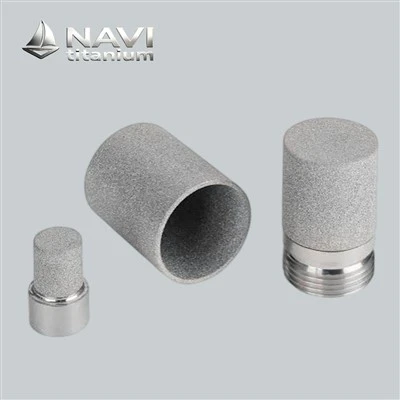
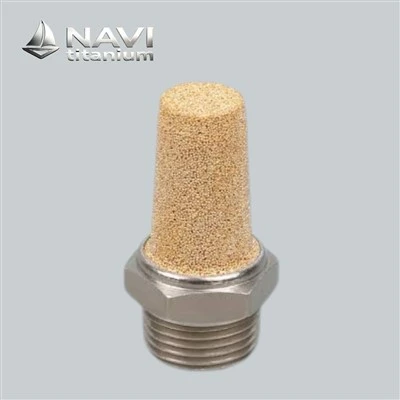
5 layer sintered wire mesh is made by stacking five layers of metal woven meshes with different mesh sizes and wire diameters in an orderly, gradient-pore structure. It's then sintered under high temperature and vacuum conditions through solid-phase diffusion, allowing the mesh intersections to metallurgically bond, ultimately forming an integrated porous metal sheet that doesn't delaminate or loosen. As a benchmark-grade gradient filter in the industrial metal porous filtration field, it's designed as an all-in-one precise filtration solution for harsh conditions. NAVI Titanium, relying on years of experience in developing and manufacturing porous metal materials, produces a full range of five-layer sintered wire mesh products on its own, providing global industrial customers with stable production, customized full-chain technical services, and one-stop delivery assurance.
Solution of NAVI Titanium
NAVI Titanium, as a brand focused on the R&D and manufacturing of porous titanium and sintered metal filter elements, breaks away from the industry's usual homogenous promotion. The table below lists three types of sintered metal filter materials, whose pore-forming mechanisms are completely different. This directly determines their fouling patterns, erosion resistance, pore cleaning recovery rate, and bubble point stability, which is also the core underlying logic behind the NAVI Titanium product line division.


NAVI Titanium|Precision Sintered Metal Discs, Stable Lock Filtration at the Edge
NAVI Titanium covers the entire process from sheet cutting, lamination sintering, precise stamping and edging, flatness correction to bubble spotting and burst pressure testing. Small samples can be quickly prototyped, while large batches of round filters can be reliably scheduled for production. Custom diameters and shaped ring pieces are supported, with material certificates and batch test reports included.


Application
5 layer sintered wire mesh made by NAVI Titanium uses a gradient functional layer arrangement. From the upstream side of the fluid (feed side) to the downstream side (permeate side), the layers are: **outer protective coarse mesh layer, fluid dispersion buffer layer, precision retention core filter layer, high-strength transitional support layer, and bottom rigid support skeleton layer**. Each of the five layers has its own role. The main goal of this whole gradient structure is not just to trap solid particles, but also to disperse the sudden impact from high-pressure fluids, reduce interlayer shear stress, and weaken the local erosion effects caused by high-speed liquid flow.
Petrochemical engineering is the core application area for high-pressure liquid filtration, covering key processes such as high-pressure hydrocracking, hydrotreating, catalytic reaction liquid filtration, and crude oil purification. The process operates at pressures of 30–100 bar, with media containing corrosive components like sulfides, chloride ions, and organic acids, along with large amounts of catalyst fine particles, coke particles, and solid impurities, making the conditions very harsh. Traditional stainless steel filter media in this environment are prone to corrosion and clogging, causing filtration efficiency to drop quickly and frequent filter element failures, which seriously affect the continuous operation efficiency of petrochemical facilities. NAVI Titanium's five-layer sintered mesh, with its ultra-high pressure resistance and strong corrosion resistance, perfectly addresses the filtration challenges of the petrochemical industry.


In high-pressure hydrogenation units, this material can precisely capture catalyst particles and coke impurities in hydrogenated oil, maintain stable filtration accuracy, and effectively protect high-pressure pumps, valves, and downstream precision reaction equipment from particle wear and pipeline blockages.Its graded dirt-holding structure greatly boosts filter element dirt capacity, extends backwashing cycles, and significantly improves the continuous operation of petrochemical units. In high-pressure filtration processes for polyester and chemical fiber raw materials, it can reliably filter high-pressure viscous polymer melts and chemical raw liquids, remove solid impurities and colloidal particles, ensure chemical product purity, and prevent quality defects caused by impurity leaks. At the same time, the material is resistant to high temperatures and pressures, chemically inert, and does not react with chemical raw materials, fully ensuring the stability of the production process and product yield.
Purchasing guide

Quality control (QC)
Quality is the core cornerstone of NAVI Titanium products for adapting to high-pressure and highly corrosive precise filtration conditions, and it is also the key prerequisite to ensure long-term stable, safe, and efficient operation of industrial filtration systems. To strictly control the quality of each batch of products and eliminate risks such as material deviations or substandard performance, we strictly follow the ISO quality management system and implement full-process standardized inspection control for NAVI Titanium products. The COA material analysis report below serves as the official authoritative proof of product quality compliance, fully recording the material composition of this batch of NAVI titanium sintered products. The data is for reference only.
|
|

Manufacturing Process
5 layer sintered wire mesh is a gradient porous filter element developed for high-pressure, highly corrosive liquid filtration. It is built on NAVI Titanium-modified high-purity titanium substrates and uses a five-layer composite vacuum sintering process. It combines stable pore size, high burst strength, and excellent resistance to chloride corrosion, making it widely used in harsh conditions such as chemical hydrogenation, seawater filtration on offshore platforms, and purification of electrolytes in new energy applications. The entire production process-from raw material inspection, mesh weaving, layer stacking, vacuum high-temperature sintering, post-treatment, performance testing, to packaging-is equipped with independent quality control checkpoints. The whole process is part of the NAVI Titanium quality management system to ensure batch consistency. Below is a detailed explanation of its standardized manufacturing process.
Inspection and preprocessing of titanium wire raw materials
The quality of raw materials determines the basic performance of sintered products. NAVI Titanium uses high-purity titanium billets that have been refined through a secondary melting process to draw metal wires. During the drawing process, the titanium wire surface can retain lubricating oil, scale, and dust. If these impurities are left until the sintering stage, they can form brittle oxides at high temperatures, leading to poor interlayer bonding, clogged pores, and even potential corrosion under high-pressure conditions. The pretreatment process includes degreasing and cleaning, acid pickling and passivation, pure water rinsing, and drying. First, a neutral degreasing agent is used to remove drawing lubricants; then the wire is briefly soaked in a low-concentration mixed acid solution to remove the surface oxide layer; after that, it is repeatedly rinsed with deionized water to remove any acid residues; finally, low-temperature drying ensures the titanium wire surface is clean, free of oil, oxide films, and moisture. After drying, the titanium wires are stored in a constant-temperature drying chamber to prevent re-oxidation and moisture absorption.

Layered Woven Five-Layer Gradient Mesh
The NAVI titanium five-layer sintered mesh is made up of five layers of titanium wires, each with a different function: a protective layer, an upper support layer, an intermediate reinforcement layer, a precision filtration layer, and a flow guide layer. Each layer is woven independently using NAVI titanium wires of different diameters and pore sizes. The weaving parameters are chosen based on the filtration accuracy the customer needs. The protective layer uses thicker wires and larger pores to buffer high-pressure fluid impact and block large particles. The upper support and intermediate reinforcement layers use medium-thick wires to handle pressure differences and boost overall rigidity. The precision filtration layer is woven with ultra-fine NAVI titanium wires and is the core layer controlling filtration accuracy. The flow guide layer uses a looser coarse mesh to reduce outflow resistance.

Cutting, Flattening, and Layering Titanium Wire Mesh
After weaving, the rolled titanium mesh enters the cutting process. Using CNC cutting equipment, the mesh is precisely cut according to the size of the finished filter element or filter plate, ensuring straight edges without burrs or lifted wires. After cutting, each layer of titanium mesh is individually flattened to remove the curling stress from rolling by using a flat press. Any tiny bumps or creases on the mesh are manually refined to ensure all layers are smooth, and when stacked, each layer fits tightly without gaps. Layer stacking is a critical step before sintering, strictly following the sequence: protective layer → upper support layer → middle reinforcement layer → precision filter layer → flow guide layer, with no deviations. During stacking, align all four edges to prevent misalignment. Once multiple mesh layers are stacked, they are placed into high-temperature-resistant graphite molds and evenly pre-pressed mechanically.

Vacuum High-Temperature Sintering
Titanium is highly reactive and easily reacts with oxygen and nitrogen at high temperatures, so vacuum sintering is required-it cannot be sintered in air. The molds with the packed material are placed in a vacuum sintering furnace. The furnace is closed, and the vacuum system is started to achieve a high vacuum inside the chamber. The heating process is controlled in stages, including preheating, holding for sintering, and slow cooling. During preheating, the temperature rises slowly to gradually remove trace moisture and residual volatile impurities from the material, preventing deformation of the mesh from rapid heating.

Demolding, Polishing, and Edge Finishing
The sintered semi-finished product is removed from the graphite mold, and any mold debris is first cleaned off. The product will have a few small burrs along the edges after sintering, which need reshaping and polishing. Specialized grinding wheels and polishing tools are used to remove burrs, gently polishing to avoid damaging the mesh's pore structure. For rolled filter cylinders, additional rolling and welding processes are added to shape the flat sintered mesh into a cylinder; flat filter sheets are cut directly to their final dimensions. Welding also uses titanium filler, with heat input controlled to avoid damaging the sintered pores or causing local oxidation. After shaping, a comprehensive visual inspection is done to check for surface cracks, local oxidation spots, delamination, or bulges. Any detected layer separation or burn defects results in immediate scrapping.

From high-purity titanium raw material purification, layered weaving, precise stacking, vacuum sintering, to multi-dimensional performance testing, quality control points are set at every step. Compared with industry processes, NAVI Titanium's pre-purification process and strict oxygen-controlled vacuum sintering ensure that the final product maintains stable pores, no interlayer delamination, and resistance to pressure fatigue impact under high-pressure corrosive liquid conditions. Standardized processes, combined with batch COA testing, enable full-quality traceability and consistently serve high-end filtration scenarios in petrochemicals, offshore platforms, and new energy. Click the button below to learn more.
Comparison of NAVI Titanium and Traditional Filter Materials
Compared to polymer filters like PTFE and PP, NAVI Titanium's 5 layer sintered wire mesh has an absolute advantage in pressure resistance and structural stability. Polymer materials tend to compress and deform under high pressure, with pores collapsing, making them unable to handle high-pressure backwashing, resulting in a short lifespan and poor reusability. On the other hand, NAVI Titanium's metal sintered structure is extremely rigid, staying deformation-free even under long-term high pressure. It can handle high-intensity backwashing and chemical cleaning cycles, with much better adaptability and lifespan than polymer materials. A small table comparing the core performance of different filter materials is shown for reference only:
| Performance Indicators | NAVI Titanium Sintered Mesh | 316L Stainless Steel Sintered Mesh | Ordinary Pure Titanium Sintered Mesh | Polymer Filtration Material |
| Maximum working pressure | 100 bar (1450 psi) | 70 bar (1000 psi) | 80 bar (1160 psi) | ≤20 bar |
| Filter Accuracy Stability | Super high stability, no accuracy loss | Stable under normal conditions, accuracy decreases after corrosion | Basically stable, with some local aperture deviations | Poor, prone to deformation and leakage |
| Corrosion Resistance | Resistant to acids, bases, chloride ions, and organic solvent corrosion | Poor resistance to chloride ions, prone to pitting | Good corrosion resistance, tiny amount of impurities may precipitate | Resistant to some media, poor temperature resistance |
| Service life under high-pressure corrosion conditions : | 3-5 years | 6-12 months | 1-2 years | 3-6 months |
| Backwash regeneration performance | Excellent, multiple regenerations with no performance loss | Good, prone to rust after multiple washings | Good, some pore clogging residue | Fair, repeated washing can easily cause damage |
| Temperature Adaptation Range | -40℃ to 280℃ | -20℃ to 200℃ | -30℃ to 250℃ | -10℃ to 80℃ |
Frequently Asked Questions
Q1: Does the NAVI titanium five-layer sintered mesh support small-batch custom non-standard samples?
+
-
A: Yes. We offer small-batch custom services for R&D testing and equipment debugging scenarios, with no minimum order requirement. We can quickly produce NAVI titanium sintered samples with non-standard pore sizes and special thicknesses, along with dedicated test data and a simple COA report.
Q2: How do you ensure zero performance deviation in NAVI titanium batches during mass production?
+
-
A: We use a dedicated NAVI titanium raw material batch-locking mechanism throughout the process, standardize vacuum sintering parameters and passivation procedures, and independently sample each batch for pore size, pressure resistance, and composition re-inspection, preventing differences in corrosion resistance and compressive performance between batches.
Q3: Can the layer mesh ratio structure be adapted for high-pressure conditions?
+
-
A: Yes, gradient layer schemes can be customized. For high-pressure fluctuations and highly corrosive media, the five-layer wire diameter and mesh ratio can be fine-tuned to optimize fouling capacity and deformation resistance, suited for varied high-pressure liquid filtration conditions.
Q4: What niche compliance services are available for export orders?
+
-
A: We can provide batch traceability reports, vacuum dust-free factory certificates, raw data from high-pressure burst tests, and support multilingual COA certificates to meet the incoming materials inspection standards of high-end overseas industrial clients.
Q5: Does after-sales service provide guidance for working conditions adaptation and regeneration processes?
+
-
A: Yes, we provide dedicated technical support. We can customize backwashing and ultrasonic regeneration schemes based on the customer's high-pressure filtration conditions to extend the service life of NAVI titanium sintered mesh and reduce operation and maintenance costs.
Hot Tags: 5 layer sintered wire mesh, China 5 layer sintered wire mesh manufacturers, suppliers, factory, Bronze Filter Element, coarse pore metal filter disc, Microporous Filter, porous sintered metal filter plate, Sintered Bronze Filter Disc, Titanium Filter