


If you order a batch of sintered metal filters made from sintered metal powder today, and another batch 3 months from now, you want them to behave the same. This is not an unrealistic expectation; it is a necessary necessity in businesses where the accuracy of the filtering directly influences the result of the process. However, batch instability is one of the most underrated issues in the production of porous metal parts.
This article covers the importance of powder batch consistency, the consequences of inconsistency, and how to assess a supplier's approach to repeatable quality.
How Does Sintered Metal Powder Batch Consistency Affect Filter Quality?
The Link Between Powder Uniformity and Pore Structure Integrity
Every sintered metal filter begins with loose powder. The evolution of the pore structure during sintering in terms of size, distribution and connectivity is directly related to the reproducibility of the powder from one batch to the next. The pore network that results from sintered metal powder with different particle shape, surface chemistry or flowability from batch to batch is difficult to see but destructive in application.
Research published in Powder Technology shows that the mean pore diameter of a sintered item may be influenced by a substantial amount by simply a 5-10% change in the particle size distribution. In filtering, such margin leads to uneven interception accuracy – a significant failure point in PEM electrolysis systems, pharmaceutical processing and semiconductor fabrication.
Why Small Deviations Compound Into Larger Problems
One off-spec powder batch in a batch seldom leads to an instant catastrophic failure. The danger is more complicated. When pore homogeneity is slightly off, flow resistance varies.
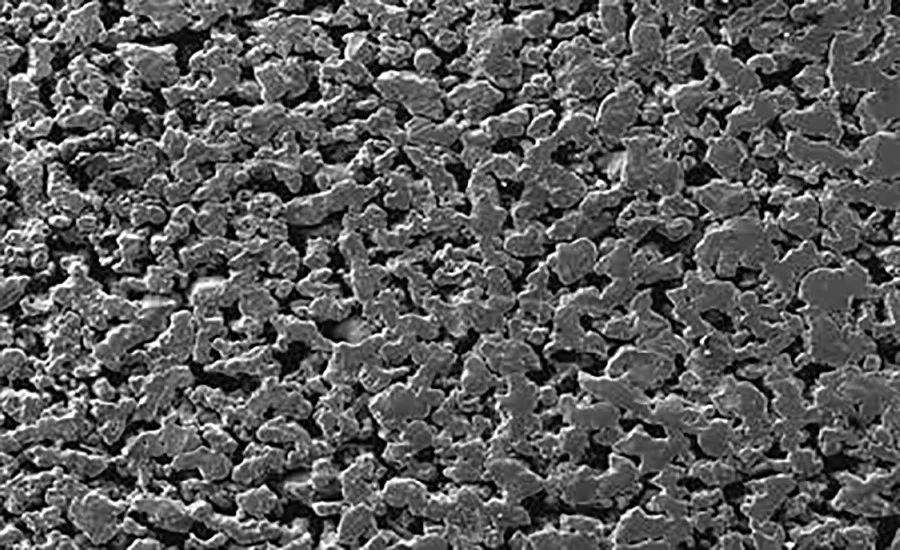
Variations in flow resistance result in variations of pressure differentials across the filter. Those shifting differentials cause fatigue in the porous skeleton during long working cycles and reduce service life. In many cases, buyers cannot relate the loss of performance to a variance in the powder batch and so blame the operating circumstances instead of the real cause.
Sintered Metal Powder Particle Size Consistency Across Production Batches
How Particle Size Distribution Governs Filtration Accuracy
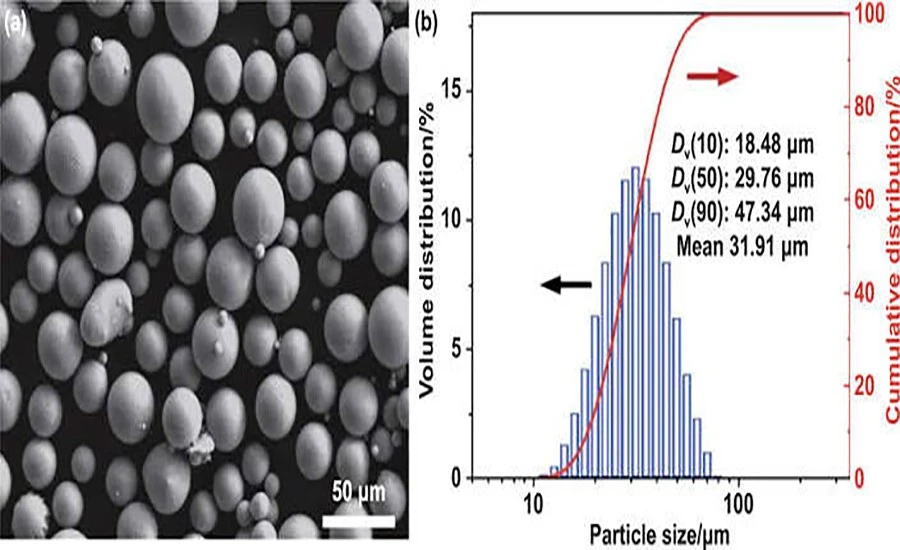
The particle size distribution (PSD) is likely the most important variable in the manufacture of sintered filters. Coarser powder means wider pores and better permeability, whereas finer powder means tighter pores and better interception accuracy. The issue isn't picking the perfect PSD, it's keeping it right, batch after batch of manufacturing, without drift.
NAVI Titanium obtains 0A grade pure titanium powder and verifies PSD conformity on incoming material by laser diffraction analysis. This methodology guarantees the powder used to feed each sintering cycle has the same D10, D50 and D90 values as the previous batch. The practical result is a porous metal filter with a pore size range - generally 5 μm to 80 μm depending on application - that is consistent throughout repeat orders.
The Role of Powder Oxygen Content in Long-Term Conductivity
In PEM water electrolysis, the filter element is not only a mechanical barrier but also a porous transport layer. It must be able to conduct electrons and to handle gas-liquid two-phase flow.
The oxygen concentration of the titanium powder substrate has a direct effect on the electrical conductivity of the sintered skeleton. This results in increased contact resistance and decreased electrochemical efficiency over time .
NAVI Titanium's PEM-grade components are manufactured from low-oxygen fine titanium powder, a material standard that guarantees low bulk resistivity and electrochemical performance throughout the service life of the component. In such case, monitoring oxygen levels batch-to-batch is not optional, it is a non-negotiable quality step.
How Can Sintered Metal Powder Composition Variation Affect Porous Filter Performance?
Composition Drift and Its Effect on Corrosion Resistance
Nickel-based alloys, SS316L and high purity titanium are not interchangeable – even small variances in composition within a specific alloy grade might influence the passivation behaviour of the material in corrosive environments. In chlor-alkali conditions or in hostile waste water streams, a sintered metal filter made from powder with somewhat higher iron or sulphur impurities may be subject to rapid pitting corrosion along the pore edges.
The difference in composition is of particular importance in the case of gradient filter elements where coarse and fine powders of various alloy classes are mixed in exact ratios. If the fine-powder layer does not contain required Ni or Cr content, the interfacial link between the gradient layers is weakened and delamination becomes a potential service failure scenario.
Material Traceability as a Quality Assurance Mechanism
Traceability, or the ability to track a manufactured filter element back to a specific sintered metal powder lot,
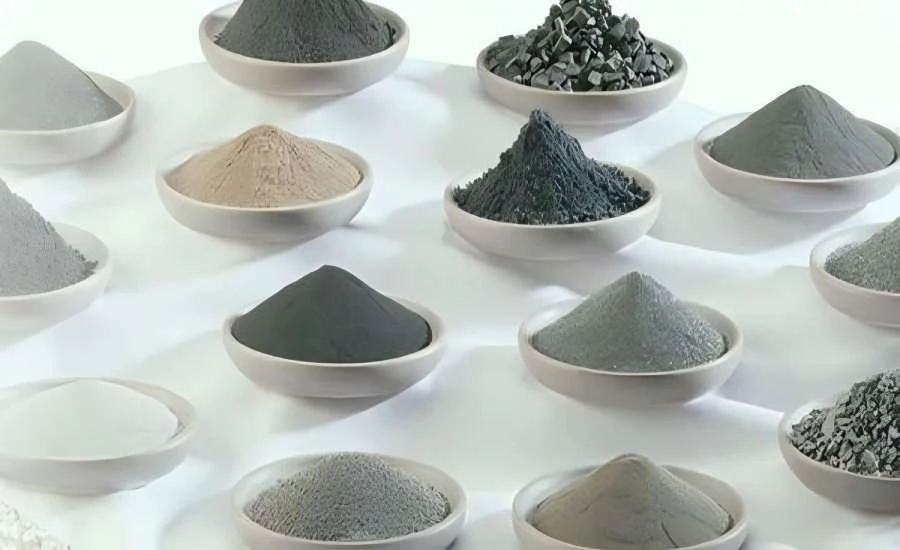
sintering cycle and inspection record is what separates a reputable producer from a commodity provider. NAVI Titanium maintains batch records comprising the certificates of the raw materials, the PSD data, the sintering settings and the inspection reports after the procedures. Such traceability architecture guarantees that any performance problem in the field can be evaluated, root caused and addressed at powder procurement stage rather than being identified post big scale deployment.
Sintered Metal Powder Quality Checks for Repeatable Filter Pore Structures
Incoming Inspection Protocols That Prevent Downstream Failures
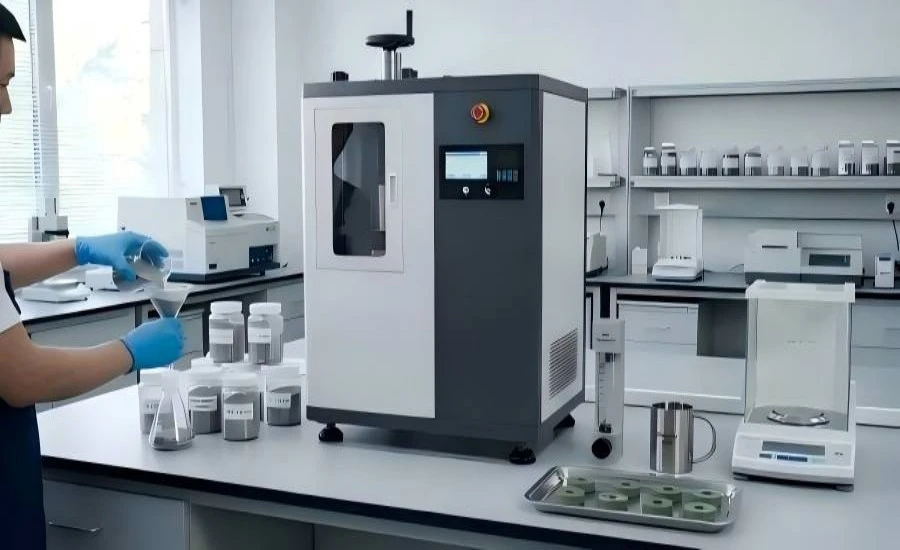
Quality control at the raw powder stage is cheaper than rework at the final component level. Incoming examination of sintered filter powder should comprise particle size analysis, bulk and tap density determination, BET surface area determination and verification of chemical composition. Each of these parameters corresponds to a physical property of the final filter. PSD corresponds to pore size, tap density is indicative of sintering shrinkage, surface area determines sintering activity and necking between particles.
NAVI Titanium routinely tests for them before any powder reaches its sintering lines. The goal is not to satisfy procedural requirements, but to avoid batch drift that gradually weakens filter consistency over time.
In-Process and Post-Sinter Verification
If the sintering parameters change then inbound inspection will not be adequate. The porosity and strength of the porous skeleton are dependent on the uniformity of the temperature in the furnace zone,
management of the environment (particularly in hydrogen or vacuum sintering) and precision of the holding duration. Bubble point testing, air permeability measurement, dimensional inspection) completes the quality loop to assure the finished component fulfils the pore structure specification derived from the validated powder batch.
What Should Buyers Ask About Sintered Metal Powder Batch Consistency?
Questions That Reveal a Supplier's True Quality Capability
Don't trust broad quality assurances from a sintered metal powder provider; buyers should ask specific, verified enquiries. Enquiring from the supplier about their incoming PSD acceptance criteria and how non-conforming powder batches are managed can demonstrate whether quality checks are being recorded or informal. Please provide inspection reports for recent manufacturing batches, to determine whether data collection is normal or retroactive.
It is also worth enquiring about the supplier's handling of unique gradient filter elements – especially in the validation of the compounding ratio of coarse and fine powders across numerous manufacturing runs. The answer to that question distinguishes vendors with developed process control from those that depend on operator expertise alone.
Evaluating Supplier Consistency Through Sample Orders
A sample order is not simply a trial of your goods, but an audit of your process. When receiving sample sintered filter elements assess not only their filtering performance, but their dimensional repeatability and surface morphology.

In a scanning electron microscope cross-section imaging may be used to determine if the pores are uniformly or grouped distributed, which has a direct influence on the quality of powder batches. And for special orders with 0% unqualified policy, NAVI Titanium may enable sample sintering so that customers can verify process consistency before volume production.
Conclusion
Sintered metal powder batch homogeneity is not an afterthought in manufacturing. It is the foundation of reliability filtering. Inconsistent powder results in a variety of pore topologies, unclear service life and costly process interruptions in demanding applications from PEM electrolysis to semiconductor manufacture. Buyers who get the powder-to-performance chain right are better situated to choose suppliers that invest in the raw material controls, process documentation and post-sinter verification that repeatable filter quality demands.
FAQ
Q1: What causes batch-to-batch variation in sintered metal powder filters?
+
-
Batch variation is often ascribed to differences in raw powder particle size distribution, oxygen concentration, or alloy composition across procurement batches. If the incoming powder is not thoroughly tested and verified before the sintering process, these variances are carried over into the pore structure, mechanical strength and corrosion resistance of the completed filter.
Q2: How does powder particle size affect the pore size of a sintered porous metal filter?
+
-
In a sintered component the pore size depends mostly on the particle size. fewer particles pack more closely before sintering, resulting in fewer interstitial gaps, tighter pore architectures and improved interception accuracy. Larger particles generate bigger holes and higher permeability. A constant PSD across batches is important for maintaining pore size within the prescribed range.
Q3: Why is low-oxygen titanium powder important for PEM electrolysis filter elements?
+
-
In PEM water electrolysis the sintered metal filter acts as a porous transport layer which must conduct electrons while controlling fluid flow. The higher the oxygen concentration of titanium powder, the thicker the surface oxide layer of the sintered skeleton, the higher the electrical resistance and the lower the electrochemical efficiency. Low-oxygen powder maintains conductivity while extending the operating life of the filter element in high-demand electrolysis applications.
Partner With NAVI Titanium for Consistent, High-Performance Sintered Metal Powder Filters
NAVI Titanium has been engineering precision porous metal components since 2008, operating from the heart of China's titanium manufacturing hub in Baoji High-tech Zone. As a dedicated sintered metal powder supplier, NAVI Titanium applies 0A-grade titanium, nickel-based alloys, and SS316L with rigorous batch controls to deliver filter elements with stable pore structures between 5–80 μm across every production run. Whether your application demands high-purity PEM-grade filtration or high-strength components for extreme operating conditions, NAVI Titanium offers material consultation, custom process design, and manufacturing support tailored to your requirements.
Reach out directly to our engineering team at sales@navititanium.com and take the first step toward filtration components you can trust batch after batch.
References
1. German, R. M. Sintering: From Empirical Observations to Scientific Principles. Butterworth-Heinemann, 2014.
2. Kang, S.-J. L. Sintering: Densification, Grain Growth and Microstructure. Elsevier Butterworth-Heinemann, 2005.
3. Lefebvre, L.-P., Banhart, J., & Dunand, D. C. "Porous Metals and Metallic Foams: Current Status and Recent Developments." Advanced Engineering Materials, Vol. 10, No. 9, 2008, pp. 775–787.
4. Tjaden, B., Cooper, S. J., Brett, D. J. L., Kramer, D., & Shearing, P. R. "On the Origins and Validation of the Bruggeman Exponent for Use in Electrochemical Transport Models." Current Opinion in Chemical Engineering, Vol. 12, 2016, pp. 44–51.
5. Smit, K., & Marijnissen, J. C. M. "Particle Size Effects on Sintered Pore Structure and Filtration Performance in Titanium Porous Components." Powder Technology, Vol. 198, No. 3, 2010, pp. 340–347.
6. Zhao, Y., Sun, D., & Li, Q. "Effect of Powder Characteristics on the Microstructure and Properties of Sintered Stainless Steel Porous Materials." Journal of Materials Processing Technology, Vol. 213, No. 5, 2013, pp. 706–713.



