


When you change a worn-out steel bolt on your motorcycle, you can feel the difference in weight right away. A titanium bolt is known for being strong even when it's hot, vibrating, or under a lot of stress from the road. What, though, goes into one of these fasteners? If you know how a titanium bolt works, you can pick the right hardware for every mounting point on your bike, whether you're replacing engine covers, exhaust brackets, or suspension parts.
This guide goes over every part of a titanium bolt, from the head to the end of the thread, and explains what it does to make the whole thing safe and light.
What Does the Head of a Titanium Bolt Do?
The head is the most visible portion of any fastener, and on a titanium bolt it handles two critical jobs: providing a bearing surface that transfers clamping force into the joint, and offering a shaped geometry that accepts a tool for installation or removal.
Head Configurations and Their Role
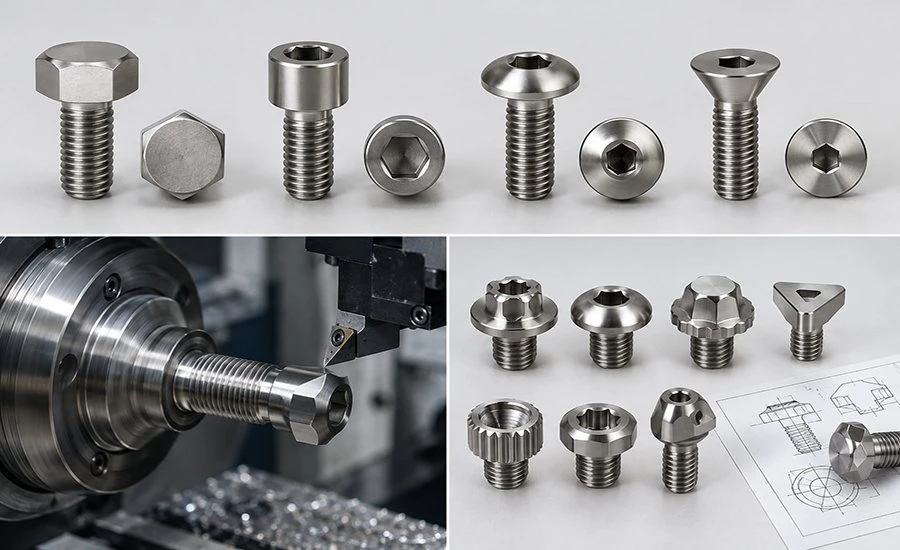
Load is spread out in different ways by different head shapes. Because the gripping force is spread out over a wide, flat bearing face, a hex head works well on clamps and mounting plates that have a lot of surface area. A socket head, which is also sometimes called a cap head, has a cylinder-shaped collar that sits partly submerged in a counterbore. This keeps the hardware flat and reduces the amount of debris in the air. Button heads have a low-profile dome that looks good on body panels and fairings that need to look smooth and round.
On the other hand, countersunk heads are designed to fit flush with the surface they are paired with. This shape is especially useful for footpeg systems and frame parts that have heads that stick out and could become sticking points. To exact specifications, each shape is CNC-machined from titanium bar stock, which keeps the bearing face flat and the drive recess precise.
Material Grade and Head Strength
The kind of titanium that makes up a bolt head may withstand more or less stress and force.
Gr5 titanium (Ti-6Al-4V) is almost twice as strong as pure Gr1 or Gr2 when you pull two pieces apart. It's commonly used for sections that need to support a lot of weight, such engine bearings and frame bracing. Pure versions from the store are better for low duty work when weight savings and corrosion prevention are more desirable than pure strength. According to ASTM standards, the minimum ultimate tensile strength of Gr5 titanium is 895 MPa or 130 ksi. This lets engineers and builders feel well when they choose screws for challenging work.
The Shank, Shoulder and Under-Head Radius of a Titanium Bolt
The shank is the cylinder-shaped body that goes through a clearance hole before the threaded zone starts. It is located below the head. The base of many fasteners is partly unthreaded, and that smooth area has specific duties that affect both how the fastener is put together and how well it works in the long run.
How the Shank Geometry Handles Shear and Tension
A threaded item does not employ the whole cross-sectional area because the roots of the threads cut into the material, and therefore an unthreaded base can better bear bending stresses. On a motorbike chassis, a bracket may be pushed tight and sheared laterally by vibration or cornering forces. A clean shank extending across the shear plane is necessary for the structural integrity of the joint. For CNC turning, the outside diameters are constant throughout the shank and any variation is within the tolerance range shown on the design.
The Under-Head Radius and Its Function
The under-head radius is the junction between the head bearing face and the shank. This little bent filet accomplishes much more than you'd expect from its size. A radius removes a sharp internal corner which redistributes stress concentration away from a notch, a place prone to developing fatigue fractures under cyclic loading. Machined correctly, The mechanical contact that transfers rotational torque into linear clamping force is the threads. The under-head radius on a titanium bolt extends service life in vibration-intensive environments such as exhaust systems and engine covers.
Quality CNC machining ensures this radius meets drawing specifications consistently across every piece in a production batch.
How Titanium Bolt Threads Are Formed and Measured?
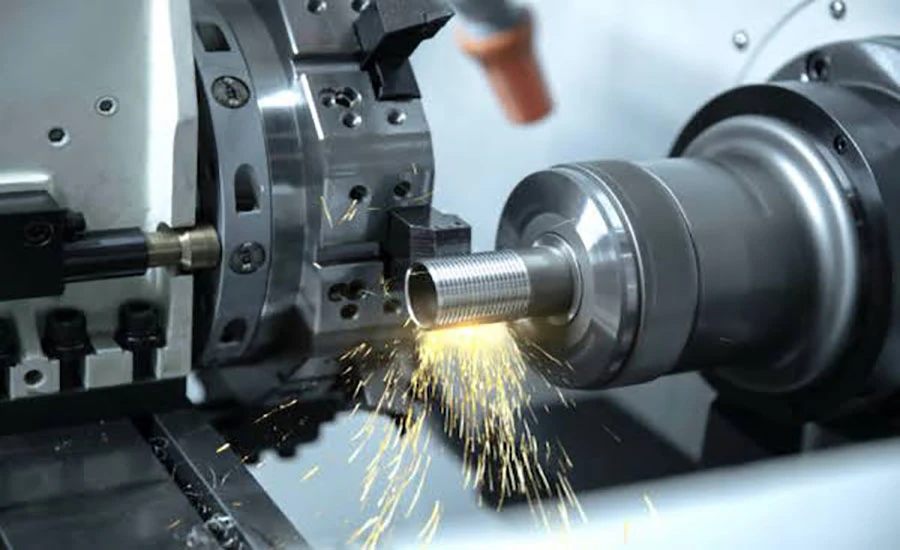
The shape of the threads controls the reliability of the fastener under load. For the titanium bolt, the manufacturing of the thread needs a careful control of the cutting parameters due to the limited thermal conductivity of titanium which causes the heat to be concentrated at the cutting edge which might impair the life of the tool and the surface quality.
Thread Form, Pitch and Tolerance Class
Metric threads have a 60 degree flank angle, a pitch (say 1.25 mm for an M8 fastener) and a set of minor and major diameters that tell you the fit class they belong to. For an external thread, a thread tolerance class such as 6g indicates the allowable amount of deviation from the nominal size. Tighter classes make it less probable that cross-threading may arise during construction. The M6 × 1.0, M8 × 1.25 and M10 × 1.25 are standard motorcycle bolt sizes that are suitable for many different engine cover, frame and suspension purposes. Accurate thread gages are used to examine the threads before the bolt advances to the final finishing stage.
Thread Length and Run-Out Zone
The thread length on a bolt with partial threads is set to match the depth of the tapped hole or the length of the nut engagement. A minimum thread contact of at least one diameter is usually thought to be needed to develop the bolt's full proof load.
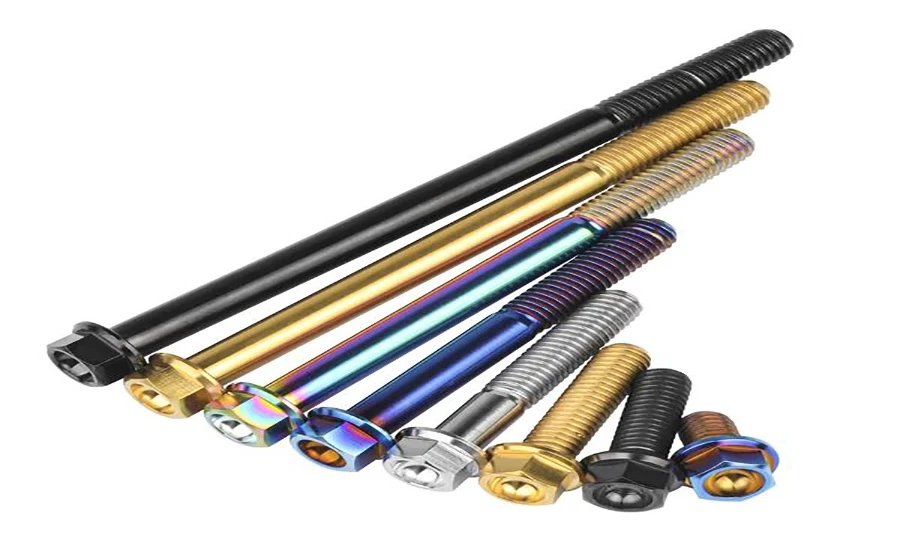
For systems that are likely to vibrate, many engineers specify 1.5 diameters. A relief slot or a slow cutaway is made into the thread run-out zone, which is where the full thread profile goes back to the shank. This keeps the stress from building up at the last engaged thread. This is a standard procedure for CNC-machined titanium fasteners made for performance applications, but it is often overlooked in lower-precision fasteners.
Drive Styles on a Titanium Bolt: Hex, Torx and Internal Hex
The drive recess determines the tool used to drive the bolt and how much torque may be applied before the recess peels or rounds out. Compared to alloy steel, titanium is somewhat hard, thus while dealing with titanium fasteners, drive geometry and tool fit are more important, not less.
External Hex and Internal Hex Drives
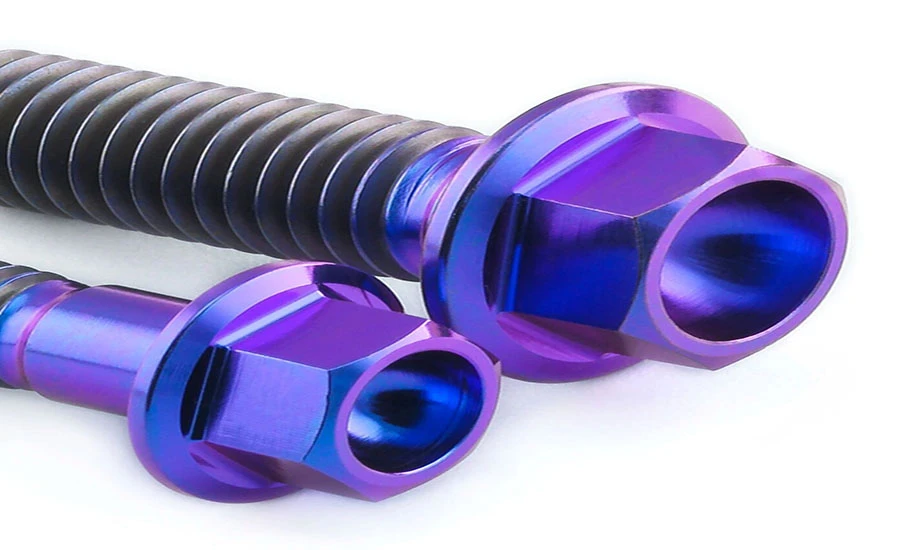
The external hex head accommodates a regular open-end or box wrench, or a socket, so it's reachable in tight spots with typical shop equipment. The internal hex, sometimes termed an Allen or socket head, focuses the driving engagement inside a carefully machined depression. Internal hex drives can usually take greater applied torques without deforming the recess, since the tool touches six flat surfaces at once and transmits torque closer to the bolt axis. For CNC-machined titanium bolts, internal hex recesses are milled to precise depth and width tolerances so that the key engages fully and evenly.
Torx Drive and Its Advantages on Motorcycles
Torx, commonly called T-drive, has a six-pointed star form that increases the surface area of contact between the tool and the opening against a hex socket. This form also makes it less likely that the tool will cam-out. Cam-out occurs when the tool slides out of the recess when there is a lot of torque. This makes it handy on fasteners that need to be removed and replaced multiple times, such fairing screws or servicing access covers.
Torx drives are available in socket head or button head. Special tools used in difficult building jobs may also be created with specific drive types.
Why a Titanium Bolt Works as a Set With Nuts and Washers?
A bolt rarely works by itself. There is a nut, one or more washers, and sometimes a screw instead of a bolt in the mounting system. By specifying that these parts are made of the same grade of titanium, the material will behave the same way across the joint, and there will be no problems with galvanic compatibility.
The Role of Titanium Nuts and Washers in Load Distribution
A titanium nut fits onto the thread of the bolt and acts as a reaction point, creating binding force. When you use a flat washer, the load from the bolt head or nut is spread out over a bigger area of the material that fits together. A nut keeps the bolt from pulling through the parent material when the motorbike is moving or hitting something. This is important for lightweight parts like helmet panels or thin metal frames. When you match titanium washers to titanium bolts, the weight of the whole thing stays as low as possible, which is another reason why titanium hardware is chosen.
Custom Sets and Coordinated Fastener Assemblies
NAVI Titanium sells titanium bolts along with nuts, studs, and washers that match. For builders and people who make parts, this means they can get all the fastening they need from a single source. It is possible to make coordinated sets with CNC machining where all the parts have the same surface finish, such as machined, polished, bead-blasted, or anodized.
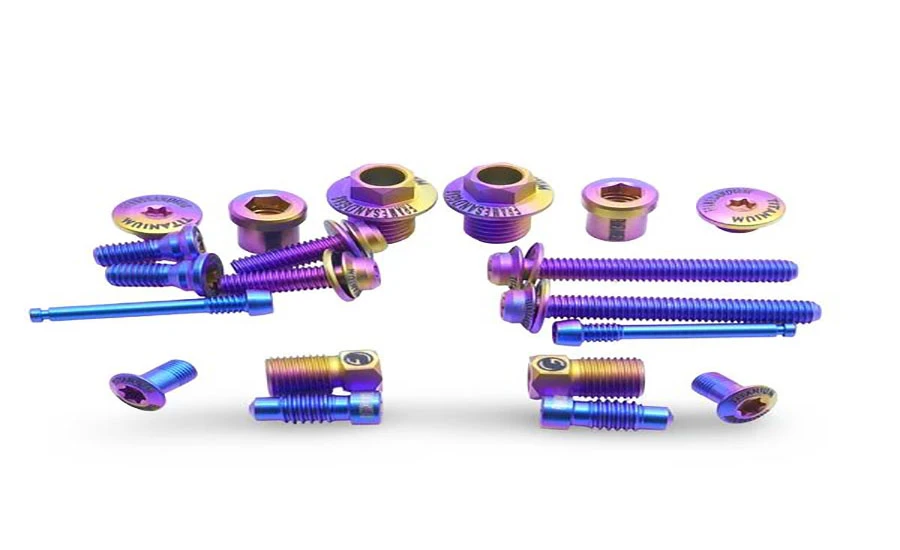
This way, the whole installation looks the same. When motorcycle manufacturers and aftermarket sellers follow written plans, it's easier to keep an eye on quality when nuts and tools that go with them are made in the same standard batch. This also makes sure that the sizes of each production run stay the same.
Conclusion
Every zone of a titanium bolt - the head, the under-head radius, the shank, the thread, and the drive recess - affects how well the fastener works in a motorcycle assembly. By knowing these details, you can choose the right setup for each job, the right grade of titanium, and matched hardware that will give you reliable fastening performance for the machine's entire life.
FAQ
Q1: What titanium grade is most commonly used for motorcycle titanium bolts?
+
-
Gr5 (Ti-6Al-4V) is the most required grade for motorcycle fasteners due to its combination of high tensile strength and low density. Commercially pure grades like Gr2 are used where corrosion resistance and weight are more important than maximum strength.
Q2: How is thread pitch specified on a titanium bolt for a motorcycle application?
+
-
The thread pitch is specified with the nominal diameter . So M8 * 1.25 means 8 mm diameter with 1.25 mm between thread crests . Most uses for fasteners for motorcycles employ typical coarse metric pitches, while fine pitches are used where vibration resistance or fine adjustability is desired.
Q3: Can titanium bolts be supplied with matching nuts and washers in the same finish?
+
-
Yes. CNC machining allows for easy production of bolts, nuts and washers in the same titanium grade and surface finish – polished, bead-blasted or anodized. Coordinated sets save installation time and provide a uniform look of the completed component.
Get Custom Titanium Bolts From NAVI Titanium - Your Trusted Titanium Bolt Supplier
NAVI Titanium has been manufacturing precision CNC-machined titanium fasteners since 2008, operating from Baoji, China's established titanium production center. As a dedicated titanium bolt supplier, NAVI Titanium offers multiple grades including Gr1, Gr2, Gr5, Gr9, and Gr23, with fully customizable dimensions, thread specifications, head configurations, and surface finishes. Every order is produced under ISO 9001-certified quality management and inspected against confirmed drawings before shipment. Whether you need a sample set for a prototype build or a full production batch for an aftermarket program, the NAVI Titanium team is ready to review your requirements and provide a practical, accurate quotation.
Send your drawings, dimensions, or specifications to sales@navititanium.com and the technical team will respond with a detailed evaluation.
References
1. ASTM International. ASTM B265: Standard Specification for Titanium and Titanium Alloy Strip, Sheet, and Plate. ASTM International, West Conshohocken, PA.
2. ASTM International. ASTM F467 / F467M: Standard Specification for Nonferrous Nuts for General Use. ASTM International, West Conshohocken, PA.
3. Donachie, Matthew J. Titanium: A Technical Guide. 2nd ed., ASM International, Materials Park, OH, 2000.
4. ISO. ISO 68-1: General Purpose Screw Threads - Basic Profile, Part 1: Metric Screw Threads. International Organization for Standardization, Geneva.
5. Bickford, John H. An Introduction to the Design and Behavior of Bolted Joints. 4th ed., CRC Press, Boca Raton, FL, 2007.
6. Peters, M., and C. Leyens, eds. Titanium and Titanium Alloys: Fundamentals and Applications. Wiley-VCH, Weinheim, Germany, 2003.



