


Every serious talk between engineers and procurement managers about how to cut down operational costs in electrolysis systems revolves around electrode material. The titanium anode rod has become the solution of choice for wastewater treatment, sodium hypochlorite production, swimming pool disinfection and industrial electrochemistry – and with good reason. In this essay, we'll explore the main technologies that make a contemporary titanium anode rod really energy-efficient, investigate how coating science drives chlorine evolution performance and demonstrate why surface engineering is the crucial aspect that separates ordinary electrodes from excellent ones.
How Can a Titanium Anode Rod Reduce Cell Voltage During Electrolysis?
Cell voltage is one of the most direct drivers of energy consumption in any electrolytic system. The millivolt excess across the electrode gap is converted into kilowatt hours in a complete working cycle. A carefully designed titanium anode rod solves this at the material level, not at the system level, where the sustained savings really begin.
The Role of Low Overpotential in Energy Efficiency
Overpotential is the excess voltage required for an electrode to push a reaction beyond the thermodynamic minimum. Pure titanium has a natural oxide layer, which adds considerable electrical resistance to the surface. Coating the titanium substrate with precious metal oxides such as ruthenium dioxide (RuO₂), iridium dioxide (IrO₂) or platinum significantly lowers the overpotential of both the oxygen and chlorine evolution processes. Research published in the journal Electrochimica Acta consistently reveals that RuO2-IrO2 mixed-oxide coatings lower the chlorine development overpotential by 150-300 mV compared to the untreated substrates, which translates into considerable energy savings at industrial scale.
Substrate Conductivity and Interface Resistance
A Grade 1 pure titanium (TA1) titanium anode rod offers a stable, low-resistance substrate under adequate pretreatment. NAVI Titanium's design of the interface between the titanium substrate and the coating ensures that the contact resistance is maintained at 0.02 Ω or lower.
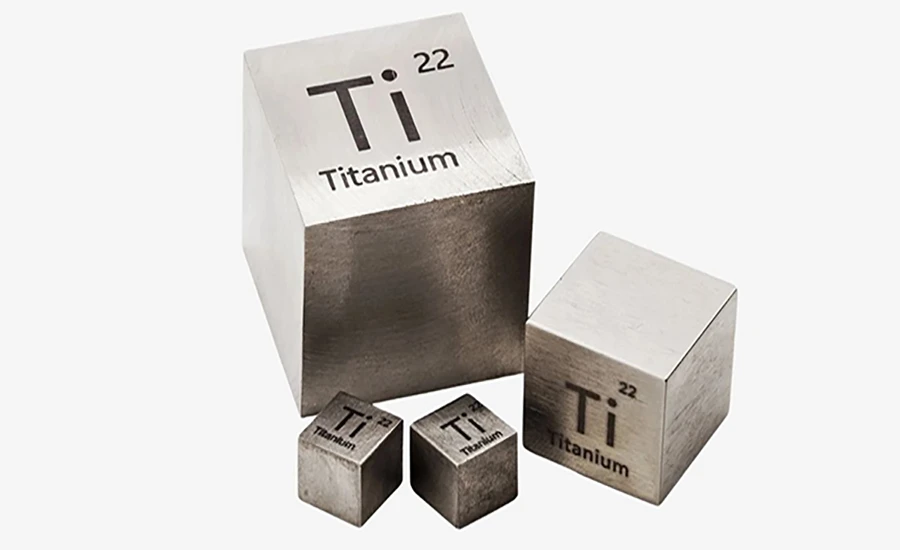
Even slight decreases in interface resistance at operational current densities from 500 to 5,000 A/m² result in a corresponding drop in cell voltage, thus reducing energy consumption without any changes in process chemistry.
Titanium Anode Rod Coating Activity and Chlorine Evolution Efficiency
The key to producing sodium hypochlorite is chlorine evolution, and the efficiency of that reaction depends on the coating on a titanium anode rod. Not all coatings are created equal, and knowing these variances is vital for anybody selecting electrodes for sodium hypochlorite generator or water disinfection system.
Ruthenium-Iridium Mixed Oxide: The Workhorse Formula
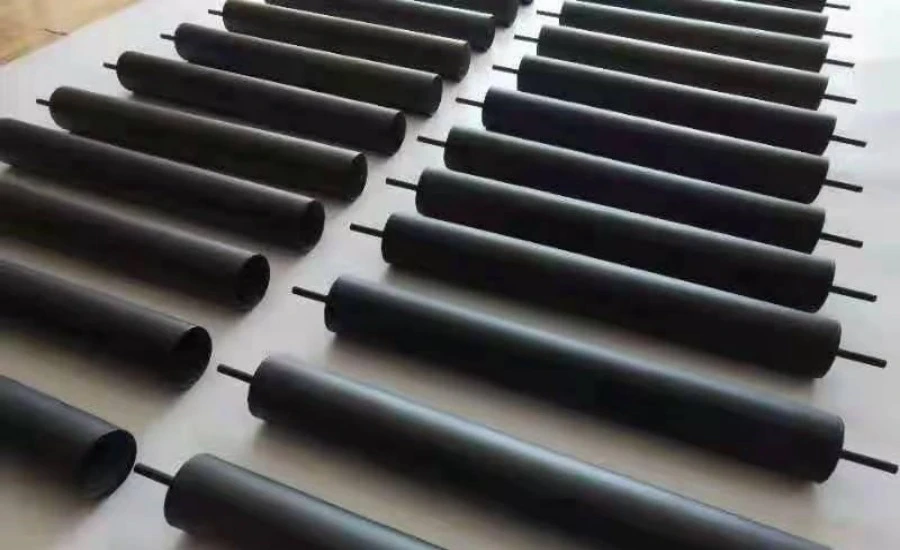
Since the 1970s the Ru-Ir mixed oxide coating has been the material of choice for industrial chlorine evolution because it offers a good compromise between activity, selectivity and durability. The ruthenium oxide is the major catalyst for the chlorine evolution process, while the iridium oxide stabilises the coating against oxidative dissolution in high-chloride, low-pH settings. A typical IrO2 --Ta2O5 or RuO2 --IrO2 formulation on a titanium anode rod, 2 to 15 microns thick, can tolerate current densities of 2,000 to 5,000 A/m2 in continuous operation--conditions that would kill graphite or lead anodes in days.
Coating Thickness, Loading, and Reaction Selectivity
Coating thickness is more than a durability criterion, it directly controls reaction selectivity. Higher precious metal loading and thicker coatings promote oxygen evolution over chlorine evolution at increased temperatures or low chloride concentrations. The optimal ratio Ru:Ir and thickness of the coating are determined for a certain electrolyte composition so as to preserve the high chlorine evolution efficiency of the titanium anode rod.
The faradaic efficiencies are often reported to be over 90% under controlled settings. The NAVI Titanium product range is designed to meet the exact electrolyte conditions of each customer's application using bespoke coating formulas.
How Does Titanium Anode Surface Engineering Influence Electrochemical Performance?
Surface engineering is not only coating. It includes all intentional surface modifications applied to the titanium substrate and the coating architecture that affect the interaction of the electrode with the electrolyte on the atomic and microstructural scale.
Acid Etching and Substrate Pretreatment Protocols
Before any coating application the titanium substrate is subjected to a controlled acid etching, often using oxalic acid or hydrofluoric acid mixes, so as to remove the native passivation layer and to provide a micro-rough surface topology . This roughness improves the geometric surface area accessible for electrochemical reaction and offers sites for mechanical anchoring of the coating. The research on pretreatment of titanium electrodes indicates that the optimised etching methods may enhance the coating adhesion strength by 30-60% compared with untreated surfaces, which immediately increases the service life and decreases the replacement frequency of electrodes.
Thermal Decomposition and Coating Microstructure
The microstructure of the oxide coating is determined by the process of thermal breakdown - applying precursor solutions and calcining at 400–550°C. A well managed heating cycle provides a crack free rutile phase oxide with strong electrical conductivity and catalytic activity. Differences in calcination temperature or environment create microcracks and amorphous oxide phases that speed up coating deterioration.
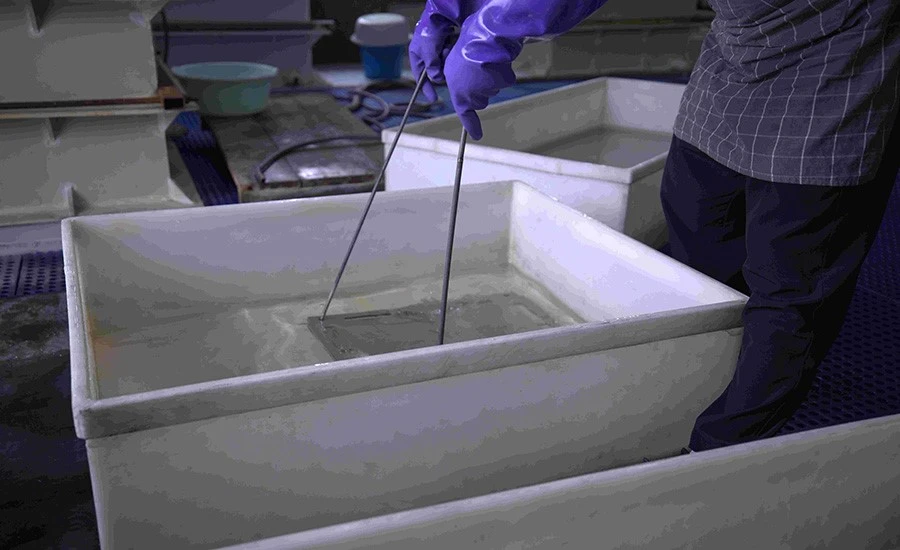
NAVI Titanium's production method tightly regulates calcination settings to achieve a uniform microstructure in each titanium anode rod manufactured.
Can Gradient Coatings Improve Titanium Anode Rod Stability During Continuous Operation?
Thermal cycling of the anodes, mechanical stress from gas evolution, and chemical assault from chloride ions and oxidising species result from continuous commercial electrolysis. Traditional homogeneous single-layer coatings do not treat any of these stresses at the structural level. The state-of-the-art technological frontier of gradient composite coatings addresses this difficulty.
Stress Relief Through Compositional Gradients
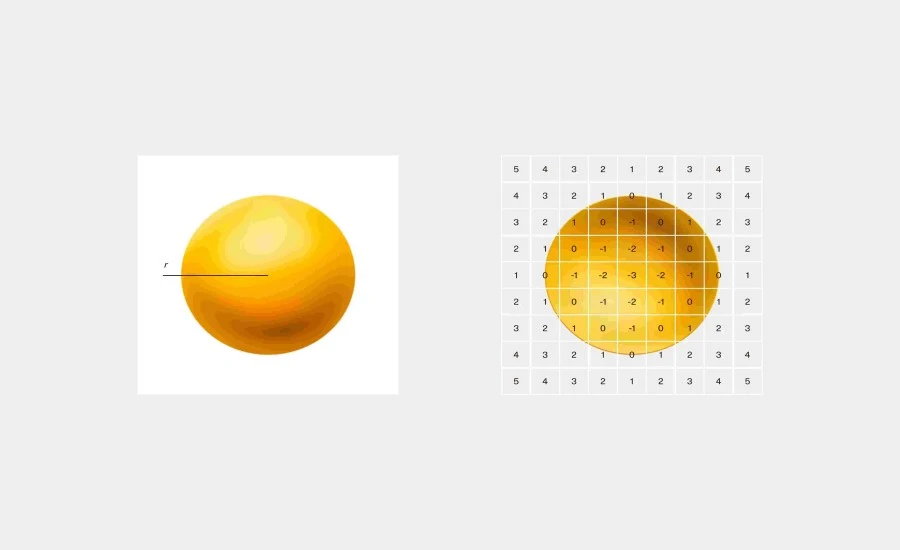
This is a gradient coating where the composition gradually varies from the titanium substrate to the outer catalytic surface. The inner layers, including Ta2O5 or SnO2, act as a thermal expansion buffer to absorb the mechanical stress arising from heating and gas evolution. The outer layers richer in RuO2 or IrO2 retain the strong catalytic activity necessary for the effective chlorine evolution. This approach addresses the four main failure mechanisms in traditional electrodes, including microcrack propagation, inter-layer delamination, passivation of the substrate by chloride ion penetration, and spallation of the coating during heat cycling.
Service Life Extension in High-Salt Environments
Conventional single layer electrodes used for sodium hypochlorite generators with brine saturation above 2,000 A/m2 current density exhibit noticeable coating loss after 2-4 years. Performance data are available from electrode manufacturers and university research groups examining mixed metal oxide (MMO) electrode deterioration,
showing that the service life of a titanium anode rod may be extended to 8–10 years with gradient composite coatings placed to the rod under comparable operating circumstances. This increased lifetime immediately amortises the original capital cost of the electrode over a significantly longer service period.
Choosing a Titanium Anode Rod for Stable Output in Industrial Electrolysis Systems
The selection of the proper electrode for a challenging industrial setting is a question of matching the anode's technical specification to the real working circumstances – electrolyte chemistry, current density, temperature and duty cycle all have to be considered.
Matching Coating Formulation to Process Conditions
The coating needs of a sodium hypochlorite generator operating on weak brine at 20-50 g/L NaCl concentration will be different to an industrial chlor-alkali cell running at 300 g/L. The Ru-Ir or IrO2 -Ta2O5 coating formulations provide the best compromise between chlorine evolution activity and hypochlorite attack resistance for water treatment and swimming pool disinfection applications, two of the most popular deployment settings for the titanium anode rod. NAVI Titanium products are available in capacities from 50 g/h up to 5,000 g/h, suitable for municipal size projects or small on-site installations.
Long-Term Performance Verification and Quality Standards
If the electrodes are purchased without verified performance data, the operation is at significant risk. Reliable providers of titanium anode rods may offer electrochemical performance data, including accelerated life tests, coating adhesion studies and impedance spectroscopy profiles so buyers can evaluate goods on objective scientific grounds. NAVI Titanium has been producing titanium anodes coated with oxides of precious metals since 2008,
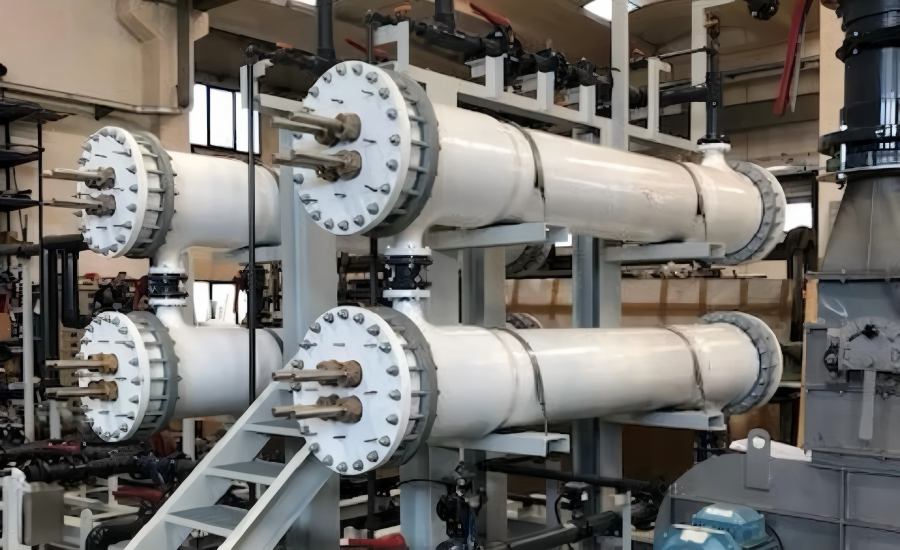
observing strict quality controls at each step of production to guarantee that every electrode corresponds to the electrochemical parameters promised to the client.
Conclusion
A titanium anode rod with appropriate substrate pretreatment, coating formulation and gradient design has demonstrable benefits: lower cell voltage, greater chlorine evolution efficiency, longer service life and lower unit energy consumption during the whole working cycle. The difference between a typical electrode and a well-engineered one is not little. It adds up over years of continuous operation into significant cost and performance disparities. Choosing the electrode specification for any electrolysis system where reliability and energy efficiency are non-negotiable must be approached with the same rigour as for any other essential system component.
FAQ
1.What makes a titanium anode rod more energy-efficient than conventional electrode materials?
+
-
The precious metal oxide layer, commonly RuO2-IrO2 or IrO2-Ta2O5, lowers the overpotential necessary to promote chlorine or oxygen evolution processes. This implies the electrolytic cell will run at a lower voltage for the same current output, directly reducing electrical energy consumption vs graphite, lead or stainless steel anodes that have much larger overpotentials and quickly deteriorate in hostile electrolytes.
2.How long does a titanium anode rod last in a sodium hypochlorite generator?
+
-
The service life varies on the operating current density, electrolyte concentration, temperature and coating quality. The gradient composite MMO-coated titanium anode rod may be used to get 8-10 years of service life in a sodium hypochlorite generator in its rated current density range. Electrodes used above rated conditions or in poorly managed electrolyte chemistry will deteriorate more rapidly.
3.Can a titanium anode rod be customized for specific electrolysis applications?
+
-
Yes. Coating formulation, substrate shape (plate, rod, mesh or tube), coating thickness and precious metal loading may be adapted to the electrolyte chemistry and profile of a certain application current density. NAVI Titanium provides unique technical assistance, process design consulting and free samples of standard specifications to help clients find the best solution before committing to full production volumes.
Work with NAVI Titanium - Your Trusted Titanium Anode Rod Supplier
Since 2008, NAVI Titanium has been designing high performance precious metal oxide coated titanium anodes for customers in wastewater treatment, sodium hypochlorite production, swimming pool disinfection, PEM electrolysis and industrial electrochemistry in worldwide markets. NAVI Titanium is a specialised supplier of titanium anode rods, and it takes charge of the entire production process, including pre-treatment of the Grade 1 titanium substrate, gradient coating, and quality verification. Therefore, NAVI Titanium supplies electrodes that can reduce unit energy consumption by 20–40% and provide 8–10 years of service life. We provide custom specifications, free samples on standard setups and personal one-on-one technical assistance. Please contact the team directly at sales@navititanium.com to discuss your project needs and get a personalised solution.
References
1. Trasatti, S. (2000). Electrocatalysis: Understanding the success of DSA. Electrochimica Acta, 45(15–16), 2377–2385.
2. Comninellis, C., & Vercesi, G. P. (1991). Characterization of DSA-type oxygen evolving electrodes: Choice of a coating. Journal of Applied Electrochemistry, 21(4), 335–345.
3. Moradi, F., & Dehghanian, C. (2014). Addition of IrO₂ to RuO₂+TiO₂ coated anodes and its effect on electrochemical performance of anodes in electrolysis of brine solution. Progress in Natural Science: Materials International, 24(1), 44–51.
4. Zeradjanin, A. R., Menzel, N., Schuhmann, W., & Strasser, P. (2012). On the faradaic selectivity and the role of surface inhomogeneity during the chlorine evolution reaction on ternary Ti-Ru-Ir mixed metal oxide electrocatalysts. Physical Chemistry Chemical Physics, 16(27), 13741–13747.
5. Chen, X., & Chen, G. (2005). Stable Ti/RuO₂-Sb₂O₅-SnO₂ electrodes for O₂ evolution and organic oxidation. Electrochimica Acta, 50(24), 4155–4159.
6. Panic, V. V., & Nikolic, B. Z. (2007). Sol-gel procedure for the synthesis of ruthenium-oxide-based mixed oxide coatings as electrocatalytic material for the chlorine and oxygen evolution reactions. Journal of the Serbian Chemical Society, 72(12), 1213–1228.



