


When electrochemical systems run around the clock, energy cost becomes one of the biggest operational burdens. A surprising amount of that cost traces back to a single component: the anode. More specifically, it traces back to what the anode is made of and how its surface has been engineered. Titanium anode rod substrate modification is now a front-line strategy for reducing cell voltage, extending service life, and cutting the kilowatt-hours required to produce each kilogram of available chlorine or other electrochemical output.
This article explains the science in simple terms and shows how modern interface engineering changes the economics of continuous electrolysis operations. It also talks about why substrate preparation is just as important as coating chemistry.
Why Does Titanium Anode Rod Substrate Design Affect Energy Consumption?
The Relationship Between Surface Resistance and Cell Voltage
Every millivolt of unnecessary overpotential at the anode interface translates directly into wasted electricity. When a titanium anode rod carries a thin, disordered native oxide layer or retains surface contaminants from machining, the contact resistance between the titanium base and the precious metal oxide coating rises. Higher contact resistance means higher cell voltage for the same current density, and higher cell voltage means higher energy consumption - every hour, every day, every year.
A study in the Journal of Applied Electrochemistry confirms that the resistance between the substrate and coating can make up 15–30% of the total cell overpotential in mixed metal oxide (MMO) anodes. For high-efficiency systems, controlling that contact through intentional material preparation is not a choice; it is a must.
Why Pure Titanium Gr1 Is the Preferred Base Metal?
Titanium that is industrially pure (TA1/TA2, equivalent to ASTM Gr1) has properties that no other base metal can match.
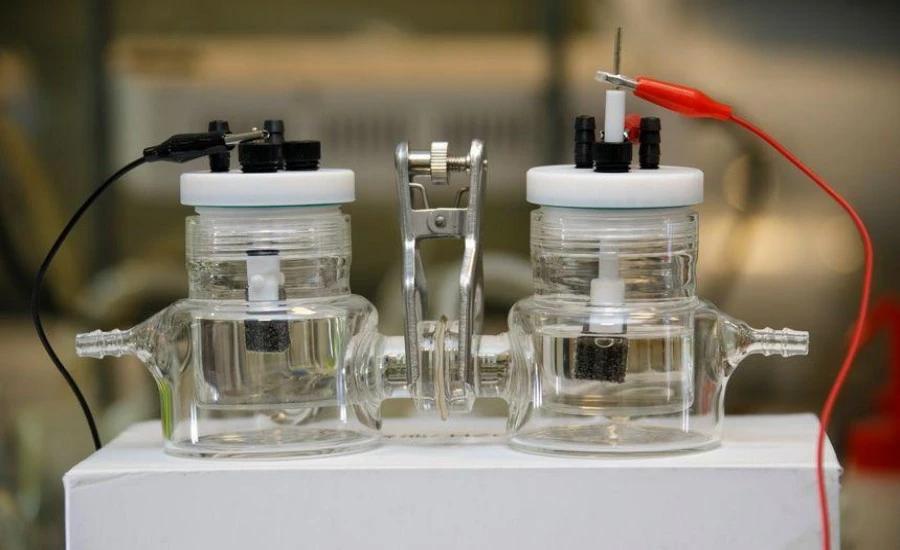
It has great corrosion resistance in halide-rich electrolytes, good mechanical stability at working temperatures, and a surface chemistry that bonds strongly with ruthenium-iridium oxide coatings after being properly activated. Under anodic oxidation, graphite breaks down. Chloride media either break down stainless steel and iron, or they form insulating passive layers that cause cell voltage to spike. Without titanium coating, copper rusts very quickly. The choice of titanium substrate is not a matter of taste; it is based on electrochemistry.
Titanium Anode Rod Substrate Modification for Lower Cell Voltage
Acid Etching and Surface Activation Protocols
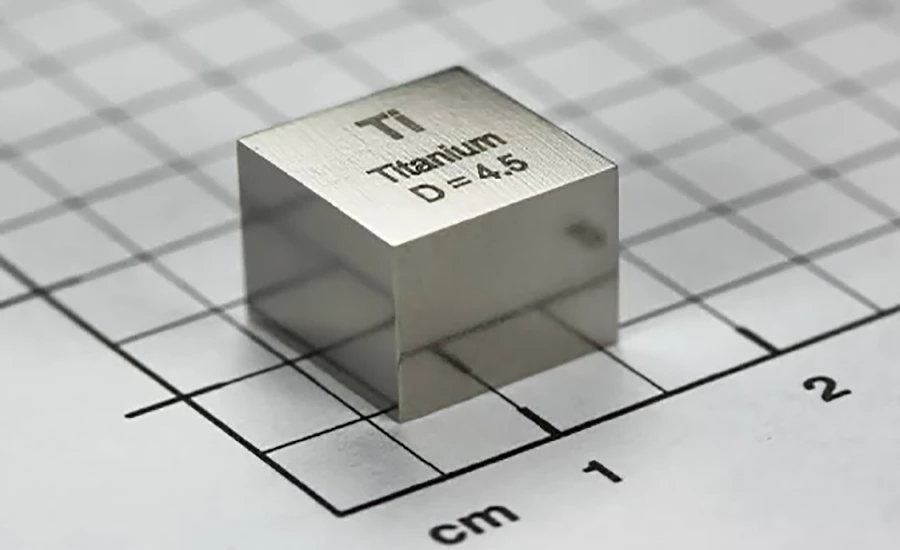
When exposed to air, raw titanium quickly forms a stable TiO₂ layer. That layer keeps the metal safe while it's being stored, and it also stops electrons from moving between semiconductors. When controlled acid etching is done, usually with oxalic acid or a mixed acid system, the inactive oxide is selectively removed. This leaves a new titanium lattice with a rougher surface and forms micro-anchor sites where the precursor coating solution can go in and join at the nanoscale level.
It is possible to measure the rise in roughness. When plates are properly etched, they have a surface area factor (roughness factor) that is two to four times higher than titanium that has not been etched. If the true surface area is bigger, the coating spreads out more evenly, the local current density goes down even when the nominal current is high, and there is a much lower chance of hot-spot delamination. All of these factors work together to lower the voltage that cells need to keep producing at a certain rate.
Thermal Decomposition Optimization for Coating Adhesion
The precious metal oxide coating is put on through a thermal decomposition cycle after the acid etching. How well the IrO₂-RuO₂ or IrO₂-Ta₂O₅ crystalline structure sticks to the titanium surface depends on the substrate temperature profile during firing, the number of covering layers, and the calcination conditions between the layers. Gradient composite coating methods, where the inner layers are made to stick together and the outer layers are made to react with chemicals, lower the charge transfer resistance more than single-layer coatings used on unaltered surfaces.
A well-optimized titanium anode rod produced through this route can reach a cell resistance below 0.02 Ω, supporting working current densities from as low as 10–50 A/m² up to 2,000–5,000 A/m² without voltage runaway.
How Can Surface Optimization Improve Titanium Anode Rod Electrolysis Efficiency?
Nano-Roughness Engineering and Active Site Density
Surface improvement is more than just cleaning with acid. Nano-scale painting, which can be done with controlled chemical etching processes or electrochemical anodization, increases the number of catalytically active sites per unit area. Each extra active site helps with the chlorine evolution or oxygen evolution reaction, which spreads out the electrochemical load and lowers the exchange current overpotential. This means that less energy is needed to make one kilogram of usable chlorine in the sodium hypochlorite reaction, which is dominated by the chlorine evolution reaction.
Coating Uniformity Across Rod Geometry
A rod geometry introduces a specific challenge: current distribution is inherently non-uniform along the length and around the circumference. Surface optimization protocols for the titanium anode rod geometry include end-zone treatment adjustments that compensate for edge effects, ensuring the coating thickness and catalytic activity remain consistent from tip to connection point. Uniform coating directly prevents localized overheating, premature coating wear at high-current zones,
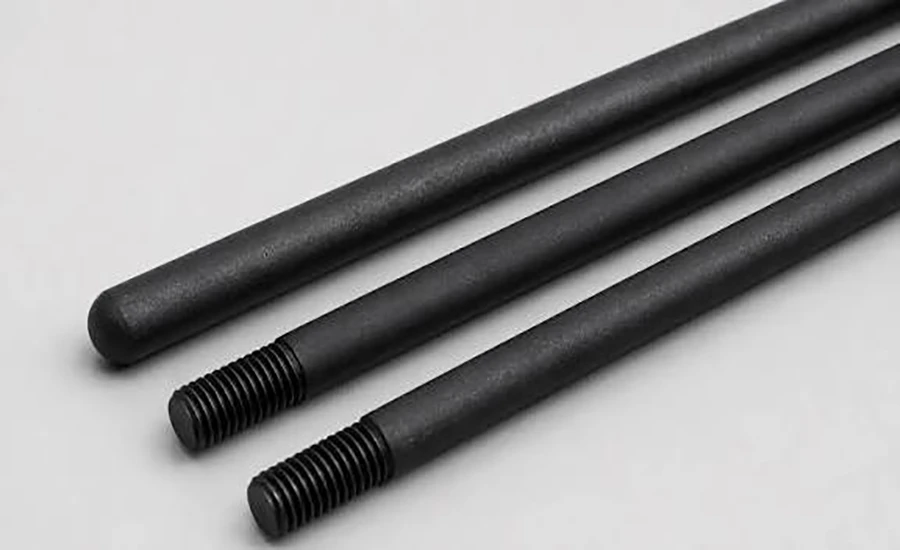
and the gradual efficiency decline that operators often misattribute to electrolyte fouling rather than electrode degradation.
Titanium Anode Rod Interface Engineering for More Efficient Chlorine Evolution
Interlayer Chemistry Between Substrate and Active Coating
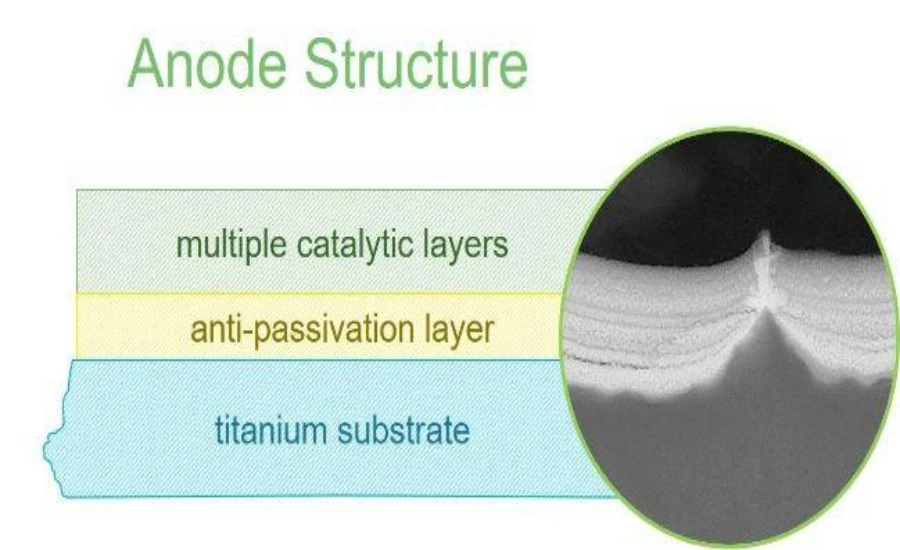
In interface engineering, a layer is added on purpose between the bare titanium substrate and the active ruthenium-iridium coating. This layer is usually a titanium suboxide or a mixed oxide with controlled stoichiometry. This insulator does two things at the same time. It stops chloride ions from moving toward the titanium base more slowly, which lowers the chance of substrate passivation over time. It also gives a crystallographic template that helps the outer active layer grow epitaxially, which makes the electron pathway more continuous across the interface.
Reducing Substrate Passivation Over Extended Operation
There are four main ways that MMO anodes can fail in continuous chlorine evolution service. One of them is substrate passivation, which is when insulating TiO2 grows back under the coating. The cell voltage gradually goes up, energy use goes up, and production capacity goes down as the TiO2 barrier gets thicker, but there are no obvious changes in the electrode.
This passivation route is blocked by interlayer engineering that uses conducting titanium suboxides, like Magnéli phase TiₙO₂ₙ₋₁ compounds. This keeps low-resistance electron transfer going for the electrode's entire useful life.
How Does a Modified Titanium Anode Rod Reduce Long-Term Energy Demand?
Lifespan Extension and Amortized Energy Cost
The energy cost of an electrolysis system is not simply the kilowatt-hours consumed per kilogram of product on day one. It includes the energy penalty associated with rising cell voltage as electrodes age, plus the embedded energy cost of manufacturing and shipping replacement anodes. A titanium anode rod with optimized substrate modification and gradient composite coating maintains stable electrochemical performance for 8–10 years under controlled operating conditions. That lifespan effectively amortizes the initial manufacturing investment across a far larger volume of product, reducing the total system energy cost per unit output.
Measurable Efficiency Gains in Sodium Hypochlorite Generation
In sodium hypochlorite electrolysis - a 24-hour continuous process used in municipal water treatment, swimming pool disinfection, and industrial water systems - unit energy consumption for systems equipped with substrate-modified ruthenium-iridium titanium anode rods falls in the range of 3.2–3.8 kWh per kilogram of available chlorine.
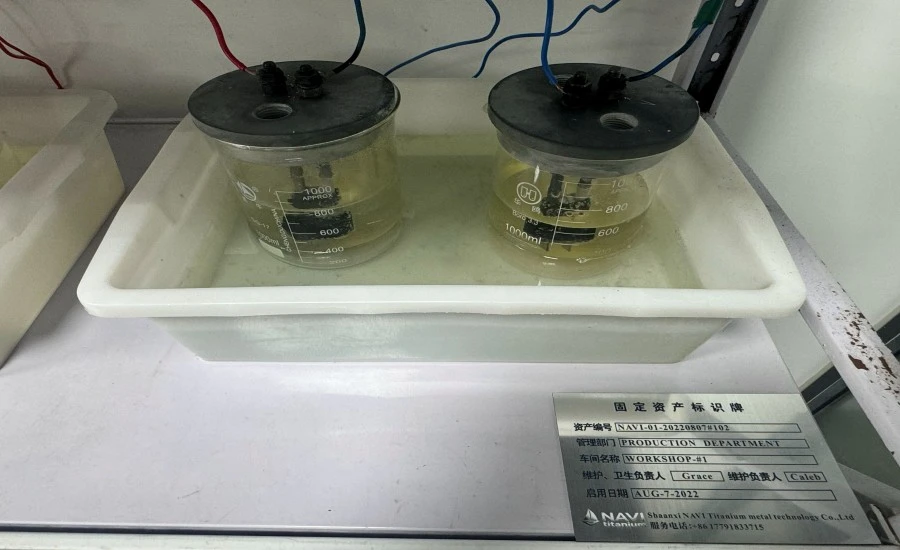
Conventional electrodes operating on unmodified substrates typically consume 10–20% more energy for the same output. Over a ten-year operational window, that efficiency gap compounds into a substantial cost difference that dwarfs the price premium of advanced substrate modification.
Conclusion
Substrate modification is not a minor refinement - it is the foundational step that determines how efficiently a titanium anode rod converts electrical energy into electrochemical output. Acid etching, interlayer engineering, gradient coating architecture, and nano-surface optimization each address a specific energy loss mechanism. Together, they create an electrode that maintains low cell voltage, resists passivation, and delivers stable performance across a decade of continuous operation. For any facility where electrolysis runs continuously, these are not technical details - they are direct line items on the energy bill.
FAQ
Q1: What substrate modification methods are most effective for reducing energy consumption in a titanium anode rod?
+
-
Controlled acid etching to remove passive TiO₂ and increase surface roughness, combined with interlayer engineering using conducting titanium suboxides, produces the most consistent reductions in contact resistance and cell voltage. Gradient composite coating applied over the modified substrate further stabilizes long-term efficiency.
Q2: How does substrate passivation develop in a titanium anode rod during chlorine evolution service?
+
-
Chloride ions gradually penetrate microscopic defects in the active coating and react with the titanium base, regenerating an insulating TiO₂ layer beneath the coating. This layer increases interfacial resistance progressively, raising cell voltage and energy consumption over time. Interlayer engineering with Magnéli phase titanium suboxides is the primary technical approach used to retard this mechanism.
Q3: Can a standard titanium anode rod be recoated after the active layer wears out?
+
-
Yes. Provided the titanium substrate remains structurally sound and has not undergone severe passivation, the spent coating can be stripped chemically and a fresh gradient MMO coating applied after re-etching and surface re-activation. This recoating capability is one of the practical economic advantages of titanium anode rods over consumable graphite or lead-based anodes.
Get a Custom Titanium Anode Rod Quote from NAVI Titanium
NAVI Titanium has specialized in high-performance electrochemical electrodes since 2008, operating from Baoji - the heart of China's titanium industry. As a professional titanium anode rod supplier, NAVI Titanium combines refined substrate pretreatment, gradient MMO coating technology, and rigorous electrochemical testing to deliver anodes engineered for real-world continuous service. Whether your application is sodium hypochlorite generation, wastewater electrolysis, swimming pool disinfection, or cathodic protection, NAVI Titanium offers material consultation, process design, free samples for standard specifications, and full customization. Reach out to the NAVI Titanium team today and let an experienced engineer help you select the right electrode configuration for your system.
Contact us at: sales@navititanium.com
References
1. Comninellis, C., & Vercesi, G. P. (1991). Characterization of DSA-type oxygen evolving electrodes: Choice of a coating. Journal of Applied Electrochemistry, 21(4), 335–345.
2. Trasatti, S. (2000). Electrocatalysis: Understanding the success of DSA. Electrochimica Acta, 45(15–16), 2377–2385.
3. Chen, X., & Chen, G. (2005). Stable Ti/RuO₂–Sb₂O₅–SnO₂ electrodes for O₂ evolution and organic oxidation. Electrochimica Acta, 50(20), 4155–4159.
4. Kuznetsova, E., Petrykin, V., Sunde, S., & Krtil, P. (2015). Selectivity of nanocrystalline IrO₂-based catalysts in parallel chlorine and oxygen evolution reactions. Electrocatalysis, 6(3), 198–210.
5. Lassali, T. A. F., Boodts, J. F. C., & Trasatti, S. (1994). Electrocatalytic activity of the ternary oxide Ru₀.₃TiₓCo(0.7₋ₓ)O₂ for chlorine and oxygen evolution reactions. Electrochimica Acta, 39(11–12), 1545–1549.
6. Panić, V. V., Dekanski, A., Milonjić, S. K., Atanasoski, R. T., & Nikolić, B. Ž. (1999). RuO₂–TiO₂ coated titanium anodes obtained by the sol-gel procedure and their electrochemical behavior in chloride solution. Colloids and Surfaces A: Physicochemical and Engineering Aspects, 157(1–3), 269–274.



