


Electrochemical methods from the past were hot, expensive, and short. The energy bills went up, the electrodes burned out quickly, and the maintenance crews had to replace parts way too often. The story is different now. The titanium anode rod has moved from a basic conductive part to a precision-engineered component that drives efficiency, durability, and cost savings across wastewater treatment, swimming pool disinfection, chlor-alkali production, and more.
This article explains why modern gradient-composite designs are getting a lot of attention from businesses, how that change happened, and what coating technologies are moving the field forward.
How Has Titanium Anode Rod Technology Evolved Beyond High Energy Use?
The Early Limitations of Conventional Electrode Materials
In the beginning, electrochemical cells were mostly made of graphite, lead, and stainless steel. There were real problems with each one. In chloride-rich conditions, the graphite slowly broke down, contaminating the solution. Lead anodes give off toxic waste, which makes disposal difficult and puts companies at risk of fines. When there was a lot of current flowing through stainless steel, it quickly became passivated. This stopped reactions from working well almost before the system hit steady state.
Titanium came into play because its natural oxide layer has a strange property: it is very resistant to weathering and also works great as a base for catalytic coatings. Engineers learned that etching, pretreating, and thermally depositing precious metal oxides onto titanium substrates made electrodes work much better.
The Shift Toward Lower Cell Voltage and Stable Output
In the 1990s and 2000s, older materials in the chlor-alkali industry were being replaced by ruthenium-iridium mixed-metal oxide (MMO) coatings on titanium.
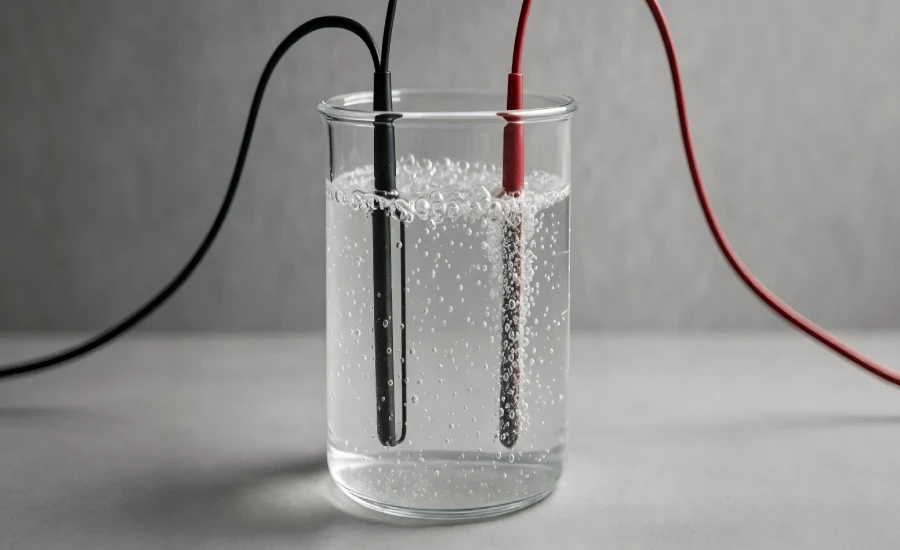
These coatings are now used by more than 70% of the industry. It was a drop in cell voltage that was the key gain. Less voltage means that less electricity is used per kilogram of product, which saves money directly. At the same time, response specificity got better. The efficiency of chlorine evolution went up, side effects went down, and the electrodes lasted longer, from months to years.
Titanium Anode Rod Innovations for Lower Energy and Longer Service Life
Precious Metal Coating Precision as an Energy Lever
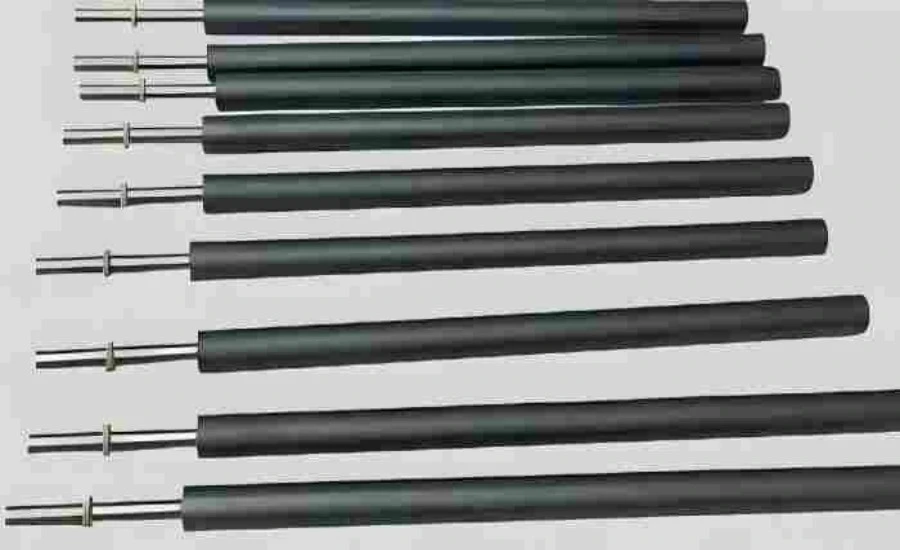
Modern titanium anode rod manufacturing is not simply a matter of brushing a coating onto metal. Precise control of ruthenium, iridium, and tantalum oxide ratios determines both activity and longevity. Iridium oxide stabilizes the coating against oxidative dissolution; ruthenium oxide provides the catalytic sites that drive chlorine evolution at low overpotential; tantalum oxide acts as a structural binder, slowing lattice collapse under continuous operation.
The Journal of the Electrochemical Society and other electrochemistry journals regularly show that improved Ru-Ir-Ta ratios can lower the working voltage of a cell by 0.2 to 0.5 V compared to mixtures that have not been optimized. When used on an industrial scale, even a 0.1 V drop means that less energy is used to make one ton of chlorine.
Substrate Modification: The Underappreciated Variable
A coating is only as durable as the surface beneath it. Refined pretreatment of high-purity titanium - including controlled acid etching, surface roughness engineering,
and thermal oxidation conditioning - increases the mechanical interlocking between the titanium substrate and the oxide coating. This bonding quality determines whether a titanium anode rod survives 8–10 years of continuous immersion in aggressive electrolytes or delaminates within 18 months.
NAVI Titanium has focused significant development effort on substrate modification, recognizing that even the best catalytic formula underperforms on a poorly prepared base material.
Why Are Gradient-Coated Titanium Anode Rods Gaining Industrial Attention?
Solving the Four Classic Failure Modes
There are four common ways that conventional single-layer MMO coatings fail: microcracks that spread when the temperature changes, coating delamination at the coating-substrate interface, substrate passivation from oxygen getting through coating defects, and chloride ion ingress that speeds up corrosion below the coating.
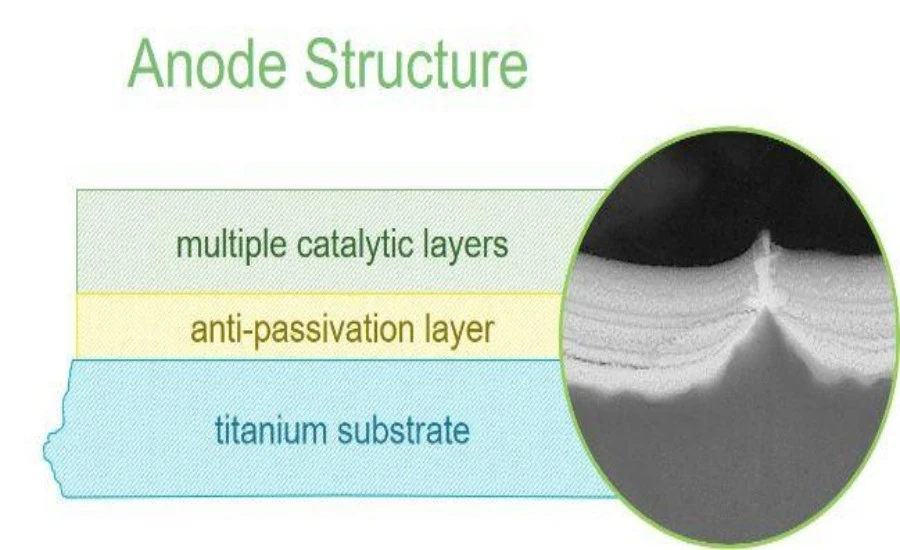
All four are taken care of by gradient composite coating technology, which builds the covering up in several layers, each with a slightly different mix of materials and strength. The deepest layer focuses on sticking to titanium; the layers in between provide catalytic activity; and the top layer is designed to be as resistant to rust as possible. This design spreads mechanical stress across several interfaces instead of concentrating it at one boundary. This makes catastrophic delamination less likely.
Industrial Demand Driving Rapid Adoption
Sodium hypochlorite generators operating at 50–5,000 g/h continuous output place extreme demands on electrode assemblies.
Twenty-four-hour operation in high-salt, strongly oxidizing conditions is the norm, not the exception. Gradient-coated titanium anode rods are gaining share in these installations because they demonstrably outlast conventional single-layer designs while holding cell voltage steady over the full service period, which stabilizes hypochlorite output and reduces process variability.
Titanium Anode Rod Durability: From Conventional Coatings to Advanced MMO Designs
Comparing Single-Layer and Multi-Layer MMO Performance
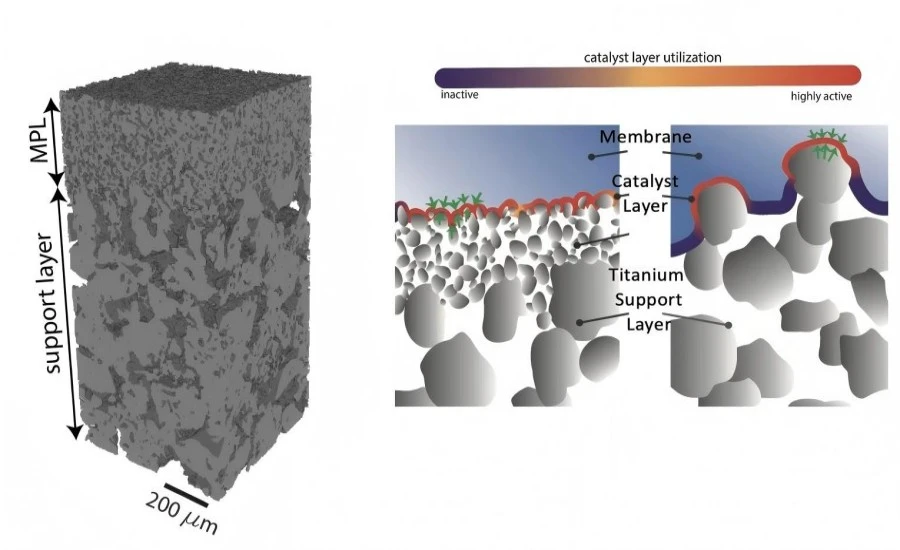
A pure ruthenium single-layer coating is inexpensive to apply but dissolves relatively quickly in high-chloride, low-pH conditions. An ordinary ruthenium-iridium bilayer improves stability but can still develop inter-layer stress cracks. A conventional uniform MMO coating distributes multiple oxides evenly through the coating depth - better, but still vulnerable to the substrate passivation problem when coating integrity is compromised.
Advanced gradient composite designs solve the passivation issue by ensuring that every layer, down to the titanium interface, contributes to both catalysis and corrosion protection. Electrode resistance stays low - field data from multiple installations show values at or below 0.02 Ω - and working current density remains stable across a range spanning from tens of amperes per square meter up to several thousand.
Material Selection and Working Condition Matching
Not every application needs the most complex coating. Cathodic protection applications in soil or seawater may perform well with platinum-coated titanium anode rods rated for decades of service at low current densities.
High-throughput electrolytic water treatment or PCB manufacturing demands coatings engineered for high current density and chemical aggression. Matching coating type to working condition is not optional - it is the central engineering decision that determines total cost of ownership.
How Can Long-Life Titanium Anode Rods Lower Full-Cycle Operating Costs?
Energy Consumption as the Dominant Cost Variable
In sodium hypochlorite electrolysis, energy consumption per kilogram of available chlorine is the largest controllable operating expense. Systems using well-engineered titanium anode rods with optimized interface catalysis routinely operate at 3.2–3.8 kWh per kilogram of available chlorine. Systems running degraded or low-quality electrodes can consume significantly more. Over a multi-year operating period, a difference of even 0.5 kWh/kg at industrial throughput represents a substantial cumulative cost.
Amortizing Capital Cost Across an Extended Service Life
Electrode replacement carries direct and indirect costs: the electrode itself, labor for removal and reinstallation, system downtime, and the productivity loss during changeover. A titanium anode rod with an 8–10 year verified service life amortizes its initial cost across a period roughly three to five times longer than a conventional electrode. When full-cycle cost models are built out, the higher upfront investment in a gradient-coated MMO anode frequently results in a lower total cost per kilogram of product or per cubic meter of treated water.
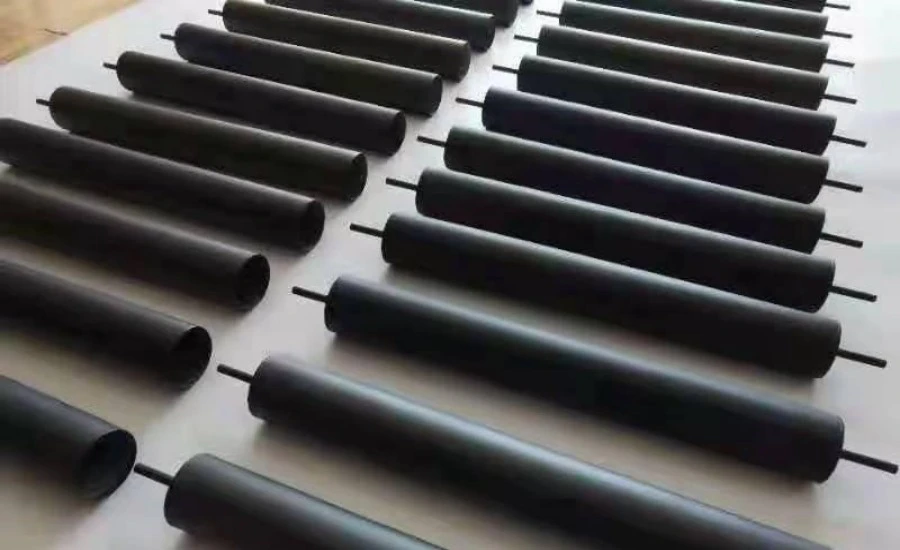
Comprehensive operational data from wastewater treatment and swimming pool disinfection projects confirm that advanced electrode designs can reduce system operating costs by 10–25% compared to baseline configurations using earlier-generation anodes.
Conclusion
The titanium anode rod has traveled a long distance from its origins as a simple corrosion-resistant conductor. Substrate pretreatment science, multi-component oxide coating formulations, and gradient composite architectures have collectively driven electrode energy consumption down, extended service life up, and made full-cycle cost management a realistic engineering goal rather than an aspirational one. For any operation that depends on reliable, efficient electrochemical performance - from municipal water treatment to industrial chlorine generation - the choice of electrode technology carries consequences that compound over years of operation.
FAQ
1. What makes a titanium anode rod more durable than a graphite or lead anode?
+
-
Titanium is a strong, stable material that doesn't rust and keeps its shape in harsh electrolytes. When precious metal oxide coatings are added to the electrode, it stops dissolving, keeps its low electrical resistance, and doesn't pollute the electrolyte, which are all ways that graphite and lead alternatives fail.
2. How long does a gradient-coated titanium anode rod typically last?
+
-
Under controlled operating conditions - appropriate current density, compatible electrolyte chemistry, and proper system design - gradient-composite MMO-coated titanium anode rods routinely achieve 8–10 years of continuous service, with cathodic protection variants rated for over 50 years in some applications.
3. Can a titanium anode rod be customized for specific electrochemical applications?
+
-
Yes. Coating composition, substrate geometry, and current density rating are all adjustable. Plate, rod, mesh, and tube geometries are standard; coating formulas including IrO₂-Ta₂O₅, Ru-Ir, and platinum are available, and custom compositions can be developed to match specific process requirements.
Ready to Upgrade Your Electrode System? Contact NAVI Titanium
NAVI Titanium has been engineering high-performance titanium anode rod solutions since 2008, operating from Baoji - China's recognized center for titanium manufacturing. As a dedicated titanium anode rod supplier, NAVI Titanium covers the full project cycle: material selection consultation, process design, product customization, and finished product delivery. Ruthenium-iridium gradient composite anodes, substrate-modified designs for demanding 24-hour continuous operation, and energy-optimized electrode assemblies are all part of the product portfolio. Whether your application is municipal wastewater treatment, swimming pool disinfection, chlor-alkali production, PEM water electrolysis, or cathodic protection, NAVI Titanium's engineering team is ready to help you identify the right solution.
Reach out directly at sales@navititanium.com to discuss your project requirements, request a free sample for standard specifications, or get a no-cost process design consultation.
References
1. Trasatti, S. (2000). Electrocatalysis: Understanding the success of DSA. Electrochimica Acta, 45(15–16), 2377–2385.
2. Beer, H. B. (1980). The invention and industrial development of metal anodes. Journal of the Electrochemical Society, 127(8), 303C–307C.
3. Comninellis, C., & Vercesi, G. P. (1991). Characterization of DSA-type oxygen evolving electrodes: Choice of a coating. Journal of Applied Electrochemistry, 21(4), 335–345.
4. Panic, V. V., & Nikolic, B. Z. (2007). Sol-gel prepared active ternary oxide coating on titanium in cathodic protection. Journal of the Serbian Chemical Society, 72(12), 1393–1402.
5. Chen, X., & Chen, G. (2005). Stable Ti/RuO₂–Sb₂O₅–SnO₂ electrodes for O₂ evolution with low energy consumption. Electrochimica Acta, 50(20), 4155–4159.
6. Luo, Y., & Guo, J. (2015). A review of electrode materials and electrolyte design for electrochemical advanced oxidation processes in water treatment. Environmental Science & Technology, 49(2), 591–608.



