


Most cargo claims on coated anode shipments come down to one missing piece of evidence: a picture that nobody took, or a Packing List paragraph that nobody re-read. The things are frequently delivered in excellent order and the debate is what can be proved later. A five-step audit the week before loading turns "we think the crate was packed right" into "this is what it looked like when it closed." None of the five processes requires your own inspector to board a plane - each is a brief written instruction the titanium anode rod provider executes on its own floor, so the job goes where the items already are.
Step 1 & 2 - Quantity Reconciliation and Visual / Connection Documentation
The first two phases catch the evidence that goes away first. Counts will change throughout the picking process and coated surfaces appear different when a case is strapped therefore both need to be recorded while cartons are still open on the bench.
Step 1 - Count, Model and Dimensional Check Against the PO and Packing List
Before closing a case, have the titanium anode rod provider read the Packing List aloud against the purchase order line by line. Model code, coating system, diameter, overall length and active length are individually marked with a tick, and the count is printed per carton rather than each lot.
One titanium anode rod is randomly chosen from each case and measured and the measurement is recorded along with the drawing tolerance. Kitted shipments count against the kit list and against the rod total. A titanium bolt kit may be full on rod count, but short a washer or lock nut.
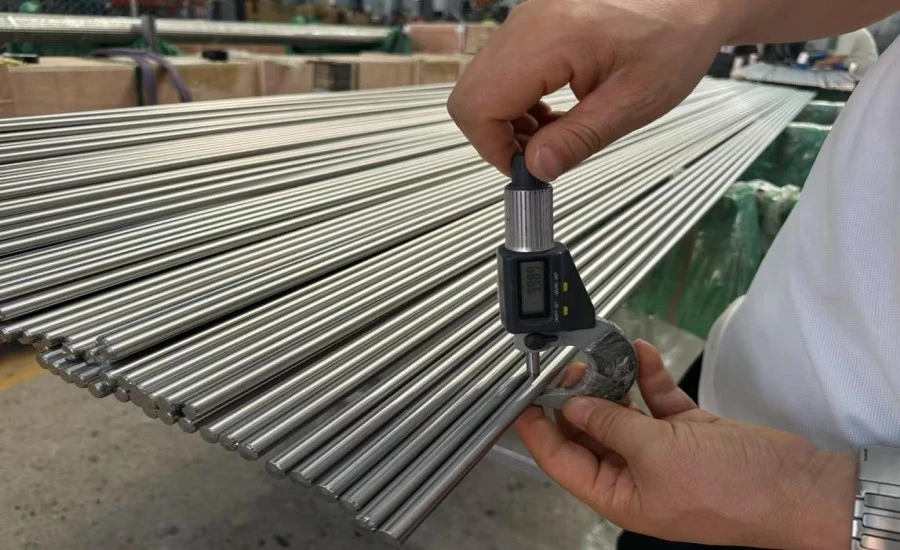
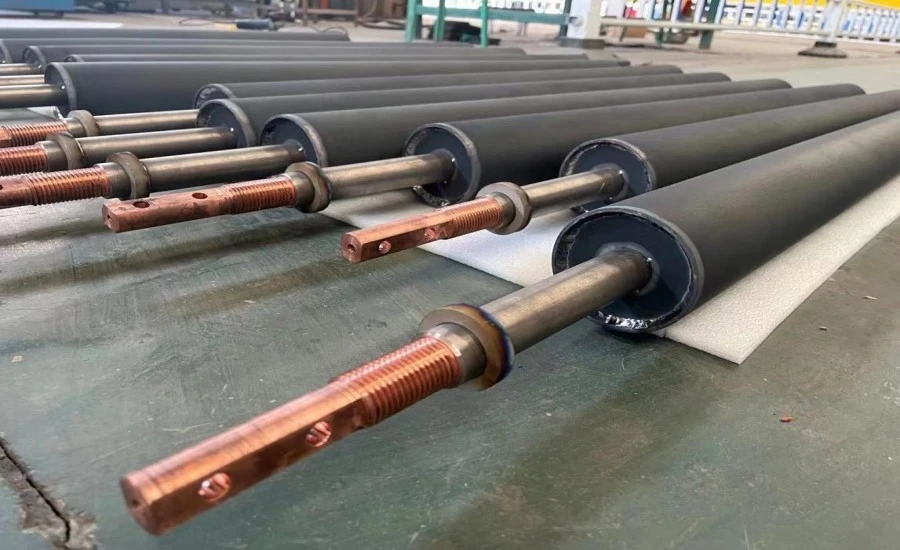
The sampling depth is based on the AQL logic in ISO 2859-1 keeping the check defensible without unwrapping each item.
Step 2 - Coating and Connection Close-Up Photos With a Sealed File Name
Photos are where most claims files come apart, so ask for "some pictures" or "the frame." All coated surfaces receive a direct shot in uniform lighting, and all connection faces-threaded end, machined flat, tab weld, busbar contact-get a second shot near enough to read surface texture. A titanium anode rod with a scratched thread tells one narrative, one with a chipped edge to the coating another.
Only a closely fitting frame holds the two apart. File names include carton number, SKU and anode ID, written once and never changed, so a picture may still be linked to a Packing List line months later. On the day the box is sealed, ask the titanium anode rod provider for the files, not in the morning the truck departs.
Step 3 & 4 - Internal Fixing, Moisture and Marking Audit
Steps 3 and 4 go from what the parts are to how the crate retains them. Either one carton has to be opened, or at least unstrapped and shot from the top, since nothing within a closed container can be checked later.
Step 3 - Internal Fixing State Inside a Representative Carton
What breaks down silently, in the packaging, in transportation, is the support. A lengthy road leg may make saddles and spacers that fit snug on the bench walk outward. When a long titanium anode rod loses the mid-span support it has begun to work against the foam wrap and the case wall.
Ask the vendor of the titanium anode rod to take a picture of the open carton from immediately above so that all of the saddles are installed, the wrap has not been split and you cannot see a gap between a rod and its cradle. Lightly push each component by hand and see whether it moves.
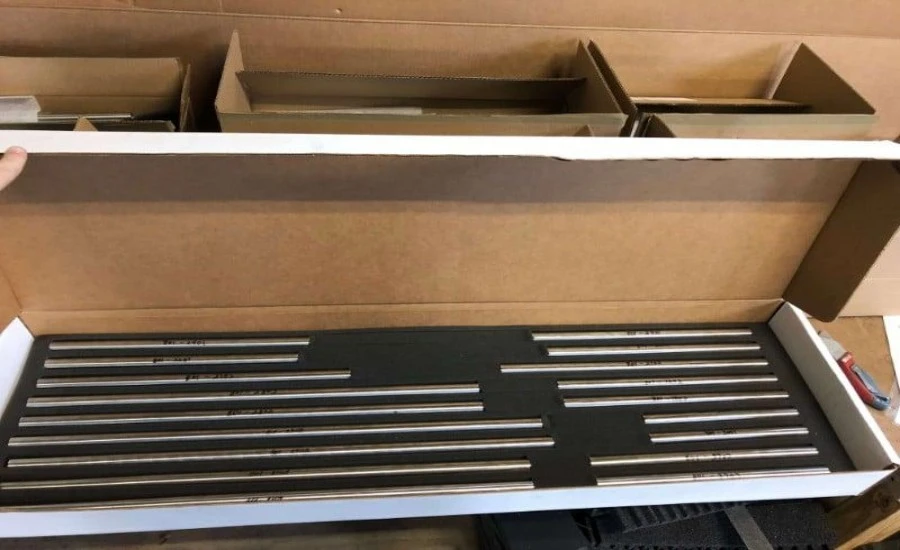
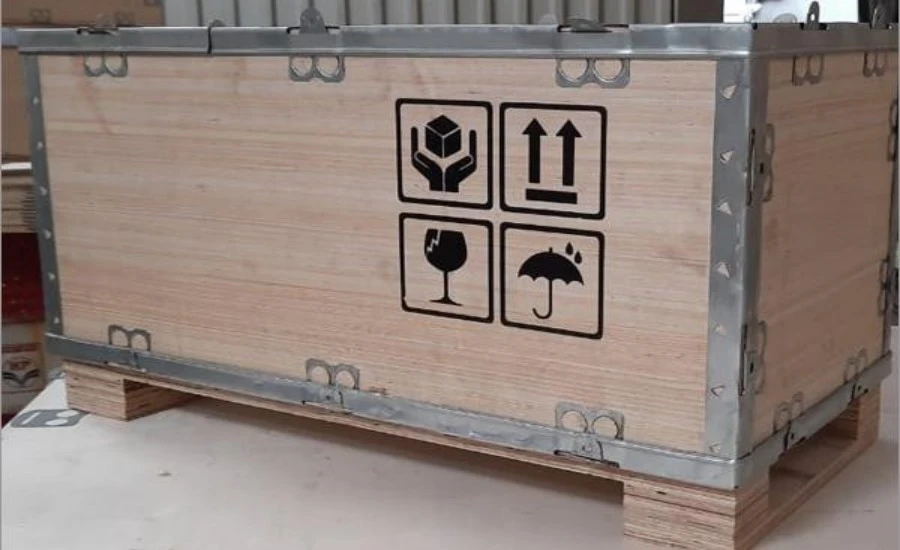
The sequence of stacking important, too: never stack covered surfaces against each other.
Step 4 - Moisture, Buffer, Label and Shipping Mark Audit
Protection against moisture is effective only if the barrier is intact at the time of container closure. The titanium anode rod provider should examine the humidity indicator card in the open carton and take a picture of it in the same frame as the case number, and ensure the amount of desiccant is appropriate for the crate volume and sea leg. This procedure is to grab a titanium anode rod that reaches a humid port behind a used desiccant.
Damp kraft, ripped inner bags, a buffer layer squeezed flat-- All demand a second frame and a comment. Last, the labels and shipment markings: carton marks, PO number, destination port and handling symbols must follow the factory's packing instruction and the destination country's marking requirements. They are defined in ISO 780 . Name the symbols you anticipate rather than leaving the decision to habit.
Step 5 - Build the Claim-Ready Photo File
Steps 1-4 create fragments. Step 5. Group them into one package that a quality engineer, forwarder and claims reviewer can all open without a follow-up query.
One File: Packing List, Photographs and Humidity Card Scans
Deliverable is one folder per shipment, not a string of emails. Inside are the signed Packing List, Step 1 count sheet, coating and connection photos, open-carton fixing images and the humidity card and mark frames. Ask the titanium anode rod provider for a single index file at the top of the folder describing what is in the folder, with each line crossed off when it is added.
A folder with a missing entry encourages the reviewer to think the remainder is thin as well. The packing frames are added to an existing batch of titanium anode rods that have the coating and dimensional data. Most factories already keep these files . The audit determines which and in what order.
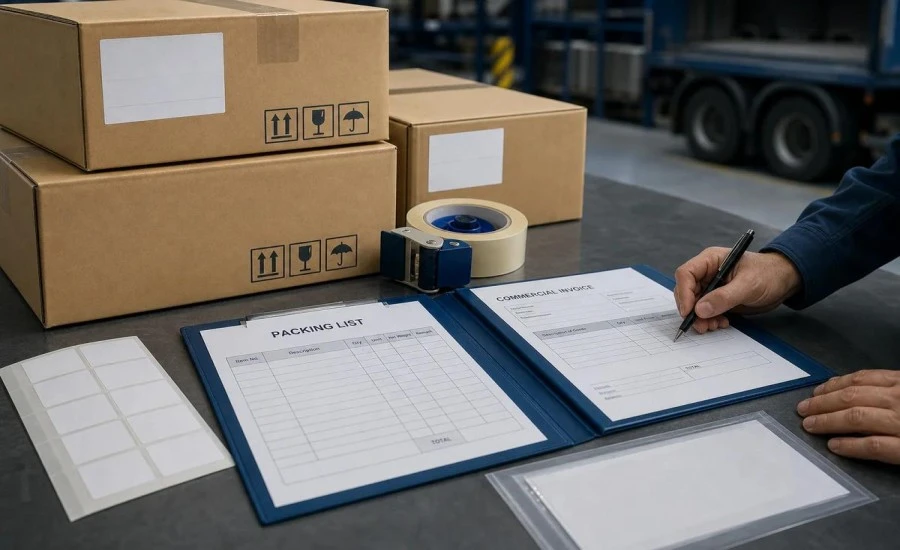

A One-Page Cover Sheet That States What the Shipment Proves
And one page is put at the front, written for someone who's never seen the sequence. It lists the PO, coating system, carton count, inspection date and who signed. One brief paragraph on what this file displays and one on what it does not. The rest of it is made credible by saying what you don't have, since the instant one piece is absent the file purporting to show everything is thrown out. Ask the titanium anode rod provider to state the packaging grade used for this lot, rather than the term "standard export packing" which is not verifiable by any reviewer. The grade is the claim . A titanium anode rod is sent in several grades based on size , shape , surface condition and route.
Shared Storage Before the Container Closes
The step most likely to be skipped is timing.
The container is sealed after the folder is posted to someplace accessible by both parties and receipt is verified, not after the vessel leaves when a re-check is not feasible. If the numbers from Step 1 are not the same, a titanium anode rod provider that regards the audit as its own gate will refuse to shut a box. NAVI Titanium, a producer of ruthenium, iridium and platinum-based titanium anodes in Baoji since 2008, does the pre-shipment examination on its own floor and shares the same folder with the buyer's quality and logistics teams. We have varied pack-outs for sample batches and large production runs but the file format is the same so a two-piece order will provide you the same proof as a palletised order.
Conclusion
Five steps, one afternoon every shipment, and a file that closes questions, not opens them. Write the steps into the purchase order as a requirement for every titanium anode rod shipment. Agree the picture naming format with the quality team at the manufacturer prior to production starting. Require a humidity card on every sea-freight lot. Hold the boxes open until the Step 1 counts reconcile. Then preserve that file throughout the whole warranty period. It takes a few hours on the packing floor and buys a record that still holds up when anything goes wrong.
FAQ
1. Can the five-step audit be run without sending our own inspector to the factory?
+
-
Yes, and that's why it is written as a fixed script. Each stage specifies what to inspect, what passing proof is, and where the record is filed so the factory's own quality team may do it and return the file. Your team looks at photos and signed sheets, not books travel. Select a file naming format at the beginning since changing photos later destroys the relationship to the Packing List.
2. How many cartons should be opened for the fixing and moisture checks?
+
-
Typically one carton per packaging grade is the beginning point, escalating to two or three when a lot blends sizes or coating systems. The same AQL logic applies to sampling depth as to dimensional checks – thus the count varies with lot size rather than being static. Make sure you know the cartons you choose before you start packing, not after the boxes are piled.
3. What if the humidity card already shows a colour change at the time of packing?
+
-
Consider this a failed Step 4 and do not seal the container. A card that has already moved indicates that the desiccant was under-specified for the crate volume and sea leg or the contents were placed in the container with moisture on them. Ask them to recalculate the amount of desiccant, re-dry the carton and take a picture of a new card next to the case number before uploading the file.
Ready to Run the Five Steps on Your Next Lot?
Send your PO and destination port to sales@navititanium.com and NAVI Titanium's export team will return the five-step acceptance file template and sample packing photographs before your next booking closes. NAVI Titanium is a privately owned, technology-driven manufacturer established on June 18, 2008, based in Baoji High-tech Zone, the district known as China Titanium Valley. The company produces titanium anode rod products based on ruthenium, iridium, and platinum, as well as lead dioxide anodes and sintered metal filter products for PEM systems, wastewater treatment, swimming pool disinfection, chlor-alkali, semiconductor and electronics, and pharmaceutical applications. It also supports material selection, process design, customization, and delivery.
References
1. 1. ASTM International. ASTM B348/B348M-25, Standard Specification for Titanium and Titanium Alloy Bars and Billets. West Conshohocken, PA, 2025.
2. 2. ASTM International. ASTM D3951-18(2023), Standard Practice for Commercial Packaging. West Conshohocken, PA, 2023.
3. 3. International Organization for Standardization. ISO 2859-1:2026, Sampling procedures for inspection by attributes - Part 1: Sampling schemes indexed by acceptance quality limit (AQL) for lot-by-lot inspection. Geneva, 2026.
4. 4. ASTM International. ASTM D4169-23e1, Standard Practice for Performance Testing of Shipping Containers and Systems. West Conshohocken, PA, 2023.
5. 5. International Organization for Standardization. ISO 780:2015, Packaging - Distribution packaging - Graphical symbols for handling and storage of packages. Geneva, 2015.
6. 6. ASTM International. ASTM D4332-22, Standard Practice for Conditioning Containers, Packages, or Packaging Components for Testing. West Conshohocken, PA, 2022.



