


One of the most practical changes a motorcycle owner can do is to swap out steel fasteners with a titanium bolt kit. Titanium is about 45% lighter than steel, yet has similar tensile strength and is far more corrosion resistant than other typical fastener materials. Regardless of whether you ride a stripped-down street machine or a purpose-built track bike, putting together the appropriate titanium bolt kit needs more thinking than just purchasing a bag of gleaming hardware. This tutorial goes over everything you need to consider before committing to a set.
What Fasteners Come in a Titanium Bolt Kit?
Bolts Are Only Part of the Picture
A well-built titanium bolt kit is more than just the bolts themselves. Titanium nuts of matching material provide uniform clamping stress and avoid galvanic incompatibility which may arise when different metals are allowed to touch each other during vibration. Titanium washers protect mounting surfaces and distribute bearing load over a greater area which is important notably on composite fairings and light alloy brackets. Studs enable fixed-point applications such as exhaust manifold installations , when a normal bolt head would be unreachable after assembly .
By choosing the whole family of fasteners from a single provider, you'll have consistent thread tolerances, and restocking is easier. NAVI Titanium makes bolts, nuts, studs, washers and custom CNC machined components in grades such as Gr1, Gr2, Gr5, Gr9 and Gr23, so every item in a kit is of the same standard quality.
Head Types and Drive Styles That Matter on a Motorcycle
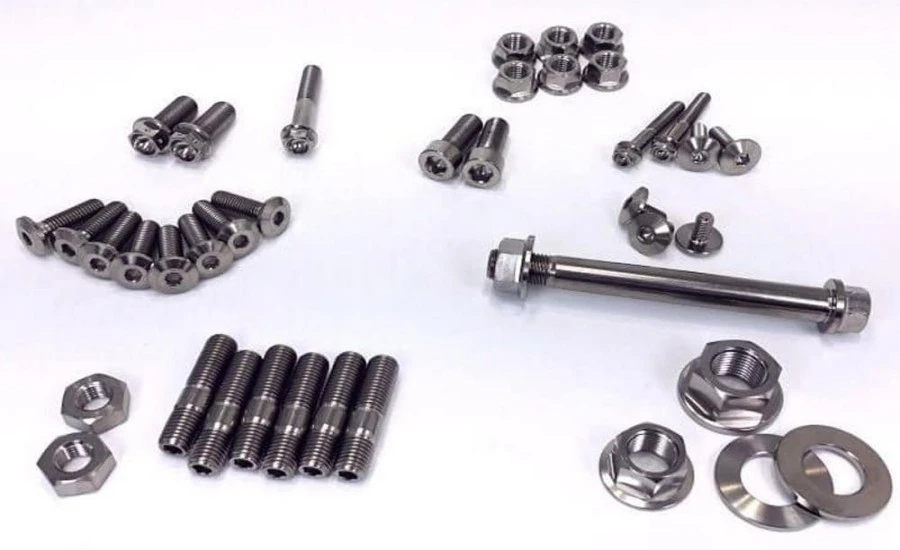
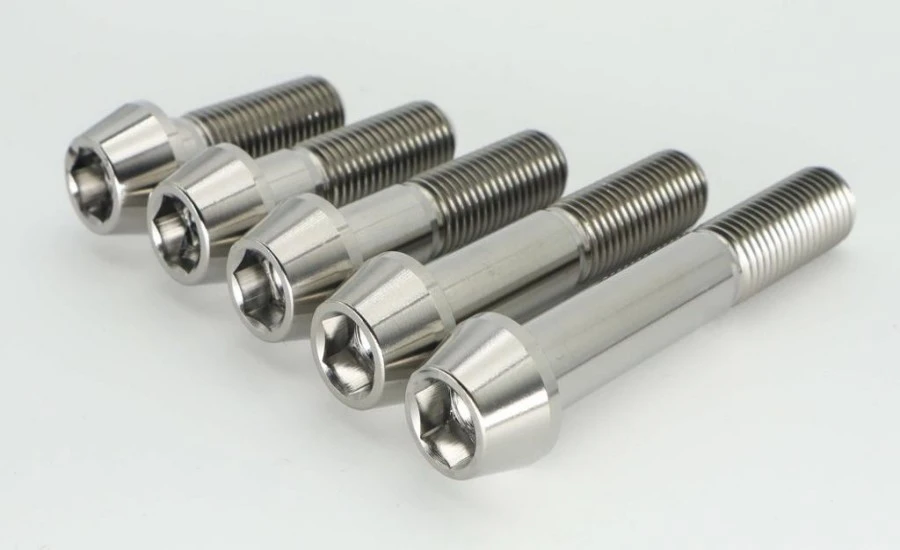
The shape of the head influences both function and esthetics. Hex socket head cap screws are used for recessed mounting positions such as engine covers and footpeg assemblies that can be reached with a hex wrench but not a spanner. Button head bolts lie low to the surface and are good for use on fairings and body panels where aerodynamic profile and clean visual line are important. Countersunk configurations are flush mounted into designated holes on frame attachments. Both the internal hex and the Torx drive types help limit the possibility of cam-out during installation, which is important when technicians are working in confined access zones at torque requirements that titanium alloy grades can sustain consistently.
Sizes a Motorcycle Titanium Bolt Kit Should Cover
The Core Metric Range
Fasteners on motorcycles seem to congregate in a typical metric range. M5 x 0.8 is used on fairings, body panels and light brackets. M6 × 1.0 is the go-to for engine covers, heat shields and fairing brackets – undoubtedly the most popular thread size on current street and sport motorcycles. M8 x 1.25 is the standard for footpegs, chassis accessories and certain structural joints. M10 × 1.25 or M10 × 1.5 cover mounting points, brackets and hardware near to suspension. Add M4 x 0.7 for further covering over instrument clusters, tiny covers, mounting for electronics.
Equally crucial is the choosing of lengths in each diameter. For example, you could require M6 bolts in lengths from 8mm to 50mm, depending on the thickness of the component and if there is a washer or spacer between the head and the surface.
Grade Selection Within the Kit
Not all fasteners in a kit must be the same grade of titanium. Gr5 (Ti-6Al-4V) has a greater tensile strength and is good for load bearing places such as footpeg mounts and frame brackets. Gr2 commercially pure titanium has good corrosion resistance and is suited for exterior body hardware and exhaust heat shield attachments when mechanical loading is low. Gr9 (Ti-3Al-2.5V) is in the middle – stronger than Gr2 and more formable than Gr5 – which makes it a viable option for mixed-use fastener combinations. Gr23 (Ti-6Al-4V ELI) is utilized when a higher degree of material purity and fatigue performance is needed.
Does a Titanium Bolt Kit Match Your Motorcycle Model?
Checking OEM Thread Specifications
Motorcycle manufacturers include standards for fasteners in their service manuals, and comparing those criteria with a planned titanium bolt kit can eliminate fitting issues before they happen. A variation in thread pitch of just .25 mm might cause incorrect engagement or false-torque measurements during assembly. For models that employ non-standard thread forms or custom head profiles on certain parts, CNC machining enables for the replication of these precise dimensions in titanium, negating the need for an off-the-shelf catalog item. NAVI Titanium can use drawings, samples and dimensional specs as manufacturing references and can handle both common model sizes and unusual or historic setups.
Compatibility Across Platforms
The fastener arrangement in an electric motorbike or a hybrid engine may be different from a conventional internal combustion setup.
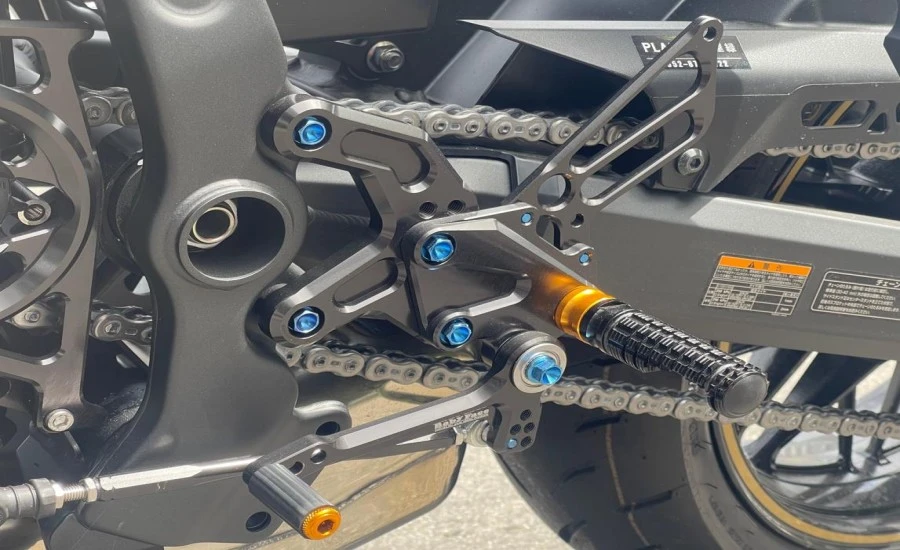
The thermal cycling, the vibration frequency and the mounting geometry are variable. Titanium's low coefficient of thermal expansion and vibration damping properties are theoretically a solid option for these platforms, but the diameter, length and thread pitch still need to fit the manufacturer's design purpose. The ability to provide the model year, variation and component locations you want to convert offers a supplier the chance to check compatibility before manufacturing starts.
Keeping a Consistent Finish Across a Titanium Bolt Kit
Surface Treatment Options and Their Applications
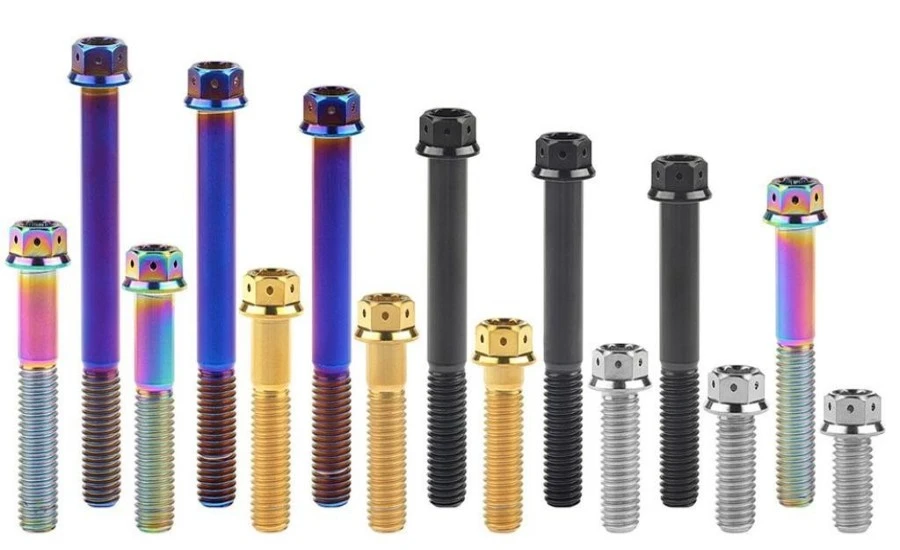
The machined titanium has a matte-silver finish, a stark contrast to the polished stainless or anodized aluminum hardware elsewhere on the motorbike. The surface treatment for all the kit components is consistent, creating a uniform visual effect. Mechanical polishing gives a brilliant reflecting finish that is suitable for exposed exterior hardware. Bead blasting results in a consistent matte finish that minimizes glare and camouflages small handling marks. Anodizing titanium creates color by creating an electrochemical oxide layer – this process does not add a coating but changes the thickness of the oxide to create color effects – and may be done on bolts, nuts and washers all together for a matching look.
Why Uniformity Across the Kit Reduces Rework?
If you order the bolts and matching hardware from one manufacturing run , the surface difference between individual pieces is reduced .
When fasteners come with variable finishes, one piece polished, the other blasted, the visual effect under assembly illumination shows discrepancies that need to be corrected. Establish the surface condition once for the whole kit and check it before manufacturing to ensure consistency across all fasteners in the kit. This technique also facilitates communication since the finish specification is general and not component particular.
How to Check a Titanium Bolt Kit Before You Order?
What to Verify in a Technical Specification Sheet?
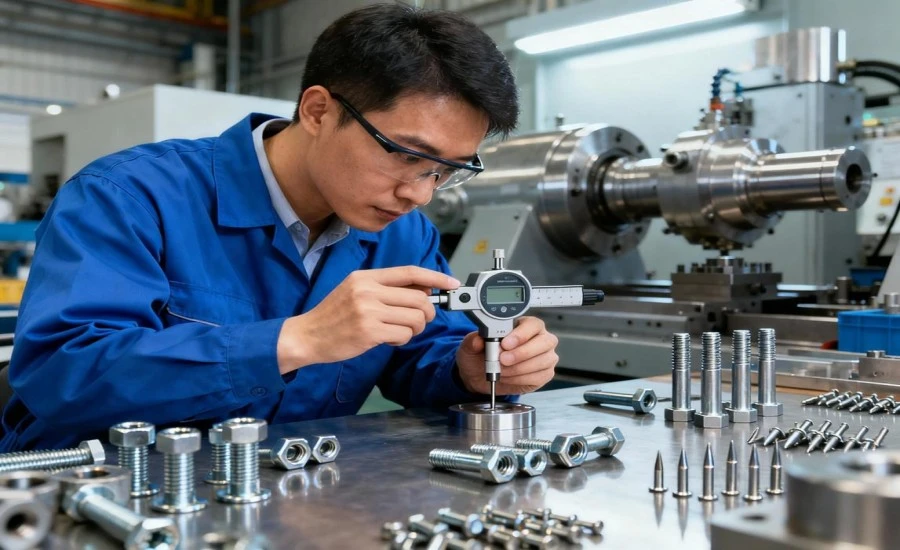
A reputable titanium bolt supplier will give paperwork that verifies the grade of material to the appropriate ASTM or ASME standard; dimensional tolerances for each kind of fastener; and thread gage inspection findings. Grade verification is important since titanium alloys look the same as commercially pure grades -- there is no way to tell Gr2 from Gr5 visually. A complying quality package will usually include material traceability, dimensional inspection records and appropriate certificates. NAVI Titanium is ISO 9001 certified and every single order is subject to incoming material inspection and final component inspections for dimensions, threads, surface condition and grade conformance.
Communicating Requirements Clearly Before Production Begins
Ambiguity in an order specification is a common cause of rework. Instead of a back-and-forth exchange of information, the technical review step is accelerated with a consolidated document that includes the diameter,
pitch, length, head type, drive style, surface treatment, relevant standard, needed quantity and destination. A dimensional design or a tangible sample closes the gaps in understanding for bespoke arrangements. For mixed kits that include a number of components on one bike, dividing fasteners by location – engine, chassis, bodywork, suspension – enables the supplier to ensure that each subset of the kit has the correct mechanical and surface requirements for its placement.
Conclusion
Building the perfect titanium bolt kit for a motorbike is not just a matter of swapping out steel fasteners with lighter gear. A practical set will include the proper mix of bolts, nuts, washers and studs, with sizes, thread pitches, grades, head styles and finishes suited to each mounting location. Before going into production, check OEM specs and double-check all details to avoid fitment issues and needless re-work. CNC machining may also be used to replicate certain sizes and shapes for unique and non-standard uses. NAVI Titanium offers the whole spectrum of titanium grades, motorcycle fastener alternatives, bespoke machining and quality inspection to allow riders, workshops and aftermarket brands construct consistent fastener kits around their real needs.
FAQ
1. What titanium grade is recommended for a motorcycle titanium bolt kit?
+
-
Gr5 (Ti-6Al-4V) suits structural and load-bearing positions such as footpeg mounts, frame brackets, and engine mounting points because of its higher tensile strength. Gr2 works well for external body hardware and exhaust accessories where corrosion resistance is the primary requirement. Gr9 offers a practical balance of strength and formability for general mixed-use fastener sets.
2. Can a titanium bolt kit be made to match non-standard OEM thread specifications?
+
-
CNC machining accommodates custom diameters, pitches, lengths, head profiles, and drive styles. Providing a service manual specification sheet, a dimensional drawing, or a physical sample gives the production team enough information to replicate the exact thread form and geometry required.
3. How does titanium compare to steel fasteners in terms of weight savings on a motorcycle?
+
-
Titanium's density sits at approximately 4.5 g/cm³ against steel's 7.8 g/cm³, a reduction of roughly 42–45%. Converting a full set of accessible fasteners across fairings, engine covers, chassis accessories, and exhaust hardware to titanium can produce a meaningful aggregate weight reduction, with the exact figure depending on the number and size of fasteners replaced.
Build Your Custom Titanium Bolt Kit with NAVI Titanium
NAVI Titanium has specialized in precision CNC machined titanium fasteners since 2008, operating from Baoji High-tech Zone - the recognized center of titanium manufacturing in China. As a dedicated titanium bolt supplier, NAVI Titanium covers Gr1 through Gr23 grades, metric and inch thread forms, and a full range of head and surface finish configurations. Every kit is produced against confirmed technical specifications, inspected under ISO 9001 procedures, and packaged for secure international delivery. Whether you need a matched set for a single motorcycle build or a recurring production order for an aftermarket parts program, the engineering team is ready to review your requirements and provide a precise quotation.
Contact NAVI Titanium at sales@navititanium.com to share your specifications and receive a tailored response.
References
1. Donachie, M. J. Titanium: A Technical Guide. 2nd ed. ASM International, 2000.
2. Boyer, R., Welsch, G., and Collings, E. W. Materials Properties Handbook: Titanium Alloys. ASM International, 1994.
3. ASTM International. Standard Specification for Titanium and Titanium Alloy Strip, Sheet, and Plate, ASTM B265. ASTM International, current edition.
4. Peters, M., and Leyens, C., eds. Titanium and Titanium Alloys: Fundamentals and Applications. Wiley-VCH, 2003.
5. Bania, P. J. "Beta Titanium Alloys and Their Role in the Titanium Industry." JOM: Journal of the Minerals, Metals and Materials Society, vol. 46, no. 7, 1994.
6. Society of Automotive Engineers. Fastener Standards Manual, SAE International, current edition.



