


When the filtering systems in industrial filtration are exposed to excessive acidity, high current density or unrelenting oxidative stress, the material at the heart of every filter element takes the brunt. Titanium sintered metal powder is a favoured substrate in demanding applications, especially in PEM (Proton Exchange Membrane) water electrolysis systems, because of the combination of structural durability and electrochemical compatibility. This article will examine what makes titanium powder the ideal option, how purity and oxygen concentration affect real-world performance, and what engineers need to know when choosing powder grades for corrosion-intensive filtering settings.
Why Choose Titanium Sintered Metal Powder for Demanding PEM Filter Environments?
PEM electrolysers work at circumstances that would destroy most traditional filter materials within months. The anodic environment is one of low pH and high temperature, with all components exposed to extremely acidic, oxygen loaded water. Material selection is not a trivial matter under such circumstances - it is the difference between a failed filter element and one that lasts for years.
High purity titanium sintered metal powder is the answer to each of those stresses. The naturally occurring oxide layer on titanium (mostly TiO2) is a spontaneously formed layer strongly adhered to the surface offering passive corrosion protection without any coating or post-treatment. That passive layer is regenerated when scratched or abraded, thus the basic protection is self-sustaining over long service cycles.
Structural Compatibility with PEM Operating Conditions
Titanium has a density of around 4.51 g / cm3 , about 60 % the density of steel , yet its strength to weight ratio is one of the greatest of any structural metal . In a sintered porous substrate this means filter elements that resist mechanical compression under differential pressure, without adding superfluous bulk to the electrolyser stack. The porous skeleton is dimensionally stable during the pressure cycles that are common for proton exchange membrane systems.
Chemical Inertness in Acidic Electrolyte Environments
Titanium is very resistant to oxidising acids including dilute sulphuric acid conditions that may exist in certain PEM systems . Independent studies in corrosion science literature reveal that Grade 1 and Grade 2 titanium have insignificant corrosion rates, generally less than 0.025 mm/year, in oxygenated acidic solutions at temperatures up to 100°C.
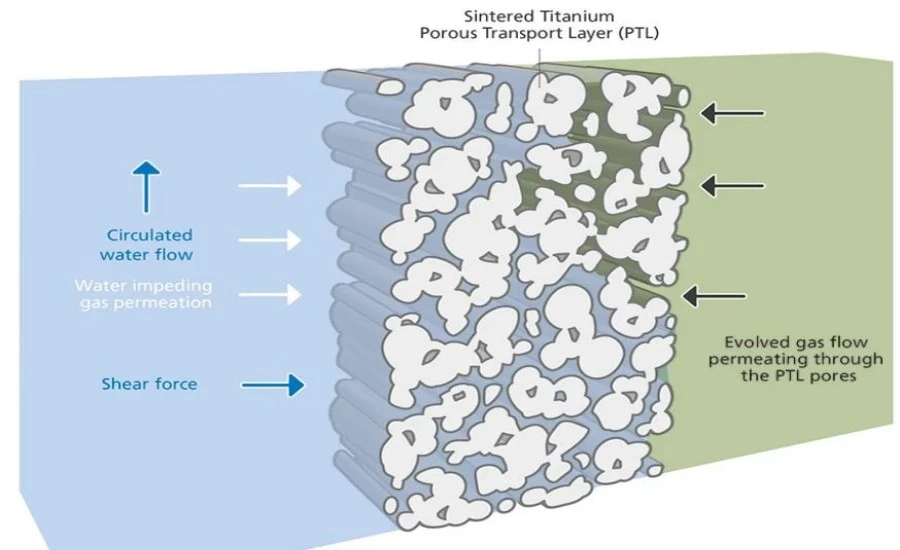
This degree of chemical inertness makes sintered porous metal filter parts manufactured from titanium powder a sensible long-term investment for the system operator.
How High-Purity Titanium Sintered Metal Powder Supports Stable Filter Structures
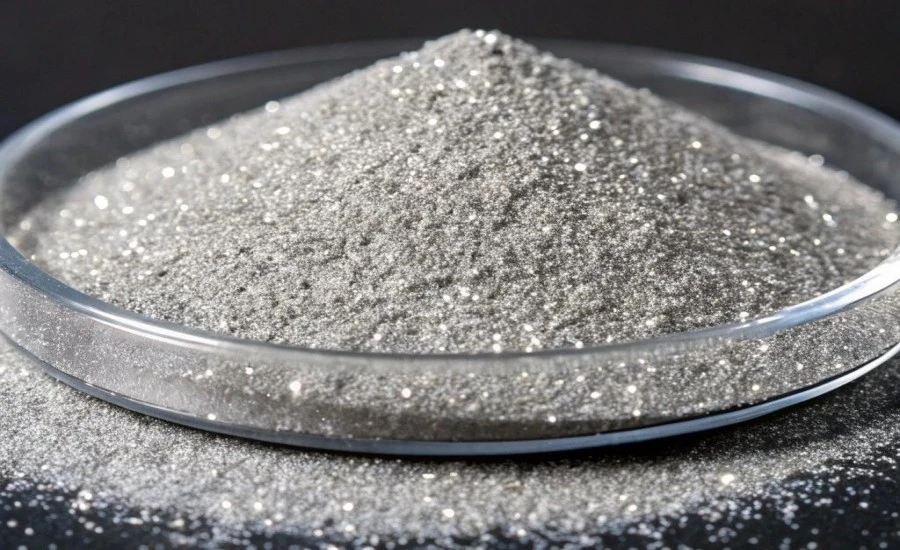
The quality of the starting powder defines practically all the downstream features of the completed filter element. The sintering results in accumulation of interstitial impurities at the grain boundaries and modifies the mechanical and electrochemical properties. Impurities are reduced in concentration at the time of creation of a high purity titanium powder, generally called 0A grade, before any thermal processing takes place.
Grain Boundary Integrity and Mechanical Durability
Oxygen dissolved in titanium lattice enhances hardness and yield strength, but at the cost of ductility and fracture toughness. Excess oxygen concentration may induce brittleness in sintered filter elements that must bend slightly under varying differential pressures. It can propagate microcracks over time. To maintain the balance between load bearing strength and fracture resistance required in long life filter components, high purity powder is used to keep oxygen levels below critical levels.
Uniform Pore Architecture Across the Sintered Matrix
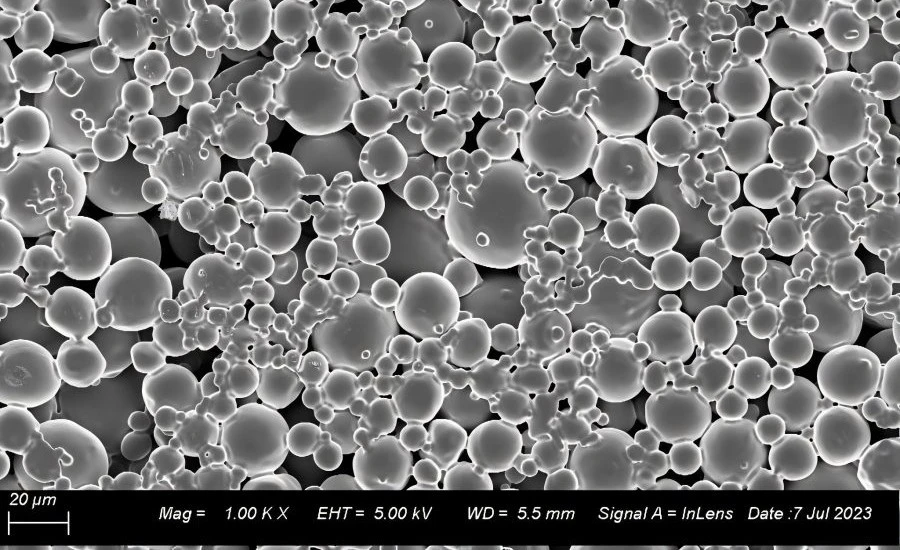
The purity of the powder also effects the uniformity of pore formation throughout the sintering cycle. Contaminants may develop localised hot spots, change surface diffusion rates and create pore size anomalies which affect the regularity of the filtering process. When the input powder is of precisely regulated chemistry, the resultant pore network (usually constructed between 5 and 80 μm for PEM applications) distributes with predictable regularity over the cross-section of the component.
That regularity influences the constancy of flow, the precision of particle interception and the overall effectiveness of the filter.
Low-Oxygen Titanium Sintered Metal Powder for Conductive Porous Frameworks
The conductivity of electricity is not an afterthought in the construction of PEM filters, but is a practical need. The porous titanium transport layer has to carry electrons effectively between the membrane electrode assembly and the bipolar plate. Oxygen in the titanium lattice increases electrical resistivity and an excessively resistive transport layer boosts cell voltage, decreases energy efficiency and promotes localised heating.
Oxygen Content as a Conductivity Control Variable
The resistivity is noticeably reduced by decreasing the oxygen concentration of the sintered titanium framework. In electrochemical engineering research, it was shown that an increase in the oxygen content in titanium from 0.08 wt% to 0.40 wt% may increase the resistivity by a factor that has a significant effect on the cell performance at high current densities. Therefore, sintered metal filter components made with low oxygen 0A grade powder provide a direct efficiency benefit for PEM stack operators looking for low overpotential operation.
Conductivity Preservation Through Sintering Parameter Control
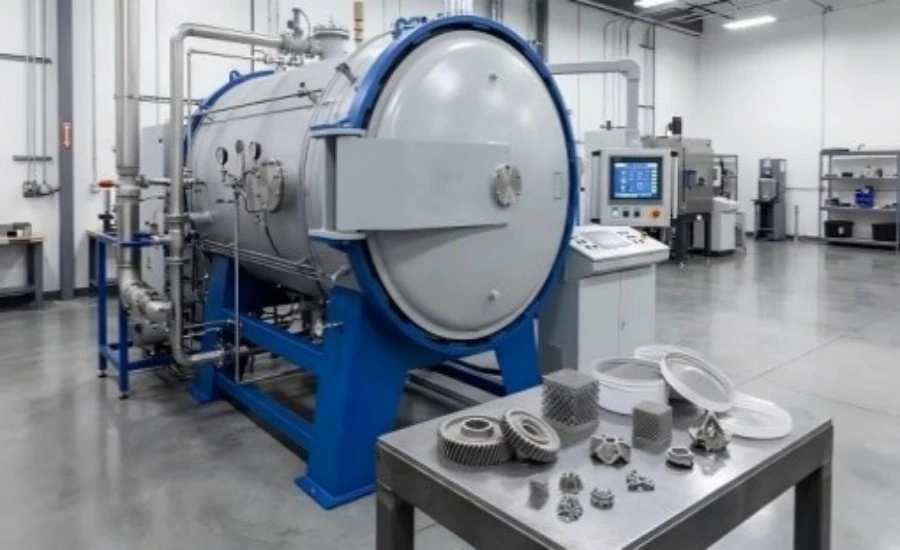
Even when you use low oxygen powder, you still have to control the sintering environment and temperature profile carefully. A vacuum or inert gas environment during densification at high temperature avoids surface re-oxidation.
NAVI Titanium is manufactured using controlled sintering procedures to keep the oxygen pickup below permissible limits for the whole heat cycle so that the conductivity advantage of the low-oxygen input powder is carried through to the completed component.
How Does Titanium Sintered Metal Powder Resist Structural Changes During Operation?
Long-term dimensional and microstructural stability separates a mediocre filter material from an exceptional one. Titanium's crystal structure - hexagonal close-packed at ambient conditions - transitions to a body-centered cubic phase above 882°C, well beyond normal PEM operating temperatures of 50–80°C. This means titanium sintered frameworks experience no phase-driven volume changes during routine service, eliminating a significant source of structural degradation seen in other metals.
Resistance to Creep and Stress Relaxation
At PEM operating temperatures, titanium exhibits minimal creep - the slow plastic deformation that occurs under sustained stress. Powder metallurgy sintered structures distribute applied loads across a three-dimensional skeletal network, which further reduces localized stress concentrations. Porous titanium components fabricated through sintering maintain their original geometry across thousands of pressurization cycles without measurable dimensional drift, a behavior documented in materials testing conducted on porous titanium structures intended for electrochemical applications.
Immunity to Galvanic Attack in Mixed-Metal Assemblies
PEM stacks incorporate multiple metal components in close proximity. Titanium sits near the noble end of the galvanic series, which means it acts as a cathode rather than an anode in most coupled-metal scenarios, dramatically reducing its own corrosion rate.
This galvanic compatibility protects the sintered metal powder substrate from electrochemical dissolution even when adjacent components use different alloys.
Titanium Sintered Metal Powder Selection for Corrosive, High-Performance Filtration
Choosing the right powder specification involves matching the material qualities to the chemical, thermal and mechanical profile of the intended application. A generic powder grade may fulfil general industrial needs, but is not sufficient for high precision PEM filter components where, e.g., tolerances in oxygen concentration, particle size distribution and sintering activity all have to be deliberately optimised.
Particle Size Distribution and Pore Engineering
Powder particle size directly controls the pore network formed during sintering. Coarser particles produce larger interparticle voids, increasing permeability while reducing filtration precision. Finer particles yield tighter pores with higher interception accuracy but lower throughput flux. Gradient designs - layered structures using coarse powder at the inlet and fine powder at the active filtration surface - combine high flux with precise cut-off performance. NAVI Titanium's technical team supports customers in specifying particle size gradations that align pore architecture with their actual process demands.
Adapting Powder Specifications to Working Condition Severity
Applications that include increased temperature, severe oxidisers, or frequent pressure cycling need more stringent powder requirements than industrial filtering at ambient conditions. The most demanding end of the range is served by high purity, low oxygen 0A grade titanium powder. For moderately demanding applications stainless steel grades, in particular SS316L, provide cost-effective options with sufficient corrosion resistance.
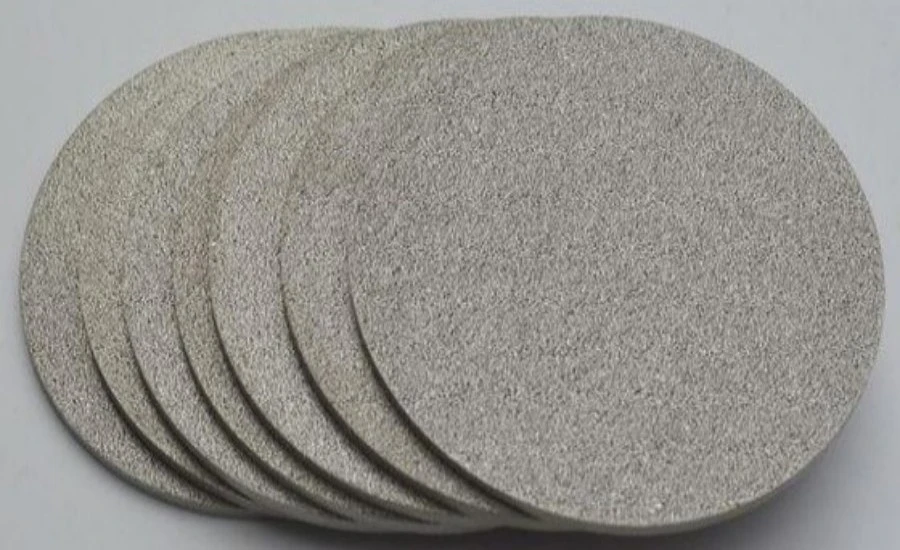
Nickel-based alloys, such as INCONEL and the Hastelloy family, increase the material palette for high-temperature or halide-rich use where titanium itself may need extra protection.
Conclusion
For difficult filtration systems, the correct sintered metal powder may make a direct difference in durability, conductivity and long-term operational stability. Titanium is especially suitable for PEM settings where corrosion resistance, structural strength and regulated pore performance are critical. The use of a high-purity, low-oxygen powder may also help to maintain constant conductivity and avoid brittleness with repeated pressure cycling. Particle size and sintering conditions are not specified with a one-size-fits-all rule, but have to be adjusted to the desired pore structure and working environment. NAVI Titanium's 0A-grade titanium materials, controlled sintering and knowledge with stainless steel and nickel-based alloys may help design unique porous filter solutions built around particular chemical, thermal and filtering requirements.
FAQ
1. What is the typical pore size range achievable with titanium sintered metal powder?
+
-
NAVI Titanium designs pore diameters between 5 and 80 microns for sintered titanium filter elements. The exact range relies on the powder particle size distribution, compaction pressure and the sintering temperature profile. Custom pore architectures beyond this range may be explored depending on application needs.
2. How does oxygen content in titanium powder affect PEM filter element performance?
+
-
In PEM systems, increased oxygen concentration increases lattice resistance, resulting in a higher cell voltage and reduced energy efficiency. It also lowers ductility, therefore increasing the danger of microcracking under cyclic mechanical stress. Low-oxygen 0A grade powder minimises the two effects, which contributes to steady conductivity and extended service life.
3. Can NAVI Titanium produce sintered filter elements from materials other than titanium?
+
-
Yes. Apart from titanium NAVI Titanium processes stainless steel (SS304, SS316, SS316L), nickel based alloys (MONEL, INCONEL, Hastelloy C22/C276) and bronze. Guidance is given on material selection so that powder composition may be tailored to the chemical and thermal requirements of particular industrial applications.
Partner with NAVI Titanium - Your Trusted Sintered Metal Powder Supplier for High-Performance Filtration
If your operation demands filtration components that endure aggressive chemical environments without structural compromise, NAVI Titanium delivers exactly that. Established in 2008 and headquartered in China's recognized "Titanium Valley," NAVI Titanium combines 0A-grade raw materials, precision sintering processes, and application-specific engineering support to produce sintered metal powder filter elements matched to your exact working conditions. As a professional sintered metal powder supplier, we offer full-cycle services from material consultation and process design through to custom manufacturing and delivery. Speak directly with our engineering team to discuss your filtration requirements.
📧 Reach us at sales@navititanium.com
References
1. Ito, H., Maeda, T., Nakano, A., & Takenaka, H. (2011). Properties of Nafion membranes under PEM water electrolysis conditions. International Journal of Hydrogen Energy, 36(17), 10527–10540.
2. Carmo, M., Fritz, D. L., Mergel, J., & Stolten, D. (2013). A comprehensive review on PEM water electrolysis. International Journal of Hydrogen Energy, 38(12), 4901–4934.
3. German, R. M. (1994). Powder Metallurgy Science (2nd ed.). Metal Powder Industries Federation.
4. Antony, L. V. M., & Reddy, R. G. (2003). Processes for production and characterization of titanium metal powder. JOM, 55(11), 14–18.
5. Xu, J., Atrens, A., & Lynch, J. P. (2002). Corrosion behavior of titanium alloys in dilute sulfuric acid solutions. Corrosion Science, 44(8), 1897–1908.
6. Mishler, B. A., Wang, Y., Mukherjee, P. P., Mukundan, R., & Borup, R. L. (2012). Subfreezing operation of polymer electrolyte fuel cells: Ice formation and cell performance loss. Electrochimica Acta, 65, 127–133.



