


It's not always easy to pick the right material for a thin metal screen. Engineers and acquisition specialists often look at a lot of factors, such as resistance to rust, mechanical strength, temperature stability, and long-term cost performance. Not like other materials, nickel sintered metal powder does a great job in certain tough situations where others just don't work.
In this guide, we'll talk about the main situations in which nickel-based porous filter parts work best, as well as how NAVI Titanium chooses powders to help clients make better filtration systems.
When Is Nickel Sintered Metal Powder the Right Choice for Filter Applications?
Nickel doesn't have to be used for every filter problem. However, there are places of work where its chemical and physical properties make it the best choice.
Alkaline and Chemically Aggressive Environments
Nickel is very resistant to many organic acids, strong acidic solutions and alkaline surfaces. Nickel-based filter parts are often employed in businesses that utilize sodium hydroxide, ammonium compounds or chlorine solvents. Other metals break down significantly more rapidly when exposed to these chemicals over lengthy periods of time. The nickel surfaces are passivated by a persistent oxide layer that forms a natural barrier, which protects the porous skeleton from corrosive assault without any further surface treatment.
Moderate-to-High Temperature Filtration Duties
If the temperature at work is too hot for stainless steel to handle properly, nickel is an excellent alternative. Filters used on high temperature gasses or liquids must maintain structural integrity. Examples include chemical synthesis lines, and hydrogen generation systems. Sintered metal powder retains its mechanical cohesiveness and pore geometry at temperatures that would cause lower-grade alloys to oxidize or change form more rapidly.
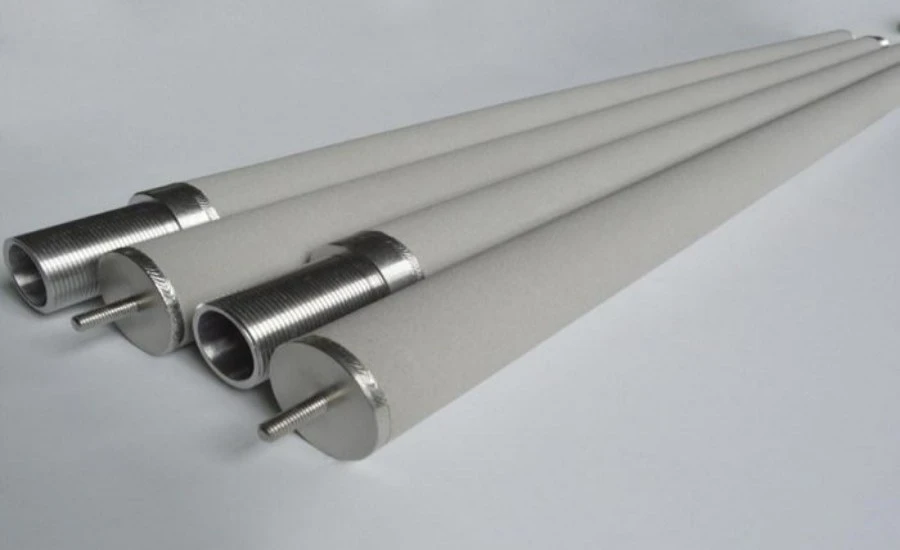
How Nickel Sintered Metal Powder Performs Under High-Temperature Conditions?
Nickel-based porous filter architectures are amongst the most advantageous materials due to their stability at elevated temperatures. To see why we need to look more closely at the material's inherent characteristics.
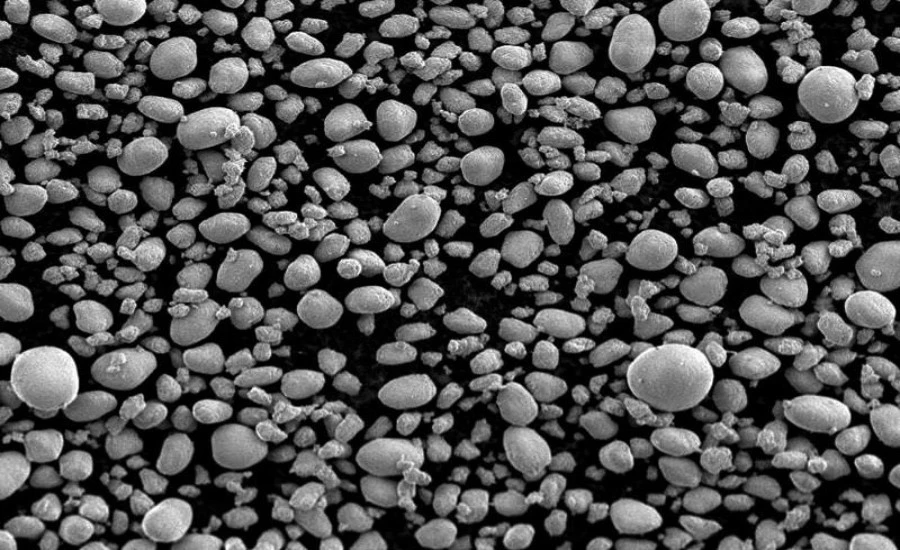
Microstructural Integrity at Elevated Temperatures
Nickel is a face centered cubic solid that on heating has no phase shift. Nickel powder is sintered in a regulated manner to produce a porous framework which retains its structure over a long period of time and through many heating and cooling cycles. In precision applications this implies that the pore size distribution changes little over time. It is normally designed to be between 5 to 80 μm in size. This kind of dimensional stability is required when filters are used to clear high temperature gasses or liquids in a hot process so that the flow and interception may be accurately maintained.
Oxidation Resistance and Long Service Life
Above 300°C most ferrous alloys form flaky, loose oxides. The oxides contaminate the filtrate and damage the filter body.Instead, hollow pieces made of nickel produce a thick layer of adhering oxide.
The passive layer reduces the rate of material loss substantially, so extending the duration between service cycles and reducing the number of part replacements required. For a plant manager with continuous processes, this implies fewer downtime and better accuracy in maintenance planning.
Nickel Sintered Metal Powder for High-Strength Porous Filter Frameworks
Chemical compatibility is not always as important as mechanical durability for many filtration systems. The filter medium is exposed to mechanical stressors, such as differential pressures, abrupt flow spikes and backwash processes.
Load-Bearing Capacity of Sintered Nickel Structures
Sintered metal powder components made from nickel exhibit high tensile strength relative to their porosity. Solid-state diffusion holds powder particles together at grain boundaries during sintering. This makes the skeleton metallurgically continuous instead of just compacted. Nickel porous filters can handle high pressures without breaking or cracking because of this. This is a trait that is very useful in hydraulic systems and high-pressure gas filtration circuits.
Fatigue Resistance Under Cyclic Operating Conditions
In industrial filtering, pressure cycles of raising and reducing are repeated. Nickel is inherently pliable, giving it a toughness that other materials can't match. The porous skeleton may absorb mechanical energy without propagating microcracks inside the framework. This means that the filter stays physically sound even after thousands of rounds of operation.
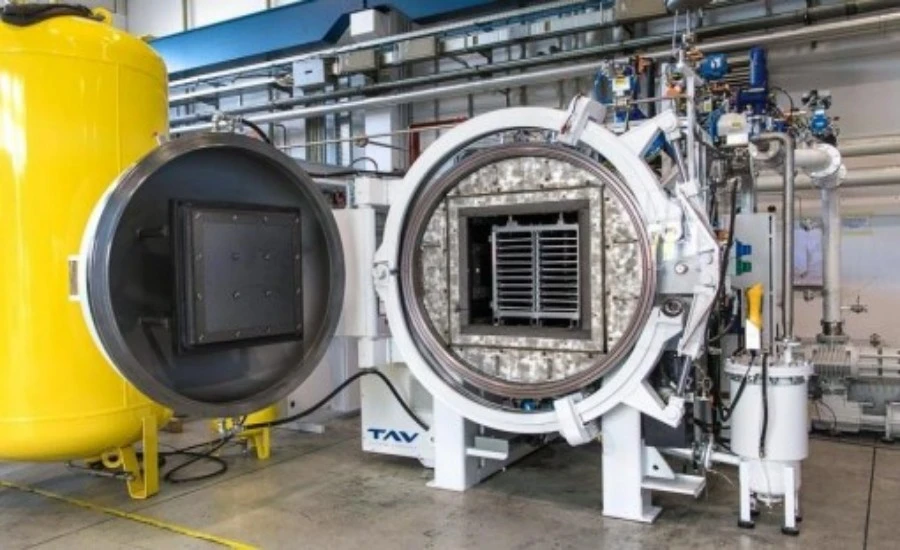
Nickel Sintered Metal Powder vs. Stainless Steel for Demanding Filter Designs
Engineers frequently encounter the choice between nickel and stainless steel when specifying sintered porous filter components. Each material has a defined zone of advantage.
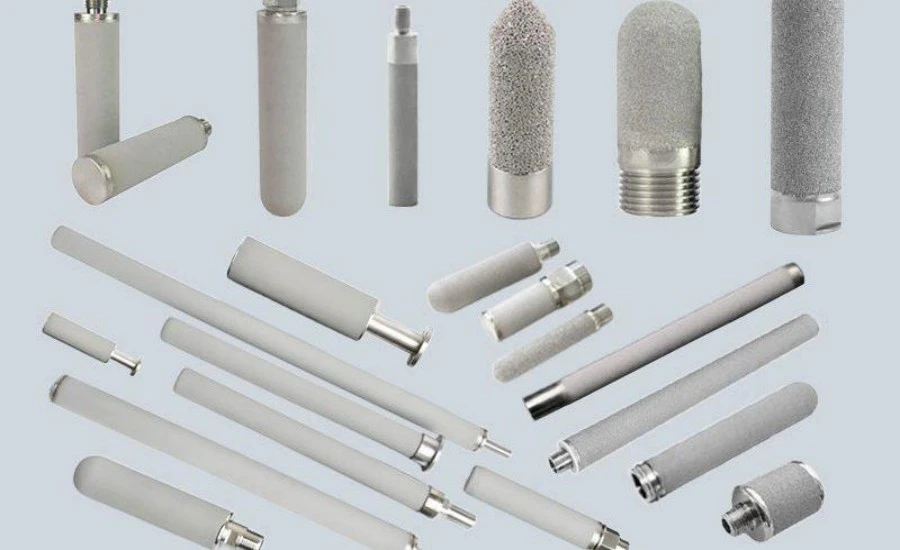
Where Nickel Outperforms Stainless Steel
Stainless steel, such as SS316L, is very suitable for moderately corrosive and hot conditions. Some environments in which stainless steels might suffer pitting, crevice, or stress-corrosion include highly hot and oxidizing, excessively alkaline, or halide-rich streams. Nickel based sintered metal powder structures are more resistant to these failure types. If your process streams are caustic or chloride heavy, switching to nickel instead of stainless steel can lower your total cost of ownership and avoid premature filter failure.
Material Selection Logic for Mixed-Demand Applications
Some filtering jobs are right on the line between the performance ranges of the two materials. Nickel-based alloys, such as MONEL, INCONEL, and Hastelloy types, are a good choice because they are resistant to corrosion and work well with a wide range of chemicals. NAVI Titanium offers sintered filter pieces composed of these alloy groups.
This means engineers may choose materials that are compatible with particular process chemicals instead of having to pick between them.
How to Match Nickel Sintered Metal Powder with Specific Working Conditions?
Material selection becomes more precise when it is tied directly to measurable process parameters rather than general guidelines.
Mapping Powder Specifications to Process Requirements
A finished filter element's performance is determined by % porosity, size of the pores and amount of oxygen in the powder. In PEM electrolysis and other high-precision applications, the low-oxygen nickel powder lowers electrical resistance in porous structures and prevents contamination of the process stream. In heavy industrial gas filters, using a rougher powder grade with bigger sintered pores allows more gas to pass through without affecting the structure.
Gradient Structures and Custom Powder Ratios
In some demanding filtering applications, gradient filter elements are required. As you proceed within, they are sections with smaller pores. NAVI Titanium produces porous structures with high flow-through and high particle capture efficiency by careful combinations of several kinds of coarse and fine nickel powder. This approach allows a single filter element to do both large scale removal and fine polishing,
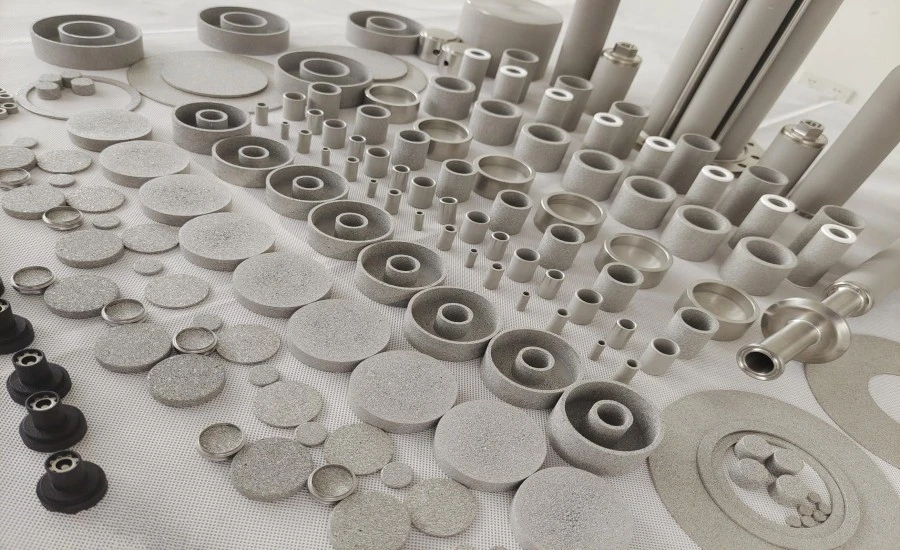
without the requirement for multi-stage filtration trains.
Conclusion
Nickel sintered metal powder is the material of choice if the process circumstances include alkaline chemistry, higher temperature, high mechanical stress or extended continuous operation cycles. It is a useful substrate for porous filter frameworks in chemical processing, hydrogen energy and heavy industrial applications. That is because it is resistant to corrosion, stable at high temperatures and structurally robust. Nickel-based sintered components provide processes the additional dependability they need when normal varieties of stainless steel fail to perform what they are meant to do.
FAQ
Q1: What pore size range is available for nickel sintered metal powder filters?
+
-
Porous nickel filter parts made by NAVI Titanium can have pore sizes between 5 and 80 μm, depending on the type of powder, the sintering conditions, and the needs of the application. Custom ranges outside of this window can be made upon request.
Q2: How does oxygen content in nickel powder affect filter performance?
+
-
A higher oxygen content in the raw powder makes it harder for the nickel particles to sinter. This breaks the bonds between the particles and raises the electrical resistance in the finished porous skeleton. Low-oxygen nickel powder makes a filter framework that is denser, more conductive, and mechanically stronger. This is important for electrochemical and precision filtration applications.
Q3: Can nickel sintered metal powder filters be used in hydrogen production systems?
+
-
Sintered metal powder filters made of nickel can work with alkaline water electrolysis systems because nickel is a common building material. There are titanium-based parts that work best for PEM water electrolysis because the membrane environment is acidic. However, nickel porous parts help with certain steps in the process. The research team at NAVI Titanium can help you choose the best material based on the design of your system.
Get a Custom Nickel Sintered Metal Powder Filter Solution from NAVI Titanium
NAVI Titanium has been manufacturing precision sintered metal powder components since 2008, with deep expertise in nickel, titanium, stainless steel, and specialty alloy porous structures. As a sintered metal powder supplier, NAVI Titanium offers material consultation, custom pore structure design (5–80 μm), and full-batch production with zero unqualified sample policy. Whether your application demands high-purity low-oxygen powder for PEM systems or high-strength nickel alloy structures for aggressive chemical environments, our engineering team delivers solutions built to your exact specifications.
Contact NAVI Titanium today to discuss your filtration requirements: sales@navititanium.com
References
1. German, R. M. Powder Metallurgy and Particulate Materials Processing. Metal Powder Industries Federation, 2005.
2. ASM International. ASM Handbook, Volume 7: Powder Metal Technologies and Applications. ASM International, 1998.
3. Totten, G. E., & MacKenzie, D. S. Handbook of Aluminum: Physical Metallurgy and Processes. CRC Press, 2003. (Referenced for comparative sintering behavior of non-ferrous metal powders.)
4. Davis, J. R. Nickel, Cobalt, and Their Alloys. ASM International, 2000.
5. Lenel, F. V. Powder Metallurgy: Principles and Applications. Metal Powder Industries Federation, 1980.
6. Schatt, W., & Wieters, K. P. Powder Metallurgy: Processing and Materials. European Powder Metallurgy Association (EPMA), 1997.



