


Grab a titanium bolt for the first time and something's instantly wrong, in the greatest conceivable manner. It is lighter than you imagine, yet has a serene feeling of stability. That difference is precisely what makes titanium fasteners so appealing to engineers, motorbike builders, and performance aficionados alike.
What really makes titanium bolts different from steel, aluminum and stainless ones? This article explains the differences between the materials, their density, strength, corrosion properties and applications in real life.
What Is a Titanium Bolt Actually Made Of?
The Base Metal and Its Alloy Variants
A titanium bolt begins with titanium, the transition metal with the atomic number 22. Titanium in its economically pure state is graded according to its oxygen and iron concentration – Gr1 to Gr4, where Gr1 is the most ductile and Gr4 the strongest of the pure grades. Gr2 is at a practical sweet spot for most fastener applications; workable, corrosion resistant and mechanically competent.
Mix in alloying elements and the characteristics change dramatically. Ti-6Al-4V, or Gr5, is a mix of titanium, 6% aluminum and 4% vanadium. The combination of the above factors results in tensile strength values generally between 895 and 1000 MPa, which makes this one among the most extensively used titanium alloys in technical applications. Fasteners in Gr9 (Ti-3Al-2.5V) and Gr23 (a extra-low interstitial variant of Gr5) are also used, particularly when biocompatibility or refined mechanical qualities are important.
How Grade Selection Changes Fastener Behavior?
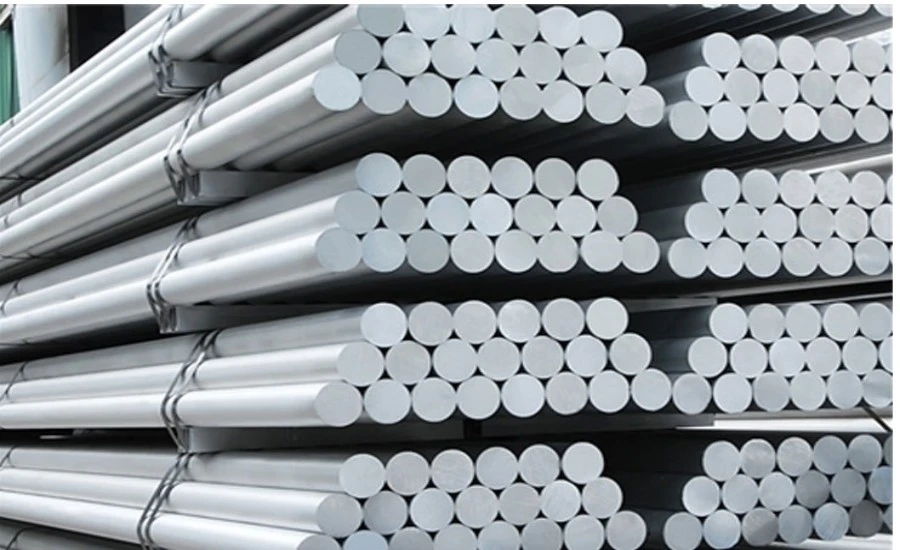
Selecting grades is not cosmetic. A Gr5 titanium bolt reacts substantially differently to a Gr1 bolt under stress . Higher grade alloys can take greater stress before deforming, they can take fatigue cycling better and they retain characteristics across a wider temperature range. Gr5 is frequently the working option for motorcycle engine covers or suspension braces. Gr2 is easy to machine and is suitable for light weight exterior hardware for moderate load requirements.
The Density Advantage Behind a Lightweight Titanium Bolt
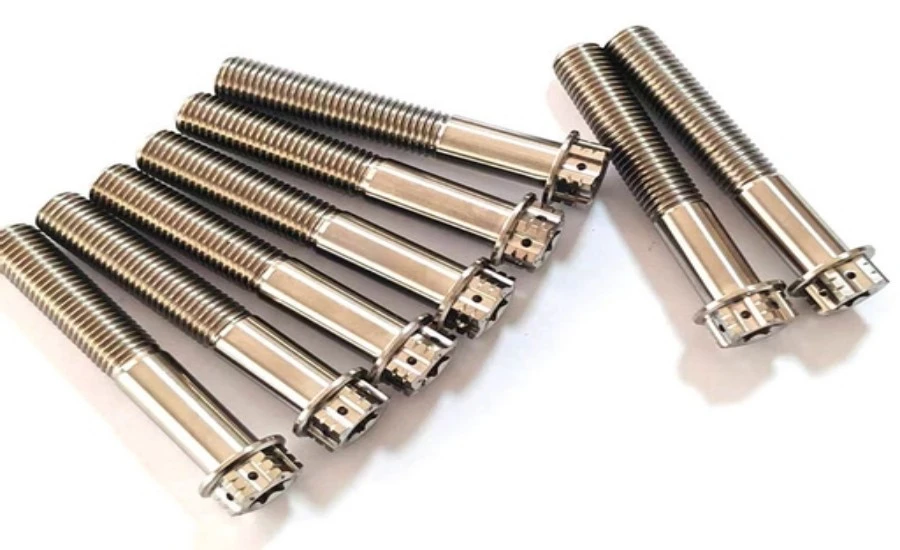
Comparing Density Numbers Across Common Fastener Materials
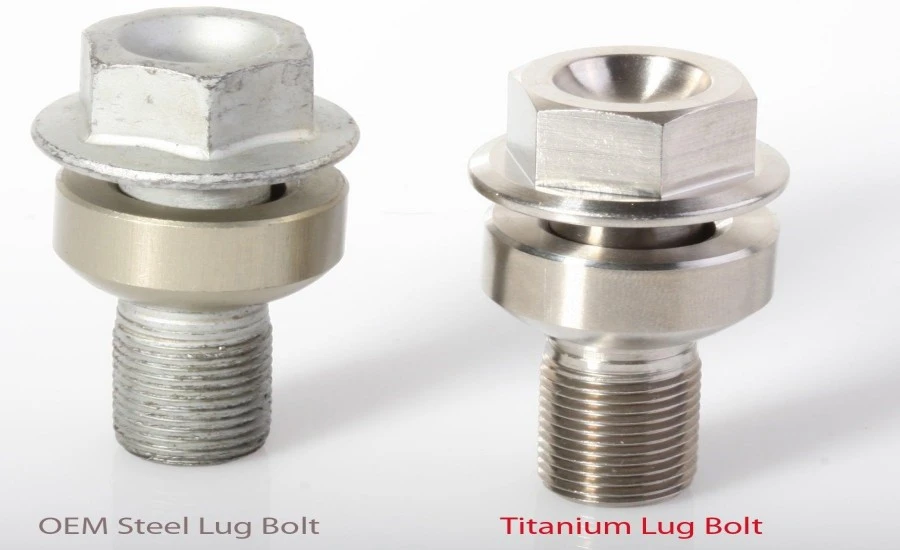
It is in density that titanium speaks most clearly. Titanium is around 4.51 g/cm3 . Carbon steel is about 7.85 g/cm3 and stainless steel is about 7.9 g/cm3 . That implies a titanium bolt is around 43 percent lighter than a similar steel bolt of the same size. Aluminum is lighter at around 2.7 g/cm³, but the strength trade-off modifies the equation by a little.
In a motorcycle application you may achieve a meaningful decrease in rotational and static mass by changing a whole set of steel fasteners for titanium bolts (frame, engine cover, braking system, exhaust brackets). This kind of cumulative weight reduction has real ramifications for handling and acceleration, across racing classifications and performance builds.
Specific Strength - the Number That Actually Matters
Density is merely one component of it. Specific strength is the ratio of tensile strength to density,
and is a measure of the load a material can withstand per unit mass. Gr5 titanium has a specific strength of around 260 kN·m/kg, which is better than most common steels and much better than aluminum alloys in structural fastening tasks. That implies a titanium bolt may perform the same mechanical function as a steel bolt, but with less mass to carry, a very beneficial characteristic when weight and reliability must coexist.
Is a Titanium Bolt Strong Enough for Structural Joints?
Tensile and Shear Performance in Real Applications
One of the most common queries concerning titanium bolts is whether they are robust enough for load bearing joints. Short answer: Yes, as long as you choose the right grade. Gr5 titanium is equivalent in strength to mid-range alloy steel fasteners. ASTM standards for titanium fasteners, such as ASTM F467 and F468, provide minimum mechanical property criteria that offer engineers a valid basis for design choices.
Titanium is a dependable material for non-critical structural attachments on bikes – mounting brackets, footpeg assemblies, engine covers. For higher-load chassis joints grade, diameter and thread specification are important, and it is recommended to work with certified technical drawings with a competent supplier.
Fatigue Resistance Over Time
Titanium has a fatigue endurance limit, hence it is desirable for applications to components exposed to vibration and cycle stress.
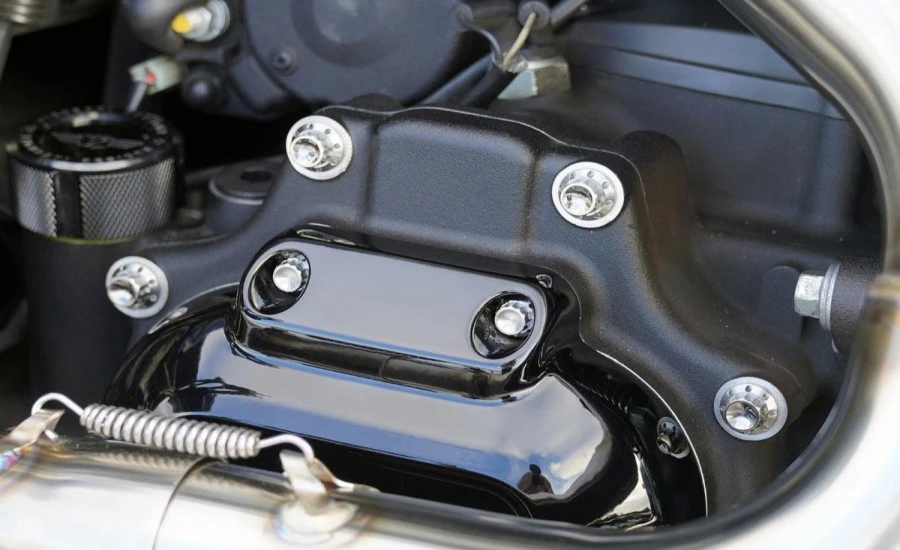
Some aluminum alloys have no clearly defined fatigue limit and continue to deteriorate during alternating stress cycles. Titanium alloys will retain their integrity over lengthy service periods if appropriately specified. Motorcycle engines and suspensions create continual vibration, and fasteners that hold clamping force over thousands of operational cycles give real reliability benefits.
How a Titanium Bolt Survives Rain, Road Salt and Winter Storage?
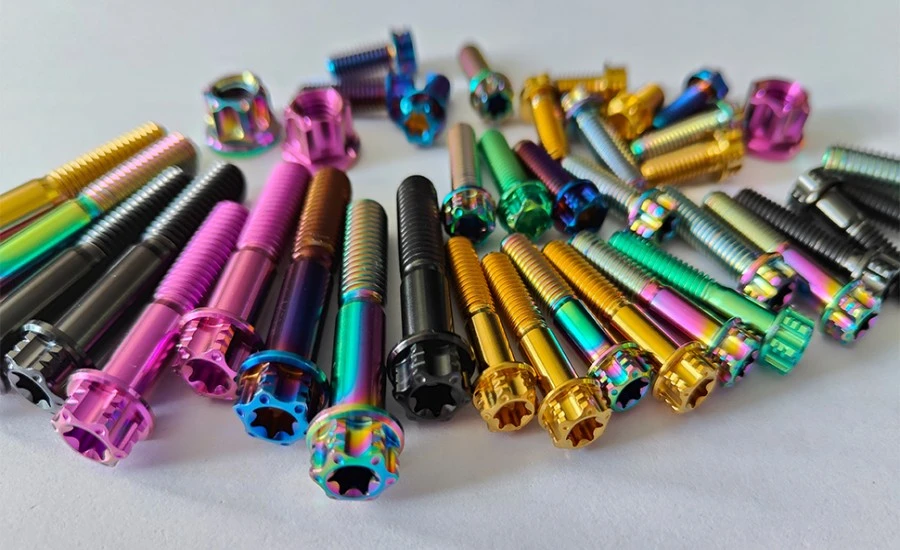
The Passive Oxide Layer That Protects the Surface
Titanium reacts with oxygen fairly immediately, forming a thin, stable oxide layer (mostly TiO₂). This passive coating forms a barrier between the base metal and corrosive substances including water, salt solutions and many industrial chemicals. Titanium, unlike steel, does not need any coating or plating to withstand corrosion; its protection is self-generated and self-repairing. If the surface is scraped , the oxide layer is reformed in presence of oxygen .
Road salt, with its chloride ion concentrations which damage carbon and low alloy steel very quickly, does not pose a danger to commercially pure titanium or Gr5 alloy fasteners. For bikes driven in cold weather or kept in humid areas, this means fasteners that don't seize, corrode or need to be replaced annually.
Galvanic Compatibility Considerations
Being at the noble end of the galvanic scale, titanium influences the choices of material pairing.
If a titanium bolt is in touch with a less noble metal, such as aluminum, and an electrolyte is present then a galvanic cell will be set up and the aluminum will corrode preferentially. This isn't a failure of the titanium, it's a galvanic compatibility problem, which is something that engineers can around via insulation, material matching, or suitable coating of contact surfaces. Knowing this tendency is part of competent fastener selection.
When a Titanium Bolt Beats Aluminium and Stainless Alternatives
Aluminium Fasteners in Comparison
Lightweight aluminum fasteners have limitations in fatigue life and thread engagement strength for safe application. They have a tendency to gall during installation and may creep under prolonged load at high temperatures – a serious hazard near exhaust systems or engine parts. In many size-for-size comparisons a titanium bolt has equal or less weight at higher grades and is more predictable for torque, vibration and temperature.
Stainless Steel - When Titanium Makes the Practical Case
Stainless steel fasteners are more corrosion resistant and look nicer than carbon steel. However, stainless steel is ~75% heavier than titanium, by volume, and certain grades may be sensitive to crevice corrosion and stress corrosion cracking in chloride-rich environments. Titanium bolt is a cohesive answer for exposed hardware in performance projects where look, weight and lifespan must match. Stainless steel cannot entirely imitate this.
Conclusion
A titanium bolt is not a better steel fastening. It is a fundamentally different component with its own density , strength profile , corrosion behavior and compatibility features . The keys to unlocking titanium's benefits are selecting the proper grade, matching it to the application load and combining it with suitable materials. For motorcycle builders, performance engineers and industrial specifiers who seek fasteners that perform under real life situations without adding extra bulk, titanium is still one of the most technically coherent options available.
FAQ
1. Q: What titanium grade is best for motorcycle bolts?
+
-
Gr5 (Ti-6Al-4V) is the preferred option in the case of motorcycle fasteners when strength and weight reduction are both important. Gr2 is applicable to lighter duty external hardware and accessories when the greatest mechanical strength is not the major consideration.
2. Q: Can a titanium bolt be used with aluminium threads?
+
-
It may be. Compatibility should be considered before installation. Titanium is more noble than aluminum , and aluminum threads may be corroded faster in the presence of moisture or road salt . To get around this, you might use anti-seize chemicals or insulating techniques.
3. Q: How do titanium bolts compare to steel bolts in torque specifications?
+
-
Titanium fasteners typically have different tightening torque ratings than steel bolts of the same size. Use the mechanical data and manufacturer recommendations for the individual grade, and not the generic steel torque tables for titanium hardware.
Get Custom Titanium Bolts From NAVI Titanium - Built to Your Specification
NAVI Titanium has been manufacturing precision CNC-machined titanium bolts and fasteners since 2008, operating from Baoji - China's recognized center of titanium production. Available in Gr1, Gr2, Gr5, Gr9, Gr23, and other grades, our fasteners are manufactured to ASTM, DIN, JIS, and GB/T standards with full dimensional and material inspection on every order. Whether you need a small sample batch, a coordinated fastener set for a motorcycle build, or a repeat production program, NAVI Titanium delivers consistent quality with direct technical support. As a trusted titanium bolt supplier, we work from your drawings, samples, or dimensional specifications to produce exactly what your application demands.
Reach out to our team at sales@navititanium.com to start a conversation about your project requirements.
References
1. Davis, J. R. Titanium: A Technical Guide. 2nd ed. ASM International, 2000.
2. Donachie, M. J. Titanium: A Technical Guide. ASM International, 2000. (ASTM mechanical property data for Gr2 and Gr5 alloys.)
3. ASTM International. ASTM F468: Standard Specification for Nonferrous Bolts, Hex Cap Screws, Socket Head Cap Screws, and Studs for General Use. ASTM International.
4. ASTM International. ASTM B265: Standard Specification for Titanium and Titanium Alloy Strip, Sheet, and Plate. ASTM International.
5. Schutz, R. W., and Watkins, H. B. "Recent Developments in Titanium Alloy Application in the Energy Industry." Materials Science and Engineering: A, vol. 243, no. 1–2, 1998, pp. 305–315.
6. Lütjering, G., and Williams, J. C. Titanium. 2nd ed. Springer, 2007. (Fatigue behavior and mechanical properties of Ti-6Al-4V alloys in structural applications.)



