


When engineers and procurement specialists evaluate sintered metal powder for titanium filter production, oxygen content rarely gets the attention it deserves - yet it quietly governs nearly every performance metric that matters. Pore uniformity, mechanical strength, electrical conductivity, and long-term corrosion resistance all trace back to one variable: how much oxygen is locked inside the powder before sintering even begins.
This article looks at what makes oxygen control a key quality criterion for titanium sintered metal powder and how NAVI Titanium's powder selection process leads to better filter element performance.
How Does Oxygen Content Affect Titanium Sintered Metal Powder Performance?
Oxygen as a Structural Contaminant in Titanium Powder
Titanium is a very reactive metal. It oxidizes fast even at room temperature, creating titanium dioxide (TiO 2 ) layers which survive the sintering cycle. If the oxygen level in the raw sintered metal powder is over the permitted limit (usually more than 0.25 wt% for high-performance filter applications), these oxide coatings will interfere with the neck formation between powder particles during sintering. This leads to a porous skeleton with weaker inter-particle connections, lower structural integrity and variable pore geometry. It has been shown repeatedly in the Powder Metallurgy literature that titanium powders with oxygen concentrations more than 0.3 wt% result in noticeable losses in ductility and tensile strength of sintered components. This deterioration has tangible implications for filter elements subjected to mechanical stress, pressure differentials and cyclic loads.
How Elevated Oxygen Levels Compromise Conductivity
Titanium's appeal in electrochemical systems - particularly PEM water electrolysis -
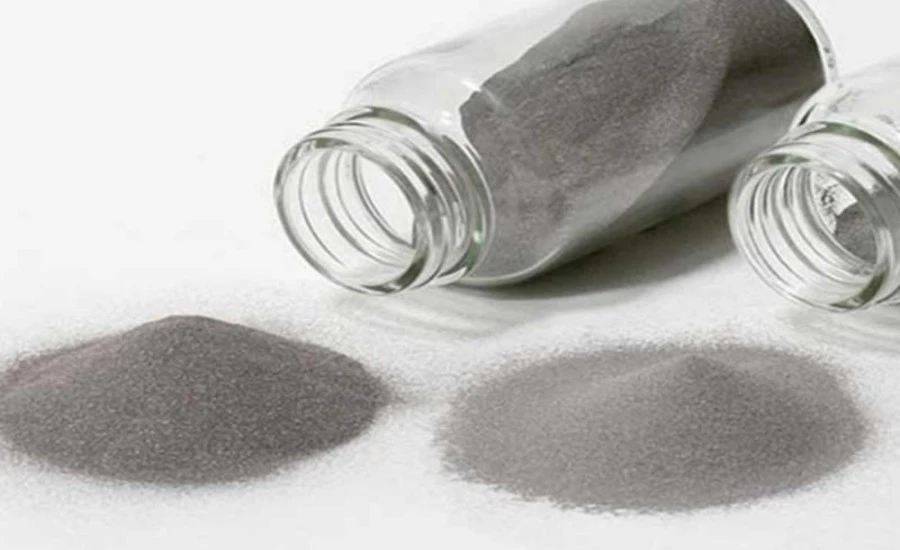
lies in its combination of corrosion resistance and reasonable electrical conductivity. Oxygen contamination undermines this balance. Oxide phases formed from high-oxygen sintered metal powder are electrically insulating. As these phases accumulate at grain boundaries and particle contact points, they increase contact resistance throughout the porous metal framework.
In PEM electrolyzers, proton transport efficiency is related to the minimization of ohmic losses in every component. High contact resistance due to an oxidized titanium substrate would immediately lead to reduced energy conversion efficiency. Research on titanium porous transport layers has revealed that oxygen levels as low as 0.1 wt% may increase contact resistance by a quantifiable amount which can impact total cell voltage and long term stack performance.
Low-Oxygen Sintered Metal Powder for Improved Titanium Filter Stability

The Measurable Benefits of Oxygen Reduction
Controlling oxygen concentration in sintered metal powder isn't just a material science preference – it delivers demonstrable gains in several performance metrics. Low-oxygen titanium powder, commonly generated by vacuum atomization or hydrogenation-dehydrogenation (HDH) processes with strict atmosphere control, provides powder lots with oxygen content typically less than 0.15 wt%. Sintering at these oxygen concentrations continues with cleaner particle surface contact and hence promotes denser and more uniform neck development. The porous filter structure formed has narrower distribution of pore sizes, a greater mechanical strength to density ratio and enhanced electrochemical stability under extended service conditions. These qualities are of great importance in harsh settings such as semiconductor processing equipment, pharmaceutical filtration systems and high pressure industrial applications.
Long-Term Stability Under Corrosive Conditions
Oxidized titanium surfaces behave differently from clean metalite surfaces when exposed to acidic or alkaline environments.
In PEM systems, the electrolyte environment is acidic (pH values commonly between 1 and 3), and the operating temperature regularly exceeds 60°C. Under these conditions, residual oxide phases from high-oxygen sintered metal powder can undergo selective dissolution, creating microstructural voids that progressively weaken the filter skeleton.
The native oxide layer is thin but is consistently formed and is tightly adhered to the titanium matrix and low oxygen powder substrates are better in preserving the integrity of passive film. This stability increases the service life of the filter, decreases the frequency of replacement, and lowers the overall operating cost of systems using porous titanium components. This is exactly why NAVI Titanium finds and certifies 0A grade pure titanium powder. Consistency in oxygen specification leads to consistency in end product reliability.
Titanium Sintered Metal Powder Oxygen Control in PEM Filter Production
Powder Qualification Standards for PEM-Grade Filter Elements
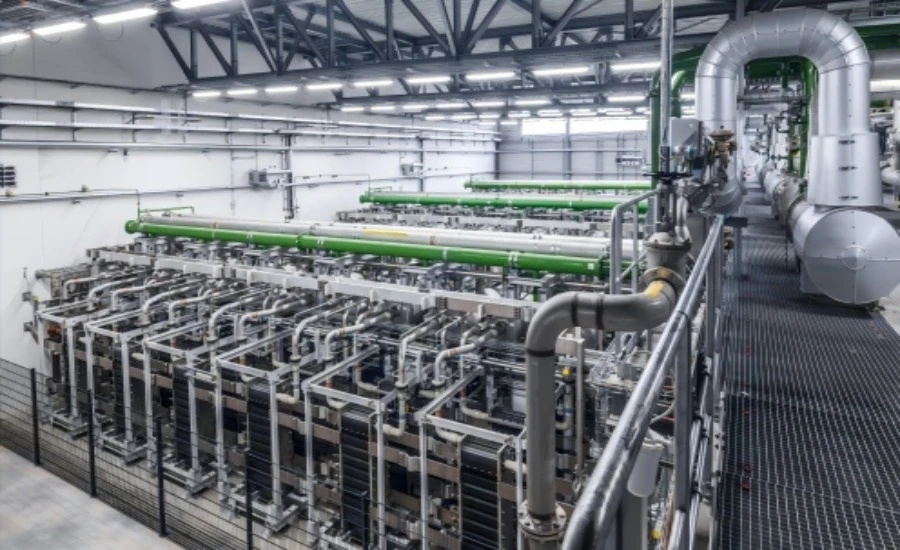
Porous titanium parts are seldom loaded as heavily in industrial applications as in PEM water electrolysis. The acidic atmosphere, excessive temperature, high current density and constant electrochemical cycling produce a synergistic effect to magnify any material vulnerability to generate a deterioration environment. Sintered metal powder for PEM filter elements has to fulfill demanding incoming quality criteria. One of the most important specifications is the oxygen content. However, before a single batch is used in production at NAVI Titanium, arriving powders are subjected to qualification methods like verification of oxygen concentration, particle size analysis and morphological inspection. This upstream quality control prevents batch-to-batch variance from being transferred into completed filter components, ensuring pore size, flux rate and conductivity are within specification during large production runs.
Why Oxygen Levels Matter for Porous Structure and Conductivity?
Pore Architecture and Its Relationship to Powder Oxygen Content
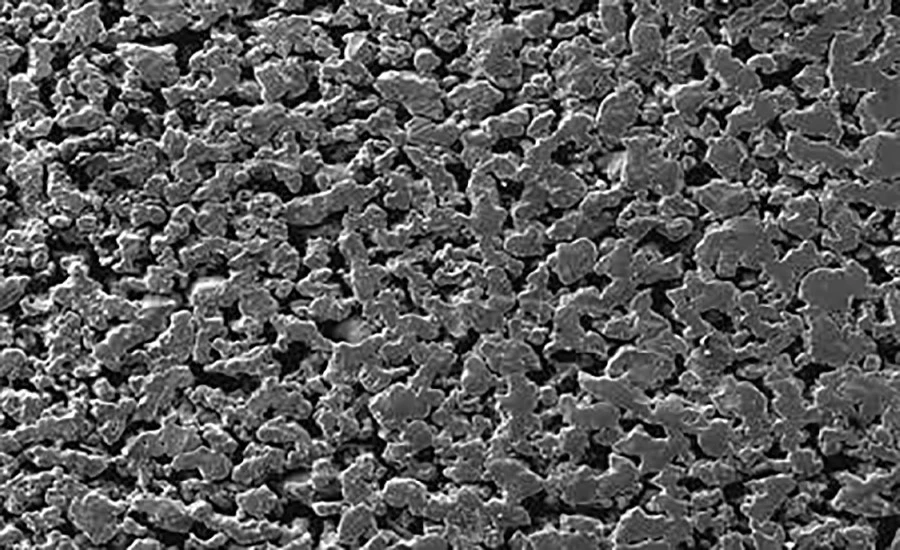
The porous architecture of a sintered titanium filter - pore size, pore distribution, and interconnected porosity - emerges from the interaction between powder particle geometry, sintering temperature, and surface chemistry. Oxygen content influences all three factors. High-oxygen powder particles carry thicker oxide shells that reduce the effective diffusion of titanium atoms during sintering, slowing neck growth and producing irregular pore geometries.
NAVI Titanium's sintered metal powder products achieve customized pore structures ranging from 5 to 80 μm, a capability that depends directly on starting powder quality. Achieving a targeted pore size with tight distribution tolerances requires powder batches with stable, low oxygen content - otherwise, pore size variance across a single filter disc can exceed acceptable engineering limits.
Conductivity Performance in Electrochemical Filter Systems
Beyond filtration mechanics,
titanium porous components in PEM systems function as porous transport layers (PTLs) that conduct electrons while allowing water and gas to pass simultaneously. This dual function makes conductivity a first-order performance requirement. Sintered metal powder with low oxygen content produces PTL-grade porous media with significantly lower through-plane resistance, contributing to improved electrolyzer efficiency and reduced energy consumption per unit of hydrogen produced.
Optimizing Titanium Filter Performance Through Sintered Metal Powder Quality Control
Batch Consistency as a Manufacturing Advantage
One underappreciated aspect of sintered metal powder quality is batch consistency. A single high-quality batch produces excellent filters; consistent quality across hundreds of batches enables reliable large-scale manufacturing. For green hydrogen projects requiring thousands of identical PEM filter elements, batch-to-batch oxygen variation in the powder supply translates directly into dimensional and performance variation in the finished product.
NAVI Titanium's manufacturing infrastructure supports sintered batch qualification at scale, with process controls designed to maintain oxygen specification tightness across production cycles. This capability supports the mass production needs of large-scale electrolysis projects without sacrificing the individual component quality that PEM system integrators demand.
Integrated Powder-to-Product Engineering
Controlling oxygen content in sintered metal powder is most effective when it connects to an integrated engineering approach that spans powder selection, forming method, sintering atmosphere, and post-processing.

NAVI Titanium combines material expertise with application-focused engineering to deliver filter elements where every process variable - including starting powder oxygen content - has been deliberately optimized for the target application.
This integrated approach means customers receive not just a filter component, but a component engineered from raw material through finished product delivery to perform reliably in its specific operating environment.
Conclusion
Oxygen content in titanium sintered metal powder is a quiet but powerful determinant of filter element performance. It shapes pore uniformity, mechanical integrity, corrosion resistance, and electrical conductivity - all attributes that matter in demanding applications like PEM electrolysis, semiconductor processing, and pharmaceutical filtration. Managing oxygen from powder qualification through sintering is what separates reliable, long-life filter components from those that fail prematurely under real operating conditions.
FAQ
1. What oxygen content level is acceptable for titanium sintered metal powder used in PEM filter elements?
+
-
For PEM-grade porous titanium filter elements, most application engineers target incoming powder oxygen content below 0.15 wt%. Above 0.25 wt%, oxide phases begin to measurably degrade interparticle bonding quality and increase electrical contact resistance, both of which reduce PEM system efficiency over time.
2. How does NAVI Titanium control oxygen content in its sintered metal powder products?
+
-
NAVI Titanium applies incoming powder qualification protocols that verify oxygen content, particle size distribution, and particle morphology before production begins. The company uses 0A grade pure titanium powder and maintains sintering atmosphere controls to prevent oxygen pickup during the thermal processing cycle.
3. Can sintered metal powder with different oxygen content levels be used for different filter applications?
+
-
Powder oxygen specification should match the demands of the target application. PEM electrolysis and semiconductor processing require stringent low-oxygen powder grades for maximum conductivity and corrosion resistance. General industrial filtration applications may accommodate slightly wider oxygen tolerances while still delivering reliable performance within appropriate operating parameters.
Partner With NAVI Titanium - Your Trusted Sintered Metal Powder Supplier
NAVI Titanium, established in 2008 and headquartered in China's premier titanium manufacturing hub, delivers precision-engineered sintered metal powder solutions built for performance under the most demanding industrial conditions. As a dedicated sintered metal powder supplier, NAVI Titanium offers fully customized porous titanium filter elements with controlled pore structures ranging from 5 to 80 μm, produced from 0A-grade low-oxygen titanium powder with verified batch consistency. Whether your application involves PEM electrolysis, wastewater treatment, or semiconductor processing, NAVI Titanium's material expertise and application-focused engineering ensure your filter components perform reliably from day one. Contact our team to discuss your project requirements and receive a tailored solution.
Reach NAVI Titanium directly: sales@navititanium.com
References
1. Leyens, C., & Peters, M. (Eds.). Titanium and Titanium Alloys: Fundamentals and Applications. Wiley-VCH Verlag, 2003.
2. German, R. M. Sintering: From Empirical Observations to Scientific Principles. Butterworth-Heinemann, 2014.
3. Smolinka, T., Ojong, E. T., & Garche, J. "Hydrogen Production from Renewable Energies - Electrolyzer Technologies." Electrochemical Energy Storage for Renewable Sources and Grid Balancing, Elsevier, 2015.
4. Lefebvre, L. P., Banhart, J., & Dunand, D. C. "Porous Metals and Metallic Foams: Current Status and Recent Developments." Advanced Engineering Materials, Vol. 10, No. 9, 2008, pp. 775–787.
5. Liu, H., & Zhang, L. "Effect of Oxygen Content on Microstructure and Mechanical Properties of Sintered Titanium." Powder Metallurgy, Vol. 58, No. 3, 2015, pp. 210–217.
6. Babic, U., Suermann, M., Büchi, F. N., Gubler, L., & Schmidt, T. J. "Critical Review - Identifying Critical Gaps for Polymer Electrolyte Water Electrolysis Development." Journal of The Electrochemical Society, Vol. 164, No. 4, 2017, pp. F387–F399.



