


The first decision in the design of filter elements for PEM (Proton Exchange Membrane) water electrolysis systems is the choice of sintered metal powder, which determines all that follows. If done well the filter will work stably for thousands of hours of operation. Pollution, loss of conductivity or early corrosion may throw the entire system out of whack if done improperly.
In this lesson we will go over the four primary selection criteria which are cleanliness, oxygen content, electrical conductivity and material composition. Whether you're purchasing parts for a green hydrogen plant or evaluating materials for high-precision electrolytic equipment, these essentials can help you make better procurement decisions.
How Does Sintered Metal Powder Purity Affect Filter Performance?
Purity is not merely a specification number on a datasheet, it is the basis of every functional feature of a sintered filter element that has to be maintained throughout time.
Why Raw Powder Grade Matters in Filtration Systems
The electrolyte in PEM electrolysis conditions is ultrapure water under tight quality limits . The breakdown may be accelerated by contamination of the membrane with metallic contaminants leaching from the filter media. The 0A-grade titanium powder is of high quality and its trace impurity levels are well within the tolerance window of PEM systems.
In research on powder metallurgy it has been proved many times that the purity of the powder is directly responsible for the regularity of the sintered skeleton. Impurity phases at grain boundaries are susceptible sites for microcracking under cyclic pressure stress. The improved purity of the starting material results in a more uniform porous structure with predictable mechanical behaviour.
Oxygen Content as a Hidden Contaminant Variable
Oxygen is not a passive contaminant in titanium powder. It dissolves in the titanium lattice and makes it harder, but less ductile. This trade-off is harmful to the long-term stability of filter walls that are subjected to pressurised streams of hydrogen or oxygen.
In addition to mechanical effects the thickness of the surface oxide is increased by high oxygen concentration. In electrolytic applications, thicker oxides increase the contact resistance at the electrode-filter interface, which directly affects the efficiency of the system. Choosing good titanium powder with low oxygen is an engineering decision, not a qualitative one.
Low-Oxygen Titanium Sintered Metal Powder for Electrical Conductivity
For the porous titanium structure, its electrical conductivity is the combined effect of the resistivity of the metal matrix itself and the continuity of the conductive routes along the sintered skeleton.

How Oxygen Content Disrupts Electron Transport
Titanium forms a very thin natural passivation layer that usually protects it from corrosion. If during sintering the original powder includes an excess of oxygen, the oxide layer grows unevenly. This results in isolated oxide clusters scattered throughout the porous structure, each acting as a resistive barrier for electron transit.
Studies of porous titanium electrodes used in PEM cells have shown that oxygen concentration beyond 0.20 wt% may significantly raise the through-plane resistance and reduce the energy efficiency of the stack. The oxygen content of the low oxygen powder is regulated below this level. This ensures a constant conductivity value across the whole operational temperature range.
Sintering Parameters that Preserve Conductivity
The appropriate powder is just part of the equation. Final resistivity is a function of the interaction of the powder oxygen level with the sintering environment, peak temperature and hold time. The sintering in vacuum or inert atmosphere minimises additional oxidation during heat treatment and preserves the conductivity advantage of low oxygen sintered metal powder.
NAVI Titanium's approach to sintering is linked with powder selection, considering material choice and heat processing as an integrated system, rather than as distinct stages. This method reliably produces porous filter elements with steady conductivity profiles, as confirmed in production batches.
Titanium vs. Stainless Steel Sintered Metal Powder for PEM Filter Applications
The choice between titanium and stainless steel is not one of desire, but one of function based upon the operating chemistry, pressure rating, and service life requirements.
Performance Comparison Under PEM Operating Conditions
Titanium is very good in oxidising acid situations such as the oxygen evolution side of a PEM electrolyser where stainless steel grades like SS304 or SS316 are at danger of pitting and crevice corrosion. The passive oxide coating of titanium is stable during the large voltage fluctuations seen in electrolysis duty cycles. However, stainless steel is suitable for situations where mechanical strength and cost effectiveness are more important than the necessity for maximum electrochemical stability.
SS316L sintered metal powder components offer a cost efficient alternative for regions less exposed to electrochemical activity such as the side components for hydrogen evolution and peripheral filtering stages, without sacrificing structural durability. This selection should be based on a detailed mapping of the chemical exposure profile of each component.

How Does Sintered Metal Powder Composition Influence Corrosion Resistance?
The composition influences corrosion resistance via a number of processes simultaneously, such as the stability of the passive film, galvanic compatibility and the formation of intermetallic phases during sintering.
Alloying Elements and Their Protective Functions
Nickel-based alloys such as Hastelloy C276 and INCONEL include molybdenum and chromium in the matrix to extend the passive range and to aid to limit the initiation of pitting in a chloride-containing environment. Nickel-base sintered metal powder parts are therefore of interest for applications outside PEM, e.g. in the semiconductor wet processing and pharmaceutical fluid handling, where aggressive media are widespread.
Microstructural Integrity During Long-Duration Exposure
Even if sintering does not lead to unwanted microstructures, chemically resistant alloys may be damaged. Segregation of alloying elements to grain boundaries may lead to the creation of anodic zones which corrode preferentially. The combination of coarse and fine powder fractions with ideal proportions results in a regulated powder gradation, which creates a more dense and uniform structure, decreasing these sensitive zones and increasing corrosion resistance.
Selecting Sintered Metal Powder for Long-Term PEM Filter Operation
A filter element for long term PEM operation is needed that can function reliably for thousands of cycles without dimensional drift, conductivity loss or pore blockage from corrosion products.
Matching Powder Specifications to Operational Cycles
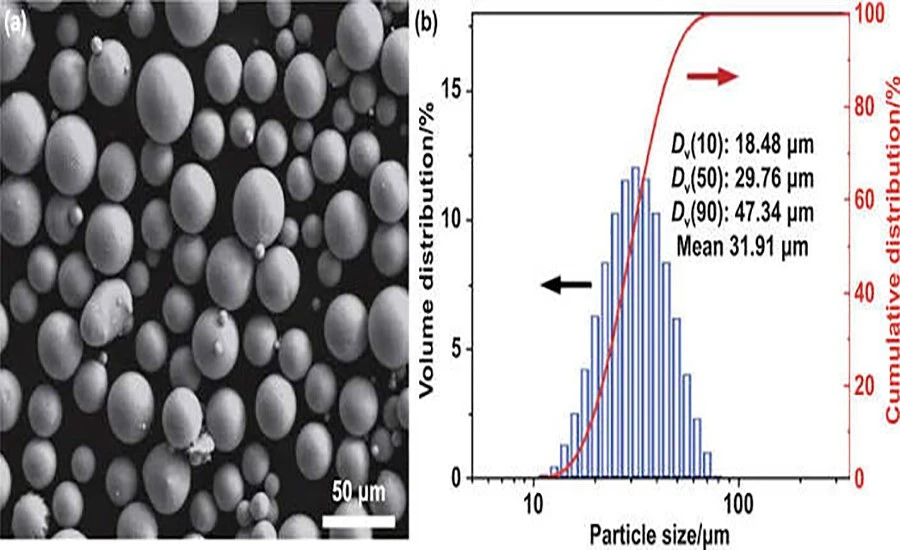
Procurement decisions sometimes misjudge the consistency of the powder from one batch to another. Lot-to-lot variability in particle size distribution alters the pore size distribution of the finished element and impacts flow and interception accuracy. Filter elements working equally . Powder consistency is a system level dependability required for high scale green hydrogen projects with hundreds of filter elements.
Customized Powder Ratios for Extended Service Life
Gradient filter elements need a precise combination of coarse and fine powder fractions where the pore size changes gradually across the wall thickness. This construction enhances the depth filtering effectiveness and the mechanical stress distribution, therefore increasing the service life. There is a clear and quantitative link between powder gradation ratio and end product quality. Tighter control of gradation provides tighter distributions of pore size and smaller variation in burst pressure ratings.
Conclusion
The selection of a sintered metal powder for PEM filter elements is a compromise of three inter-related properties: purity, conductivity and durability. Powder purity is related to the possibility of contamination and to skeletal uniformity. Ductility and electrical resistance (through plane) as a function of oxygen content. The material constitution (titanium, stainless steel or nickel-based alloy) determines the corrosion resistance envelope appropriate for each operating zone. Batch-to-batch reproducibility at production scale is dependent upon the consistency of powder gradation . The difference between a filter element that lasts and one that fails early is to address all 4 dimensions at the same time rather than optimising each dimension individually.
FAQ
1.What makes low-oxygen titanium powder preferable for PEM electrolysis filter elements?
+
-
Titanium powder with low oxygen content reduces the production of thick and uneven oxide layers during sintering. Thinner and more uniform oxide coatings decrease the interface resistance between the electrode and the filter, thereby directly supporting the energy efficiency of the PEM stacks. Above around 0.20 wt % oxygen, detectable increases in through-plane resistivity are seen, and low-oxygen grades are usual for high-performance electrochemical filter elements.
2.How does particle size distribution affect sintered filter pore size?
+
-
The pore size of the sintered body is mostly determined by the particle size distribution of the starting powder. The finer the powders, the smaller the spaces between the particles, giving tighter pore size distributions and improved interception accuracy. Larger powders improve pore width and enhance permeability. The calculated ratios of particle fractions allow for gradient constructions that balance flow with filtration accuracy across the wall thickness.
3.Can nickel-based sintered metal powder components replace titanium in PEM applications?
+
-
Nickel-based alloys have good corrosion resistance to many harsh media, but are usually not the first option in the oxidative potential environment on the oxygen evolution side of a PEM electrolyser. The stability of the passive oxide on titanium at high anodic potentials offers titanium a functional advantage for that particular task. Nickel-based parts are more appropriate for peripheral filtering steps or non-electrochemical applications, e.g. pharmaceutical fluid handling or semiconductor wet processing.
Ready to Source Precision Sintered Metal Powder? Contact NAVI Titanium
Since 2008, NAVI Titanium has been designing breakthrough sintered metal powder solutions for PEM electrolysis, wastewater treatment, semiconductor and pharmaceutical industries from our plant in Baoji High-tech Zone – the recognised titanium production center of China. Specialised Sintered Metal Powder Supplier Customised Pore Structures 5-80 μm No-defect Sample Sintering One-to-one Technique Consultation from Material Selection to Finished Product Delivery
Our 0A-grade titanium and low-oxygen powder solutions are developed to meet the rigorous conductivity and corrosion resistance requirements of PEM filter elements. Whether you are creating or scaling a green hydrogen project, industrial filtration system or precise electrochemical equipment, our technical team is ready to assist your needs.
Reach out to our team at sales@navititanium.com to discuss your application requirements.
References
1. Carmo, M., Fritz, D. L., Mergel, J., & Stolten, D. (2013). A comprehensive review on PEM water electrolysis. International Journal of Hydrogen Energy, 38(12), 4901–4934.
2. German, R. M. (2014). Sintering: From Empirical Observations to Scientific Principles. Butterworth-Heinemann, Oxford.
3. Boyer, R., Welsch, G., & Collings, E. W. (Eds.). (1994). Materials Properties Handbook: Titanium Alloys. ASM International, Materials Park, OH.
4. Smits, F. M. (1958). Measurement of sheet resistivities with the four-point probe. Bell System Technical Journal, 37(3), 711–718.
5. Totten, G. E., & MacKenzie, D. S. (Eds.). (2003). Handbook of Aluminum: Vol. 2, Alloy Production and Materials Manufacturing. Marcel Dekker, New York. (Referenced for powder metallurgy processing principles applicable to non-ferrous sintered materials.)
6. Lefebvre, L.-P., Banhart, J., & Dunand, D. C. (2008). Porous metals and metallic foams: Current status and recent developments. Advanced Engineering Materials, 10(9), 775–787.



