


One of the most promising methods is the creation of pure hydrogen by PEM water electrolysis. The porous metal filter frame is the heart of any high-performance PEM system and is never given the attention it deserves. And what is the stuff that allows this framework to happen? Sintered metal powders.
Whether you are an engineer looking for components for a green hydrogen project or a procurement professional comparing porous metal vendors, knowing how sintered metal powder affects the structural and functional quality of PEM filter elements provides you a genuine advantage in your decision-making process.
How Does Sintered Metal Powder Build a Strong PEM Filter Framework?
The filter design of a PEM electrolyzer must do two things simultaneously, conduct electrical current and precisely let water and gas flow. Its a tough combo and it begins with the powder.
Powder Selection Drives Framework Performance
The basic substrate of PEM filter elements is sintered metal powder, in particular high purity titanium powder. Titanium is not picked out of habit but out of need. The natural oxide layer provides a passive barrier to corrosion in the acidic environment of a PEM cell where the polymer membrane produces a strongly oxidizing environment on the anode side. Titanium porous transport layers have been shown to outperform stainless steel counterparts in long-term PEM durability testing, as reported in the Journal of Power Sources.
NAVI Titanium's titanium powder for PEM applications is classified as 0A-grade purity. That implies minimum trace pollutants and strict control over oxygen concentration - factors which directly impact electron transport and sintering consistency.
Why Powder Purity and Oxygen Content Matter?
The oxygen level in the raw titanium powder is not merely a chemical footnote.
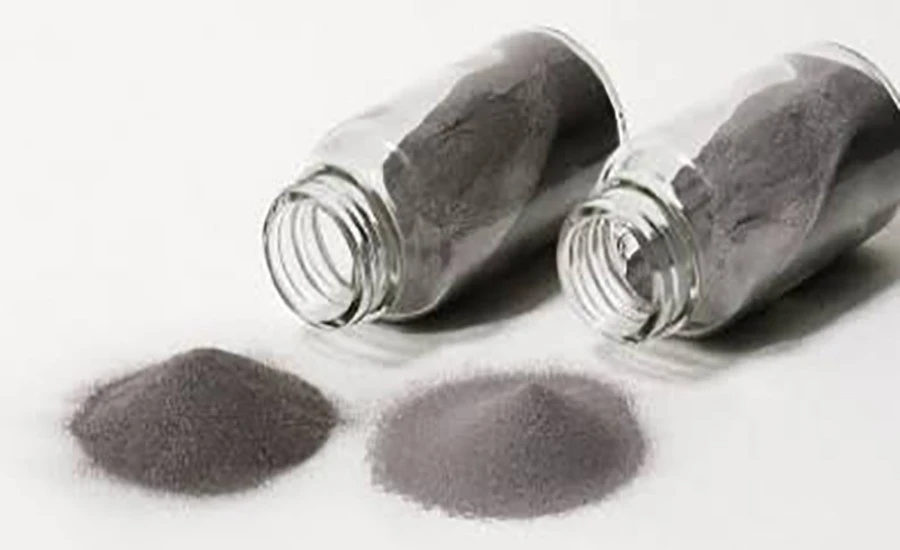
With increasing oxygen content, the sintered skeleton becomes more fragile and its electrical conductivity decreases. In a paper published in the International Journal of Hydrogen Energy, it was shown that oxygen-enriched titanium substrates had a measurable greater contact resistance in PEM assemblies, meaning more energy loss in electrolysis.
By working with fine titanium powder with minimal oxygen content, the resultant porous structure offers both mechanical integrity and constant conductivity, two must-have features in PEM filter design.
Sintered Metal Powder Packing and Its Role in Porous Skeleton Formation
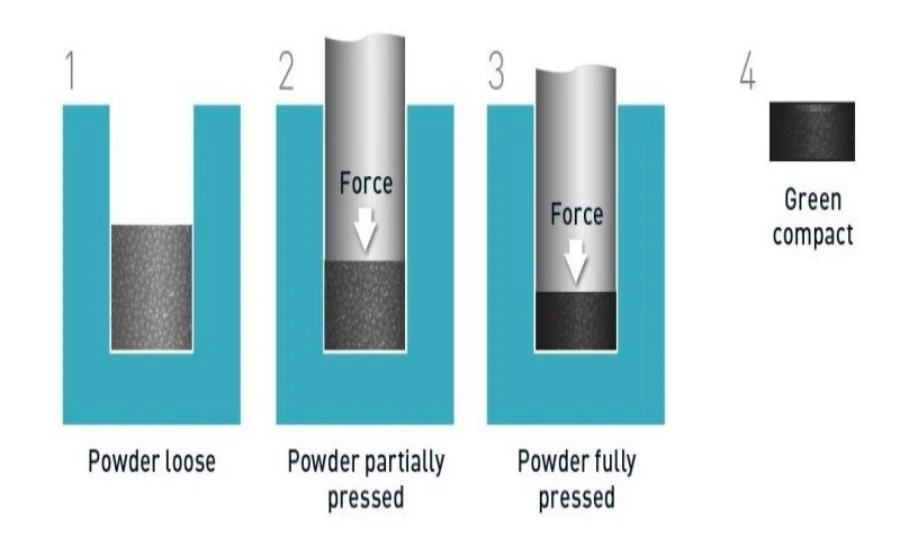
The way powder particles pack together before and during sintering determines almost everything about the final filter element - pore size, pore distribution, compressive strength, and gas permeability.
Particle Size Distribution and Pore Architecture
Powder particle size is not one quantity. It is a distribution. Pore structure is more homogeneous with limited particle size range. For a wider distribution or planned gradation mix, the manufacturer may design gradient pore structures where one face of the filter element has finer pores and the other face has coarser pores.
NAVI Titanium manufactures sintered porous metal filters with adjustable pore diameters from 5 to 80 μm. It is exactly the strict powder gradation control that enables such a broad range. For PEM applications, more constricted pore shapes of around 5–20 μm are advantageous to control the water distribution at the membrane interface yet prevent gas escape.
Coarse and Fine Powder Compounding Logic
Gradient filter elements are based on a compounding principle: combining coarser and finer powders in defined proportions to form layered or continuous pore gradients in a single sintered body.
The finer powder fills interstitial spaces between bigger particles increasing the contact area and sintering neck development. This process enhances the mechanical cohesion of the skeleton and the tortuosity of the pore network, affecting filtration accuracy.
In terms of batch uniformity, powder supply is important here. If the particle size distribution varies across manufacturing batches, the resultant filter components will have different pore properties. This is achieved by NAVI Titanium via stringent raw material certification, even at the arriving powder stage.
How Sintered Metal Powder Creates Interconnected Pores for Water and Gas Transport?
In a PEM electrolyzer, water must reach the membrane and hydrogen/oxygen gas must exit efficiently. The porous transport layer - built from sintered metal powder - is the highway for both.
Interconnected Pore Networks Enable Dual-Phase Flow
Interconnected porosity is not by chance. This is a consequence of controlled sintering circumstances where powder particles are bonded at the contact sites (sintering necks) but without total collapse of the space between them. The geometry of this network controls how water flows toward the membrane and how gas bubbles break off and flow away.
If the pores are isolated or not well linked, then gas collects and prevents the flow of water – a phenomenon known as mass transport restriction. The effect of porous titanium substrates with interconnected and homogenous pore channels on reducing the mass transport resistance in PEM electrolyzers has been shown by peer-reviewed study in Electrochimica Acta.
Porosity Engineering at the Manufacturing Stage
At the production step, NAVI Titanium experts optimize sintering temperature profiles,
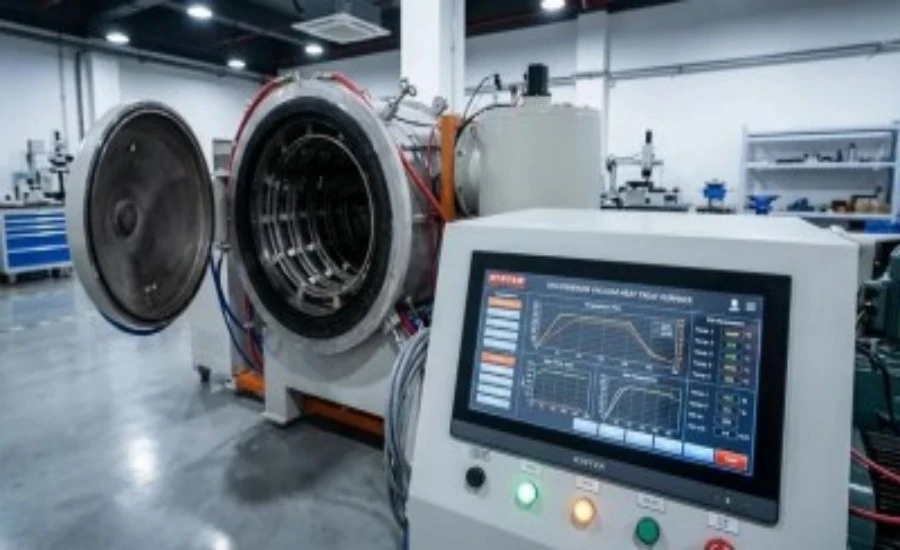
hold periods and environment conditions to produce the porosity architecture. This level of process control guarantees the linked pore network is stable even after repeated temperature cycling and pressure changes inside the electrolyzer stack.
Sintered Metal Powder Sintering Behavior and Filter Framework Strength
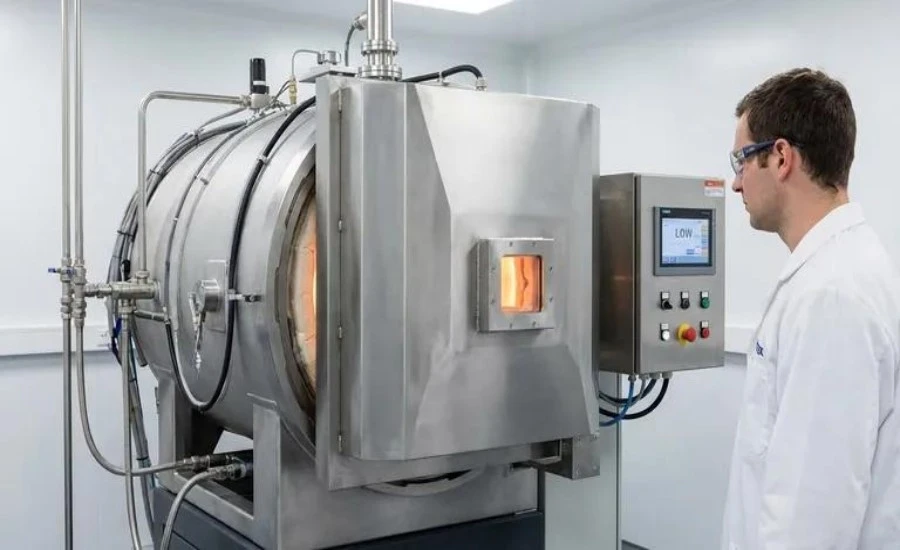
Sintering is the transformation step where loose powder becomes a cohesive, load-bearing structure. The behavior of powder during this stage - how particles soften, diffuse, and bond - determines the mechanical strength of the finished filter framework.
Sintering Neck Formation and Skeleton Density
During sintering necks, formed by atomic diffusion at particle contact sites, expand with time. The density of these necks and their degree of development directly regulate the compressive and tensile strength of the porous skeleton. Weak necks and a tendency to break are characteristic of under-sintered sections. Over-sintered pieces lose their porosity and become impenetrable.
NAVI Titanium modifies sintering settings for each powder composition – titanium, stainless steel (SS316L), nickel-based alloys and bronze – to achieve the exact balance between structural strength and retained porosity.
Material Composition and Working Condition Matching
Not all parts of the PEM are subjected to identical operating conditions. The anode side components of PEM electrolyzer are exposed to acidic and highly oxidizing environments.
Cathode-side and balance-of-plant components may be able to accept stainless steel or nickel-based powders depending on the pressure and temperature ratings. The NAVI Titanium material range – 0A-grade titanium, SS304/316/316L, MONEL, INCONEL & Hastelloy C22/C276 – offers custom-matched solutions for high-temperature, high-pressure or chemically demanding working environments without compromise.
What Makes Sintered Metal Powder Suitable for Advanced PEM Filter Structures?
The suitability of sintered metal powder for PEM applications comes down to a convergence of properties that few other materials can replicate simultaneously.
Structural Stability Under Electrochemical Stress
Electrolyzer conditions (acidic pH, high temperatures, cyclic pressure loading, electrochemical potential) lead to rapid degradation of traditional filter materials. All of these are resisted by titanium-based sintered frameworks because the passive oxide coating of titanium may be regenerated even when it is mechanically abraded. This self-heal feature significantly increases the service life of the component.
They further indicate that well-sintered titanium porous transport layers may preserve structural integrity for thousands of running hours without noticeable deterioration in pore geometry or electrical contact resistance .
Customization Depth for Green Hydrogen Scale-Up
Large scale green hydrogen projects are calling for filter elements in volume with stringent dimensional specifications and reliable performance batch after batch. This scale-up is enabled via sintered metal powder production, particularly with a vertically integrated supplier, where the powder composition,
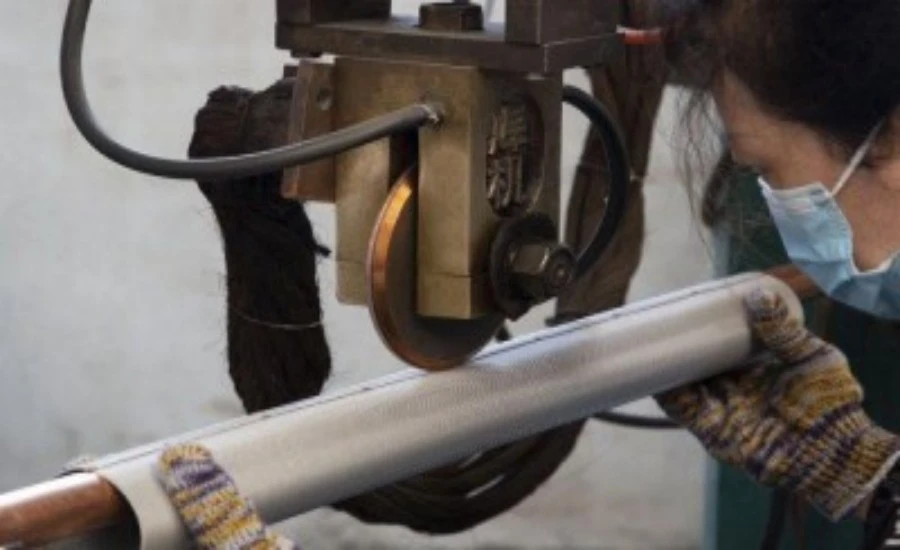
forming procedure and sintering parameters can be locked in and repeated reliably. NAVI Titanium manufactures sintered porous metal filters in common forms (disc, sheet, tube, bar, cap) and entirely bespoke geometries based on client given designs. Coupling this versatility with the accuracy of powder metallurgy makes sintered metal powder the material of choice for next-generation PEM infrastructure.
Conclusion
The selection and processing of sintered metal powder is the basis of the PEM filter frame's strength, porosity, conductivity and lifespan. Each aspect, from the purity and size of the powder particle size to the sintering behavior and the design of the pore network effects the capacity of the final component to enable the effective and long-lasting water electrolysis. For engineers and procurement teams creating the hydrogen energy infrastructure of future, these basic principles are the starting point for making smarter sourcing selections.
FAQ
1. What is sintered metal powder and why is it used in PEM filter frameworks?
+
-
Sintered metal powder refers to metallic powders - such as titanium, stainless steel, or nickel-based alloys - that are compacted and thermally bonded through powder metallurgy sintering. In PEM filter frameworks, it creates porous structures that conduct electricity, resist corrosion, and allow precise water and gas transport, which are all essential for electrolyzer efficiency.
2. How does powder particle size affect the pore structure of a PEM filter element?
+
-
Particle size distribution directly controls pore diameter, pore volume, and pore connectivity. Finer powders produce smaller, more uniform pores suitable for high-precision filtration, while deliberate gradation mixing enables gradient pore structures. NAVI Titanium offers pore sizes from 5 to 80 μm, calibrated to the specific transport requirements of each application.
3. Can sintered metal filter components be customized for different PEM operating conditions?
+
-
Yes. Material selection, powder gradation, pore size, and geometry can all be tailored. Anode-side PEM components typically use high-purity low-oxygen titanium powder for corrosion resistance and conductivity. High-temperature or high-pressure conditions may call for nickel-based alloys such as INCONEL or Hastelloy. NAVI Titanium provides application-specific adaptation solutions for both standard and demanding operating environments.
Partner with NAVI Titanium for Precision Sintered Metal Powder Solutions
If you are sourcing a dependable sintered metal powder supplier for PEM electrolysis, hydrogen generation, or advanced filtration applications, NAVI Titanium brings over 16 years of specialized manufacturing experience from the heart of China's Titanium Valley. Our 0A-grade titanium powder substrates, customizable pore structures ranging from 5 to 80 μm, and rigorous batch consistency controls mean you receive filter elements engineered to perform - not just to spec. We support your project from material consultation through finished product delivery, with tailored solutions built around your working conditions. Reach out to our engineering team and explore what precision powder metallurgy can do for your next project.
📧 Contact us: sales@navititanium.com
References
1. Ito, H., Maeda, T., Nakano, A., & Takenaka, H. (2011). Properties of Nafion membranes under PEM water electrolysis conditions. International Journal of Hydrogen Energy, 36(17), 10527–10540.
2. Carmo, M., Fritz, D. L., Mergel, J., & Stolten, D. (2013). A comprehensive review on PEM water electrolysis. International Journal of Hydrogen Energy, 38(12), 4901–4934.
3. Lewinski, K. A., van der Vliet, D., & Luopa, S. M. (2015). NSTF advances for PEM electrolysis - the effect of alloying on activity of NSTF electrolyzer catalysts. ECS Transactions, 69(17), 893–917.
4. Majsztrik, P., Bocarsly, A., & Benziger, J. (2008). Water permeation through Nafion membranes: the role of water activity. Journal of Physical Chemistry B, 112(51), 16280–16289.
5. Rashid, M. M., Al Mesfer, M. K., Naseem, H., & Danish, M. (2015). Hydrogen production by water electrolysis: a review of alkaline water electrolysis, PEM water electrolysis and high temperature water electrolysis. International Journal of Engineering and Advanced Technology, 4(3), 80–93.
6. Mo, J., Kang, Z., Yang, G., Retterer, S. T., Cullen, D. A., Toops, T. J., & Zhang, F. Y. (2016). Thin liquid/gas diffusion layers for high-efficiency hydrogen production from water splitting. Applied Energy, 177, 817–826.



