


The main reason of premature filter element failure is usually linked to the powder substrate, not the design, the operating pressure or the fluid chemistry. The service life of a porous filter component is silently controlled by the composition, particle size distribution and the mixing ratio of sintered metal powder. This article covers the material science behind longer-lasting filter elements, how powder gradation affects pore structure and pressure drop, and why batch-to-batch consistency is a non-negotiable quality requirement for high-stakes applications like PEM water electrolysis.
How Does Sintered Metal Powder Ratio Affect Filter Element Service Life?
Powder Composition as a Durability Variable
There is no set formula for the amount of metal bits in a sintered filter element; it is an engineering choice that has clear effects that can be seen. When you mix high-purity titanium powder with nickel-based or stainless steel powder, each one gives you different properties, like resistance to rust, mechanical strength, electrical conductivity, and thermal stability. If the ratio isn't right, the skeleton that is sintered could oxidize, crack very small, or lose its pores too soon when the pressure changes.
It has been continuously shown via powder metallurgy research that the oxygen level in titanium powder over 0.15 wt% decreases both conductivity and corrosion resistance – two attributes that directly limit the filter element service life in electrochemical settings. The low oxygen level is not a cosmetic standard, it is a functional need.
Why the Wrong Ratio Shortens Service Life?
A powder ratio targeted for cheap cost rather than extended service provides trade-offs that accumulate over time.
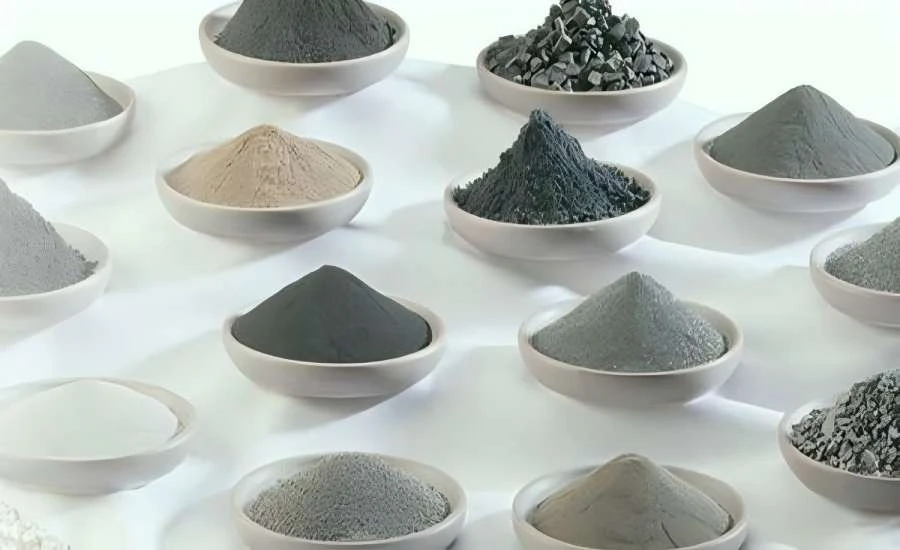
Oversized pores, caused by extra coarser particles, decrease the interception accuracy and lead to entry of particulates that physically degrade the porous skeleton. In contrast, an overabundance of tiny particles would lead to flow restriction, pressure decrease and local stress concentrations during sintering. Service life does not stretch in any direction. The difference between a filter element that lasts months and one that lasts years is a calibrated ratio – tailored to the particular operating circumstances of the application.
Precise Sintered Metal Powder Blending for More Stable Pore Structures
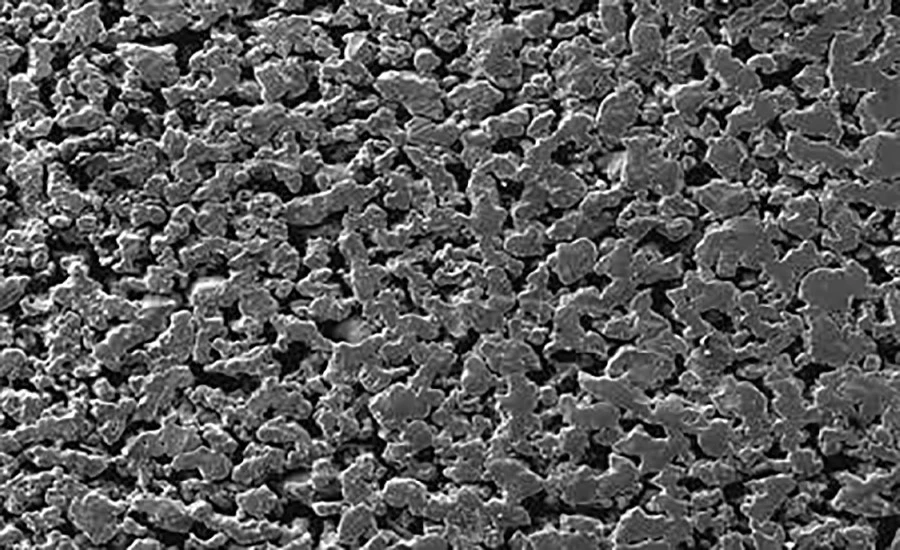
How Blending Precision Translates to Pore Uniformity?
The most direct measure of the dependability of filtering performance is the homogeneity of the pore structure. The perfect control of the particle size distribution of the blended sintered metal powder leads to a pore network with uniform throat widths, a predictable permeability and a repeatable filtration rating throughout the whole cross section of the element. Non-uniform blending creates localized dense zones and loose zones, in which flow routes are either clogged or too open. Both faults increase the mechanical deterioration and diminish effective filtering area over time.
Precision-sintered components have pore diameters designed from 5 μm to 80 μm by powder gradation, enabling engineers a broad working window to optimize water-gas transport in PEM electrolysis and other comparable high-demand applications.
Material Selection as a Blending Strategy
Blending is not only the mixing of particles of the same substance at various sizes. Titanium powder may be combined with stainless steels,
for example SS316L or SS316, or nickel-based alloys, such as Hastelloy C276, to produce composite porous structures that combine the corrosion resistance of titanium with the structural toughness of austenitic steel. The trick is to make the materials compatible during sintering so that the inter-particle bonding happens evenly without the formation of any brittle intermetallic phases that would jeopardize the structural integrity of the completed filter element.
How Coarse and Fine Sintered Metal Powder Fractions Work Together?
The Mechanical Logic of Bimodal Powder Systems
In powder metallurgy, it is common to combine coarse and fine powder fractions together in a single sintered compact. The load-bearing skeleton of the porous structure consists of coarse particles, which also define the flow pathways and the mechanical stiffness. Fine particles are present in the interstitial gaps between coarse particles and provide secondary porosity which increases surface area, facilitates particle interception and increases inter-particle necks during sintering. This results in a porous body which supports structural strain and at the same time acts as a precise filter, without compromising one function for the other.
The bimodal construction is especially beneficial in PEM filter elements because the component has to endure differential pressures while keeping the pore network stable and open for water and hydrogen movement.
Gradient Structures Enabled by Fraction Control
By controlling the geographical distribution of coarse and fine fractions, it is possible to produce gradient filter elements –
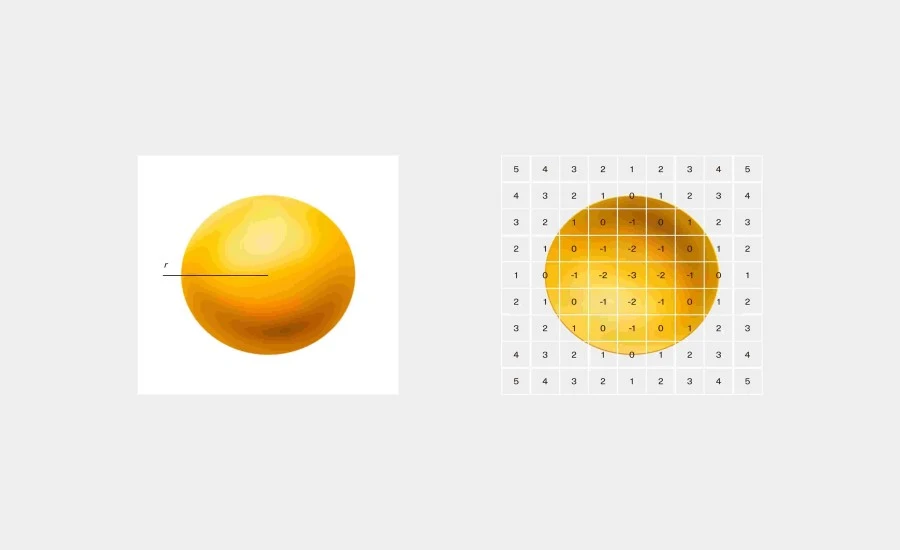
components with a coarse outer layer providing structural support and increasingly finer inside layers doing the filtering operation. This design avoids clogging on the surface, spreads the contamination load across the depth of the element and increases the service intervals between cleaning or replacement cycles. A technically more sophisticated use of powder fraction control in industrial filtering is using gradient sintered metal filter elements.
Sintered Metal Powder Gradation for Lower Pressure Drop and Better Durability
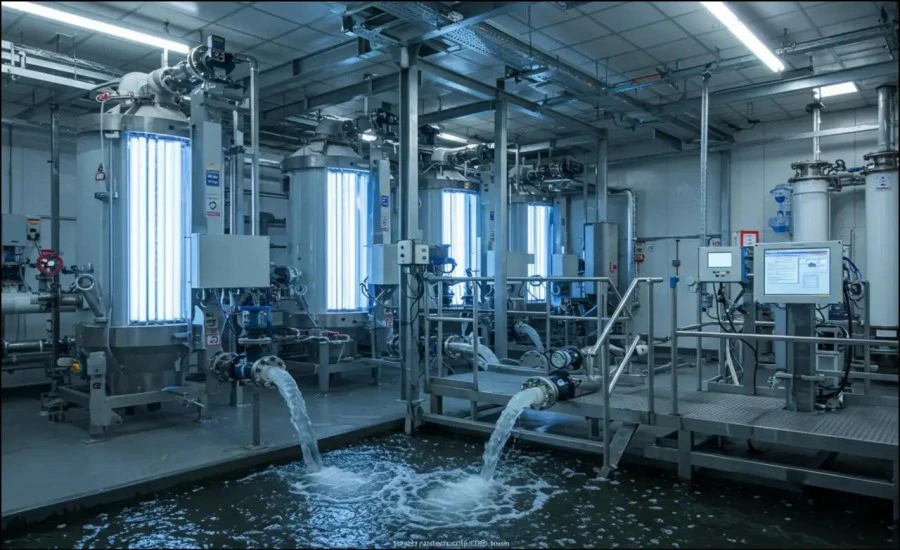
Gradation's Direct Effect on Flow Resistance
The pressure drop across a filter element is a function of pore size, pore tortuosity, and total open porosity. These three are determined by the particle size gradation of the sintered metal powder used in production. A well-designed gradation yields a pore network with minimal tortuosity and enough open porosity to provide acceptable flow rates at the operating pressures typical of industrial filtering systems.
If gradation control is inadequate, the surplus fines will pack the pore throats, increasing flow resistance and causing the system to run at greater differential pressures. The higher the differential pressure the greater the mechanical wear of the sintered skeleton and the shorter the service life of the filter element.
Durability Gains from Optimized Gradation
The improved gradation also enhances the quality of the sintering connection between the particles. With the correct particle size distribution, the sintering temperature and time may be adjusted to enhance neck development while preventing over-densification.
Fatigue cracking under cyclic pressure loading is a typical failure condition in filter elements used in continuous-duty electrolysis and industrial water treatment systems, and strong inter-particle necks resist it.
Why Does Sintered Metal Powder Consistency Matter for Long-Life Filter Elements?
Batch Variability as a Hidden Failure Risk
The most serious hazard to the life of the product in the mass manufacturing of sintered filter elements is not one badly made component but inconsistency across production batches. Variations in the sintered metal powder in terms of oxygen concentration, particle size distribution and surface chemistry from one batch to the next result in filter elements with various pore architectures, varied mechanical strengths and varying service lifetimes. Operators selecting filter elements from the first set of qualifying data may see a different behavior in subsequent production lots, which might lead to unexpected maintenance dates.
For batch stability, it's important to carefully manage how the powder is bought, stored, and checked for quality before it's used. Good raw materials, like 0A grade pure titanium powder, provide the chemical uniformity needed for the next steps in the sintering process.
Consistency as a System-Level Requirement
In large-scale green hydrogen projects using PEM electrolysis arrays,
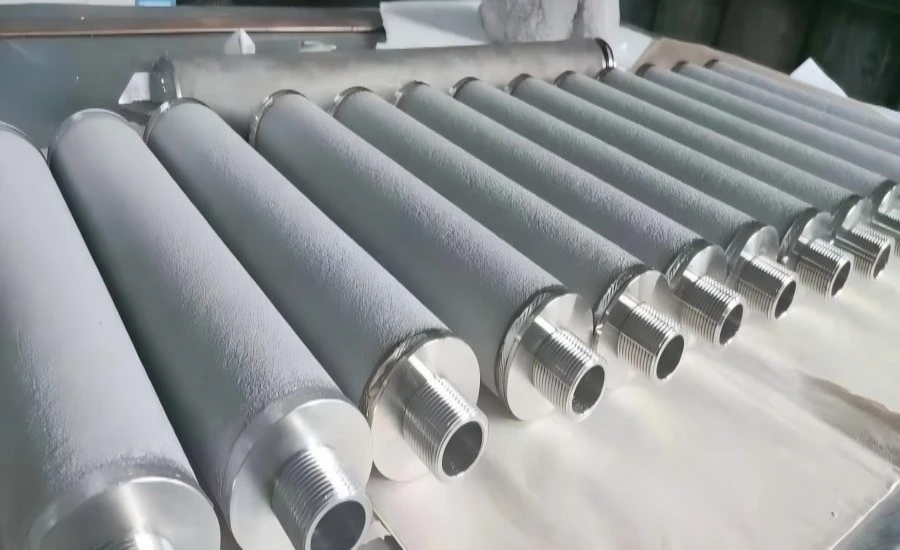
filter element consistency becomes a system-level need. Hundreds or thousands of filter components are operated in parallel, and need to preserve matching performance characteristics throughout long service periods. A single batch of off-spec sintered metal powder may generate performance variance that propagates throughout the system, raising maintenance costs and diminishing total plant efficiency. Thus, powder consistency is not just a material quality parameter, but a project economics variable.
Conclusion
The life of the sintered filter element is planned in the powder substrate long before the component ever hits the field. Pore structure stability, pressure drop performance and mechanical durability are determined by the powder ratio, blending accuracy, fraction gradation and batch-to-batch consistency. Through careful selection of sintered metal powder composition and strict process control, manufacturers may make filter elements that provide longer, predictable service life in the most demanding industrial situations. NAVI Titanium has more than 16 years of dedicated experience in the field and rises to this challenge and the results are in filter elements that outlive the competitors.
FAQ
Q1: What makes sintered metal powder different from standard metal powder in filtration applications?
+
-
Sintered metal powder is specially produced for powder metallurgy processing, with regulated particle size distribution, low oxygen concentration and strong sintering activity not consistently available in normal metal powders. These are critical properties for the manufacturing of stable uniform pore architectures in the manufactured filter elements.
Q2: Which sintered metal powder materials work best for PEM electrolysis filter elements?
+
-
Titanium has good corrosion resistance in acidic oxidizing electrolyte environment . The substrate of choice for PEM electrolysis filter elements is high purity low oxygen titanium powder . Titanium powder may be combined with nickel based alloy powders for applications that need more mechanical strength, providing a combination of chemical durability and structural strength.
Q3: How does powder particle size distribution affect filtration accuracy in sintered filter elements?
+
-
The mean pore size and the spread in pore size of the sintered component are directly controlled by the particle size distribution. A narrow, well-controlled distribution results in tight, uniform pores with predictable filtration scores. A wide or poorly regulated distribution results in varied pore diameters which reduces the interception accuracy and will enable passage of contaminating particles of excessive size.
Work With NAVI Titanium for Precision Sintered Metal Powder Filter Solutions
Since 2008, NAVI Titanium has been making sintered metal powder. They are based in Baoji High-tech Zone, which is the center of China's titanium industry. As a reliable supplier of sintered metal powder, NAVI Titanium makes porous filter parts from high-purity 0A grade titanium, SS304, SS316L, nickel-based alloys, and Hastelloy grades. The pore structures can be changed from 5 to 80 μm to meet the specific needs of PEM electrolysis, wastewater treatment, semiconductor processing, and pharmaceutical filtration. Strict quality control is done on every production batch to make sure that the dimensions are correct, the pores are uniform, and the material is consistent. This helps the product last a long time and have a low total cost of ownership. Get in touch with the NAVI Titanium tech team to talk about your unique filter element needs and get a solution that fits your needs.
Contact us: sales@navititanium.com
References
1. German, R. M. Powder Metallurgy and Particulate Materials Processing. Metal Powder Industries Federation, 2005.
2. Asgharzadeh, H., & Simchi, A. "Microstructural evolution and mechanical properties of porous titanium manufactured by powder metallurgy sintering." Materials Science and Engineering: A, 2005.
3. Smorygo, O., et al. "High-porosity open-cell aluminum foams and sintered porous structures: preparation and properties." Journal of Alloys and Compounds, 2012.
4. Lefebvre, L.-P., Banhart, J., & Dunand, D. C. "Porous metals and metallic foams: current status and recent developments." Advanced Engineering Materials, 2008.
5. Turner, J. A. "Sustainable hydrogen production." Science, vol. 305, no. 5686, 2004, pp. 972–974.
6. Millet, P., et al. "PEM water electrolyzers: From electrocatalysis to stack development." International Journal of Hydrogen Energy, 2010.



