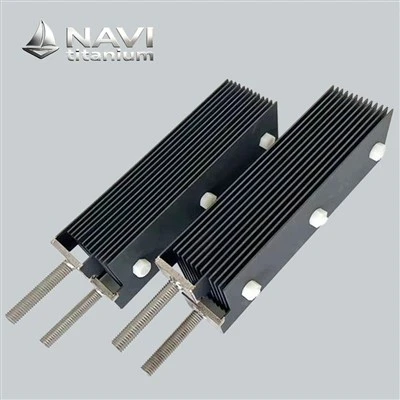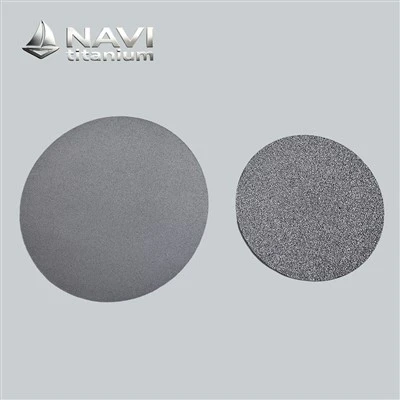


The parts inside a PEM electrolyzer need to be able to keep up as the production of green hydrogen grows. People often forget about the sintered metal powder base that is used in porous filter elements, but it is a key part of how well the system works. Getting the powder right from the start is what makes the difference between a large-scale PEM rollout that works well and one that has problems like output being uneven and parts failing early.
How Can Sintered Metal Powder Be Customized for Large-Scale PEM Filters?
You can't just pick a raw material off the shelf and use it to make sintered metal powder for PEM filter elements that fit your needs. It takes a planned engineering process to make sure that the properties of the powder match the mechanical and electrical needs of proton exchange membrane water electrolysis systems.
Powder Material Selection Drives System Compatibility
PEM filter parts should be made from 0A-grade high-purity titanium powder as the base. This grade has an incredibly low amount of oxygen, which keeps the porous skeleton's ability to conduct electricity. When there is a lot of oxygen in the powder matrix, passive oxide layers form during sintering. These layers make contact resistance higher and long-term performance worse. In big PEM projects with hundreds of filter elements working at the same time, even small changes in conductivity add up to a noticeable drop in efficiency.
In addition to titanium, nickel-based metals like INCONEL and Hastelloy C276 are used for filter parts that are in harsh chemical conditions. SS316 and SS316L, two types of stainless steel, offer a good balance of resistance to corrosion and mechanical strength for areas of the same system that don't need to be as strong.
Particle Size Calibration Shapes Pore Architecture
The particle size distribution might be the most important factor in customizing sintered metal powder.

When you combine finer powders, the interstitial holes get smaller. This makes the pores tighter, which is good for high-precision filtration. When managing pressure drop is important, coarser powders make passages that are wider and can support higher volumetric flux.
Gradient filter elements, in which the pore size changes gradually from one surface to the next, are a better choice for large PEM installations. To do this, the right amounts of coarse and fine powders are mixed together on purpose using grading ratios. The new design stops particles at the top layer while keeping permeability deeper in the element. This means that service intervals are longer without lowering the accuracy of the filtering.
Sintered Metal Powder Specifications Based on PEM Filter Design Requirements
A well-engineered PEM filter element begins with a specification document, not a prototype. Translating design requirements into powder parameters is a discipline that demands both materials knowledge and process experience.
Oxygen Content and Purity Benchmarks for PEM-Grade Powder
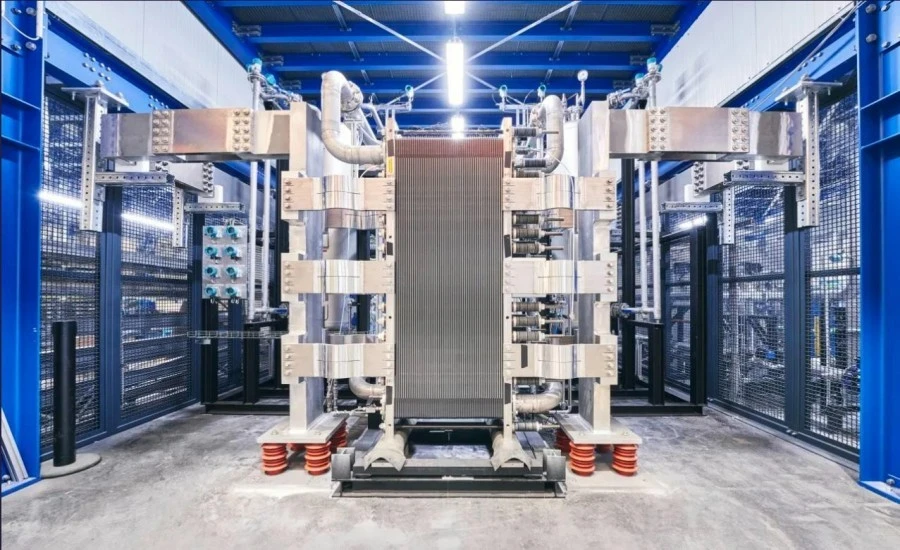
PEM electrolyzers work in environments with deionized water and high current densities. The filter parts in these systems need to be good at moving electrons around while also being resistant to reactive damage. When it comes to high-end PEM uses, titanium-based sintered metal powder must have an oxygen level below 0.15% by weight. In an electrolytic setting, powders that are higher than this limit make the sintered skeleton less able to conduct electricity.
Consistency and purity go hand in hand. When a big hydrogen project needs hundreds of identical parts, powder batches with tight compositional control are the only way to make filter elements with repeatable pore structures and predictable electrochemical behavior.
Matching Powder Specifications to Working Condition Severity
In a PEM system, not every zone is under the same amount of stress. In places with a lot of heat and pressure, powder bases need to be able to sinter better and keep their shape after being compressed.
It is better to use nickel-based metal powders or high-strength titanium formulas in these areas than standard-grade materials.
On the other hand, secondary filtration positions with moderate operating parameters let you choose powders like SS304 or SS316L that are best in terms of cost without sacrificing functionality. The art is correctly matching the gravity of the working conditions to the levels of powder specs, making sure that every part of the system gets exactly the material it needs and nothing it doesn't.
How Sintered Metal Powder Customization Controls Pore Structure and Permeability?
Pore structure and permeability are the two most measurable performance outputs of a sintered porous metal filter. Controlling them begins upstream, at the powder formulation stage.
Sintering Parameters and Their Effect on Pore Geometry
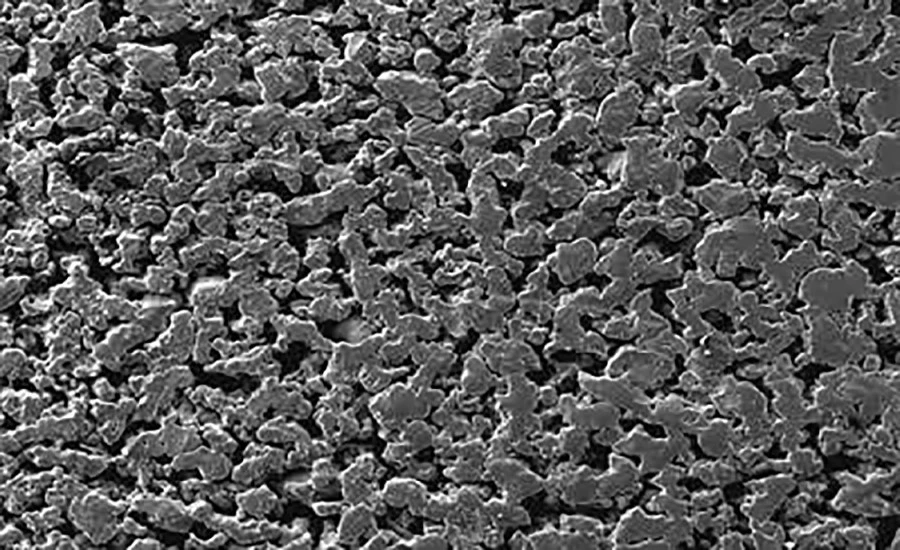
The temperature, dwell time, and atmosphere during sintering all have an effect on how powder particles stick together and how the remaining porosity is spread out. When the sintering temperature is higher, the neck growth between the particles gets bigger. This makes the skeleton stronger but less porous overall. Lower temperatures keep the open pore volume the same, but the mechanical bonding may not be strong enough. For PEM filter elements, the desired pore size range of 5–80 μm can be reached by carefully calibrating the sintering protocol to match the powder grade being used.
Permeability as a Functional Design Output
How well the open structure lets water and gas pass through it directly impacts how well the PEM system works. A filter element that doesn't let enough air pass through it causes too much pressure drop, which raises the parasitic energy consumption. Permeability can be controlled as an engineering result rather than a random one by carefully choosing the powder and designing the sintering cycle.
Sintered Metal Powder Adaptation from Engineering Drawings to Filter Elements
Translating a client's engineering drawing into a functional sintered metal powder component requires more than fabrication capability. It demands a structured process of dimensional verification, tooling design, and sintering parameter validation.
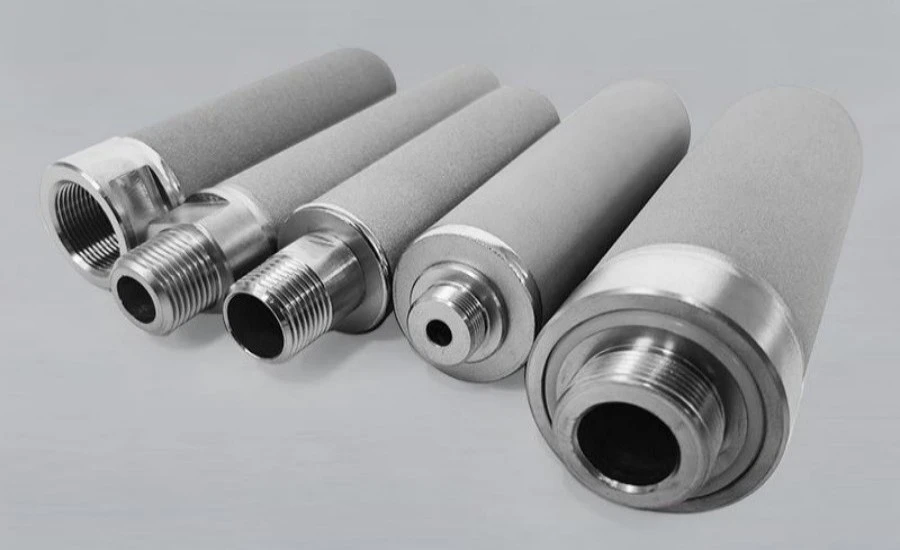
From CAD Geometry to Tooling and Forming Strategy
NAVI Titanium works with sintered porous metal parts that come from design drawings provided by the customer. With matched tooling systems, you can make shapes like disks, tubes, caps, sheets, and bars. The forming method-whether it's extrusion, die pressing, or isostatic pressing-is chosen based on how complicated the geometry is and how the powder compacts.
Sample Verification Before Full-Scale Production
Sample parts are checked for dimensions, porosity, and performance before they are used in large quantities. This validation loop finds specification drift early on, making sure that the whole production batch matches what the designer had in mind. This step is especially important for big PEM projects because if the quality of the filter elements varies across a large batch, it can affect how well the whole system works and how much hydrogen it produces.
How Does Custom Sintered Metal Powder Support Consistent PEM Filter Production?
Batch-to-batch consistency is the metric that separates capable suppliers from unreliable ones in large-scale PEM deployments.
Powder Batch Stability as a Production Control Variable
If rules on where the raw materials come from and how they are processed are not tight, the sintering activity of a powder batch changes. This is how likely it is to form strong ties between particles at a certain temperature. When powder batches are stable, the green density stays the same during shaping, and the shrinkage can be predicted during sintering. This directly means that the filter elements will have the same number of pores, wall thickness, and tensile strength throughout the whole production volume.
Scaling Production Without Compromising Specification Integrity
Filter parts need to be ordered in large quantities and within certain lead times for large green hydrogen projects that use dozens of electrolyzer stacks. To keep the integrity of the specifications at a large scale, the handling, mixing, shaping, and sintering of powder must follow clear, repeatable procedures. This is where the money you spent on custom sintered metal powder systems pays off:
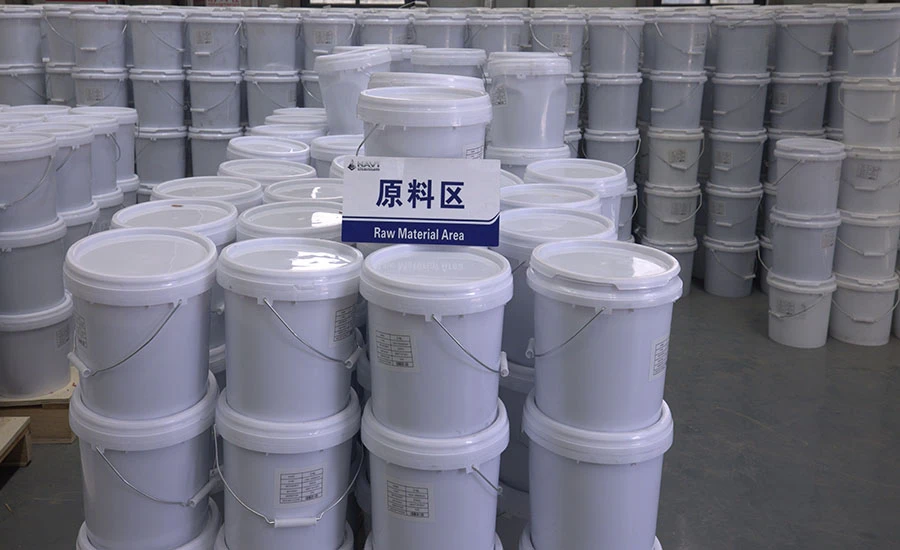
consistent inputs lead to consistent outputs, which lowers the rate of field failure and the total cost of the electrolysis installation over its lifetime.
Conclusion
Customizing sintered metal powder for large-scale PEM projects is a structured engineering discipline. Filter element performance is a function that may be measured in terms of powder purity, oxygen content, particle size dispersion and sintering processes. Control of these factors from the powder specification stage through full scale manufacturing yields a consistent, high performance porous metal component that enables dependable hydrogen generation at scale
FAQ
1. What powder material is most suitable for PEM electrolytic filter elements?
+
-
Most PEM filter elements are produced from high purity 0A-grade titanium powder which contains very little oxygen. It is chemically stable in deionized water and has good electrical conductivity which is advantageous for electrochemical conditions in a proton exchange membrane electrolyzer.
2. How does particle size distribution affect the pore size of sintered metal filters?
+
-
The particle size distribution determines the interstitial void geometry which evolves during powder compaction. Finer powder will create smaller holes providing better filtering accuracy, whilst coarser powder would create bigger pores and more permeability. The gradient filter elements utilize a mixture of both to trade-off between interception accuracy and flux needs.
3. Can sintered metal powder filter elements be manufactured to custom geometries?
+
-
Yes. Sintered porous metal products may be made to client provided technical drawings in a variety of forms including disks, tubes, caps, sheets and bars. Tooling is constructed to the prescribed geometry and sample verification is performed prior to full production runs to ensure dimensional and performance conformity.
Partner with NAVI Titanium for Custom Sintered Metal Powder Solutions
NAVI Titanium has been engineering porous metal components since 2008, operating from the heart of China's Titanium Valley in Baoji High-tech Zone. As a trusted sintered metal powder supplier, NAVI Titanium delivers high-purity 0A-grade titanium powder substrates, customized pore structures ranging from 5 to 80 μm, and full-service support from material consultation through finished product delivery - all tailored to the rigorous demands of large-scale PEM hydrogen projects. Whether your project requires a few development samples or a high-volume production series, NAVI Titanium's engineering team is ready to provide one-on-one technical support at every stage. Reach out today and discuss your specific filter element requirements directly with our specialists at sales@navititanium.com.
References
1. Carmo, M., Fritz, D. L., Mergel, J., & Stolten, D. (2013). A comprehensive review on PEM water electrolysis. International Journal of Hydrogen Energy, 38(12), 4901–4934.
2. Tsotridis, G., & Pilenga, A. (2018). EU Harmonised Terminology for Low-Temperature Water Electrolysis for Energy Storage Applications. Publications Office of the European Union.
3. German, R. M. (1994). Powder Metallurgy Science (2nd ed.). Metal Powder Industries Federation.
4. Smyth, B. M., & McEvoy, A. J. (Eds.). (2012). Fuel Cell Technology: Reaching Towards Commercialization. Springer Science & Business Media.
5. International Organization for Standardization. (2012). ISO 4793: Laboratory Sintered (Fritted) Filters - Porosity Grading, Classification and Designation. ISO.
6. Barbir, F. (2005). PEM electrolysis for production of hydrogen from renewable energy sources. Solar Energy, 78(5), 661–669.