


So if someone asks you "is a titanium bolt stronger than a steel bolt"then the honest response is… it depends what you mean by "stronger." Titanium is typically heralded as the ideal high performance fastener material, and in many instances that reputation is well deserved. But the contrast is not a simple one line solution.
Whether you're creating a lightweight motorbike, updating performance components or obtaining precise hardware for industrial usage, you need to know the fundamental distinctions between titanium and steel fasteners to make better buying choices.
What Stronger Really Means for a Titanium Bolt?
Tensile Strength vs. Specific Strength
Comparison of Fastener Materials Engineers differentiate between absolute and specific strength. Absolute tensile strength is the amount of force a bolt can take before it breaks. Specific strength divides that value by material density, revealing how much strength a material gives for a given weight.
The absolute tensile strength of steel grades 10.9 and 12.9 is around 1,040 MPa and more than 1,220 MPa, respectively. A commercially pure titanium Gr2 bolt will have a tensile strength of around 345 MPa, which obviously is lower in absolute terms than high-grade steel. However, titanium's density is 4.51 g/cm³ compared to steel's 7.85 g/cm³. That margin makes a big difference when you do particular strength calculations.
Grade 5 titanium, commonly known as Ti-6Al-4V, is ~40% lighter than steel, and has a tensile strength of ~895-1,000MPa depending on condition. That combination gives the titanium bolt competitive strength-to-weight characteristics.
Where the Real Advantage Appears?
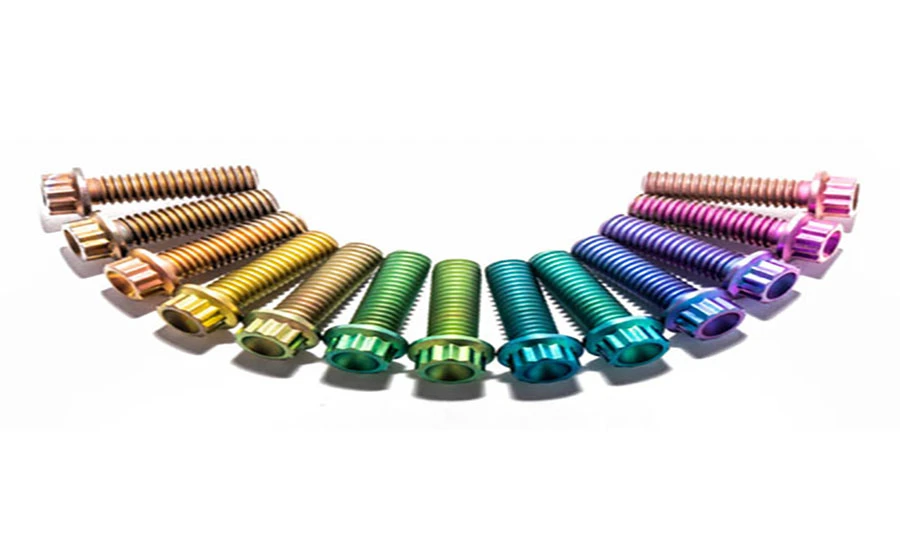
The real benefit of a titanium bolt is most seen in weight-sensitive applications. A motorcycle builder may swap out an entire set of steel fasteners for titanium and lower the weight of the hardware dramatically while without compromising functional strength at those mounting locations. This rationale has been used by aerospace and racing engineers for decades and the data consistently supports the technique for selected non-critical structural joints and external assemblies.
Why Titanium Bolt Grade Decides the Strength Result?
The Grade Gap Is Significant
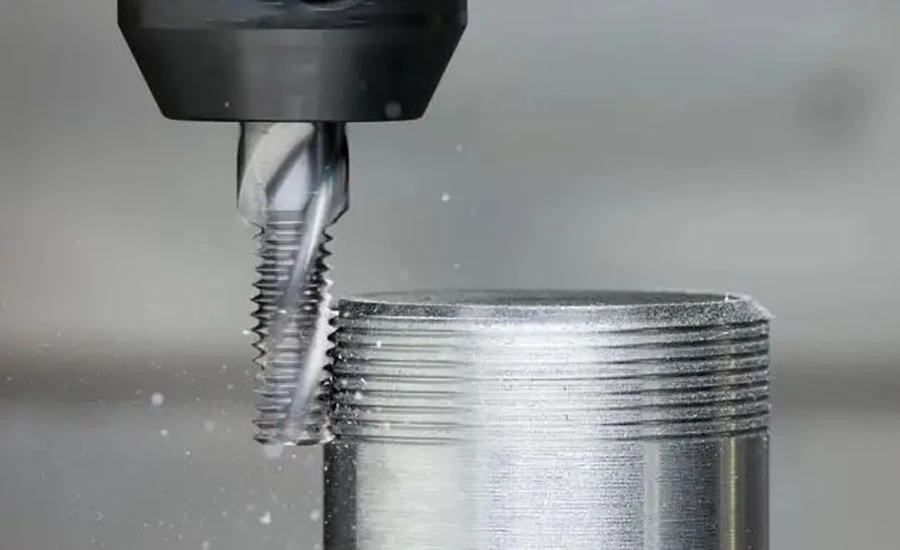
Not all titanium bolts have the same mechanical characteristics. The commercial purity grades Gr1 through Gr4 have increasing strength but are softer than the titanium alloys. Gr5 (Ti-6Al-4V) is the workhorse alloy grade, with a tensile strength that is respectable when compared to medium-grade steel fasteners. Gr9 (Ti-3Al-2.5V) is an intermediate grade between the pure grades and Gr5, providing a good compromise between machinability, weight, and strength. Gr23 is a medical grade interstitially modified variant of Ti-6Al-4V with significantly modified characteristics.
It is not optional to choose the right grade. That would be a big engineering no no . If you requested a Gr5 titanium bolt and used a Gr1 titanium bolt that would be a big no no . NAVI Titanium offers fasteners in Gr1, Gr2, Gr5, Gr9, Gr23 and other grades. Each option is in accordance with the real needs of the application.
How Grade Selection Changes the Steel Comparison?
A Gr5 titanium bolt may perform like a mild steel or ordinary Grade 8.8 steel bolt in many moderate-load applications, at about half the weight.
This is enhanced by the corrosion resistance advantage, as titanium produces a persistent oxide film that is resistant to moisture, road salt and various chemical conditions with no surface coating. Steel fasteners in exposed places may corrode and lose clamping integrity with age; titanium fasteners, in contrast, retain their condition under the same exposure. That durability issue is part of the strength equation when you think about the service life.
Is a Titanium Bolt as Stiff as a Steel Bolt?
Elastic Modulus: Where Steel Has a Clear Edge
The elastic modulus (or Young's modulus) defines the rigidity of a fastener. The elastic modulus of steel is around 200 GPa. The modulus of titanium is in the range of 110–116 GPa. Thus, a steel bolt will deflect less under the same force as a titanium bolt of the same design. The difference is important for applications requiring high joint rigidity and low elastic deformation.
Structural steel bolts are often much stiffer than needed at most motorbike attachment sites. Titanium bolts have a lower modulus and this seldom causes a functional issue for covers, brackets, fairings, exhaust hardware and accessories. When stiffness is very important, engineers define it.
What Lower Stiffness Can Offer?
Interestingly, titanium's somewhat lower elastic modulus may serve as a mild vibration dampener in certain assemblies, absorbing minor dynamic loads that could otherwise work-harden or fatigue a stiffer fastener. The feature has been seen in racing and aircraft where vibration control at bolted joints impacts service dependability.
Torque and Anti-Seize Practice for a Titanium Bolt
Titanium Galling and Why It Matters
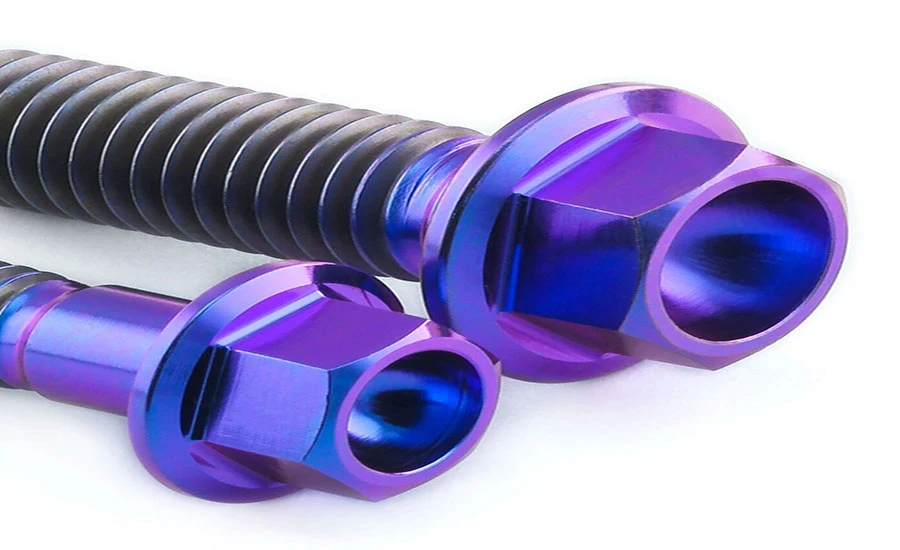
Titanium has a natural propensity to gall, meaning that the mating surfaces of a titanium bolt and a titanium nut may micro-weld themselves under the friction of tightening, making disassembly difficult or possibly destroying the thread . This is a well-documented behavior of titanium fasteners and not a flaw, but a material trait that demands careful handling technique.
If you use an anti seize compound on the thread before installation the chances of galling will be greatly reduced. This process is normal practice for many of the titanium fastener users in the motorcycle and racing circles.
Torque Specification Adjustments
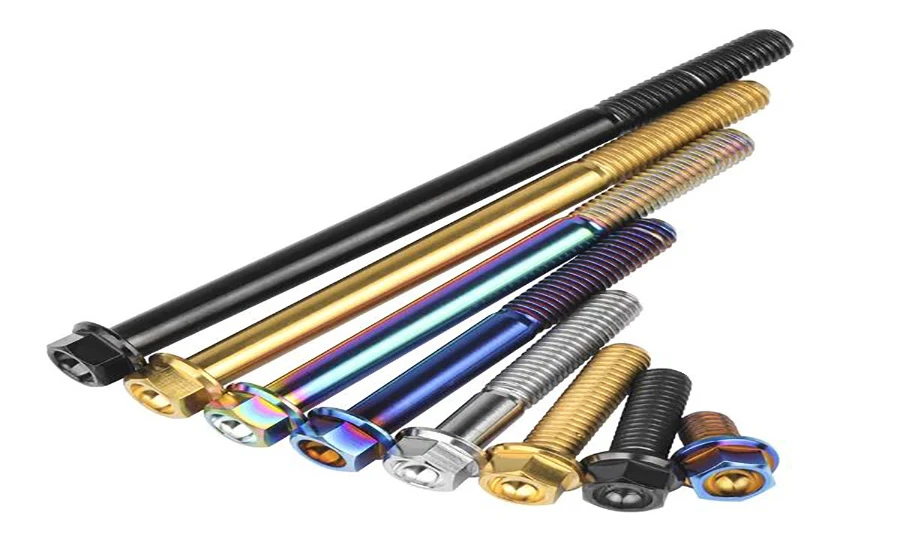
Because titanium's elastic properties differ from steel, torque specifications written for steel fasteners do not transfer directly to titanium equivalents. Applying steel torque values to a titanium bolt can over-stress the fastener or produce inaccurate clamping loads. Always reference torque data appropriate for the titanium grade and fastener geometry in use.
NAVI Titanium supports customers with technical guidance on installation requirements as part of the purchasing process.
When a Titanium Bolt Delivers More Strength Than the Job Needs?
Matching Fastener Capability to Application Load
Most motorcycle and industrial attachment points don't even come close to the proof load of a high-grade steel bolt. Covers, panels, heat shields and accessory mounts are comparatively low load carrying items. The titanium bolt, Gr2 or Gr5 in certain areas, offers more than enough mechanical strength, while also helping to reduce weight and prevent corrosion for long term.
The steel fastening strength is over-specified for many locations, adding weight but little practical advantage. Replacing them with titanium counterparts satisfies the structural requirement while reducing the bulk of the assembly.
Practical Weight Reduction Without Compromise
The valid engineering approach to weight reduction is via fastener selection. You can replace a lot of the stock steel fasteners on a motorbike with titanium ones and lower the hardware weight at those points by 40–45%. That decrease adds up over the course of a whole construction. The bespoke builder, the performance focused application this is a real benefit that a titanium bolt gives time and time again for the competitive rider.
Conclusion
A titanium bolt is not always stronger than all steel bolts on an absolute tensile strength basis. Most titanium grades have a lower absolute load capacity than high grade steel fasteners in the 10.9 and 12.9 classifications. However, on a particular strength basis, titanium is quite competitive, and Gr5 titanium competes very well with several medium grade steel fasteners, but weighs much less. Factor in corrosion resistance, service life and the practical needs of real-world applications, and the titanium bolt offers a compelling combination that steel cannot match at equal weight.
Grade selection, adequate torque practice, anti-seize application and matching the fastener to the actual load need all impact how successfully that potential is translated into dependable performance.
FAQ
1. Q: Can a titanium bolt replace a Grade 10.9 steel bolt in a high-load structural joint?
+
-
A: Not necessarily. A Grade 5 titanium bolt has a tensile strength of between 895 – 1,000 MPa, while Grade 10.9 steel is about 1,040 MPa minimum. Gr5 is a good option for mild structural joints. For the most highly loaded important structural places, the application engineer should analyze the particular loading requirements and obtain relevant technical information prior to material substitution.
2. Q: Does a titanium bolt require special tools to install?
+
-
A: Metric sized titanium bolts will operate with standard metric tools. The key installation concern is to use the appropriate torque specification for the titanium grade and not directly transfer steel torque values, and to use anti-seize compound on the threads to avoid galling during assembly.
3. Q: What titanium grade is best for motorcycle fasteners?
+
-
A: The most common alloy grade for motorcycle fasteners is Ti-6Al-4V (Gr5), where the need to reduce weight together with strength is a concern. Gr2 is suitable for lower load applications where corrosion resistance and weight are the primary concerns. Gr9 is a compromise between pure grades and Gr5. The best choice will rely on the particular mounting position, load and service environment.
Upgrade Your Build with NAVI Titanium - Your Trusted Titanium Bolt Supplier
Whether you are sourcing fasteners for a custom motorcycle build, a performance upgrade, or a precision industrial assembly, NAVI Titanium supplies CNC-machined titanium bolts across a full range of grades including Gr1, Gr2, Gr5, Gr9, and Gr23. As an experienced titanium bolt supplier, NAVI Titanium provides material grade consultation, custom dimensions, thread specifications, surface finishing, and complete technical support from drawing to delivery. Our ISO 9001-certified plant and dedicated engineering team are ready to support your project at any scale, from sample orders to full production runs. Send your specifications or drawings directly to our team and receive a detailed technical review and quotation.
Contact NAVI Titanium at sales@navititanium.com to discuss your fastener requirements today.
References
1. Boyer, R., Welsch, G., & Collings, E. W. (Eds.). Materials Properties Handbook: Titanium Alloys. ASM International, 1994.
2. Donachie, M. J. Titanium: A Technical Guide (2nd ed.). ASM International, 2000.
3. Peters, M., Kumpfert, J., Ward, C. H., & Leyens, C. "Titanium Alloys for Aerospace Applications." Advanced Engineering Materials, 2003, 5(6), 419–427.
4. ASTM International. ASTM F136: Standard Specification for Wrought Titanium-6Aluminum-4Vanadium ELI Alloy for Surgical Implant Applications. ASTM International.
5. Bickford, J. H. An Introduction to the Design and Behavior of Bolted Joints (4th ed.). CRC Press, 2007.
6. Schutz, R. W., & Watkins, H. B. "Recent Developments in Titanium Alloy Application in the Energy Industry." Materials Science and Engineering: A, 1998, 243(1–2), 305–315.



