


When engineers construct filtering systems for demanding operations like PEM water electrolysis, the size distribution of the metal powder used to produce the filter governs everything else. Fluid will flow through freely and impurities will not get in, as long as you do it appropriately. If you do it incorrectly the pressure will go up, the flow will slow down and parts will wear out quicker than they should.
The paper deals with the influence of particle gradation on pore geometry and mechanics of size distribution of sintered metal powder. It also explains why choosing the correct powder system makes a huge impact in the real world of how effectively it filters.
How Does Sintered Metal Powder Particle Size Distribution Control Flow Rate?
The rate of flow through a porous metal filter changes depending on how the pores are arranged inside the filter. During sintering, that network is formed. The results of sintering depend on the size, spread, and regularity of the metal pieces that are put into the mold before heat is applied.
Particle Packing Density and Its Influence on Pore Channels
If you pack particles together properly, and they are of the same size, the gaps left between the particles are predictable. These voids are turned into pores. Small variety of particle sizes . This leads to regular packing arrangement . This causes holes to be formed whose breadth is generally the same.
If the holes are uniform, the fluid may go through the filter at a constant pace, which can be measured. This is precisely the need for hydrogen production systems where the regularity of the flow controls the electrolytic efficiency.
The powder metallurgy investigations reveal a clear correlation between the median pore diameter and the pore size spread and the particle size dispersion. A well-controlled distribution reduces localized flow resistance and enables consistent performance across manufacturing batches, which narrows that spread.
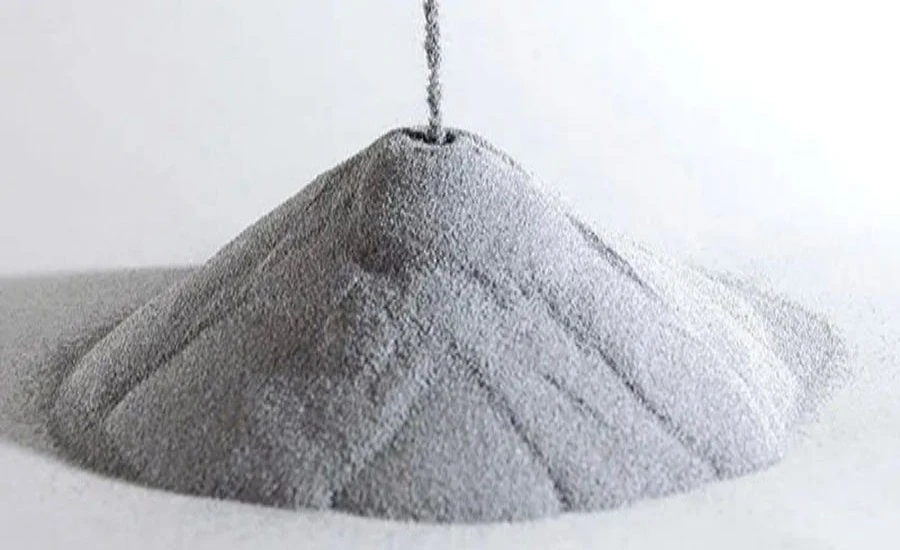
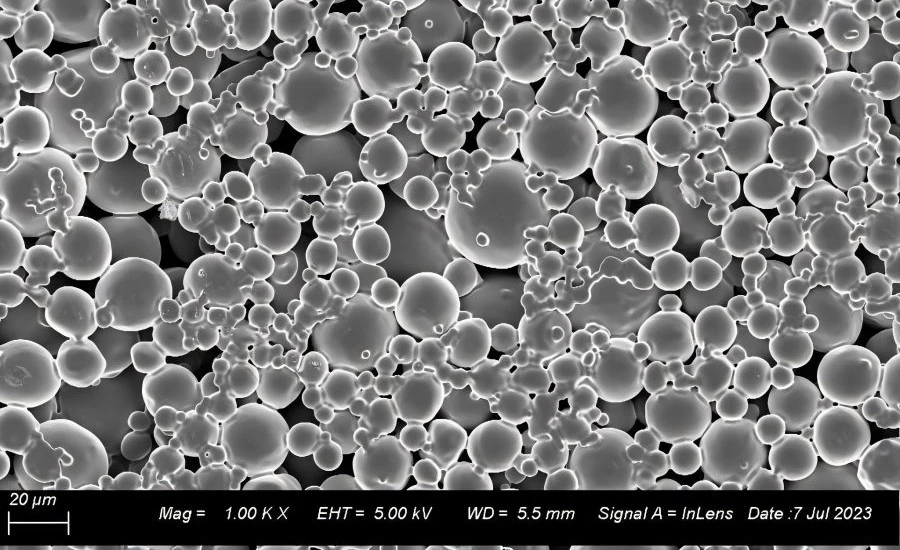
Pressure Drop and Permeability Across the Porous Skeleton
One of the most basic concepts in porous media engineering is Darcy's Law. It claims that the volumetric flow rate through a porous material is proportional to the permeability of the material, and inversely related to the thickness of the material and the thickness of the fluid.
The rapid shift in permeability may be seen if you look at the mean pore width and pore connectivity, both of which have something to do with powder particle size.
Larger particles of sintered metal powder leave larger intervals between them making the filter more permeable and the pressure drop across it less. The tighter you pack the smaller particles, the more accurate the filtering, but the narrower the flow channel.
The most difficult element of pore filter design is finding the appropriate size range to balance these trade offs.
Sintered Metal Powder Particle Size and Its Direct Effect on Pore Dimensions
A general geometry rule says that the link between the width of a particle and the holes that form around it is one of proportion. Depending on the packing geometry and sintering temperature, the pore throat diameter is usually about 15–40% of the mean particle diameter. This is the narrowest passage a particle has to go through. This ratio gives engineers a useful place to start when they want to choose the right sintered metal powder for a certain filtration cut point.
How Mean Particle Diameter Maps to Filtration Cut Points
Powders in the 45–75 µm range usually give filter cut points in the 5–20 µm window for a titanium sintered metal powder filter that is meant to remove small particles in PEM systems. This depends on the sintering parameters. Moving toward 100–150 µm powders creates pore structures that work well for gas diffusion tasks, where high flux is more important than fine retention. This relationship between particle size, pore size, and application is not close to perfect. Powder manufacturers like NAVI Titanium work hard to make sure that their powder meets exact pore targets every time.
Surface Area, Sintering Necks, and Structural Stability
Smaller particles have more surface area per unit mass, which speeds up the formation of sintering necks. These are the places where particles next to each other stick together and give the finished filter its power.
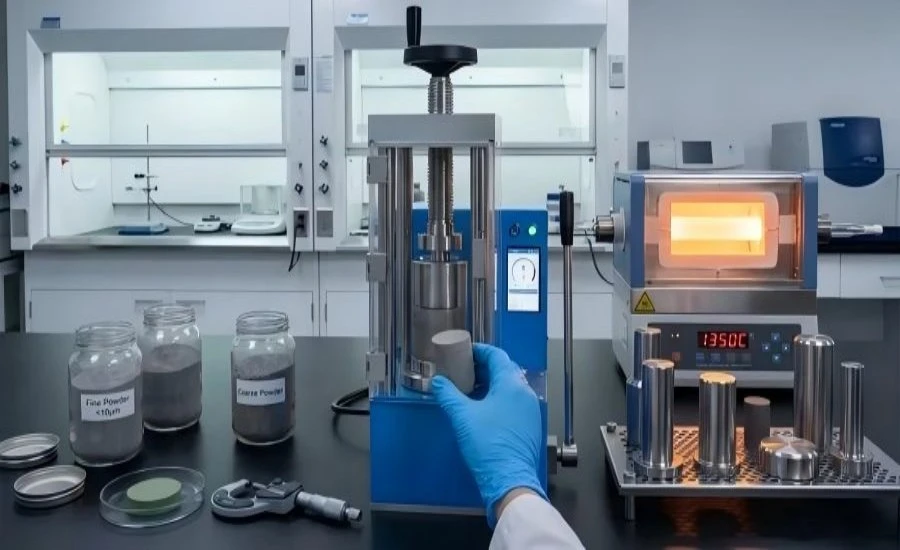
When the necks are stronger, the porous skeleton is more rigid and doesn't deform when pressure is applied and removed over and over again. This is an important factor in high-cycle PEM electrolysis environments with high differential pressures.
A filter with well-formed sintering necks keeps its pore shape even after thousands of hours of use. This directly keeps the long-term flow rate stable, stopping the pores from slowly getting smaller or bigger as can happen in parts that aren't fused properly.
How Sintered Metal Powder Gradation Balances Permeability and Filtration Accuracy
Using a single particle size produces predictable results, but blending multiple size fractions - a practice called gradation - unlocks performance combinations that a mono-modal distribution cannot achieve alone. Gradation is the primary engineering lever for simultaneously managing flow resistance, filtration precision, and structural integrity.
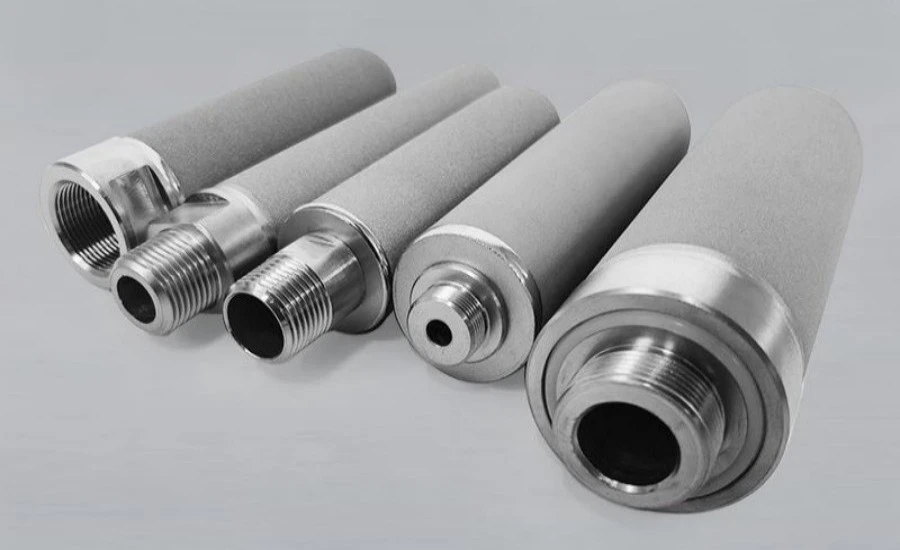
Why Mono-Modal Distributions Have Performance Ceilings
Either a filter made from a single powder fraction has good permeability or good retention; very rarely does it have both at the same time. It's easy for coarse mono-modal screens to move, but they let small particles pass through. Fine mono-modal filters do a good job of blocking contaminants, but they also stop fluids from moving, which means they need high operating pressures that speed up system wear. In precise applications like PEM electrolysis, where both gas purity and hydraulic efficiency are important, neither result meets the needs.
Bimodal and Multi-Modal Gradation Strategies
Adding a second fine fraction to a matrix of coarse powder lets the fine particles partially fill in the big gaps between the coarse powder particles. The end result was smaller pores on average without a corresponding drop in the total number of pores.
The big particles keep the load-bearing spine linked, and the small particles make the hole throats smaller. Powder metallurgy engineering research has shown that bimodal mixes can improve filtering efficiency by 30–60% compared to single-fraction filters with the same amount of porosity while keeping the leakage penalty below 20%.
Sintered Metal Powder Blending for Controlled Pore Connectivity
Pore connectivity - the degree to which individual pores link into continuous flow channels - determines how efficiently a fluid permeates the filter rather than stagnating in isolated voids. Blending strategies in sintered metal powder production directly govern this connectivity.
Open Porosity vs. Closed Porosity in Blended Systems
Not all pores aid in the flow. Closed pores are sealed holes that have no means to access the filter surface. They contribute mass but do not enhance permeability. Well-designed powder mixes preserve the same particle contact geometry throughout the compact, which results in less closed porosity. The titanium powders produced at NAVI Titanium are tested with particle size analysis and mixing controls for open interconnected pore networks. This is critical for PEM filter elements, since both gas and water must be able to pass fast through the membrane support layer.
Controlling Tortuosity Through Gradation
Tortuosity is a measure of the actual flow path's twists and turns relative to the straight-line distance across the filter. The more the tortuosity, the longer the residence duration and the filtration contact, but also the higher the pressure drop.

Tortuosity is influenced by the placement of fine particles inside the coarse particle matrix, which is controlled by gradation ratios. The good mix is carefully calibrated, with moderate tortuosity – enough to assure accurate particle interception, but so high as to restrict flow.
Choosing Sintered Metal Powder Sizes for Efficient Water and Gas Transport
PEM electrolysis places simultaneous and competing demands on filter components. The anode side requires efficient liquid water delivery, while the cathode side demands rapid hydrogen gas transport. Powder size selection must satisfy both requirements within a single filter architecture.
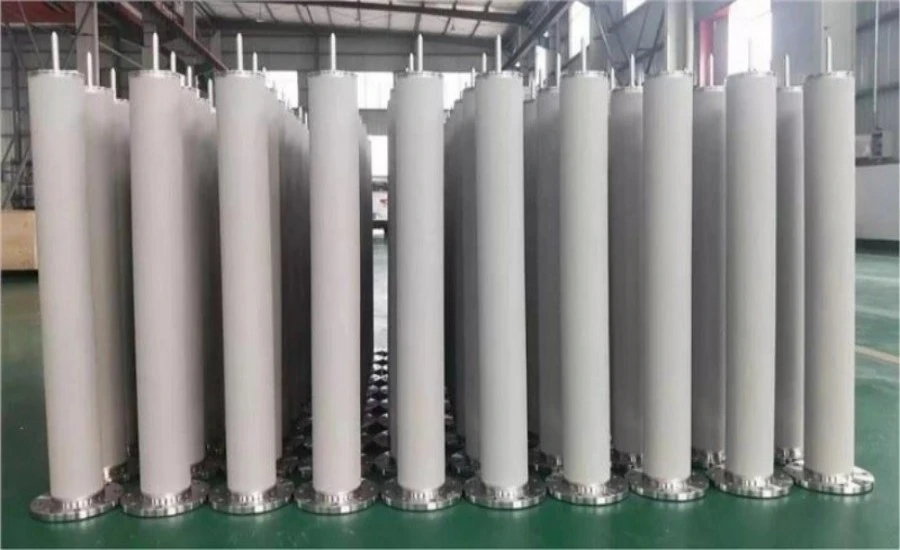
Titanium Powder Specifications for PEM Filter Elements
High-purity, low-oxygen titanium powder in the 45–100 µm range has become the established specification for PEM porous transport layers and support filters. Low oxygen content - ideally below 0.15 wt% - preserves metallic conductivity across the porous skeleton, preventing resistive losses that reduce electrolyzer stack efficiency. NAVI Titanium sources 0A grade pure titanium powder to meet these specifications, ensuring sintered components deliver consistent electrical and hydraulic performance.
Matching Powder Gradation to Flow Application Requirements
Gas transport applications tolerate and often benefit from coarser gradations, which produce higher porosity and lower pressure drop. Liquid filtration under fine particulate loads calls for tighter gradations with finer mean particle sizes and narrower distributions. Matching the powder gradation to the specific fluid, pressure regime, and contamination profile of an application is the foundation of efficient filter design - and it is where material selection expertise directly translates into performance outcomes.
Conclusion
Sintered metal powder size distribution is not a secondary specification - it is the primary design parameter for sintered metal filter performance. Mean particle diameter sets the baseline pore size. Distribution breadth controls pore uniformity. Gradation blending balances permeability against filtration precision. Together, these variables determine whether a filter delivers stable, efficient flow across its service life or compromises under operational demands.
For applications like PEM electrolysis, where precision, durability, and flow efficiency all carry significant weight, the powder selection process deserves the same engineering rigor as the system design itself.
fAQ
Q1: What particle size range of sintered metal powder is best for PEM water electrolysis filters?
+
-
A lot of people use high-purity titanium powder in the 45–100 µm range for PEM electrolysis. This range makes pores in the 5–20 µm range, which helps water and gas move through the material efficiently while keeping the structure's stability needed for repeated cycles of high and low pressure.
Q2: How does oxygen content in titanium powder affect filter performance?
+
-
Titanium powder contains oxygen that forms an oxide layer on the surface. This layer raises the electrical resistance across the porous skeleton. This resistance makes the stack less efficient in PEM electrolyzer filters. When you specify low-oxygen titanium powder (below 0.15 wt% of the total weight), the metal's conductivity is kept and the electrochemical performance stays stable over time.
Q3: Can sintered metal powder filters be customized for both liquid and gas applications?
+
-
Yes. Manufacturers can change the gradation ratio and powder particle size distribution to adjust the pore size, porosity, and permeability to work with different types of fluids and operating pressures. NAVI Titanium has personalized powder conversion tools that make sure that the filter specs are best for each application.
Partner with NAVI Titanium for Custom Sintered Metal Powder Filter Solutions
At NAVI Titanium, precision is built into every stage of production - starting with powder selection. As an established sintered metal powder supplier since 2008, NAVI Titanium engineers porous filter components from 0A grade titanium, stainless steel, nickel alloys, and bronze, with customizable pore structures ranging from 5 to 80 µm. Whether your application demands high-precision PEM filter elements or high-throughput industrial filtration components, NAVI Titanium delivers tailored solutions backed by material expertise and rigorous process control. Reach out to discuss your specifications, request a sample, or explore customized powder adaptation programs designed to reduce long-term operating costs.
📧 Contact NAVI Titanium directly: sales@navititanium.com
References
1. German, R. M. Powder Metallurgy and Particulate Materials Processing. Metal Powder Industries Federation, 2005.
2. Mench, M. M. Fuel Cell Engines. John Wiley & Sons, 2008. (Chapter on porous transport layers in PEM electrolyzers.)
3. Darcy, H. Les Fontaines Publiques de la Ville de Dijon. Victor Dalmont, 1856. (Foundational work establishing flow rate principles through porous media.)
4. Smid, J., Dautzenberg, C. F. M., & Leurs, S. A. "Porous Metal Filters and Membranes for Gas Filtration." Filtration & Separation, 2005.
5. Rashkovan, A., & Gutfinger, C. "Particle Deposition in Porous Media: Effect of Pore Size Distribution." Aerosol Science and Technology, 1997.
6. Majsztrik, P. W., Satterfield, M. B., Bocarsly, A. B., & Benziger, J. B. "Water Sorption, Desorption and Transport in Nafion Membranes." Journal of Membrane Science, 2007. (Referenced for PEM system transport layer requirements.)



