


A workshop in Cebu is looking for a gold M6 button head bolt for a current NMAX model. A Bangkok dealer is re-stocking titanium rainbow fairing kit for Click 160. Ho Chi Minh City distributor requires 300 M8 countersunk bolts for the Vision. In Southeast Asia, the enquiries coming to a titanium bolt supplier are tiny but show the same pattern: short runs, strict colour matching, and rapid response. This field guide is about the specifications, fitting checks, queries about customising, and paperwork loop involving a motorbike, scooter, or e-moped order from inquiry to first delivery.
Why Southeast Asian Distributors Keep Shortening the Sourcing Loop
A lot of Southeast Asian workshops used to get their titanium gear from European distributors ten years ago. Today more people talk directly with a titanium bolt supplier in Baoji, Shenzhen or Dongguan. The driver is not branding, it's cycle time. A five day window workshop cannot wait six weeks for a back ordered M5 socket cap. The change has been expedited by small-batch manufacture of scooters and electric mopeds: in Indonesia, Vietnam, the Philippines and Thailand, street motorcycles below 160 cc dominate unit sales, with coloured fasteners promoted as a cosmetic enhancement.
The buyer profile is stable. The owner is price sensitive, the end consumer is visual, the loop is short. Instructions also matter, as do blister cards and packing, since the person ordering them isn't usually the installation. The customer needs a sourcing loop equal to the turnover of the workshop. This loop has three qualities. Low minimum order quantity – purchasers like to start off with a few hundred pieces per part number, particularly when a kit is being tested on a new model. Stock colours quick turnaround and little variation, slightly longer shank, different head stamp, unique blister card.
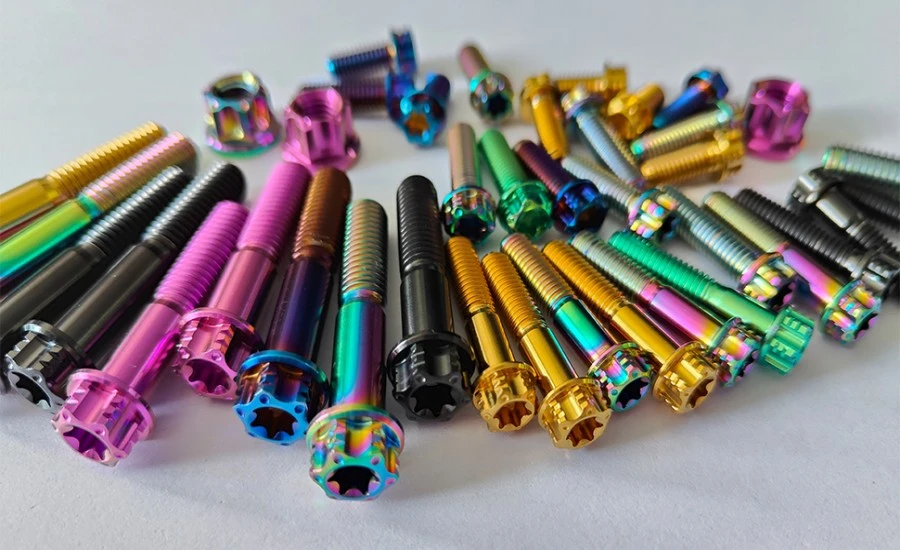
Repeatability must be predictable: if a kit is in the catalogue, the second and third orders must be the same as the first, colour and torque included. If a supplier can address these three things without going through a five-department approval process, they stick around in the discussion.
Spec Checks a Southeast Asian Buyer Runs Before the First RFQ
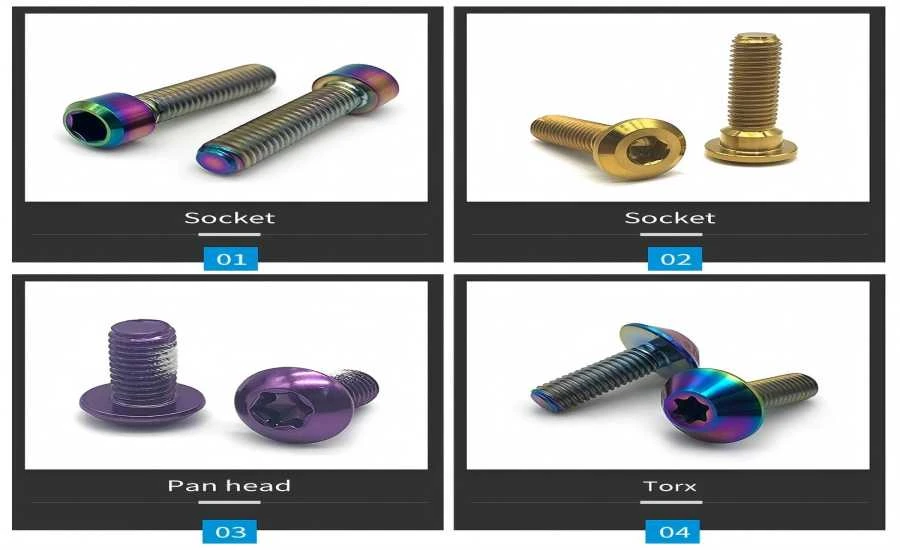
In a workshop, four sets of facts are matched up prior to the first request for quotation. The first is (grade). Grade 2 is the workhorse for colour anodising, taking dye evenly and holding a deep gold, blue or rainbow colour. Grade 5 (Ti-6Al-4V) is for locations near heat, vibration or a structural joint. Defaulting to grade 5 across the board is good for peace of mind but drives up unit cost. Usually a candid conversation about which positions actually see load saves money without affecting customer experience.
The second set is head and drive. Hex socket, button head, countersunk and Torx cover most of the color-kit applications. The third is dimensional. M4 for small brackets, M5, M6 and M8 for daily drivers for Southeast Asian small-displacement and electric moped builds, M10 for swingarm or footpeg positions. The most common point of confusion is length. Shank length is not total length, and a bolt sample will usually get you a quicker and more accurate quote than a drawing that does not show a dimension for the unthreaded section. The fourth is finish. Anodising colours are referenced to a reference card, and the same colour name - titanium blue, burnt blue, gold, etc. - may not render the same between batches.
To ensure repeatability of colour, buyers should request the supplier retain a sealed reference sample and send it with each repeat order or maintain it on file. A small ask, but it does away with one of the most common reasons a repeat order gets rejected by the workshop's own quality check.
Motorcycle, Scooter, and E-Moped Fitment: How Workshops Match Each Bolt to a Position
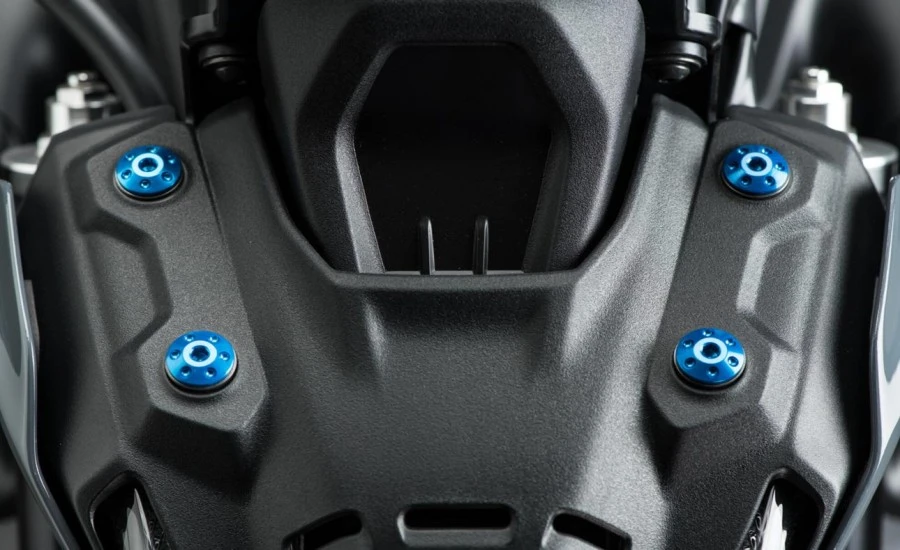
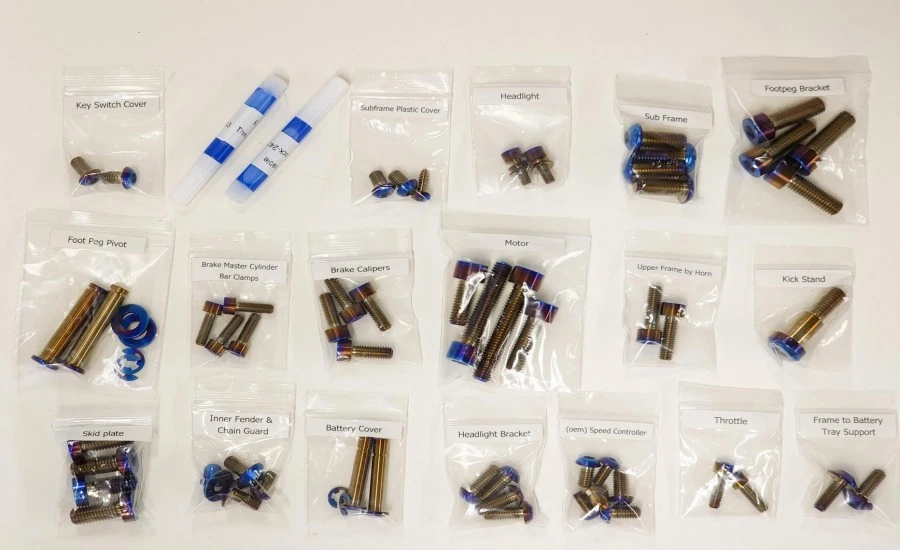
Southeast Asian colour kits are little choices for model spots. For KTM Duke 390, Yamaha Y15, and Honda Winner X bikes, the kit replaces fairing, engine cover, and tiny bracket fasteners. The kit includes body panels, inner shields, exposed bracket bolts, and an underseat count for NMAX, Click, PCX, Vision, Aerox, and Mio scooters.For Surron, Talaria, and the wave of Chinese-brand e-mopeds in Indonesia and the Philippines, the battery case, controller mount, footpeg, and chosen suspension links are dirt-bike-like.The fastest way to confirm fitment is to send the supplier a small reference set: one sample bolt per position, ideally with the original steel bolt still in place. From it, a skilled workshop can recover diameter, pitch, length under head, head type, drive style, and finish without going back to the workshop. When a sample is not available - commonly the case for a brand-new model - the next-best inputs are a workshop picture, a service manual page, or a competitor's reference kit, and a documented inventory of every position to be changed.
A titanium bolt supplier that asks for them in advance provides fewer incorrect parts, and the workshop spends less time on rework. Wheel and brake locations warrant a separate remark.
A wheel or brake fastener is a safety item, and most workshops preserve the original specification unless there is a demonstrated need to modify. When a client does request a titanium upgrade on a brake or axle position, the workshop should confirm two things: the grade (Grade 5 is the safer default) and the torque amount, preferably against the service handbook. A clear response on those two issues is a quicker indicator of supplier expertise than any catalog page.
Color Kits, Small-Batch Customization, and the Question of Repeatability
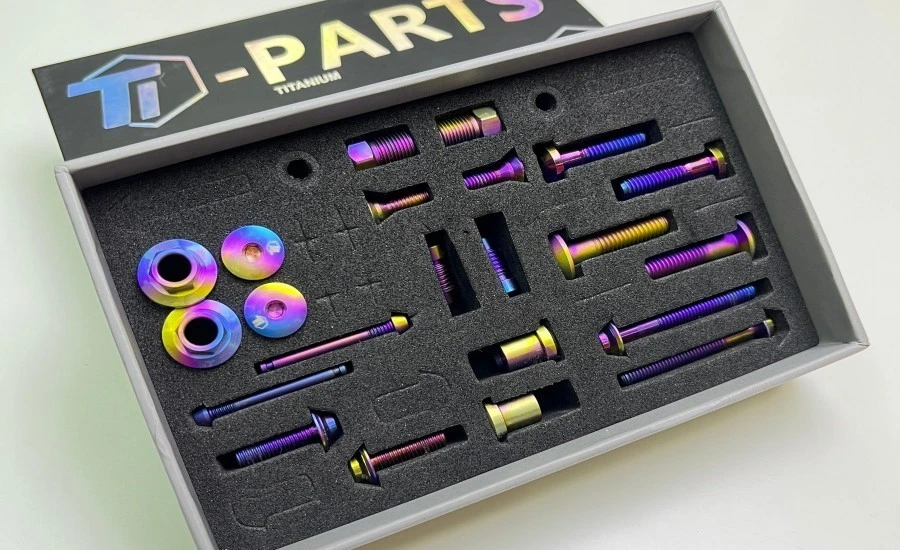
A Southeast Asian color kit is presented as a full retail product, so the consumer is not simply asking for the bolt – they are looking for a color narrative that holds together. Three request categories exist.One colour per kit (gold, blue, black, titanium natural).Two-tone or three-tone, titanium natural on body and powerful engine colour.When the anodising bath creates a spectrum on one bolt, full rainbow.Each has different tolerances; a workshop that hasn't chosen one will waste the most time sampling.
Titanium bolt providers profit from small-batch customising.If the workshop can correctly describe the variation, a 200- or 300-piece run with a custom head stamp, blister card, or length is normal.Drawings, photos of the original, and one or two reference bolts usually work.Ambiguity-a longer shank, deeper blue, pinker rainbow-slows everything down.The fastest option is to offer a physical reference and ask the supplier to save it for repeat orders. Repeatability is the silent problem. A kit reordered three or four times a year requires the color to match across batches, the head stamp to remain in the same location, the surface to feel the same in the touch.
Buyers who lock in these parameters at the first purchase - and ask the supplier to preserve a reference sample - frequently find their second and third orders come without drama.
From RFQ to First Order: Packaging, Documents, and Logistics That Move the Cycle
The last stretch is paperwork. For a Southeast Asian motorbike, scooter, or e-moped order, four paperwork normally come up. The commercial invoice and packing list with destination country, the harmonized system code, and the buyer's tax identification number. The material certificate is a mill sheet or factory proof of analysis that certifies grade and batch. A certificate of origin that the buyer may require for tariff preference or re-export to a neighbouring market. The test report is usually a tensile or hardness result and is attached if the customer requests for it. If someone is absent on the initial shipment, they have to be re-issued by hand and slows the cycle down.
Packaging is more functional than it sounds. Color-anodized bolts are scratch sensitive. A scuffed kit is a kit that gets sent back. Typically, workshops in the area need separate poly bags, a tiny inner box per kit and a master carton based on the order. For shipments between one and 10 kilos a robust corrugated export carton with a legible label will do. If shipping a full container, the customer should enquire with the provider about palletisation, desiccant, and any special humidity or handling markings that the destination port may need.
The last variable is logistics. A small shipment via air may pass Manila, Bangkok or Ho Chi Minh City in a few days; a full colour-kit pallet often sails by sea on the regional liner schedule. Fastest Cycle: At RFQ stage, check destination port and Incoterm (EXW, FOB or CIF) and ask supplier to mark carton with buyer reference number. There are two or three simple things, repeated on every order, that distinguish a flawless first delivery from a delayed one.
Conclusion
The similar pattern is seen in Indonesia, the Philippines, Vietnam and Thailand: small batch colour kits, strict colour matching and a workshop that requires a quick feedback loop from inquiry to delivery. The one that sticks in the discussion is the titanium bolt provider that has cheap minimums, a confirmed grade and finish on the first conversation and retains a reference sample for subsequent orders. It's a tiny job, but it's the small job – shank length, head stamp, colour card, packing list – that determines whether a workshop in Southeast Asia gets a second, third and fourth order.
FAQ
1. What grade of titanium bolt should a Southeast Asian color kit use?
+
-
Grade 2 is the most popular option for visible fairing, body and bracket locations as it takes on anodising colour well and provides a rich, consistent gold, blue or rainbow tone. Grade 5 (Ti-6Al-4V) is the safest option for wheels, brakes, suspension and engine locations where strength and heat resistance are important. To balance unit cost against the customer's view many workshops use a mixed kit. For example Grade 2 on visible locations and Grade 5 on structural positions.
2. What is the typical minimum order quantity for a custom color kit?
+
-
For a standard color from the supplier's catalog, a few hundred pieces per part number is usually enough to start. For a custom color, a custom head stamp, or a non-standard blister card, the first run is typically 200 to 500 pieces. The minimum scales with the number of unique part numbers - a 40-piece fairing kit of 40 different lengths is a different conversation from a 40-piece kit of 5 standard lengths repeated.
3. How do I keep the color consistent across repeat orders?
+
-
Ask the supplier to retain a sealed reference sample of the approved color and to check every repeat batch against that reference before shipment. Send a physical color card or an anodized reference bolt with your first purchase order so the supplier has something concrete to match against. Repeat orders that quote the same color as last time without a reference on file tend to drift between batches, especially on rainbow and burnt-tone finishes.
Start Your Southeast Asia Color Kit with a Titanium Bolt Supplier That Holds the Loop
If your workshop or distribution team is sourcing a titanium bolt kit for a Southeast Asian motorcycle, scooter, or e-moped program, NAVI Titanium is ready to support the loop. Share your model list, the position you want to replace, and a reference sample or drawing; the engineering team will confirm grade, head and drive type, length, and anodizing color, and return a quotation aligned to your destination port. Sample lots and small-batch color kits are welcome, and repeat orders are produced against a retained reference. To start the conversation, send your requirements to sales@navititanium.com.
References
1. ASTM B348 – Standard Specification for Titanium and Titanium Alloy Bars and Billets
2. AMS 4928 – Titanium Alloy Bars, Wire, Forgings, and Rings
3. ISO 9001:2015 – Quality management systems – Requirements
4. JIS B 0207 – General rules for metric coarse screw threads
5. DIN 912 – Hexagon socket head cap screws
6. ASME B18.3.1M – Socket Head Cap Screws (Metric Series)



