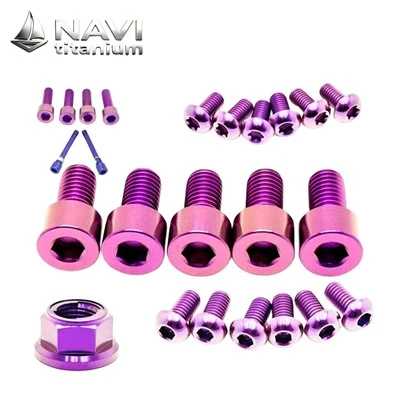
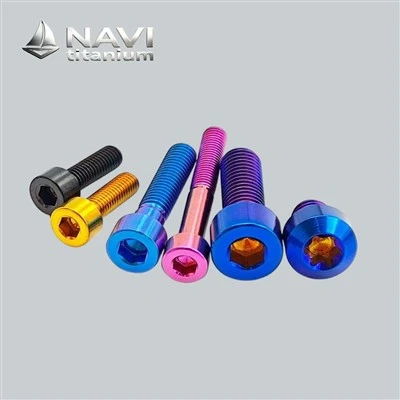
NAVI Titanium produces titanium hex bolts of motorcycle components. Each production lot follows a defined verification plan covering alloy composition, hardness, tensile behavior, head symmetry, and wrench engagement. When an irregular result appears, the affected batch is isolated while technicians review process records and identify the likely source. Corrective measures may include parameter adjustments, operator retraining, or revised work instructions, depending on the findings.


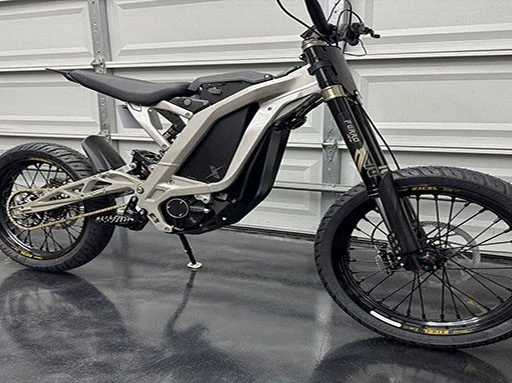
Solutions of NAVI Titanium
NAVI Titanium applies a structured response system to production deviations associated with external hex-head components for motorbikes and other mechanical assemblies. When recorded results fall outside established acceptance limits, the affected lot is held for technical review, with production records examined to trace the source of variation. Corrective actions may involve process recalibration, revised operating procedures, or additional operator training, depending on the investigation findings.


NAVI Titanium evaluates external hexagonal configurations through the relationship between face symmetry, corner transitions, and tool-contact consistency. These geometric characteristics influence engagement stability during repeated assembly cycles and maintenance operations.


Application
Titanium hex bolts from NAVI Titanium feature a precisely defined external six-sided contour, balanced flat-to-corner transitions, and reliable wrench engagement for motorbike assemblies requiring consistent tool compatibility and repeated servicing.
The external six-sided configuration is distinguished by six raised flats arranged around the head perimeter, creating an accessible interface for open-end wrenches, combination spanners, and matching sockets. Unlike an internal hexagonal recess, which requires a tool to enter a cavity, this external arrangement places the engagement faces along the outer circumference. Such a distinction is particularly relevant to motorbike assemblies, where surrounding brackets, engine casings, suspension members, and auxiliary fittings can restrict the direction of tool approach. Across-flats distance establishes the principal reference for selecting a compatible wrench, while corner radii and flat-to-flat symmetry influence the quality of contact between the tool and the head. Uneven engagement may concentrate local stress near individual corners, particularly when access is restricted or the tool is poorly aligned. A carefully controlled external contour therefore contributes to predictable tool seating and reduces unnecessary wear during repeated servicing. For engineering evaluation, titanium bolt price should be considered alongside the relationship between usable flat area, corner transitions, and available clearance within the assembled motorcycle structure.

2. Flat-to-Corner Relationships

The mechanical behavior of an external hexagonal head is influenced by the interaction between its six planar faces and six connecting corners. Each flat provides a potential contact region for a wrench, whereas the corners define the transitions between adjacent faces and influence the amount of usable engagement available near the perimeter. Excessive rounding can shorten the effective flats, while irregular transitions may produce inconsistent contact when a tool is applied. These effects become relevant in motorbike applications involving engine covers, brake assemblies, frame accessories, handlebar components, and suspension hardware, where repeated disassembly may gradually alter the condition of the head. Head height also deserves consideration because it determines how much of the external contour remains available for tool engagement after accounting for adjacent components and recess depth. Engineering assessment can examine across-flats consistency, corner symmetry, flatness, and resistance to localized deformation under representative service conditions. Evaluating these characteristics together provides a more rigorous basis for selecting an external hexagonal configuration, particularly when maintenance access and tool compatibility are important purchasing considerations.
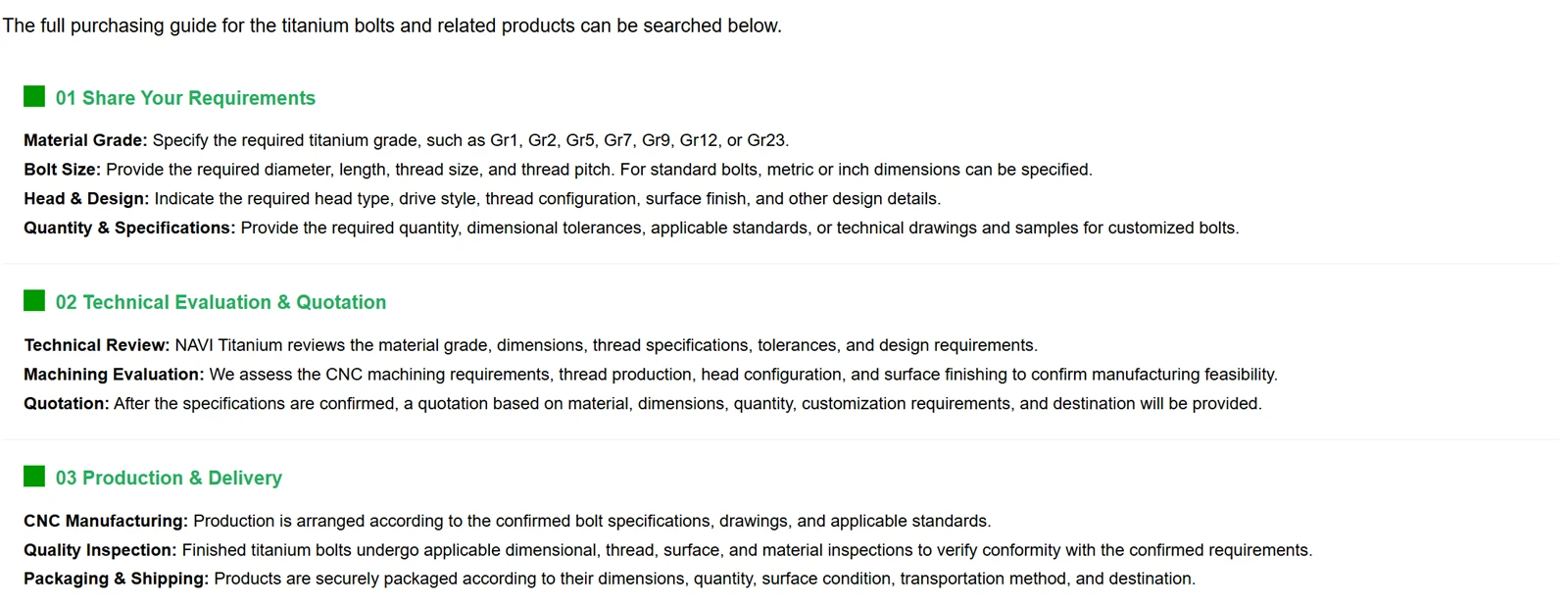
Purchasing guide
Quality control (QC)
For external hexagonal components, reliable documentation from NAVI Titanium should establish a clear connection between recorded test results and the physical characteristics that influence wrench engagement. Across-flats consistency, corner symmetry, hardness, and alloy composition are relevant data points when evaluating manufacturing repeatability.

Manufacturing Process
External hexagonal head production at NAVI Titanium begins with controlled blank preparation, followed by precision machining that establishes six distinct flats around the central axis. Particular attention is given to across-flats consistency, corner transitions, head concentricity, and the relationship between the head and shank. These parameters influence wrench seating, contact uniformity, and compatibility with surrounding motorbike assemblies. Subsequent deburring removes sharp edges that could interfere with tool engagement, while hardness testing and optical measurement provide evidence of process consistency.
Compatibility and Transit Handling
The external six-sided head must correspond closely with the engagement contours of open-end spanners, ring spanners, and six-sided sockets used in motorbike assembly and maintenance. Across-flats consistency is a primary reference when selecting compatible tools, while corner radii and flat-face symmetry influence contact distribution during engagement. An open-end spanner approaches from the side, making unobstructed access and accurate seating particularly important in confined engine compartments. A ring spanner surrounds the head and can provide more uniform contact when sufficient clearance exists above the assembly. A six-sided socket offers another practical option, especially where controlled alignment is needed during installation or removal. Differences in internal tool tolerances can affect the contact pattern, so compatibility assessment should consider both the external contour and the intended tool standard. For purchasing teams, confirming these details before ordering helps reduce workshop fitting problems, unnecessary tool wear, and delays during assembly. Consistent head contours across repeat orders also simplify maintenance planning for distributors and motorcycle service centres.

Corner Separation

The six projecting corners create localized contact points when multiple components move against one another during transport. Repeated vibration, shifting within a carton, and contact with adjacent metal parts can produce small scratches, polished marks, or edge abrasions, particularly where protective finishes are present. Individual separation between neighboring heads reduces direct metal-to-metal contact and limits the transfer of movement across the load. Compartmented trays, partitioned inserts, or individually divided sleeves can keep components apart without placing excessive pressure on the six-sided perimeter. The separation method should also prevent loose movement inside the outer container, since excessive clearance can allow repeated impacts during road, air, or sea freight. For export orders, NAVI Titanium recommends clearly separated compartments for multiple head styles or finishes to reduce mixing and simplify identification during receiving operations. Procurement teams should therefore evaluate transit arrangements alongside component specifications, considering corner clearance, restraint stability, stacking pressure, and handling conditions. This approach helps preserve the intended appearance and reduces avoidable disputes over transport-related cosmetic damage.
External Hex Head Precision for Commercial Supply
For motorbike hardware distributors and assembly manufacturers, the clarity of the six external corners is an important indicator of machining consistency. Clearly defined transitions between adjacent flats allow compatible spanners and sockets to engage more predictably, while excessive rounding may reduce the usable contact area and increase the likelihood of localized wear. Chamfer design deserves equal attention: a controlled bevel can remove vulnerable sharp edges without unnecessarily shortening the six principal flats. If the bevel extends too far across a corner, the effective engagement region may become smaller, affecting tool contact during repeated maintenance. Burr control is another purchasing consideration because residual metal fragments can interfere with seating, scratch neighboring components, or complicate handling during sorting and installation. Buyers evaluating production samples should therefore examine corner continuity, bevel uniformity, edge cleanliness, and the consistency of these features across multiple pieces. Establishing acceptance criteria for these characteristics before mass production can reduce disagreements between purchasing teams and manufacturers, particularly when orders involve multiple head styles, decorative finishes, or recurring deliveries for motorcycle aftermarket distribution.

Across-Flats Accuracy and Head Proportion

The across-flats measurement establishes the principal reference for matching an external hex head with a wrench or socket, while head height determines how much engagement depth remains available after installation. Variation in either characteristic can affect tool fit, access in confined assemblies, and consistency across replenishment orders. Chamfer width must also be considered in relation to the main flats: an excessively broad bevel may reduce the contact region available to the tool, whereas an insufficient bevel can leave vulnerable edges more exposed to handling damage. Corner shape influences how the six faces transition into one another, making symmetry and repeatability relevant to both functional assessment and visual acceptance. For purchasing, these features should be reviewed as a coordinated set rather than as isolated measurements. A practical supplier evaluation can compare across-flats readings, head-height records, bevel proportions, and corner appearance across samples from different production runs. Recording agreed acceptance limits on technical drawings and purchase specifications gives both parties a common reference, helping distributors maintain consistent inventory and reducing the risk of fit-related complaints from downstream motorbike workshops.
Hex-Head Proportions and Shank Transition
For motorbike hardware, the engineering quality of an external six-sided head depends on the coordinated relationship between its six flats, overall height, corner contours, and shank transition. Across-flats consistency determines tool compatibility, while the angular relationship between adjacent faces influences contact symmetry during engagement. Head height affects available socket depth and clearance near surrounding brackets or casings. Corner radii and chamfer widths must remain proportionate to the flats, since excessive edge removal can reduce usable contact regions. At the head-to-shank junction, a controlled transition helps avoid abrupt changes in cross-sectional area that may intensify local stress under cyclic loading. For titanium hex bolts, these characteristics should be evaluated as an integrated engineering system rather than independent attributes.
| Feature |
|
Relevance |
| Six planar faces | Across-flats consistency and angular symmetry | Wrench and socket compatibility |
| Head height | Available engagement depth and surrounding clearance | Assembly access |
| Corner contours | Chamfer proportion and radius consistency | Contact preservation |
| Head-to-shank junction | Transition continuity and stress concentration | Fatigue-related assessment |
NAVI Titanium can use coordinated drawing review, machining controls, and sample comparisons to establish repeatable production criteria for motorbike assemblies.
FAQ
1. How can an in-house laboratory help verify suitability for motorbike assemblies?
-
An in-house laboratory can assess alloy identity, hardness, mechanical behavior, and consistency across production lots, helping buyers evaluate suitability for engine covers, chassis brackets, and other motorbike components.
2. Which laboratory equipment is relevant to evaluating six-sided head performance?
-
Optical measuring systems, hardness testers, and tensile testing machines can provide useful data on head-contour consistency, resistance to deformation, and mechanical strength under specified test conditions.
3. Which testing instruments help confirm wrench compatibility?
-
Optical comparators, coordinate measuring machines, and calibrated gauges can assess across-flats distance, head height, corner contours, and alignment between the head and shank, supporting compatibility with designated spanners and sockets.
4. How is alloy identity verified before production approval?
-
Spectrometric analysis can identify principal alloying elements and help distinguish the specified grade from other alloys, providing purchasing teams with traceable evidence for incoming quality decisions.
5. How can chemical composition analysis reduce sourcing risks?
-
Optical emission spectroscopy or X-ray fluorescence can screen relevant elemental constituents, depending on the alloy and analytical method. Buyers should confirm that the selected technique can measure the specific elements and concentration ranges needed for grade verification.
Hot Tags: titanium hex bolts, China titanium hex bolts manufacturers, suppliers, factory