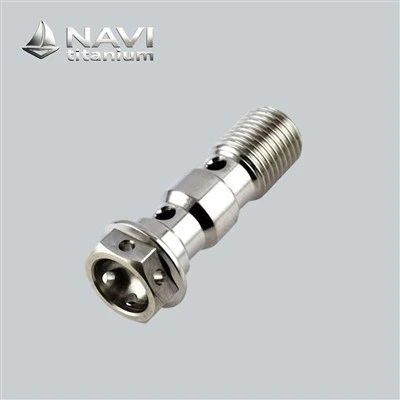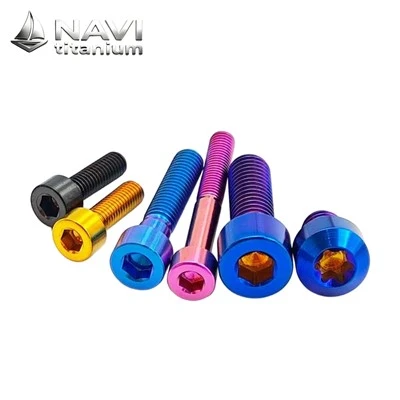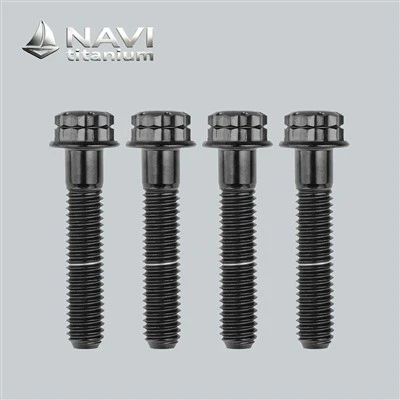
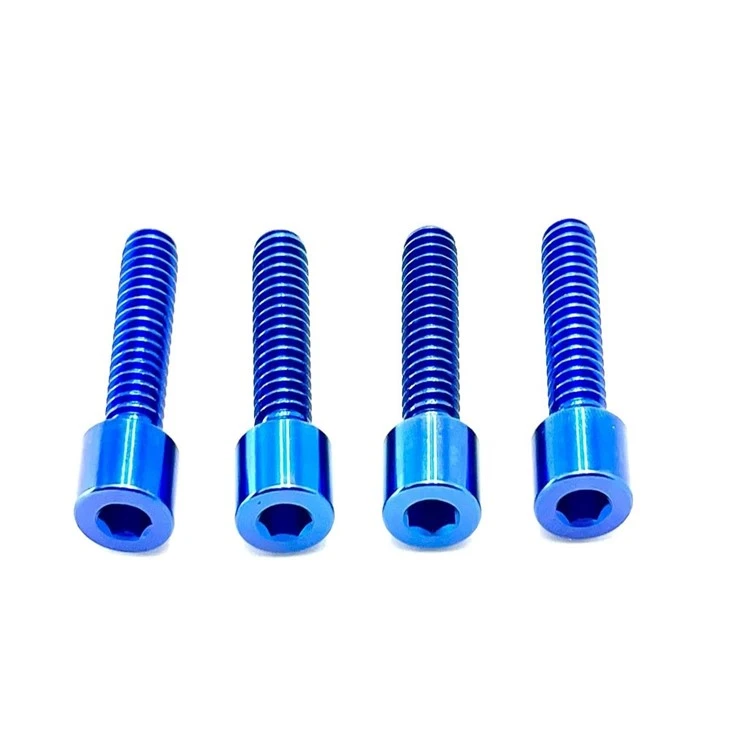
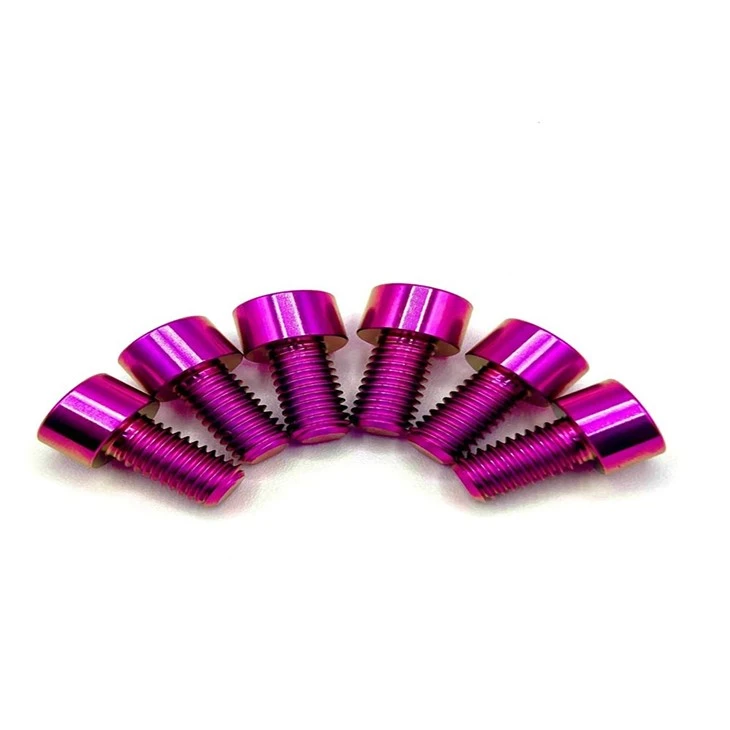
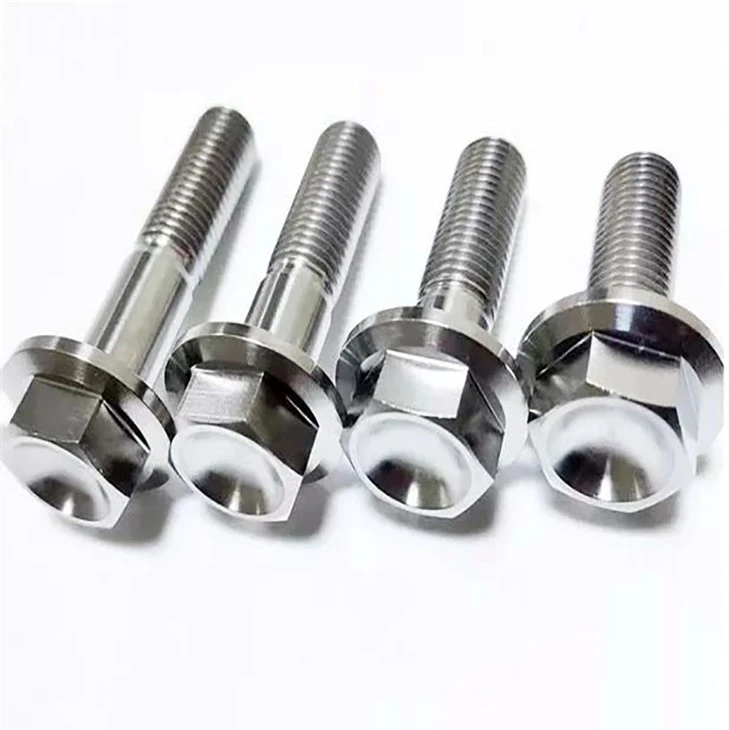
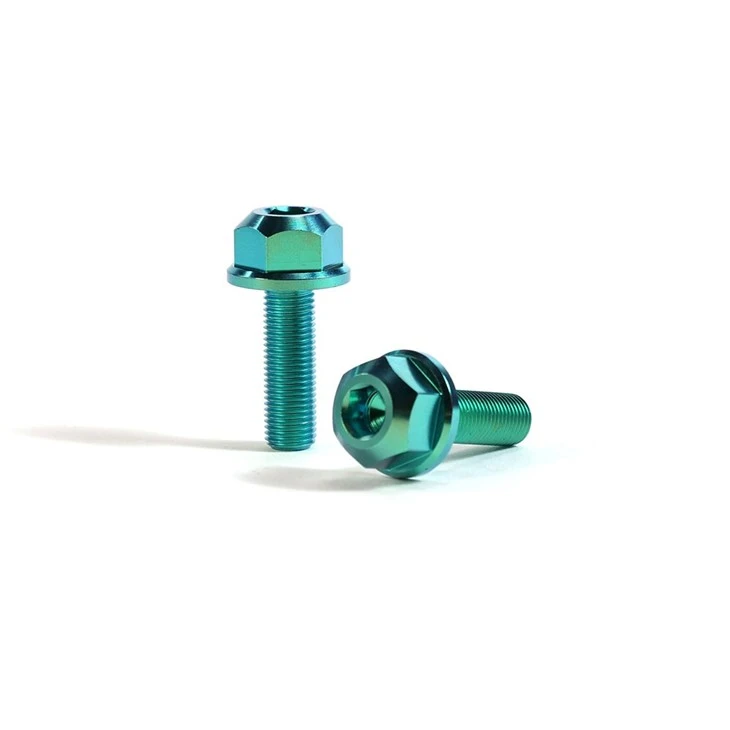
NAVI Titanium produces Gr5 titanium bolts for motorcycle upgrades, combining high strength with reduced component mass. Established in 2008, the company brings more than 18 years of experience in metal manufacturing and international trade. Procurement teams can also review previous order histories to assess recurring demand patterns, supplier continuity, and specification stability before establishing longer-term sourcing arrangements.

Solutions of NAVI Titanium
NAVI Titanium has developed long-term experience in metal manufacturing and international trade, serving buyers across multiple industrial sectors. Repeat-purchase ratios can provide useful evidence of buyer retention when supported by verifiable transaction data; such figures should be reported only when reliable internal records are available.


NAVI Titanium draws on established metallurgical knowledge to address the relationship between alloy composition, mechanical loading, and component reliability. Grade 5 titanium alloy, comprising aluminium and vanadium as principal alloying elements, exhibits high specific strength and favorable corrosion resistance.
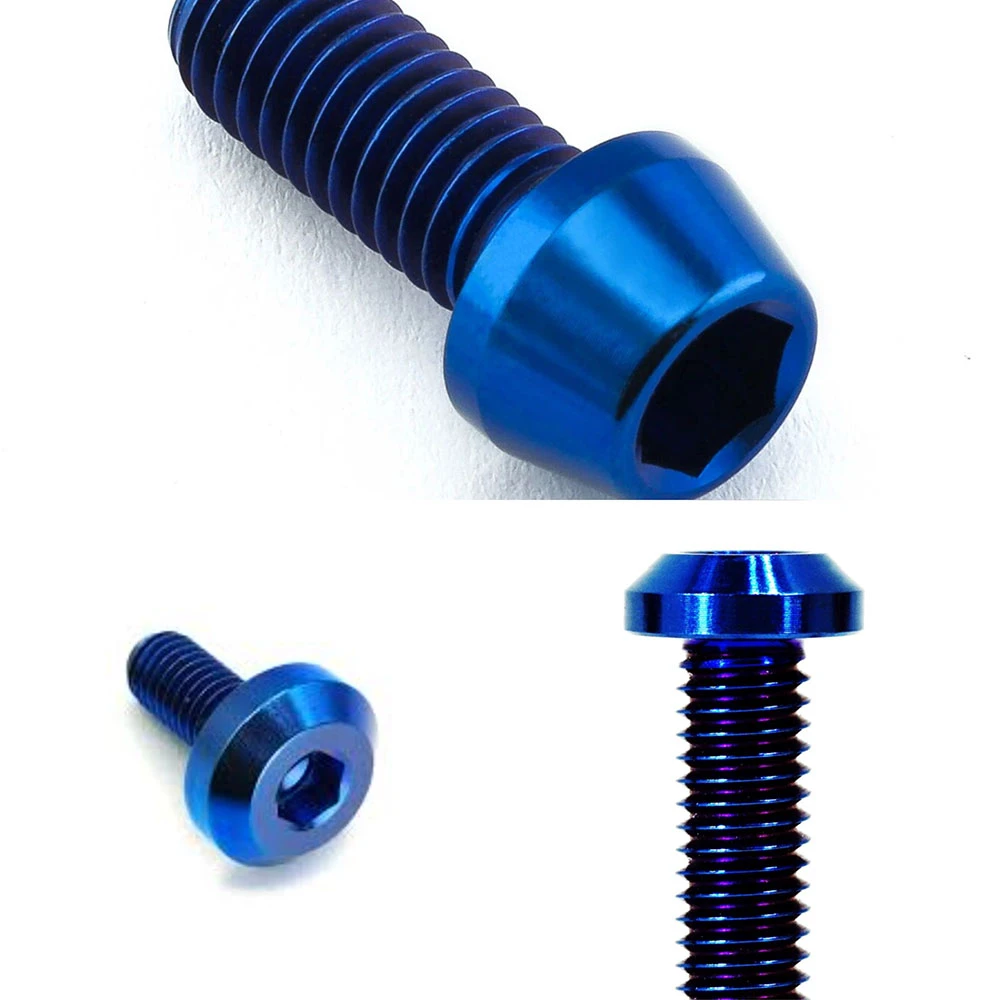
Application
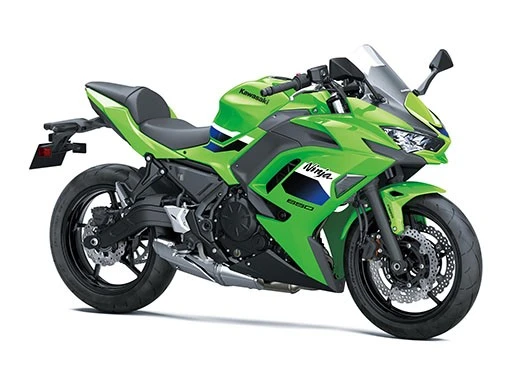
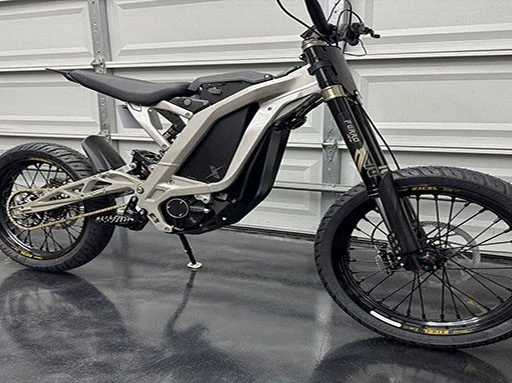
NAVI Titanium applies verified Ti-6Al-4V alloy expertise to Gr5 titanium bolts, combining high specific strength, fatigue-performance considerations, and traceable metallurgical evidence for demanding motorcycle applications.
Grade 5, designated Ti-6Al-4V, belongs to the α+β class of titanium alloys, in which aluminium stabilizes the alpha phase while vanadium promotes the beta phase. This combined microstructure provides a favorable balance between tensile strength, fatigue resistance, and specific strength, making the alloy relevant to motorcycle components exposed to repeated mechanical loading. Compared with commercially pure grades, its enhanced load-bearing capability allows engineers to evaluate weight reduction without relying solely on changes to component dimensions. However, mechanical performance depends on more than nominal alloy designation. Oxygen and other interstitial elements, metallurgical cleanliness, processing history, and subsequent heat treatment can influence ductility, fracture behavior, and fatigue life. For threaded components, stress concentration at the root, under-head contact pressure, and installation-induced preload remain important factors in service reliability. Consequently, alloy selection should consider the complete load path rather than tensile strength alone. Reliable technical documentation should identify the applicable specification, chemical composition limits, mechanical test results, and traceability of each production batch.
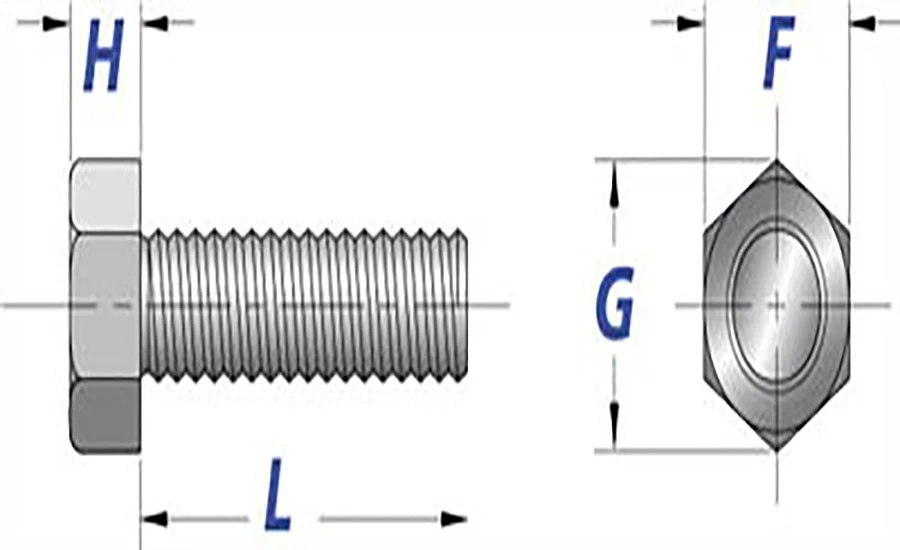
2. Metallurgical Verification and Application Suitability
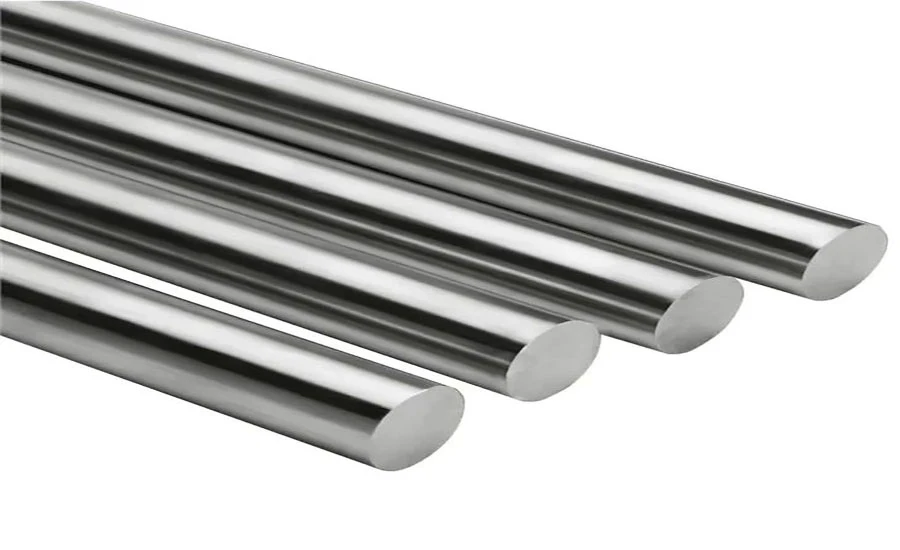
The designation Grade 5 identifies a recognized alloy family, but it does not independently establish conformity with every international specification or guarantee identical mechanical performance across different production sources. Procurement teams should distinguish between nominal grade identification and verified compliance with an applicable standard, such as ASTM F136 for qualifying wrought Ti-6Al-4V ELI products or ASTM B348 for titanium and titanium alloy bars and billets. These standards address different product forms and should not be treated as interchangeable references. For motorcycle applications, verification may include chemical analysis, tensile properties, hardness where relevant, and records linking test results to the originating batch. The distinction between standard Grade 5 and extra-low-interstitial ELI variants is particularly important because their compositional limits and intended performance characteristics differ. In addition, galvanic interactions with adjacent metals, friction during tightening, and susceptibility to galling can influence assembly behavior. Appropriate lubrication, controlled installation procedures, and engineering review of preload are therefore important considerations.
Purchasing guide
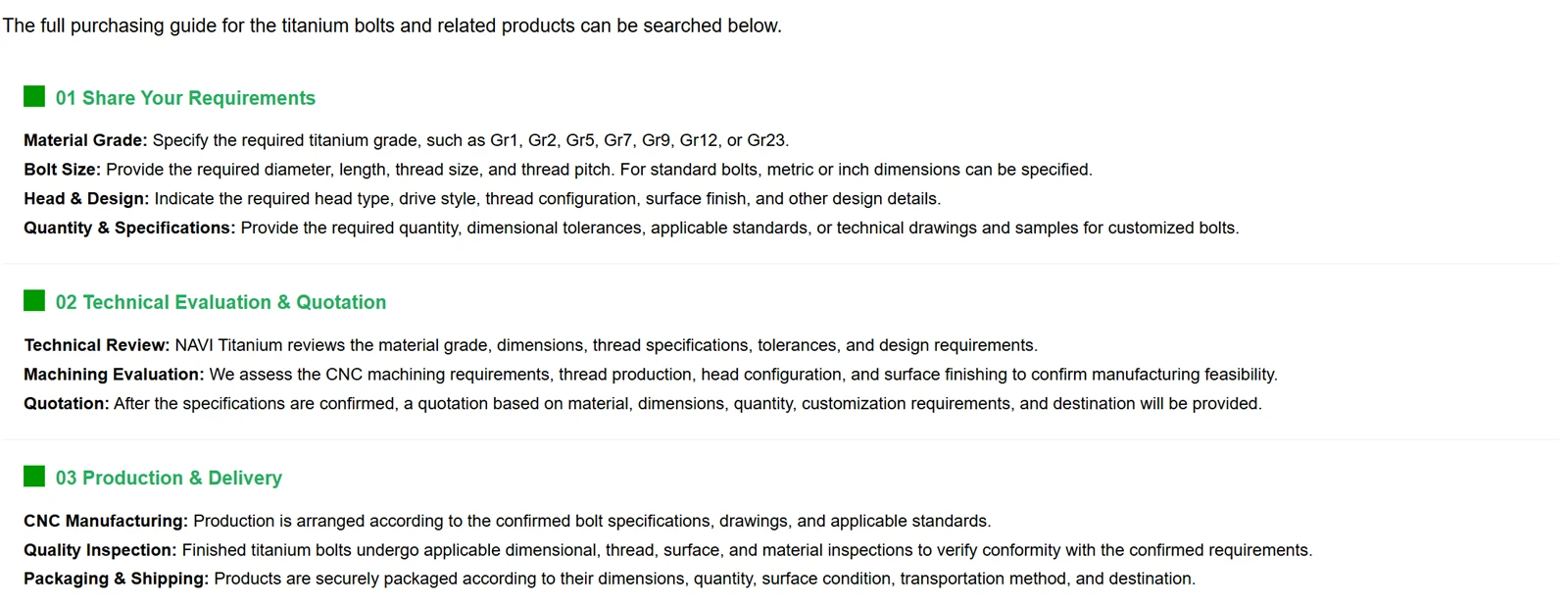
Quality control (QC)
Grade 5 alloy identification provides a technical basis for evaluating high-strength motorcycle fasteners, particularly where compositional consistency and mechanical performance influence purchasing decisions. NAVI Titanium maintains supporting metallurgical records to facilitate verification of alloy designation, chemical composition, and relevant mechanical properties, allowing buyers to assess specification conformity and establish greater confidence in long-term sourcing.

Manufacturing Process
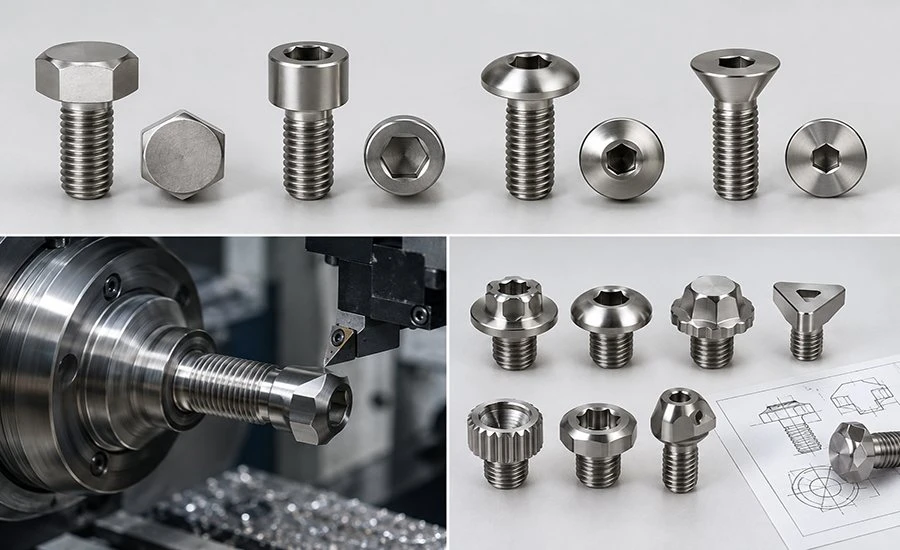
Grade 5 alloy fasteners are manufactured from Ti-6Al-4V stock, with chemical composition and metallurgical condition influencing mechanical performance. Precision machining establishes the head profile, shank dimensions, and helical threads. Because this alloy has relatively low thermal conductivity and a tendency toward tool adhesion, controlled cutting parameters and suitable lubrication help maintain surface integrity. Depending on the applicable specification, heat treatment may optimize strength and ductility. Deburring, cleaning, and verification of chemical composition, mechanical properties, and dimensional conformity support reliable performance in motorcycle assemblies exposed to vibration and cyclic loading.
Handling and Order Identification
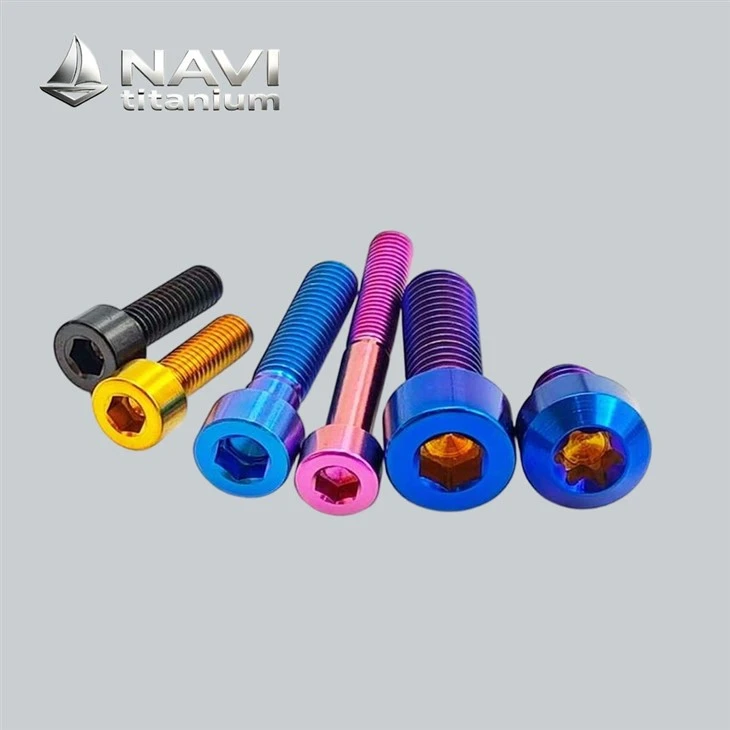
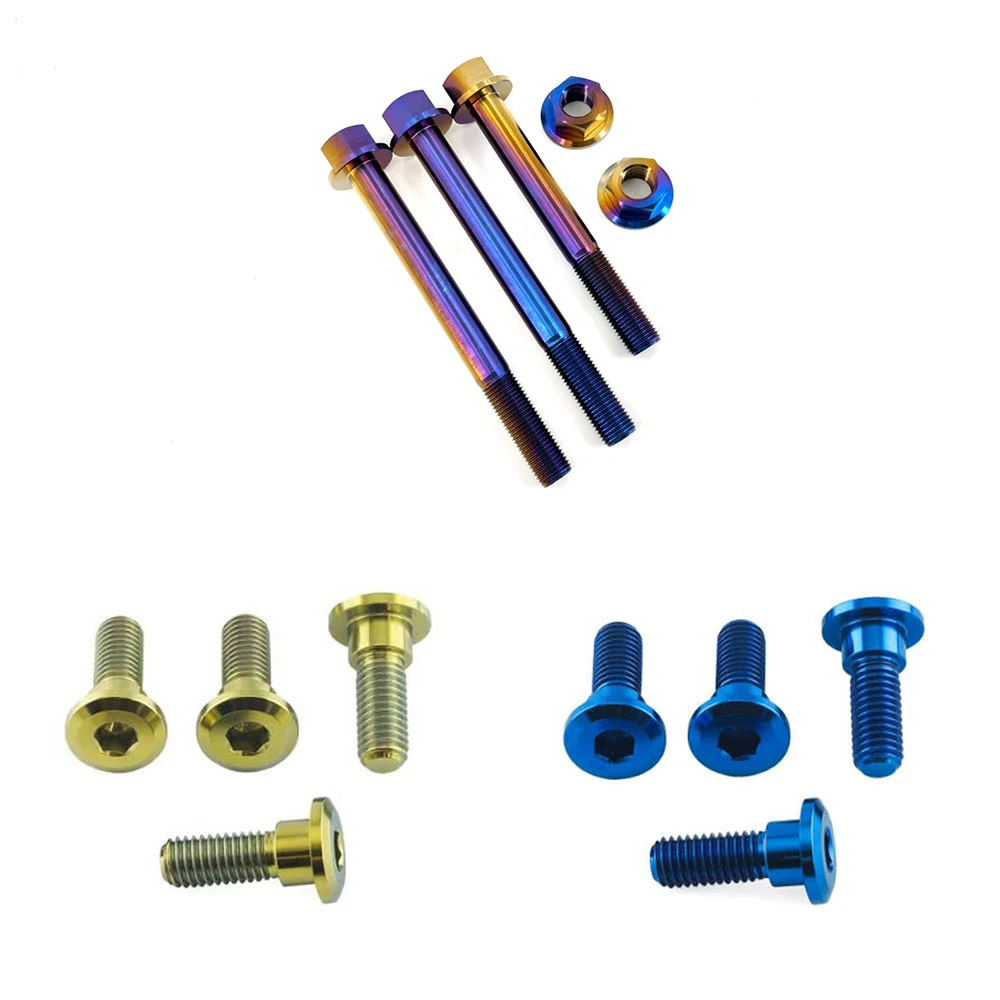
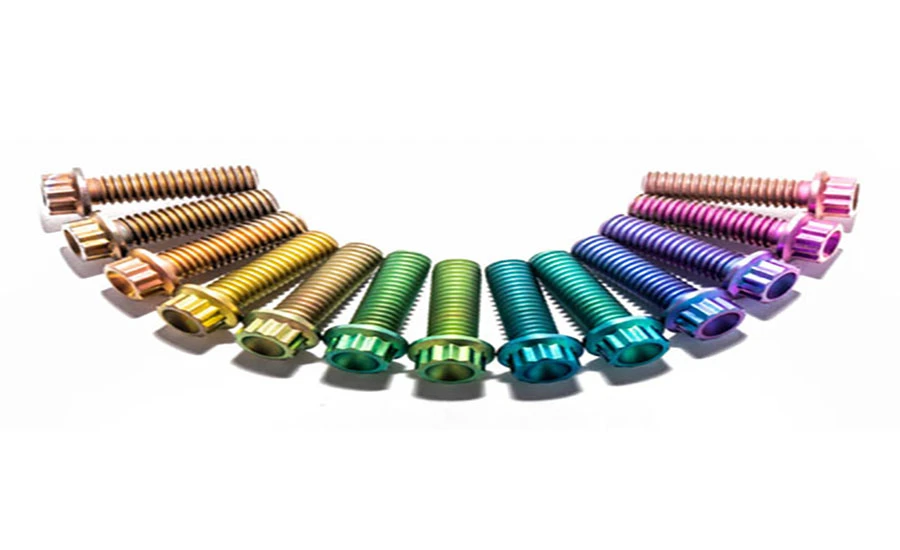
For Grade 5 alloy fasteners intended for motorcycle applications, organized separation during order preparation reduces picking errors and simplifies stock management at the distributor's warehouse. Individual bags can be assigned according to nominal diameter, overall length, head configuration, anodized color, and compatible vehicle model. These attributes should follow a consistent identification sequence, allowing warehouse personnel to distinguish visually similar items without opening multiple containers. Length conventions deserve particular attention because countersunk designs may include the head in the stated measurement, whereas protruding-head designs are generally measured from beneath the head. Color identification should correspond to the agreed finish rather than alloy composition, since anodized appearance alone cannot establish metallurgical grade. Printed labels can include a stock-keeping code, quantity, alloy designation, and order reference, while a consolidated packing list links each bag to the corresponding purchase line. For distributors handling multiple motorcycle platforms, model-specific grouping also reduces accidental substitution during picking and subsequent resale.
Abrasion Control and Cleaning
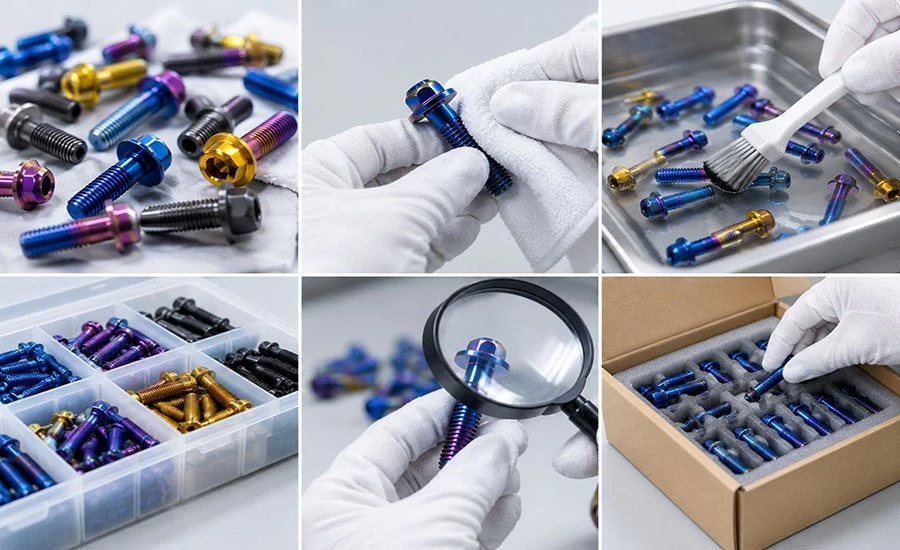
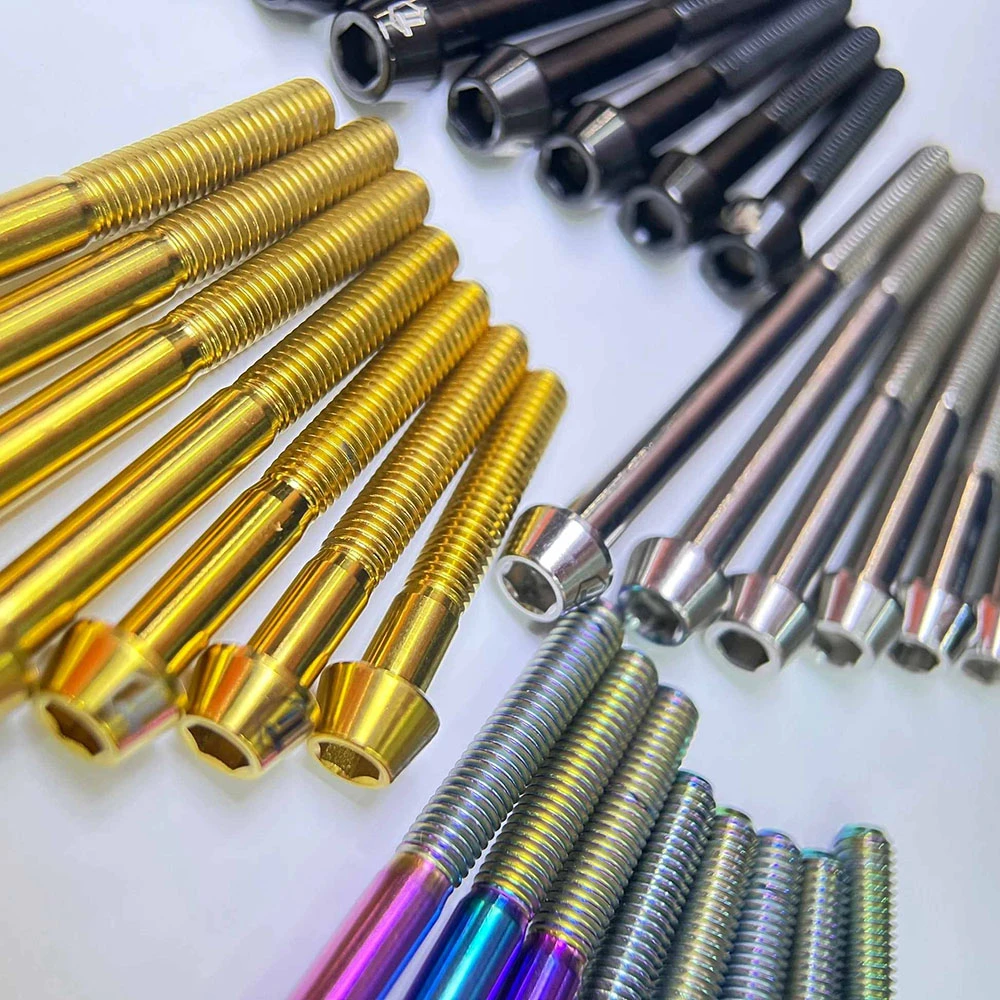
Grade 5 alloy components can develop visible marks when they rub against one another, contact hard tools, or move against abrasive debris during handling. Colored anodized finishes may show scratches or localized wear more clearly than natural metallic finishes, particularly around edges and raised head profiles. Individual compartmentalization, clean liners, and nonabrasive separators can reduce direct contact during storage and transport. Before dispatch, loose chips, fingerprints, machining residues, and dust should be removed using a clean, lint-free cloth and a compatible mild cleaning agent. Chloride-bearing cleaners, aggressive acids, and abrasive pads should be avoided unless specifically approved for the relevant alloy and finish. After cleaning, components should be dried thoroughly to prevent residue marks and unwanted contamination. Personnel should use clean gloves when handling prepared items, especially those with decorative anodized colors. If scratches or coating wear are discovered, affected pieces should be separated for assessment rather than polished indiscriminately, since abrasive treatment may alter appearance and local finish integrity. Clear handling procedures help preserve presentation quality and reduce disputes over cosmetic condition after delivery.
Gr5 titanium bolts
Consistent segregation makes replenishment easier, improves inventory visibility, and helps procurement teams maintain accurate records. Grade 5, Grade 5 alloy, and Ti-6Al-4V are closely associated terms used in international trade, engineering documentation, and procurement records. Grade 5 identifies the alloy grade, while Ti-6Al-4V describes its principal alloying system, containing approximately 6% aluminium and 4% vanadium, with titanium constituting the balance. TC4 is the commonly used Chinese designation for this alloy family. For distributors, importers, and motorcycle component wholesalers, recognizing these naming conventions makes cross-market sourcing more efficient, particularly when comparing quotations from manufacturers in different countries. NAVI Titanium applies this terminology when documenting a custom titanium bolt for international buyers. However, these terms should not be treated as automatic proof of compliance with every national or industry specification. Applicable standards may differ in permitted chemical composition, mechanical properties, product form, and testing provisions. Procurement documentation should therefore identify the declared grade, governing specification, and relevant technical evidence rather than relying exclusively on a catalogue heading.

Specification Consistency
When comparing Grade 5, Ti-6Al-4V, and TC4 offerings, buyers should distinguish common alloy identity from formally verified conformity. Although these names generally refer to the same principal alloy system, specific product standards can impose different limits on interstitial elements, tensile properties, and manufacturing conditions. For example, ASTM B348 covers titanium and titanium alloy bars and billets, whereas ASTM F136 addresses wrought Ti-6Al-4V ELI alloy for surgical implant applications. These specifications serve different purposes and should not be substituted for one another simply because both identify a related alloy composition. Motorcycle component distributors should establish the applicable commercial specification before comparing prices or approving recurring purchases. Supporting records may include a chemical composition report, mechanical test results, originating stock identification, and traceability information linking documentation to the purchased goods. Extra-low-interstitial ELI grades should also be distinguished from conventional Grade 5 because their compositional limits are not identical. Maintaining consistent terminology across quotations, purchase orders, warehouse records, and sales catalogues reduces the risk of unintended substitutions and gives overseas customers a clearer basis for evaluating alloy authenticity.
Gr5 vs. Gr2: Load Capacity, Weight and Cost
Selecting Gr5 titanium bolts instead of Grade 2 depends on mechanical loading, mass-reduction targets, and procurement economics. Grade 5 (Ti-6Al-4V) generally offers substantially higher tensile strength, making it suitable for compact components exposed to demanding loads. Grade 2 commercially pure titanium provides greater ductility and may offer adequate performance in less demanding applications. Both grades have relatively low density, but alloy selection alone cannot establish assembly safety; joint design, preload, fatigue exposure, and mating components also influence performance. NAVI Titanium recommends verifying the declared grade through traceable chemical analysis and mechanical test documentation before approving recurring orders.
| Procurement factor |
|
Gr2 |
| Strength | Higher tensile strength | Lower tensile strength |
| Weight reduction | Low density with greater load capacity potential | Low density, but lower strength |
| Ductility | Generally lower than Gr2 | Generally higher |
| Purchase cost | Typically higher | Often lower |
| Typical selection | High-load motorcycle components | Less demanding, corrosion-sensitive applications |
In conclusion, choose the grade according to verified mechanical performance and total operating cost rather than purchase price alone.
FAQ
1. Which technical parameters should distributors record for repeat orders?
-
Distributors should retain the alloy grade, nominal diameter, length, head style, pitch, color, quantity, and compatible motorcycle model.
2. How can production traceability support long-term procurement?
-
Traceable production records can link alloy certificates, machining records, heat-treatment data where applicable, and mechanical test results to identifiable production lots.
3. Can semi-automated production maintain consistency across larger orders?
-
Semi-automated workflows combine machine-controlled operations with operator handling and process monitoring. Their consistency depends on equipment calibration, standardized work instructions, tool condition, and effective process controls, particularly when several head styles or lengths are processed.
4. What advantages do automated machines offer for recurring orders?
-
Automated equipment can improve production repeatability, reduce manual handling, and maintain stable cycle times during repetitive operations.
5. How does precision machining affect installation performance?
-
Accurate machining helps maintain pitch compatibility, head seating, concentricity, and dimensional consistency.
Hot Tags: gr5 titanium bolts, China gr5 titanium bolts manufacturers, suppliers, factory