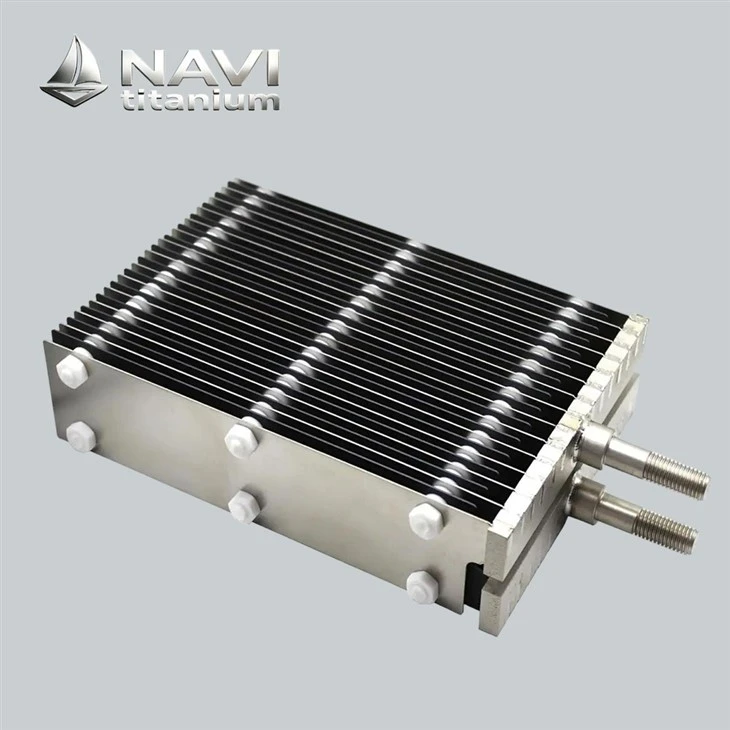
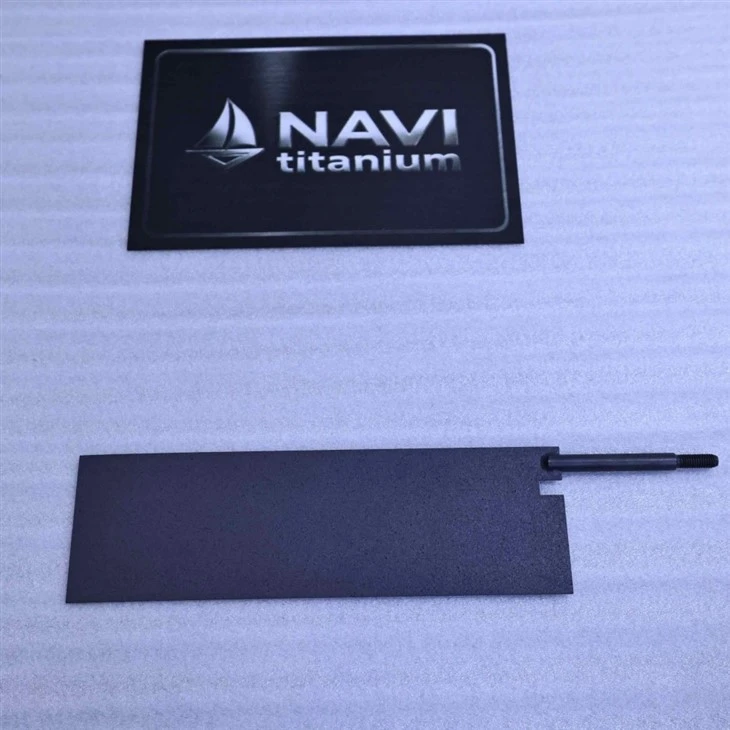
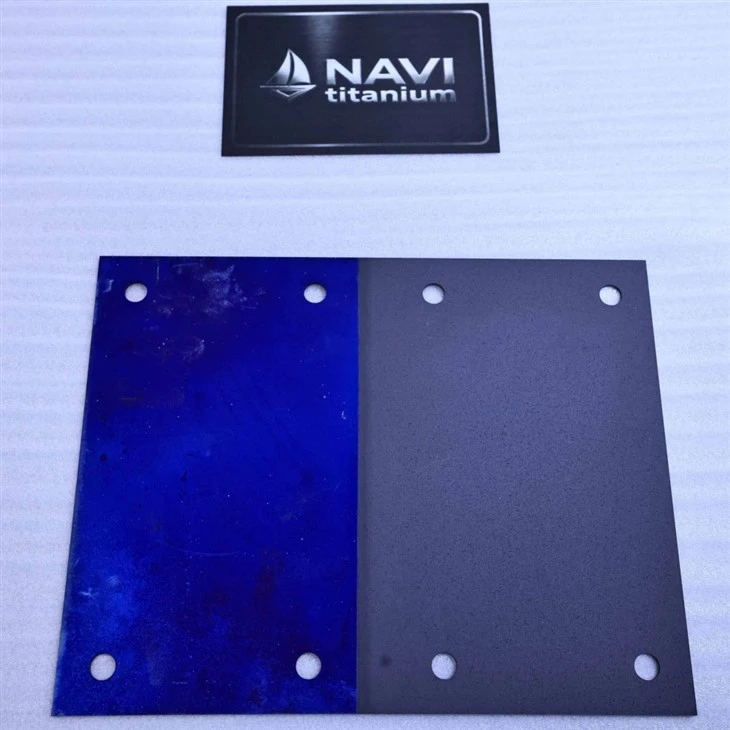
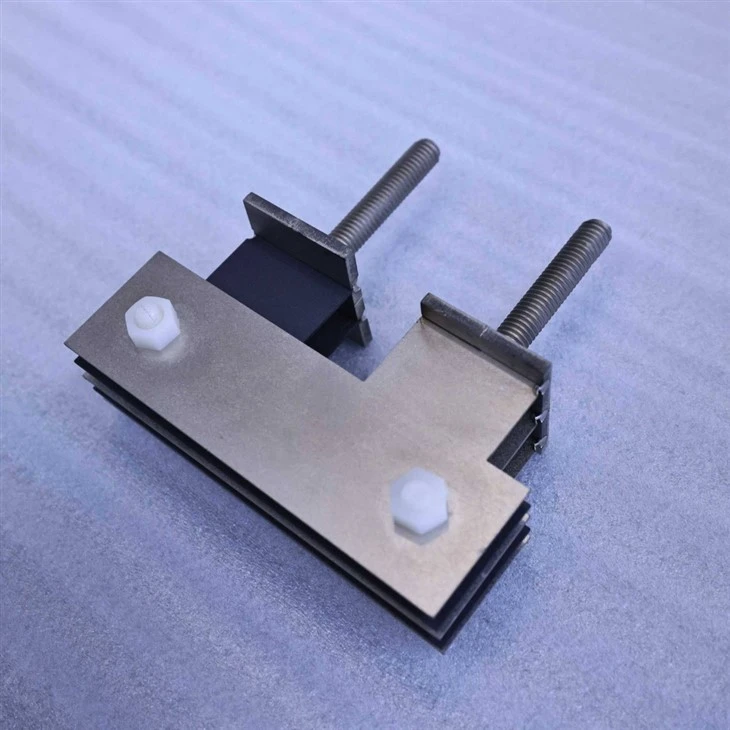
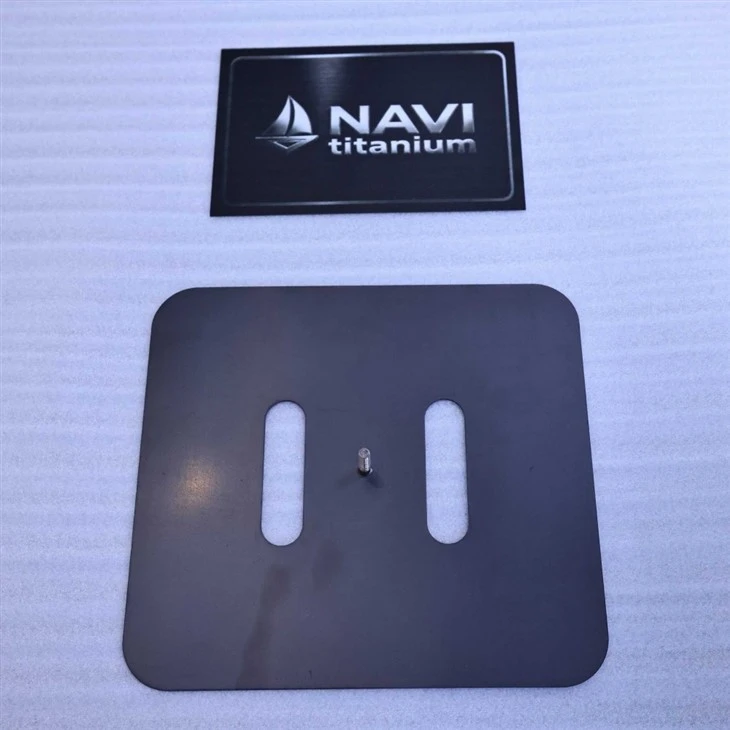
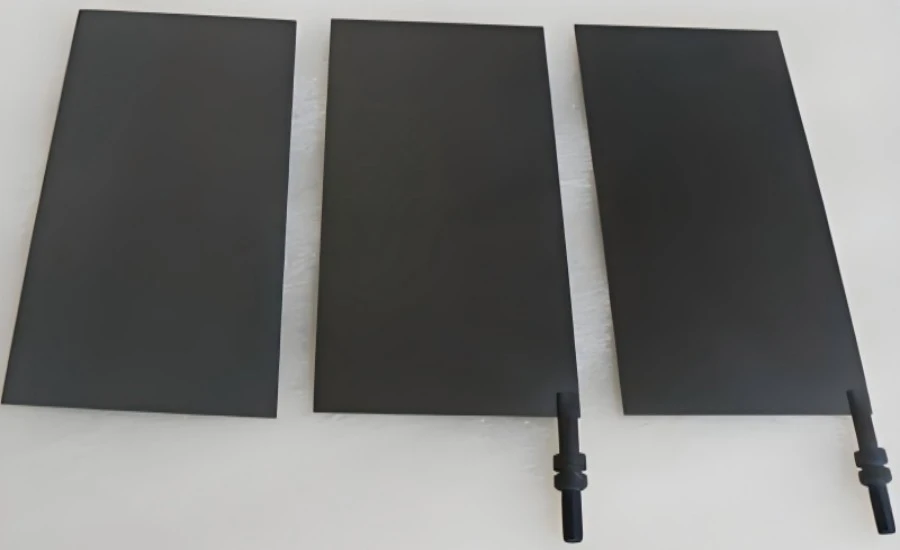
NAVI Titanium ruthenium-iridium titanium anodes plate for wastewater treatment are insoluble, dimensionally stable electrodes: a TA1/Gr1 or TA2/Gr2 titanium plate carrying a ruthenium oxide plus iridium oxide coating, brushed on in repeated passes and fired at high temperature. In chloride-bearing effluent the plate electrolyses salt into hypochlorite, oxidising colour and COD, breaking down ammonia and killing bacteria, so it stands at the centre of every electrochemical treatment skid. NAVI Titanium plates hold their dimension and stay near-zero in consumption, cutting sludge and maintenance for years.
Solution of NAVI Titanium
Wastewater duty punishes every weak point at once, so NAVI Titanium shapes these plates around three advantages a buyer can measure. A lower chlorine evolution potential holds the cell voltage down at the same current, which shrinks the electricity line on the monthly operating budget and eases rectifier sizing and spare capacity. Batch electrochemical testing proves the promised potential and service hours on the metal you actually receive, not on a brochure. Light, stable titanium keeps lead out of your discharge permit, needs no hoist on maintenance day and leaves a substrate still worth scrap value. Coating ratio, loading and plate size are set from your water analysis; catalogue ranges sit in the table below.


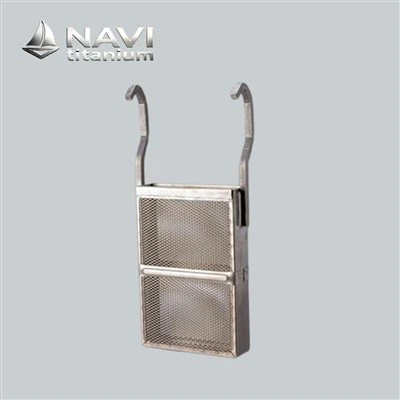
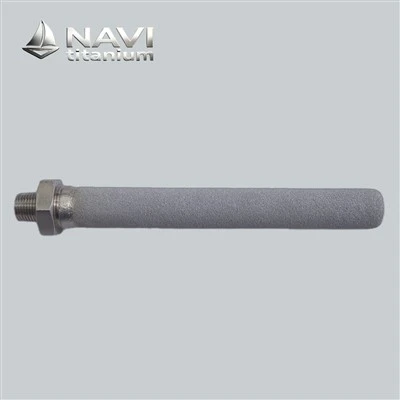
NAVI Titanium delivers these plates as perforated sheet for through-flow cells, solid flat plate where the whole footprint must carry current, disc for compact or rotating housings, and basket form for packed-bed electrodes. Outline, hole pitch, busbar tab, thickness and surface finish follow your drawing.


Application
Two duties fill most NAVI Titanium plate orders, and both rest on one behaviour: the electrode has to keep making oxidant while the liquor around it drifts. Strength, chloride content and temperature seldom hold inside a single band, so the coating must still tolerate oxygen evolution on days when salt runs thin and still deliver chlorine when the load peaks.
Industrial Effluent: Dye, Chemical, Pharma and Plating Lines
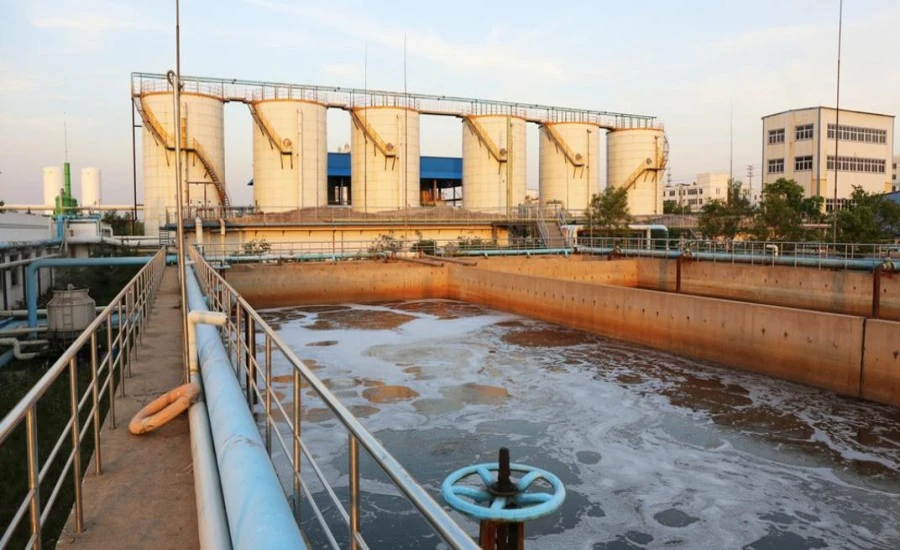
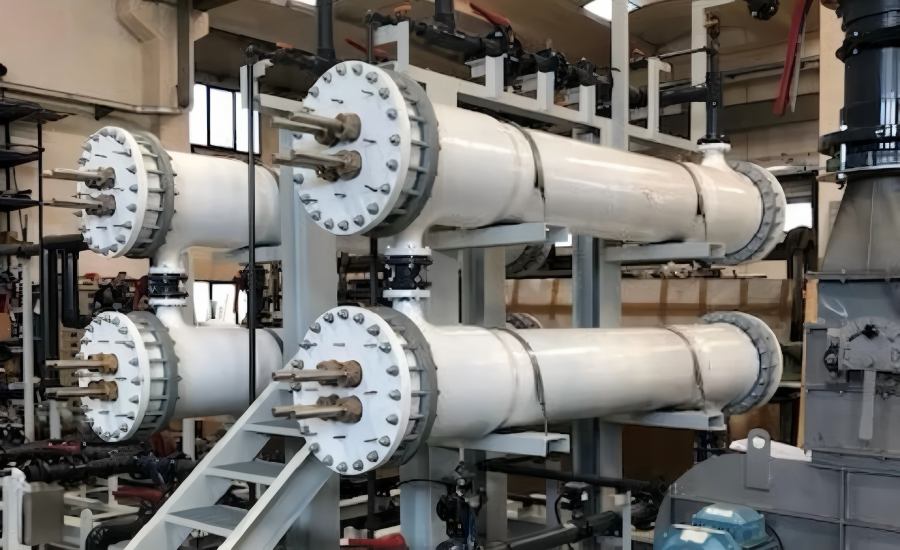
Textile dye houses, chemical works, pharma sites and plating shops share a problem: the stream is toxic to biology yet too lean in salt to electrolyse comfortably. NAVI Titanium ruthenium-iridium titanium anodes plate for wastewater treatment are mounted parallel inside the oxidation cell, with the gap set from measured conductivity of the real liquor rather than from a supplier default. On dye effluent hypochlorite and radicals formed at the surface break the chromophore, so colour falls within minutes of residence; on plating rinses the same reaction destroys cyanide complexes and oxidises ferrous iron; on pharmaceutical mother liquor it lifts COD and strips ammonia ahead of the biological stage. Current density is capped at what the coating tolerates at site temperature, so the plate is never driven past its band. Because it is a flat rigid panel, maintenance can lift, inspect and refit it without dismantling the cell, and sludge falls clear instead of blinding the surface.
On-Site Hypochlorite Generation and Disinfection
Where a site needs disinfectant rather than treated water, the same plate becomes the chlorine source in a hypochlorite generator. Brine or softened water crosses a cell holding NAVI Titanium plates, direct current converts chloride to hypochlorite, and dosing follows at once into hospital sewage, cooling towers, fish ponds or pools. Storing chlorine gas is avoided, so the site carries no gas detection regime or scrubber. Duty is gentle on current but hard on starts: cells switch with the dosing controller, and each stop leaves the plate sitting in warm brine. Engineer set coating loading for that rhythm and recommends a short flush before shutdown. Because strength follows current rather than salt dose, an operator can trim output to the disinfection setpoint without changing chemicals. Output is quoted in grams of available chlorine per hour at a stated current, a figure a buyer can check against the site's titration.
Purchasing guide

Quality control(QC)
NAVI Titanium manufacturing holds ISO 9001 certification, and each coating batch ships with a certificate of analysis stating metal loading, adhesion result and life-test hours. So the quality system can be inspected rather than merely believed, several inspection reports are reproduced below for guidance only. Click the button beside them and open the COA before you ask for a quotation
| Certificate of Analysis | ||
| Titanium Base Material Suppliers: | Coating Precursor Suppliers: | COA of product: |
|
|
|
|


Manufacturing Process
Every NAVI Titanium ruthenium-iridium titanium anodes plate for wastewater treatment starts as a casting decision, but the coating that makes it an anode lives or dies in the manufacturing room. Surface preparation decides how the oxide keys in, drilling order decides whether the layer ever lifts at a hole edge, and each firing cycle decides whether the panel comes out flat enough to sit in a cell. What follows is the steps from bare TA1/TA2 sheet to a released, batch-coded plate:
Sheet release.
We book TA1 or TA2 sheet with a mill certificate, checks thickness across the diagonal and records rolling direction, because a plate that is already bowed cannot be pressed flat after firing.
Drilling before coating.
Every hole, slot and mounting bore is cut now, while the sheet is still bare. A coated face is never drilled: cutting through oxide exposes titanium on the hole wall, and that ring becomes the first place the layer lifts.
Surface anchor.
The plate is degreased and etched to a defined roughness, so the first oxide layer keys into metal rather than sitting on a polished skin.
Coating and firing cycles.
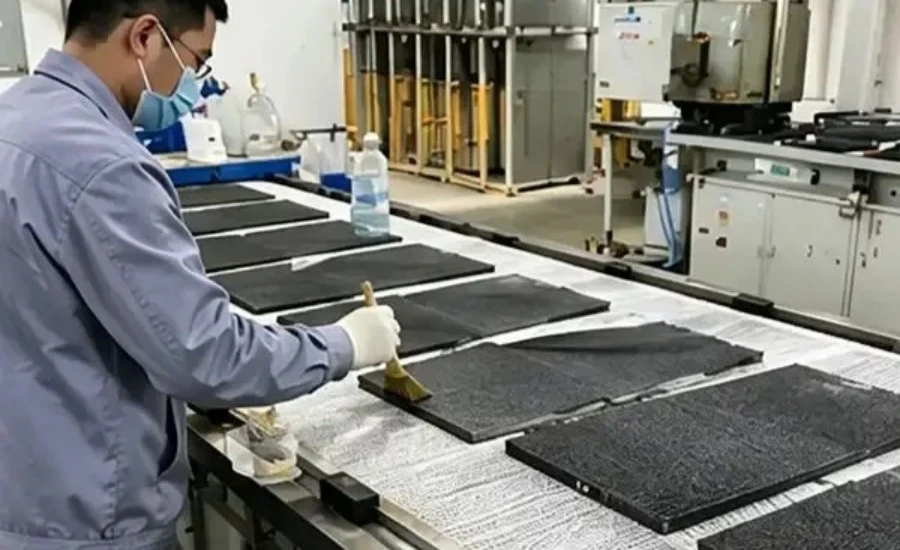
Ruthenium and iridium salts go on by brush, each pass followed by drying and firing. The panel is re-levelled between passes, since thermal cycling wants to curl a thin plate.
Edge make-up and electrical test.
Cut edges and tab roots receive extra passes, then a polarization scan is run and coating weight is checked by XRF across the face before the batch is released.
Final flatten, pack, ship.
Flatness is measured on a bed, the face is masked, and each plate leaves with a batch code tying it to the firing record.
NAVI Titanium Core Parameters
The figures below describe the range NAVI Titanium builds most often for effluent duty. They are indicative values only, offered so that a process engineer can size a cell and compare one supplier's quotation against another. Every number is re-confirmed against the water analysis, the drawing and the current density of the actual order before any production slot is booked.
|
Item |
Range held for wastewater duty |
|
Substrate |
TA1 / Gr1, TA2 / Gr2 titanium sheet, 0.8 – 3.0 mm |
|
Coating system |
Ruthenium oxide + iridium oxide, mixed metal oxide |
|
Metal loading |
8 – 25 g/m², single or double side |
|
Ru : Ir ratio |
Set from chloride band, typically 70:30 to 50:50 |
|
Working current density |
100 – 1,000 A/m² of immersed area |
|
Chloride band served |
300 mg/L upward, higher loading above 5,000 mg/L |
|
Cell voltage guide |
3.2 – 5.5 V per cell, gap and conductivity dependent |
|
Service band in effluent |
12 – 36 months, judged by voltage rise |
|
Maximum temperature |
60 °C continuous in chloride service |
|
Flatness after firing |
≤ 1.5 mm per metre of length |
|
Forms |
Perforated plate, solid plate, disc, basket |
|
Certificate with shipment |
COA per batch, mill certificate, RoHS / REACH |
Why Plants Specify NAVI Titanium for the Electrode Position
The voltage you pay for is the voltage the coating sets.
Chlorine evolution potential is the single number that travels from the electrode surface to the electricity meter. A ruthenium-iridium titanium anodes plate for wastewater treatment starts chlorine generation at a lower overpotential than graphite, lead alloy or plated titanium, so a cell built around NAVI Titanium plates reaches the same current at a lower cell voltage.
The saving is not theoretical: on a 5,000 A cell, every 100 mV removed is 500 W of heat that no longer has to be paid for or cooled away, and across 6,000 running hours that is roughly 3 MWh per cell per year.
Flatness adds to it, because a panel that stays flat keeps the anode-to-cathode gap from closing, and gap is what turns amps into wasted volts. That margin matters on the afternoons when production pushes the rectifier past its design current.
Every batch is tested, because batches are where coatings differ.
A coating is a chemical process, not a stamped part, and two runs of the same recipe can differ in loading and in crystal structure.
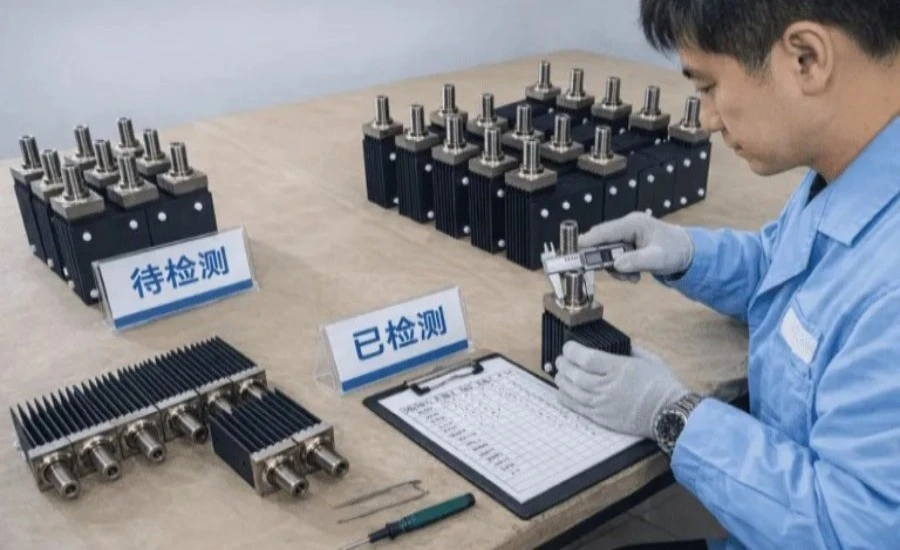
NAVI Titanium therefore tests each batch rather than each design: an accelerated life run at elevated current density in brine, a polarization scan to confirm the chlorine evolution potential sits inside the band, coating weight by XRF at several points across the face, and an adhesion check at a cut edge.
The report carries the batch code printed on the plate, so a buyer can match paper to metal. Retained samples are kept for three years, so a question about a plate two seasons old can still be answered. It is the difference between a sample that shines in a laboratory and a shipment that behaves the same way after six months in a plant.
Light, stable, and worth money at the end of its life.
A ruthenium-iridium titanium anodes plate for wastewater treatment weighs about 4.5 g/cm³ against 11.3 for lead, so a rack of NAVI Titanium electrodes can be lifted by two people without a hoist, and the cell frame carries less load.
Nothing dissolves from it: where lead alloy anodes shed metal into the liquor and turn ordinary sludge into hazardous waste with a disposal bill attached, the ruthenium-iridium surface either works or stops working, and the titanium beneath stays inert.
The panel holds its dimensions across thousands of thermal cycles, keeping the gap and the voltage steady instead of drifting upward year by year. And when the coating finally retires, the substrate is still grade titanium, with scrap value that offsets part of replacement. Nor does a service plate need a protective wrapper or a passivation step before it goes back into a cell.
FAQ
Our effluent carries less than 500 mg/L chloride. Will the plate still work?
+
-
Yes, with a different balance. Thin chloride pushes the cell toward oxygen evolution, which attacks ruthenium faster than chlorine does. The iridium share and the loading are raised for such sites, and we will say plainly when a pure oxygen-duty coating such as iridium-tantalum is the better buy.
How long does it last, and how do we know it is finished?
+
-
Expect 12 to 36 months in effluent, longer in clean brine. Watch voltage at fixed current: a rise of 0.5 V that cleaning cannot recover means the oxide is spent. Visually, grey-white patches where the coating has gone signal bare titanium.
Can we clean the plate ourselves?
+
-
Scale normally forms on the cathode, not the anode. If the plate does foul, use a short dip in dilute citric or oxalic solution at ambient temperature, rinse thoroughly, and never touch it with a wire brush, abrasive pad or chloride-rich acid, all of which strip the oxide fired onto the surface.
We are replacing electrodes in an existing skid. Can you match it?
+
-
Send the old plate or a measured drawing. Hole pitch, tab position and thickness are copied exactly, and we supply EN 10204 3.1 paperwork for Europe, imperial dimensions and rectifier-compatible terminals for North America, and humidity-barrier crating for Gulf and Southeast Asian ports.
What arrives with the shipment, and what if a batch disappoints?
+
-
Each crate carries the COA, mill certificate and RoHS / REACH declarations, all keyed to the batch code etched on the plate. If a batch misses its stated life or potential band, the retained sample is retested and the plate is replaced against the reported figures.
Hot Tags: ruthenium-iridium titanium anodes plate for wastewater treatment, China ruthenium-iridium titanium anodes plate for wastewater treatment manufacturers, suppliers, factory