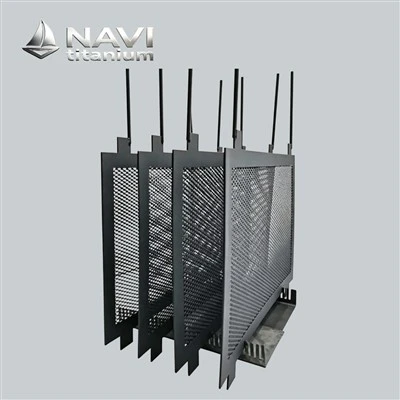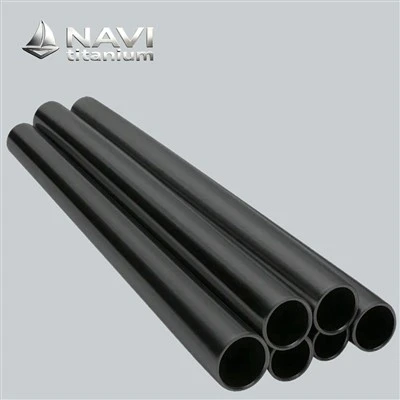


NAVI Titanium provides titanium anode rod for hot water heater, helping reduce internal oxidation risks during extended operation. The company gathers specialists from electrical-chemical fields, material science backgrounds, and production disciplines, with teams covering research, quality control, customer support, and use case guidance. Their expertise includes years of project experience, academic training, and cross-functional cooperation for customized requirements from global purchasers. The company also maintains a professional team culture with continuous learning, detailed communication, and practical experience across diverse use case fields for overseas cooperation and partnerships.
Solution of NAVI Titanium
NAVI Titanium combines an experienced engineering team with dedicated manufacturing resources for electrical-chemical applications. Its technical R&D group includes more than 40 members, including 5 PhD researchers, while approximately 65% of the staff hold master's degrees or above. Team members cover electrochemistry, materials engineering, functional film technology, precision machining, process development, and use case engineering, with academic cooperation involving several leading Chinese universities. This multidisciplinary background helps we evaluate electrolyte conditions, electrical requirements, structural dimensions, and service expectations for customized electrode projects. Its current product portfolio covers various electrode configurations and related Ti-based solutions.


NAVI Titanium applies electrical-chemical engineering principles to active protection in heated-water vessels. A Ti substrate combined with a catalytic layer forms the functional electrode interface, while externally regulated current establishes a controlled electrical-chemical field.


Application
Titanium anode rod for hot water heater from NAVI Titanium is specified for sacrificial corrosion protection in residential and commercial heating vessels exposed to elevated temperature, dissolved salts, and continuous electrical-chemical demand.
Inside a hot water heater, the internal tank is exposed continuously to elevated temperature, dissolved salts, dissolved oxygen, and changing pH. These factors accelerate electrical-chemical reactions, particularly around welds, threaded areas, joints, and regions where protective coatings become locally damaged. Once a small galvanic cell forms, anodic dissolution can gradually remove material from vulnerable locations, increasing the possibility of leakage and premature tank replacement.
A sacrificial rod establishes a preferential reaction site within the tank. Its electrical-chemical potential is intentionally selected so that it reacts before the tank wall becomes the primary site of oxidation. The resulting charge distribution depends on tank volume, liquid chemistry, operating temperature, conductivity, and the distance between the rod and protected areas. Higher temperature generally accelerates reaction kinetics, while elevated ionic content can alter load demand and consumption rate. For commercial heaters running continuously, these variables should therefore be evaluated together rather than judging protection solely from nominal rod dimensions. NAVI Titanium provides this use case context for evaluating suitable rod specifications.

2. Selection Factors

For residential and commercial heating systems, selection begins with the vessel capacity and expected running profile. A small household tank may require a different sacrificial capacity from a large storage vessel supplying apartments, hotels, hospitals, or process facilities. The surrounding liquid chemistry is equally important: hardness, chloride concentration, alkalinity, conductivity, dissolved oxygen, and temperature can all alter the rate at which the sacrificial material is consumed.
Installation geometry deserves similar attention. Rod length, diameter, threaded connection, insertion depth, and available clearance must correspond with the heater opening and internal arrangement. Excessive length may interfere with internal fittings, whereas insufficient active area can shorten replacement intervals. Electrical continuity between the rod and tank must also remain effective throughout operation; deposits, unsuitable sealing compounds, or damaged threads can interrupt the intended current path.
For sourcing teams, evaluation should therefore include connection specification, expected consumption rate, and replacement accessibility. Such parameters allow a heating vessel to be assessed according to its actual running duty rather than by dimensions alone.
Purchasing guide

Quality control(QC)
NAVI Titanium maintains detailed quality documentation for electrode assemblies intended for hot water heater systems. Relevant records can cover substrate grade, dimensional tolerances, functional film composition, surface condition, electrical characteristics, and inspection results. Such traceable data also helps verify that supplied components correspond with approved drawings and agreed technical specifications before installation.
| Certificate of Analysis | ||
| Titanium Base Material Suppliers: | Coating Precursor Suppliers: | COA of product: |
|
|
|
|


Manufacturing proces
Production begins with selection of a high-purity rod suitable for impressed-current protection inside heated storage vessels. The rod is cut according to the approved drawing, followed by mechanical cleaning and abrasive treatment to remove residual contamination and prepare an active interface for subsequent functional film. Chemical activation is then applied to eliminate the native oxide layer and expose a suitable bonding texture. After rinsing and drying, a ruthenium-iridium or iridium-tantalum catalytic formulation is deposited through controlled brushing or dipping. Repeated functional film cycles gradually build the required loading while promoting uniform coverage along the working length. Between applications, controlled drying allows the deposited layer to settle before the next pass. The treated rod then undergoes controlled curing to establish adhesion between the catalytic layer and the Ti substrate. Threaded ends, terminals, and connection areas are subsequently prepared according to the heater assembly requirements. Electrical continuity, functional film adhesion, appearance, dimensional conformity, and accelerated running performance are verified before shipment, helping ensure compatibility with household and commercial hot-water storage installations.


Installation Compatibility and Replacement Considerations
For hot-water storage use case, installation compatibility begins with the threaded port, rod length, diameter, terminal arrangement, and available internal clearance. NAVI Titanium buyers should compare these points with the heater drawing before placing an order, particularly where the original rod has limited removal space or where the tank uses a dedicated opening. Connection details also matter because the power lead must match the controller or external power unit without requiring unnecessary modification. For OEM projects, drawings can specify thread type, insertion length, head configuration, cable routing, and mounting orientation in advance. This approach helps reduce fitting issues during installation and makes replacement more straightforward for maintenance teams. Powered installations generally rely on a dedicated threaded fitting and electrical connection, while some heater models use alternative mounting positions, so compatibility should be checked against the specific tank configuration rather than judged by rod appearance alone.

Arrival Verification, Replacement & Maintenance

For replacement orders, sourcing teams normally need more than dimensional matching. Upon arrival, check the threaded end, terminal, functional film condition, packing integrity, identification marks, and supplied documentation before installation. Particular attention should be given to thread compatibility, rod length, diameter, connection position, and available clearance inside the heater tank. A replacement should match the approved drawing and electrical specification so that the existing heater assembly can be restored without unnecessary modification. Keeping one or more approved spare units in stock can also shorten maintenance downtime when an existing rod requires replacement. During field replacement, power and inlet supply should be isolated, the tank depressurized and partially drained according to the heater manual, then the old rod removed and the new one fitted with the specified sealing method. After refilling, the connection should be checked for leakage before power is restored. Periodic attention may also be required where mineral deposits accumulate around the active portion, since heavy deposits can reduce charge flow in powered installations. For recurring procurement, consistent specifications, traceable records, and matched replacement dimensions can simplify purchasing and reduce installation uncertainty.
Considerations
Titanium anode rod for hot water heater from NAVI Titanium is tailored to tank compatibility, controlled corrosion protection, convenient replacement, and practical maintenance requirements across residential and commercial hot-water installations.
In hot-water storage use case, procurement decisions are closely linked to tank capacity, internal geometry, electrical arrangement, water chemistry, and expected running schedule. A powered rod introduces a controlled DC current into the tank, helping suppress corrosion on the steel interior rather than relying on progressive consumption of a sacrificial rod. For OEMs and distributors, the practical focus is therefore on matching the rod length, diameter, threaded connection, cable arrangement, charge distribution, and power-unit specification with the target heater. Hard-water environments deserve particular attention because calcium and lime deposits may accumulate around the active area and reduce charge flow, making periodic checking and cleaning relevant to continued operation. Residential storage heaters, commercial hot-water tanks, indirect heating units, and other tank-based systems may have different mounting arrangements, so a drawing-based selection process can reduce installation discrepancies. For replacement programs, buyers can also evaluate tank capacity ranges, connection standards, electrical requirements, packaging, spare availability, and technical documentation before confirming an order.

OEM Matching, Replacement and Maintenance

From a purchasing perspective, replacement efficiency is closely tied to compatibility rather than appearance alone. Many powered rods are installed through a dedicated threaded opening, while certain heater models use alternative mounting positions; therefore, the original heater specification should be checked before ordering. During replacement, the power source and inlet should be isolated, pressure released, and the tank drained according to the heater maker's instructions. After installation, the threaded connection should be checked for leakage before the installation returns to operation. Manufacturer guidance also recommends inspecting powered rods when mineral deposits become noticeable, with cleaning carried out according to the applicable maintenance instructions. For wholesalers and OEM buyers, maintaining approved drawings, connection data, electrical parameters, inspection records, and replacement references can simplify repeat purchasing. Where multiple heater models are involved, keeping separate specifications for capacity ranges and mounting arrangements can reduce ordering errors and make field replacement faster. This is particularly useful for distributors handling recurring maintenance orders across different tank models.
Technical Application
For storage-type heaters, titanium anode rod for hot water heater uses impressed-current cathodic protection to reduce corrosion inside a steel tank. A low-voltage DC source passes current from the rod through the liquid toward exposed steel areas, shifting the electrical-chemical potential so the tank wall receives protective current instead of acting as the primary corrosion site. Manufacturer manuals describe this principle and note that the amperage can be monitored by the control unit. For sourcing teams, selection should consider tank capacity, threaded port, rod length, diameter, cable connection, amperage requirement, power supply, and internal clearance. Hardness is also relevant because calcium and lime can accumulate around the active end and restrict charge flow, making periodic checking advisable. NAVI Titanium can configure rod specifications around different heater configurations and running requirements.
| Procurement factor | Technical relevance |
| Tank capacity | Determines required protection range |
| Threaded port | Directly affects installation compatibility |
| Rod length | Must suit internal clearance |
| Current rating | Relates to protective output |
| Power supply | Must match the control installation |
| Water chemistry | Affects deposit formation and upkeep |
For OEMs, distributors, and maintenance purchasers, the product should therefore be evaluated as part of the complete tank protection circuit rather than as an isolated rod.
FAQ
1. How much industry experience do the key technical personnel have?
+
-
The core technical personnel have backgrounds covering electrochemistry, materials science, active film preparation, machining, and use case support.
2. How is the technical team organized?
+
-
The team follows a multidisciplinary model in which specialists from laboratory analysis, process control, drawing review, quality management, and customer support participate according to project requirements.
3. How does the team coordinate on customized heater projects?
+
-
Technical staff first review drawings and operating data, then communicate dimensional, electrical, connection, and installation requirements with the relevant departments. Feedback from testing can be incorporated into subsequent orders, creating a continuous information loop for repeat purchasing.
4. What areas does the R&D team focus on?
+
-
Research activities cover catalytic layer formulations, substrate preparation, adhesion assessment, accelerated testing, and adaptation to different electrolyte environments.
5. Which parameters should buyers provide before quotation?
+
-
Useful information includes tank capacity, rod length, thread specification, terminal type, cable length, rated current, running voltage, installation opening, immersion length, and intended running environment.
Hot Tags: titanium anode rod for hot water heater, China titanium anode rod for hot water heater manufacturers, suppliers, factory, DSA Coating Titanium Anode, MMO Titanium Electrode, Platinum Anode, Platinum Coated Titanium Anode, Ruthenium Iridium Titanium Anode Plate, Titanium Anode Mesh