NAVI Titanium supplies the Ru-Ir titanium anode mesh for swimming pool salt chlorinators: a Grade 1 or Grade 2 base, cut to the cell, carrying a ruthenium-iridium oxide layer that turns chloride in the circulating water into the species that sanitise the pool. NAVI Titanium provides shape-based tailoring, size checks against existing cell housings, layer and substrate selection, and technical support for retrofit projects. Buyers can receive quotations based on operating conditions and sheet specifications, along with material and lot documentation.
Product Introduction
The base metal is why this part earns a second life: commercially pure titanium passivates instead of dissolving, so cell water never picks up copper or lead, and a spent sheet stripped of its layer is still worth re-processing. The Ru-Ir layer is the working surface, and its composition and deposit weight decide the three numbers buyers budget against - start-up potential, chlorine output per amp, and seasons before renewal. Matching is where quotations stop short. A conductive sheet has to suit the rectifier, the cathode spacing, the salt level and the water path; sized on any one of those alone it performs on paper and disappoints in the water. NAVI Titanium grades and figures ordered most sit in the table below.


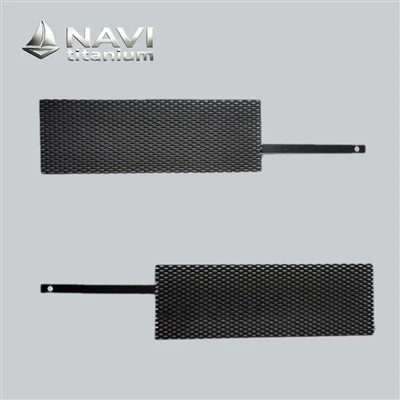
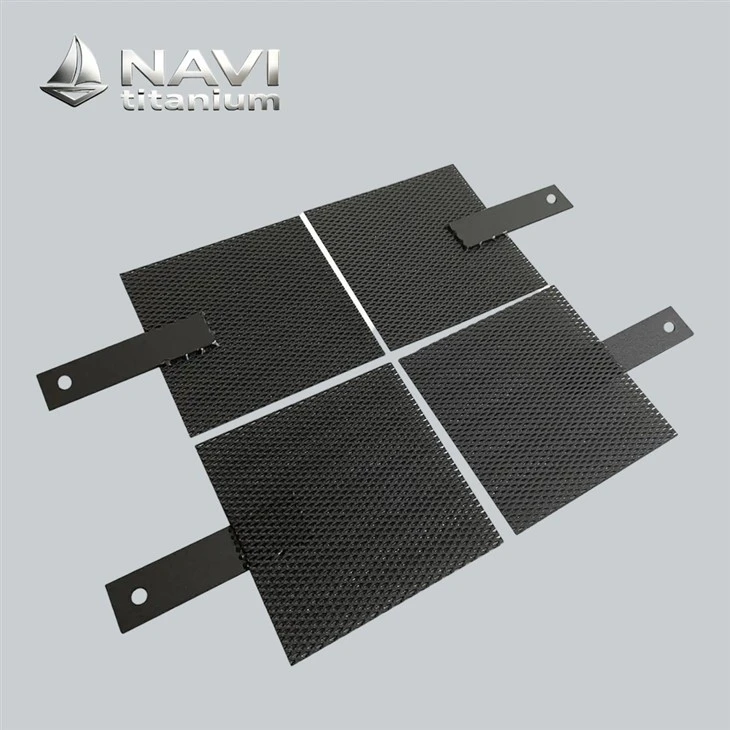
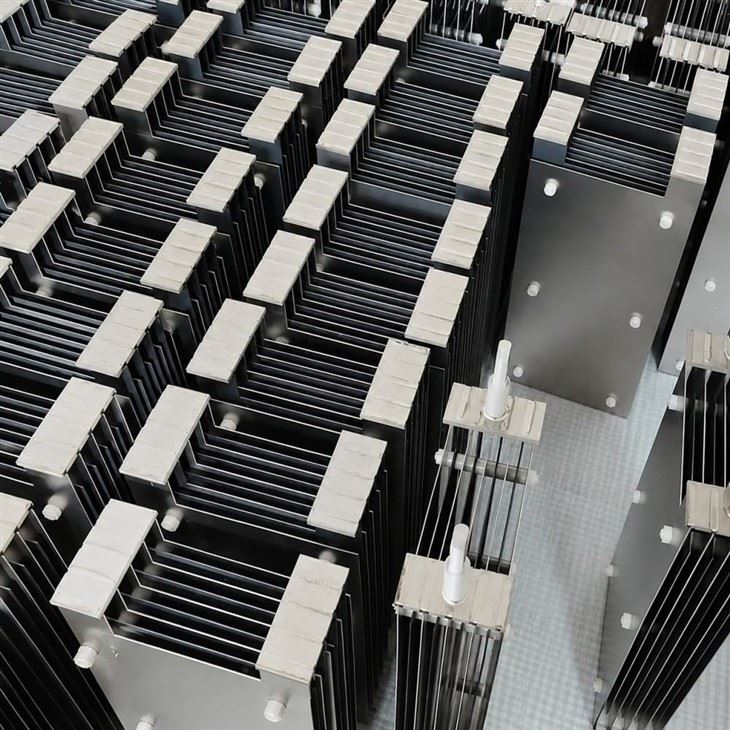
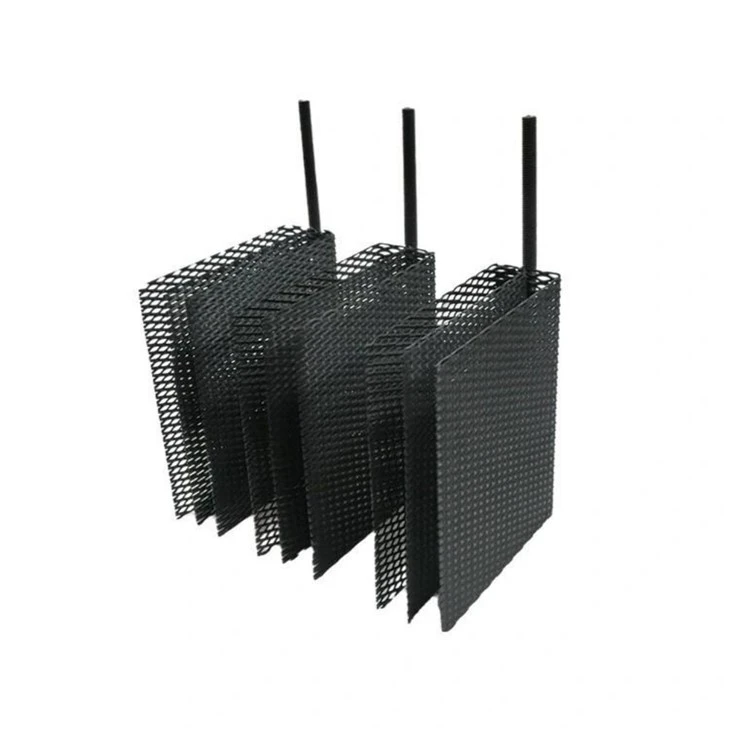
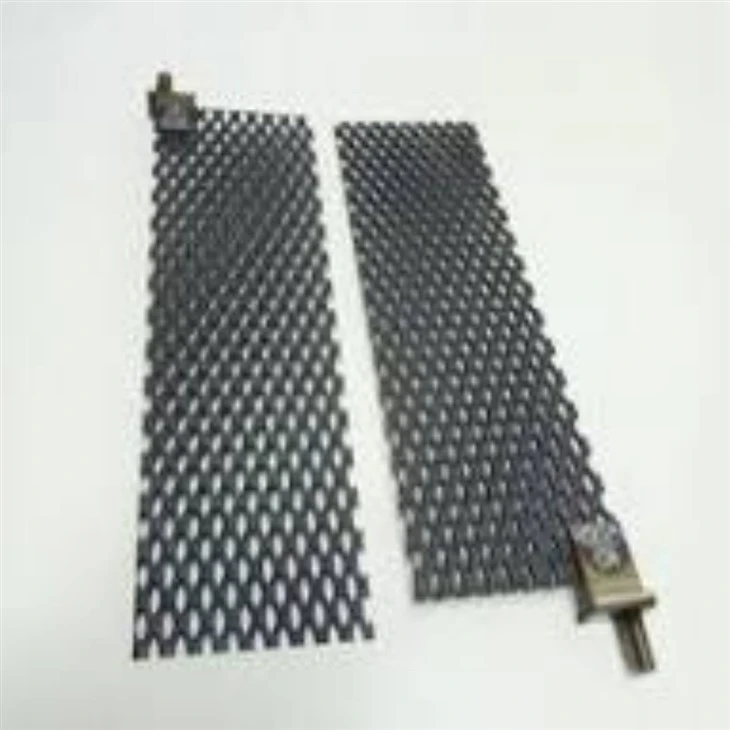
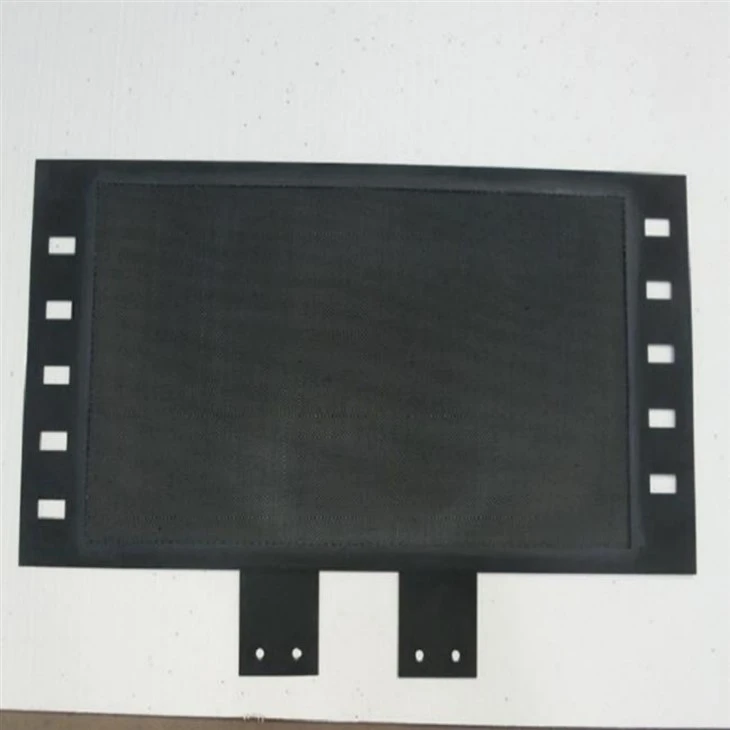
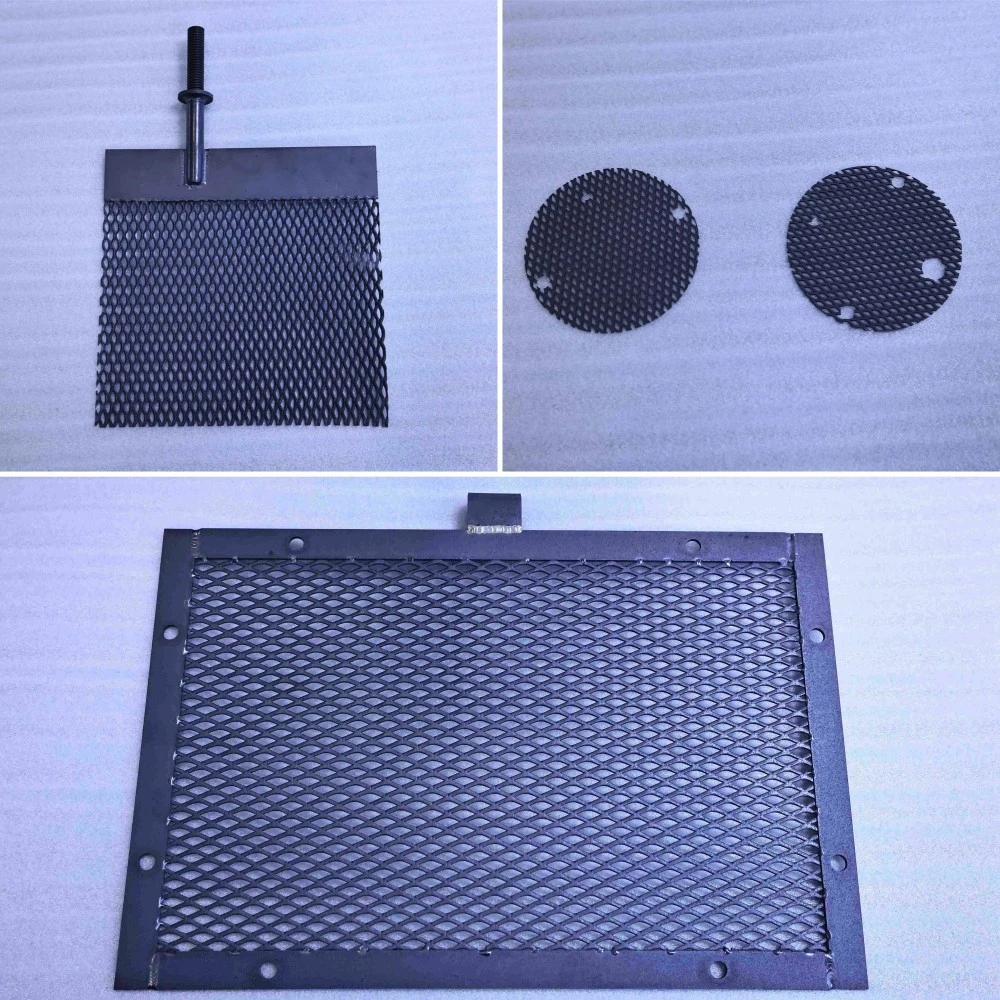
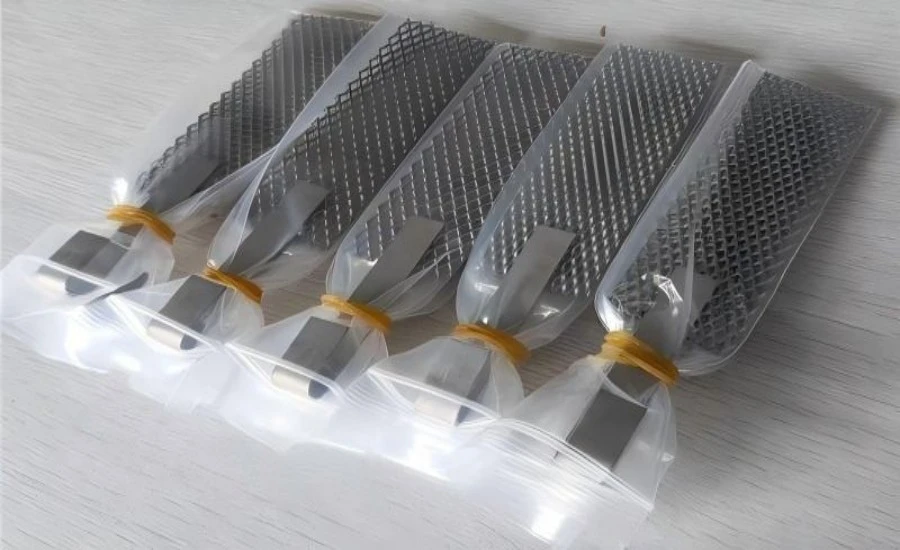
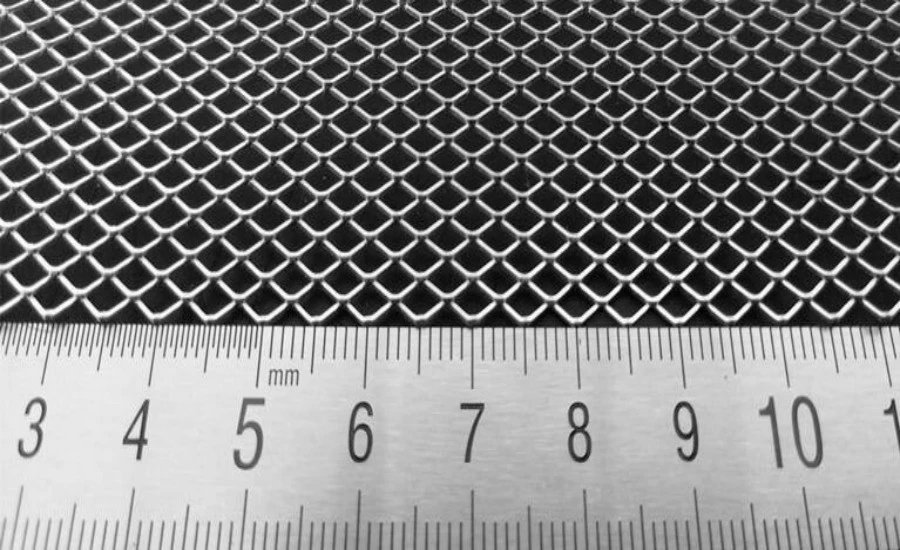
Flat expanded sheet is widely used because its openings allow water to cross the surface, while the outline follows the internal cell size and the effective treated area is determined by the specified sheet size. Multi-plate assemblies arrange conductive sheets in parallel inside a single chlorinator. Cylindrical expanded sheet is suitable for round cell bodies and compact housings, while sheet with a welded tab supports OEM retrofit requirements.

Application
NAVI Titanium supplies Ru-Ir titanium anode mesh for swimming pool installations for both residential and commercial applications. Although these buyers use the same general conductive sheet type, their operating requirements can differ considerably. Ordering by outline alone overlooks salt concentration, water movement across the surface and the reverse-polarity cycle used by many pool chlorinators.
Residential Saltwater Pools
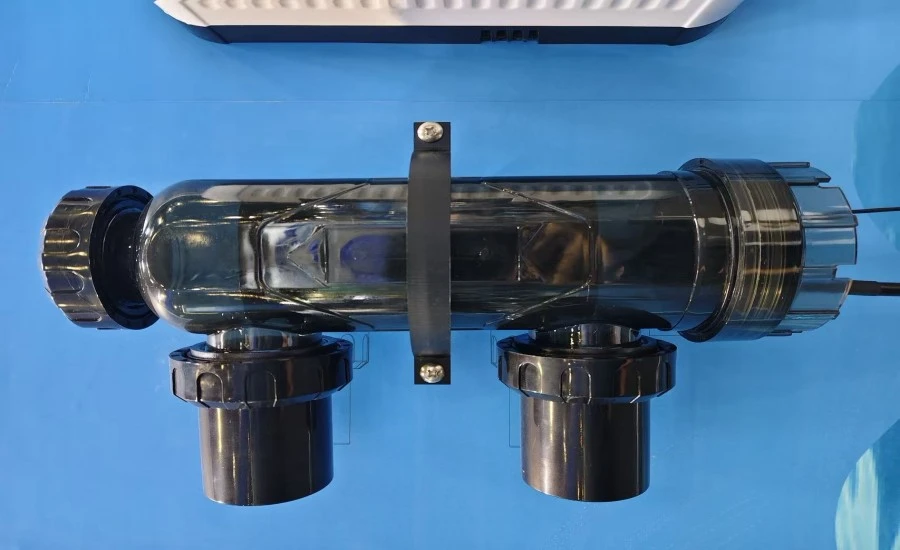
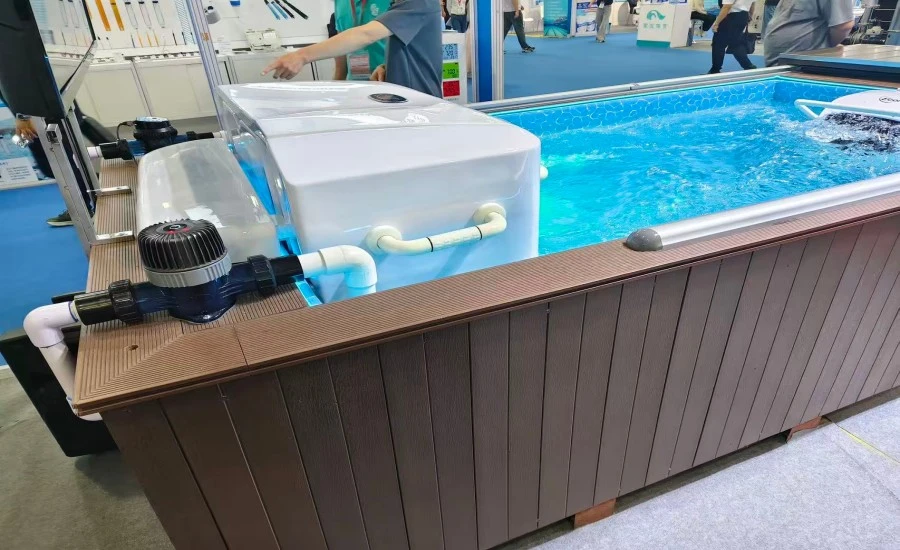
Residential salt chlorinators take the largest share of what NAVI Titanium ships, and most of it is retrofit: the housing outlives its conductive set, and the owner wants a sheet that fits the original shell. The rectifier drives chloride in the circulating water to the chlorine species that keep the pool sanitary. Four things decide performance. Sheet size and plate count set working area, which at pool salinity limits output per amp. Opening size governs whether water crosses the surface or channels around it, and whether gas leaves freely. Connection must match the existing terminal, or the installer improvises and the joint runs hot. Last, the reverse-polarity cycle on household units briefly makes the sheet cathodic, so the layer is specified to survive it, not merely to evolve chlorine. Chlorinator makers, pool brands and spare-part distributors usually send a sample or a cell model; we measure it and quote the same geometry.
Commercial & Public Swimming Pools
Commercial installations run harder: longer daily circulation, heavier bather load, and often continuous duty through a season, so disinfection demand per cubic metre is higher and the conductive sheet works nearer its limit. Buyers here are chlorinator makers, hotel pool integrators and municipal water contractors, and they specify differently. Treated area comes before outline, since output must hold on a hot afternoon, not just at commissioning. Electrical load is checked against plate count so no sheet carries more than its share. Water distribution matters more than in a domestic cell; a surface starved on one side scales where water barely moves. Maintenance interval is written into the tender with the acid-wash method. On the purchasing side, lot consistency, documented endurance testing and traceable certificates decide the award more often than unit price, since a failed cell closes a public pool. Multi-plate assemblies and non-standard sizes are the configurations worth developing here with NAVI Titanium.
Purchasing guide

Quality control(QC)
NAVI Titanium holds ISO 9001 certification on the conductive sheet line, and every lot carries its record: layer weight scan, bond check, endurance-run result and mill certificate for the base metal, all filed under one code. Numbers always beat adjectives. Press the button below to open our full COA and compare every line with the limits written into your pool specification.
| Certificate of Analysis | ||
| Titanium Base Material Suppliers: | Coating Precursor Suppliers: | COA of product: |
|
|
|
|


Manufacturing Process
NAVI Titanium manufactures Ru-Ir titanium anode mesh for swimming pool through a controlled sequence of six production stages, from strip selection to final inspection and packaging. Each stage addresses a specific manufacturing risk, including size errors, surface contamination, layer defects and uneven electrical distribution.
Pass 1 · Picking Strip and Aperture
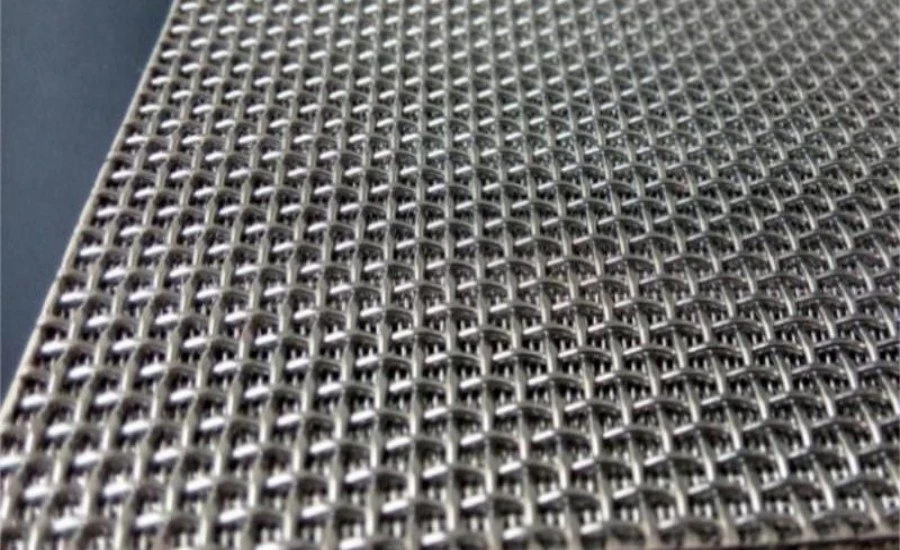
Strip arrives as Gr1 or Gr2: Gr1 folds without complaint, Gr2 holds shape across long spans. We expand rather than weave, keeping one conduction path for panels energised from a single edge. Aperture is set against pump flow and peak gas - too fine and bubbles lodge inside the openings, too open and coated area falls.
Pass 2 · Outline, Tabs and Fixing Holes
Laser or water-jet cutting fixes the outline; every slot, hole and tab is made here, since a tab welded onto a fired panel burns the oxide off the joint. Woven borders are hemmed so no strand works loose. Tab orientation and hole pitch go on the traveller rather than being left to the operator.
Pass 3 · Etch, Then Rinse Properly
Degreasing, then an acid etch to key the surface, then the rinse that decides more than buyers expect. Liquor wicks into every strand crossing and folded lap; what stays vaporises in the kiln and leaves a patch with no coating. Blanks reach coating within the same shift, handled by the edges only.
Pass 4 · Building the Film in Thin Coats
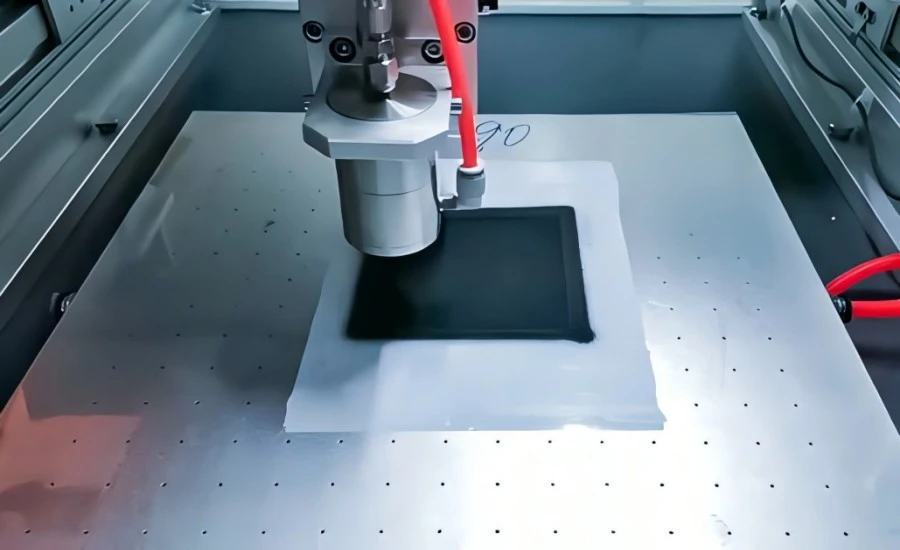
Active solution goes on in thin coats, each decomposed before the next, so the oxide grows as a stack rather than one layer that cracks. Loading is quoted against projected panel area, the number the rectifier sees. Where the unit reverses polarity to shed scale, the formulation is adjusted: a film tuned only to evolve chlorine degrades once the panel spends part of each cycle cathodic.
Pass 5 · Feeding Current the Full Width
Current fed at one corner does not arrive evenly: the near section carries too much while the far area idles. Entry is spread over several tabs or a header bar across the top edge, with the drop at each joint measured in millivolts. Two same-size panels ageing at different speeds almost always have a current-entry problem, not a coating one.
Pass 6 · Evidence, Then Flat Packing
Panels from each lot go to an XRF scan for coating weight, a bend-and-tape check for bonding, and a life run from the same lot. Sheets travel flat, interleaved on a pallet - a coated mesh rolled for transport arrives with a cracked film.
Electrode Shape Comparison
The rows below set the expanded sheet against the other conductive forms NAVI Titanium is asked to quote, using the shapes described earlier on this page. Treat the figures as indicative only: which form suits you depends on internal cell height, plate spacing and water path, and every figure is confirmed by NAVI Titanium against your sketch or sample before it enters an order acknowledgement. The table below is Ru-Ir titanium anode mesh for swimming pool - electrode shape comparison for you to reference.
|
Electrode Shape |
Main characteristics |
Where it fits |
|
Flat Mesh |
Large open area, water passes through the sheet |
Chlorinators built around a mesh electrode |
|
Solid Plate |
Simple structure, easy to stack in parallel |
Plate-type chlorinator cells |
|
Cylindrical Structure |
Matches a round housing |
Purpose-built cell designs |
|
Custom Assembly |
Integrates terminals, fixings and stated dimensions |
OEM supply, like-for-like replacement |
Why Choose NAVI Titanium?
Application-Matched Ru-Ir Coating
NAVI Titanium specifies Ru Ir titanium anode mesh for swimming pool according to the operating duty rather than relying on the product name alone. The Ru-Ir ratio and coating loading influence electrode performance and service life, so the proposed coating must be evaluated against the conditions in which the chlorinator operates. Salt concentration sets how much chloride reaches the surface, and pool water is dilute - a few thousand ppm against industrial brine - so the film works harder per amp. Temperature cuts the other way: a warm cell shortens life at unchanged current, and we derate instead of letting the buyer find out.
Current density is checked against coated area, not outline, since a panel generous on paper can be starved once plate count and flow count. Operating mode matters most: units reverse polarity on a timer to shed scale, and each reversal makes the face cathodic briefly. Built only to evolve chlorine, such a film wears fast under that cycle. Send those four variables and the proposal names a formulation and loading, not a product name.
Dimensional Consistency
For Ru-Ir titanium anode mesh for swimming pool, dimensional accuracy is essential because replacement panels must fit the existing chlorinator without forcing, bending or improvised modifications. NAVI Titanium reviews the panel outline, plate count, mounting-hole pitch, terminal position and tab orientation against the approved drawing. Each is written into the order acknowledgement against the approved drawing and checked on the finished lot, not on a first sample.
Two buyers feel the difference. An OEM cannot absorb a panel that needs persuasion to drop onto its studs; a bent tab stops the bench and costs more than the electrode. A distributor shipping spares cannot absorb it either, since the customer judges the brand on whether fitting took ten minutes or an afternoon. Drawings are held under NDA and never reused; where a lot misses the drawing, the remake and freight are ours - stated in the acknowledgement, not left to negotiation.
Flexible Electrode Configurations
Few pool cells share a geometry, and the electrode that fits one rarely fits its neighbour, so our line is defined by structure, not by one catalogue shape. Flat expanded mesh is what residential units use, quoted on outline and aperture, not pulled from stock. Multi-plate assemblies are the other common request: electrodes in parallel, spaced to the housing, fed from one header so each carries its share. Where the existing unit was built on solid plate, we supply that form instead of arguing the buyer into a conversion - matching the original structure is usually worth more than the theoretical gain.
Cylindrical bodies, folded wings and panels with a welded tab or lead fall inside that capability. That lets a buyer choose the structure the cell was designed around, send a sample or a dimensioned sketch to NAVI Titanium, and receive a panel built to that geometry, not a compromise off a shelf.
FAQ
1. Will it fit my chlorinator, and what do I send to get a quote?
+
-
Fit is decided by four dimensions: panel outline, plate count, hole pitch and tab position. A drawing or STEP file is ideal, though most replacement orders start with the worn electrode itself - send it, or a photograph with a scale plus the cell model - and we measure the original and quote that geometry. Note which face the terminal sits on; tab orientation is the detail most often missed.
2. How long does it run, and how do I know it is near the end?
+
-
Life is counted in seasons, not hours, since a domestic cell idles half the year. The oxide thins gradually: in the cell logbook, voltage at a fixed current creeps up while output per amp falls. Keep the first month's reading as baseline. An undersized panel ages faster than a generous one at the same setting, and low salt, warm water and long reverse-polarity intervals shorten it. Replacing is a like-for-like swap: isolate the supply, drain, release the terminals, lift the old stack and fit the new one without touching the coated surface.
3. What maintenance does the cell need, and what should never be done?
+
-
Scale is the normal enemy: calcium and magnesium drop out as water warms, blocking apertures and pushing local current density up until the coating burns unevenly. Use the acid-wash interval and dilution in the quotation, not a stronger mix. Never scrape the face or bend a coated panel - the oxide is glass-brittle - and avoid fluoride cleaners, which attack both film and base metal. On winter shutdown, drain the cell and store dry.
4. Which documents do buyers in different regions ask for?
+
-
North American specifiers usually reference NSF/ANSI 50 for pool equipment and ASTM B265 for the titanium base, and expect inch-dimensioned drawings. European buyers ask for the EN 10204 3.1 certificate together with REACH and RoHS statements, and increasingly for a declared coating composition. Australian and New Zealand enquiries commonly add and metric drawings. Gulf projects run hot water and high ambient temperature, so they ask for the temperature the life figure was measured at - we state it on the quotation.
5. How is quality held from lot to lot, and what happens if a batch is wrong?
+
-
Consistency starts with coating a lot as one lot: one solution batch, one kiln schedule, one code on every panel, and readings held against that code instead of averaged across the month. Buyers may appoint SGS, Bureau Veritas or TÜV to witness, at their cost. Certificates named in the order travel with the goods, not the invoice. Miss the approved drawing and we reproduce the lot and pay the freight - written into the acknowledgement. Worn panels can come back for stripping and a fresh coat.
Hot Tags: ru-ir titanium anode mesh for swimming pool, China ru-ir titanium anode mesh for swimming pool manufacturers, suppliers, factory, Mixed Metal Oxide Anodes, MMO Titanium Anode, perforated coated titanium anode, Titanium Anode for Water Treatment, Titanium Anode Rod for Water Heater, tube MMO titanium anode