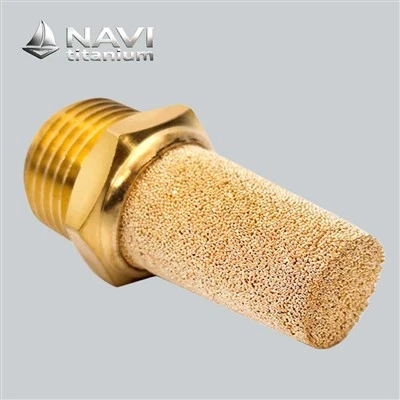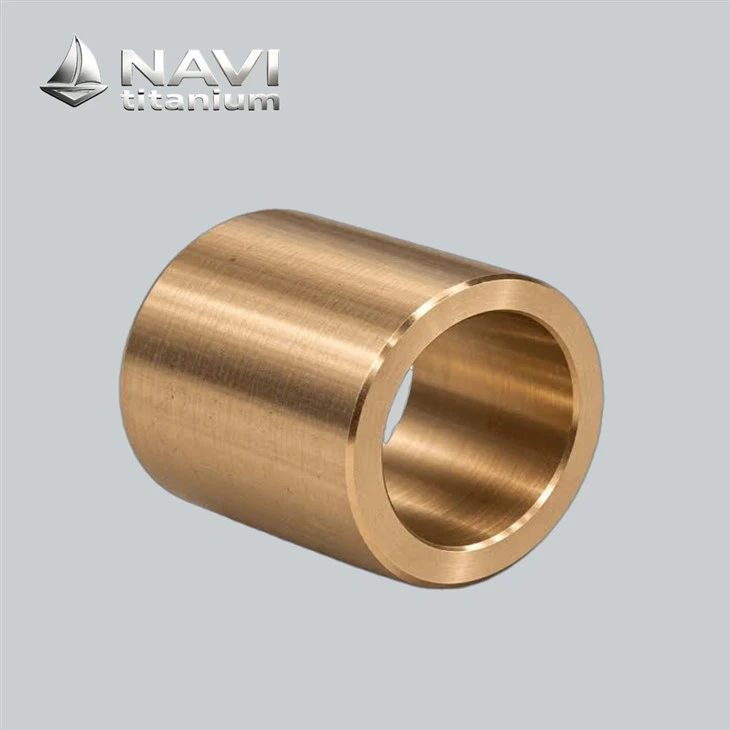


NAVI Titanium presents sintered bronze bearings for rotary shaft support, with particular attention to pore-size distribution and fluid throughput characteristics. Pore-size analysis examines the proportion of different aperture ranges, revealing potential variations in impregnating fluid retention and migration pathways. Fluid-flow assessment records permeability under specified load differentials, allowing buyers to compare throughput rates across sample groups.
Solution of NAVI Titanium
NAVI Titanium, a sintered bearings manufacturer, examines fluid throughput through controlled pressure-drop testing, recording flow rates across different sample dimensions and operating load.
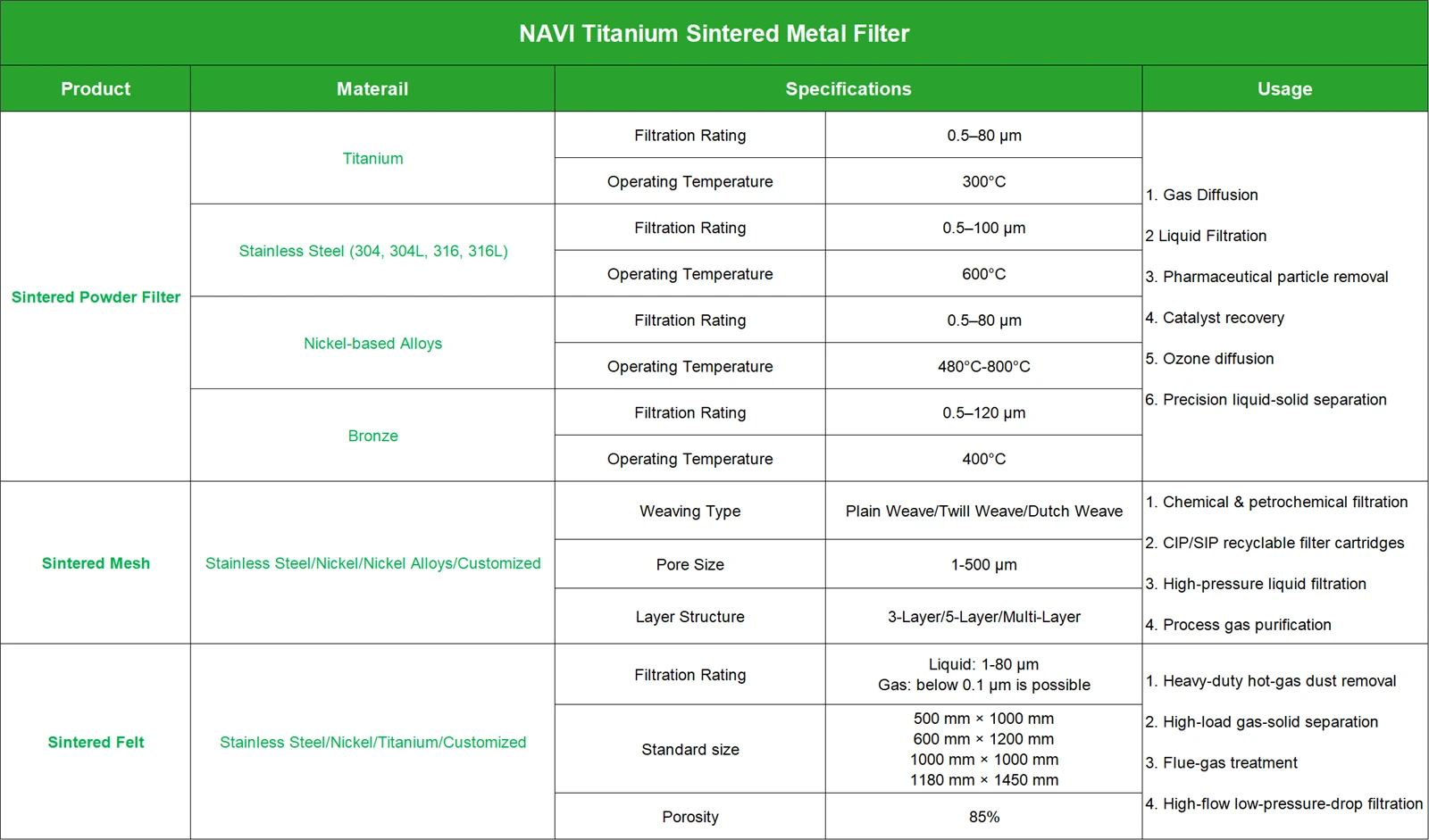


NAVI Titanium places particular attention on particle bonding and interconnected voids, where variations in these parameters may alter capillary transport and frictional response.


Application
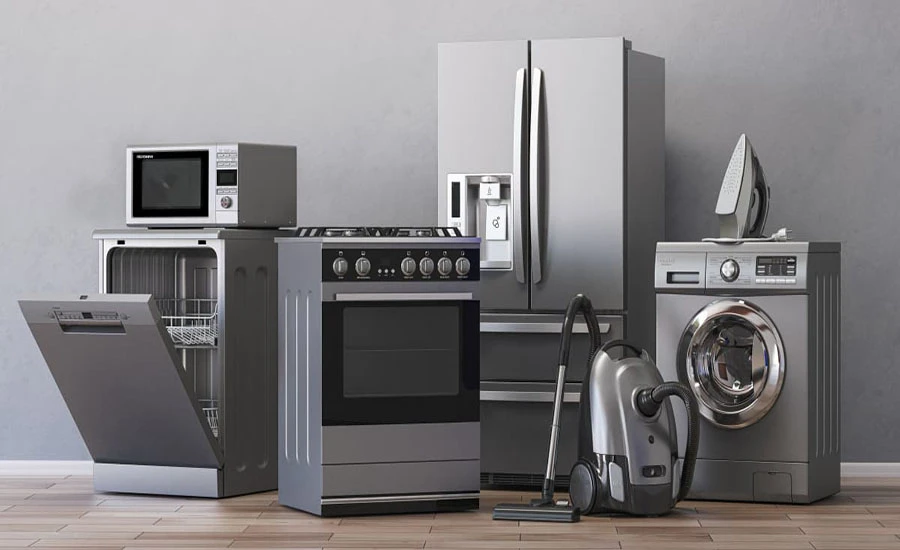
NAVI Titanium supplies sintered bronze bearings for household appliances and fans & blowers, addressing rotary shaft support, impregnating fluid retention, friction reduction, and consistent operation across diverse operating cycles.
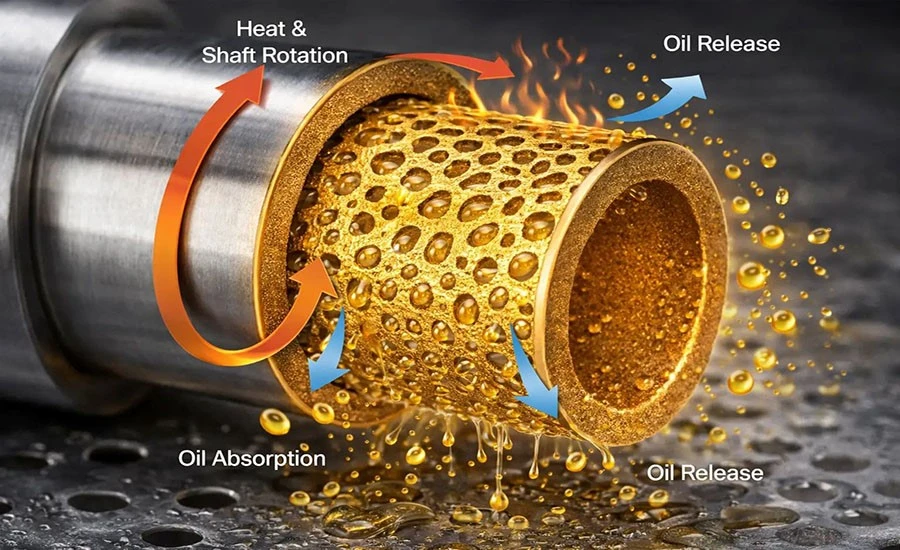
Small drive assemblies in household appliances frequently rely on compact rotary supports to maintain shaft alignment during repeated starting, stopping, and speed variation. In washing machines, vacuum cleaners, air-conditioning units, and kitchen appliances, impregnated powder-based bearing insert are commonly applied around motor shafts and auxiliary rotating shafts. Their interconnected internal voids retain lubricating fluid, which gradually migrates toward the contact interface through capillary action and local temperature changes. This mechanism establishes a hydrodynamic lubricating film between the shaft journal and its supporting hole, limiting direct contact during rotation.
Hole caliber, external caliber, axial length, and running clearance must correspond to the mating shaft and housing specifications. Excessive interference may restrict impregnating fluid migration and reduce internal clearance, whereas insufficient engagement can cause unwanted displacement or vibration. Impregnating fluid viscosity, rotational speed, ambient temperature, and intermittent duty cycles also determine lubrication performance. For household appliance manufacturers, these parameters are essential when assessing operating noise, rotational smoothness, maintenance intervals, and consistency across high-volume assembly operations.
2. Fans & Blowers
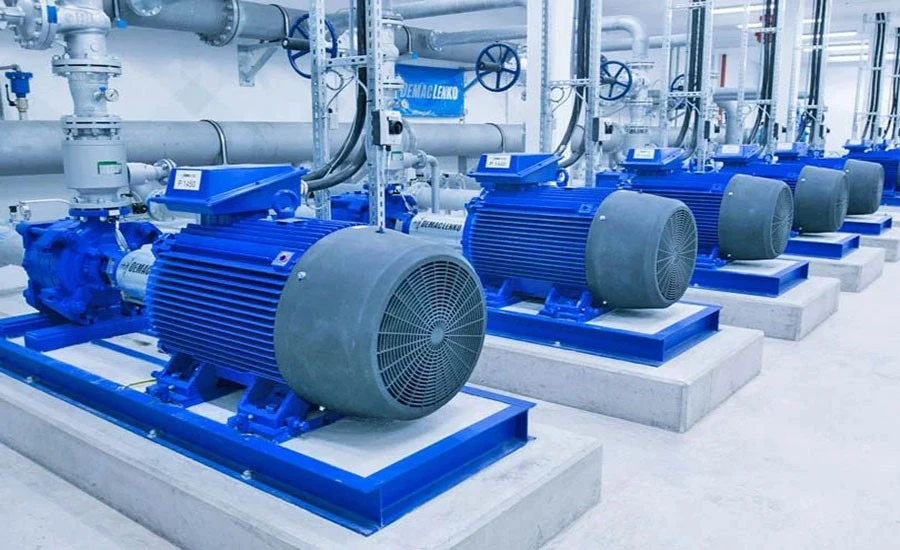
Rotating shafts in fans and blowers are subjected to continuous frictional contact, radial loading, and periodic thermal variation. Impregnated powder-sintered bearing inserts are frequently adopted in compact ventilation motors, centrifugal fans, axial-flow fans, and small air-moving units. Their interconnected capillary passages retain lubricating fluid within the internal matrix. During rotation, a portion of this impregnating fluid migrates toward the shaft interface, forming a supporting tribological film that reduces direct contact between the journal and the bearing hole.
Operating performance depends on several interrelated parameters, including shaft caliber, radial clearance, rotational speed, applied load, impregnating fluid viscosity, and heat dissipation. Inadequate clearance may restrict impregnating fluid-film formation, while excessive clearance can increase shaft movement, vibration, and acoustic emissions. Shaft alignment and housing concentricity also require careful verification because uneven radial loading may accelerate localized wear. For fan and blower manufacturers, impregnating fluid retention, dimensional consistency, rotational noise, and temperature tolerance are important purchasing criteria, particularly in units intended for extended operation or frequent speed adjustment.
Purchasing guide

Quality control (QC)
NAVI Titanium maintains documented inspection records for bearing-grade materials, covering chemical composition, apparent density, dimensional tolerances, radial clearance, and oleaginous impregnation characteristics.

Manufacturing Process
NAVI Titanium maintains documented inspection records for bearing-grade materials, covering chemical composition, apparent density, dimensional tolerances, radial clearance, and impregnating fluid impregnation characteristics.


Wear Resistance and Acoustic Performance in Rotary Applications
During shaft rotation, repeated contact stress and relative movement may gradually remove material from the hole, particularly when impregnating fluid availability becomes insufficient or radial loading exceeds the recommended range. The resulting wear rate depends on several interacting variables, including shaft hardness, journal roughness, rotational velocity, applied load, impregnating fluid viscosity, and internal oleaginous retention capacity. Excessive shaft misalignment may further concentrate mechanical stress along localized contact regions, accelerating hole enlargement and uneven wear. Procurement teams should therefore assess wear performance under operating parameters representative of the intended assembly rather than relying exclusively on nominal hardness values. Comparative testing can record dimensional loss, hole enlargement, mass reduction, and changes in radial clearance after a specified number of operating cycles. Buyers should also examine whether impregnating fluid replenishment remains adequate throughout extended operation. These measurements provide a more meaningful basis for comparing different grades, estimating maintenance intervals, and determining suitability for continuously rotating motors, pumps, fans, and household appliance drives.
Noise Reduction: Rotational Sound and Vibration Control
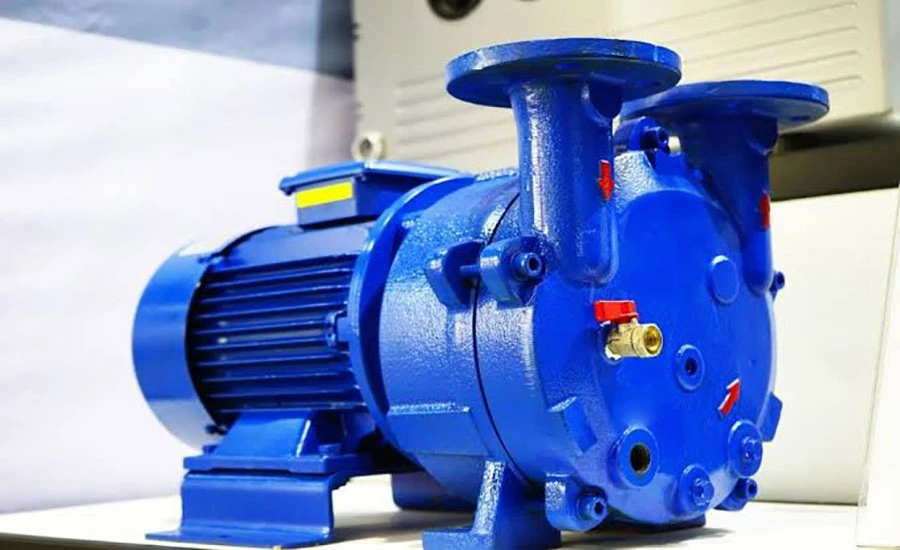
Operating noise is an important purchasing consideration for bearing bearing inserts used in domestic appliances, ventilation units, compact motors, and other noise-sensitive assemblies. Unwanted acoustic emissions may originate from excessive radial clearance, shaft eccentricity, uneven contact load, insufficient lubrication, or dimensional deviations between the bearing insert and its housing. During rotation, these factors can produce intermittent contact, mechanical resonance, and periodic vibration, resulting in increased sound load levels. Adequate film formation reduces direct contact between the shaft journal and the internal hole, helping limit friction-related sound generation. However, lubrication alone cannot compensate for incorrect assembly geometry or poor shaft alignment. Buyers should evaluate noise performance through sound load measurements at specified distances, rotational speeds, and applied loads. Vibration amplitude, frequency spectrum, radial clearance, and shaft concentricity are also useful assessment parameters. For repeat procurement, agreed acoustic limits and consistent assembly specifications facilitate comparison across different deliveries. Particular attention should be given to starting noise, continuous running noise, and sound variation under changing rotational speeds, especially where end-use applications require quiet operation and minimal vibration transmission.
Operating Speed Requirements
For buyers sourcing powder-sintered bearing bearing inserts, chemical composition is an important consideration when assessing mechanical strength, compressibility, retention, and resistance to operational wear. The primary constituents generally include copper and tin, while selected additional constituents may be introduced to adjust hardness, strength, and processing characteristics. Their respective proportions should be controlled according to the intended bearing application rather than selected solely by nominal material grade. Variations in tin content may alter hardness and particle bonding, whereas deviations in the primary constituent ratio can affect dimensional shrinkage during furnace treatment and the resulting internal void distribution. Procurement specifications should clearly identify the required chemical composition, permissible variation ranges, applicable analytical methods, and incoming inspection requirements. Buyers handling repeat orders should also request composition records linked to individual production lots to assess consistency over time. For applications involving frequent starting, intermittent rotation, or sustained radial loading, chemical verification should be considered alongside apparent density, mechanical strength, and impregnating fluid retention.

Operating Speed: Sliding Velocity and PV Limit Assessment
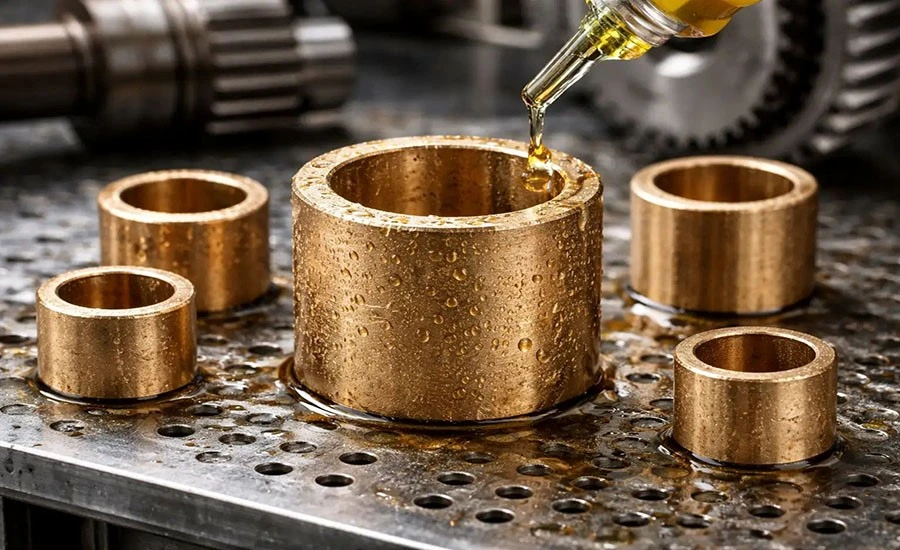
Operating speed is a major selection criterion because rotational velocity determines the sliding speed between the shaft journal and the internal bearing hole. For a cylindrical bearing insert, sliding velocity can be estimated using the formula (V=π DN/60), where D is shaft caliber in metres and N is rotational speed in revolutions per minute. Another essential parameter is PV, calculated by multiplying projected bearing load by sliding velocity. Projected load is generally obtained by dividing radial load by the projected bearing area, commonly expressed as shaft caliber multiplied by bearing length. Exceeding the specified PV limit may cause excessive frictional heating, accelerated impregnating fluid depletion, and premature wear. Buyers should therefore evaluate radial loading and rotational speed together rather than considering RPM independently. Additional factors include shaft roughness, alignment, impregnating fluid viscosity, ambient temperature, and operating duration. Procurement specifications should identify the expected load range, continuous and intermittent speeds, shaft dimensions, and acceptable PV limits. Application-specific testing under representative operating conditions is advisable before confirming suitability for continuous-duty motors, fans, pumps, or other rotary assemblies.
Service Life Evaluation and Operating Parameters
The operating longevity of sintered bronze bearings depends on the interaction between mechanical loading, rotational speed, shaft alignment, and impregnating fluid availability. Excessive radial loading increases contact load and may accelerate local wear, while elevated rotational speed can intensify frictional heating and impregnating fluid depletion.
| Evaluation factor |
|
|---|---|
| Radial load |
|
| Rotational speed |
Higher speeds may increase frictional heat and impregnating fluid depletion. |
| Shaft eccentricity | Uneven loading promotes localized wear and vibration |
| Impregnating fluid viscosity |
|
| Retention | Insufficient retained impregnating fluid increases frictional contact |
| Operating temperature | Elevated temperatures may accelerate impregnating fluid oxidation and evaporation |
NAVI Titanium recommends evaluating these parameters together rather than estimating replacement intervals from operating hours alone.
FAQ
1.What manufacturing capabilities and company qualifications does your company have?
+
-
Its manufacturing operations are supported by ISO-certified quality management systems, dedicated production facilities, and technical personnel. Drawing-based customization, and production inspection records are available to accommodate different industrial purchasing requirements.
2. How can production scheduling accommodate urgent orders?
+
-
Production scheduling generally considers order quantity, tooling availability, raw material inventory, and required delivery dates.
3. How is process management maintained during powder pressing and furnace treatment?
+
-
Key control parameters include pressing pressure, compaction uniformity, furnace atmosphere, heating profile, and sintering duration. Variations may affect internal pore connectivity, dimensional shrinkage, and mechanical strength.
4. How are individual production stages monitored to prevent dimensional deviations?
+
-
Critical stages include compaction, sintering, sizing, machining, and oil impregnation. Hole diameter, outside diameter, roundness, axial length, and radial clearance should be checked at their designated stages.
5. How is batch traceability maintained for repeat orders?
+
-
A documented identification system should connect raw material records, production dates, furnace records, inspection results, and packaging labels.
Hot Tags: sintered bronze bearings, China sintered bronze bearings manufacturers, suppliers, factory, coarse pore metal filter cartridge, coarse pore sintered porous metal filter, controlled porosity metal filter element, Porous Stainless Steel Tube, Sintered Bronze Filter, sintered porous metal filter insert