


Out of the furnace comes a filter element pressed and sintered from sintered metal powder as a final precision product. Nothing that occurs later improves it. Freight handlers don't read pore-size charts, warehouse floors aren't pristine rooms and a container traversing an ocean might carry humidity, salt and vibration for weeks. So the packing challenge is never only how to box the item but what danger this specific shipment is really subject to. The single house standard silently assumes that a fifty gram sample cartridge and a four hundred kg pallet encounter the same hazards and that one bag, one carton and one box will protect both. They won't. The six examples below show when a generic standard fails, what replaces it and the proof worth asking for before the items depart.
Tiered Clean Packaging by Risk
The initial layers are at opposing extremes of a single risk curve. Small items where a scratch writes out the part. Long thin bodies where it is the geometry, rather than the mass that determines how the load needs to be borne.
Scenario 1: Small High-Value Elements and the Limits of a Single Bag Spec
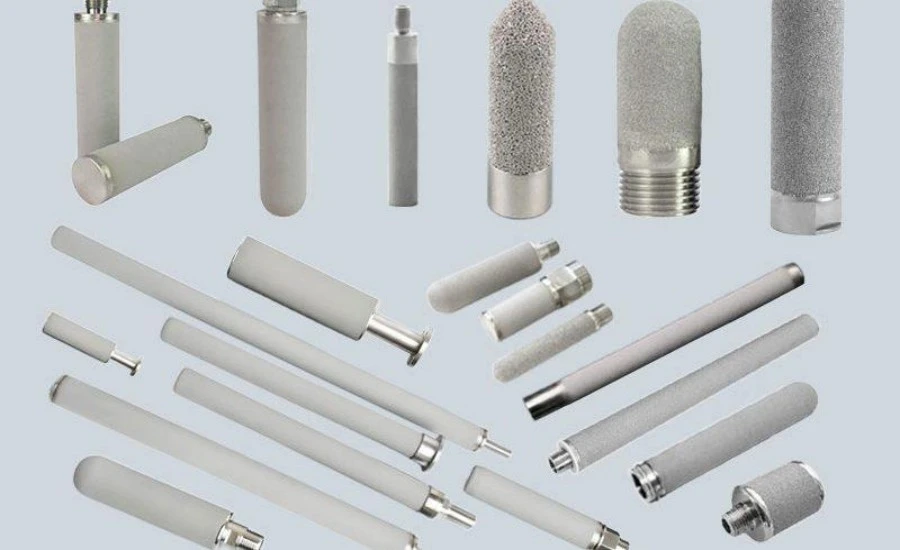
It is a twenty gram part produced from sintered metal powder. Cheap to replace, expensive to certify; therefore it failed a common export container. Drop a number of little pieces in one bag, and weeks of vibration will polish their seal faces against each other, while the porous body will pick up lint from whatever the inside wrapping may be. It's not about the metal but the qualifying work that went into the part.
Each element is heat sealed in a clean polyethylene bag, pharmaceutical grades are supplied in a second bag and vacuum sealing is offered as required by the receiving process. Clean bags are available from any source of sintered metal powders. The distinction is to seal them in a controlled place and print the batch-validated label on the exterior so goods-in can identify the lot without opening anything. Ask for a picture of the sealed bag before it is put into the carton.
Scenario 2: Long, Thin Cartridges - When Length Outranks Weight
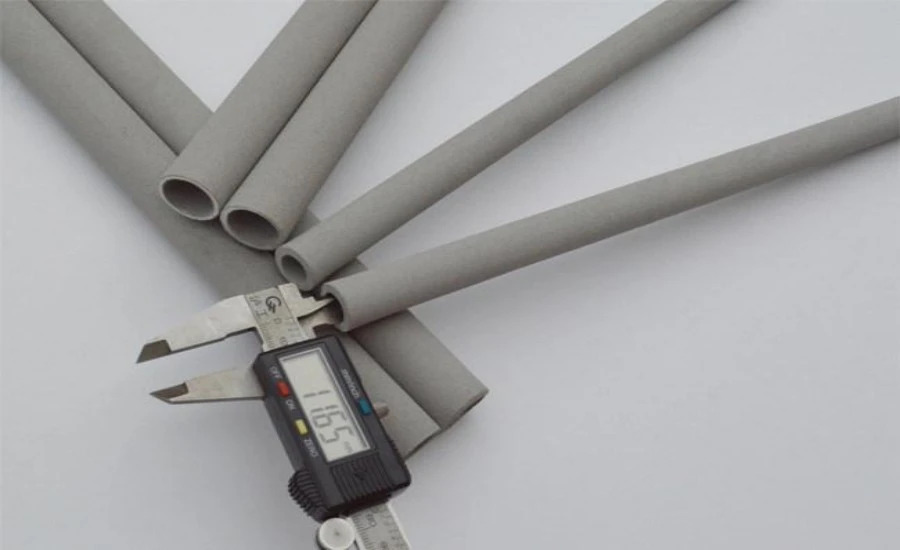
Length totally alters the manner of failure. A cartridge of half a metre or more seldom fails because it is heavy; it fails because it bows, and a bent porous body will not sit in its housing even when nothing seems to be wrong. Parts that are laid flat on a foam sheet are unsupported in the center, so the element sits on two end points and flexes during every road joint and crane lift. Instead of a single point, multi-point axial saddles disperse the load around the body.
End caps, meanwhile, keep the sealing lands off harsh surfaces, and foam sleeving provides a second layer after the element crosses about 500 mm. A cautious sintered metal powder provider will enquire about total length and wall thickness before pricing, since those two values will determine how many saddles the box requires. Verify in writing the support space and enquire as to how the element is constrained sidewise, not only vertically.
Mixed-Lot and Heavy-Bulk Scenarios
A high bulk makes the box a specification item in itself, and trying to combine various grades in one shipping makes a tough choice on how to separate element from element. Mistakes here cost days of cleanroom rework.
Scenario 3: Mixed Multi-Piece Lots and the Separation Problem
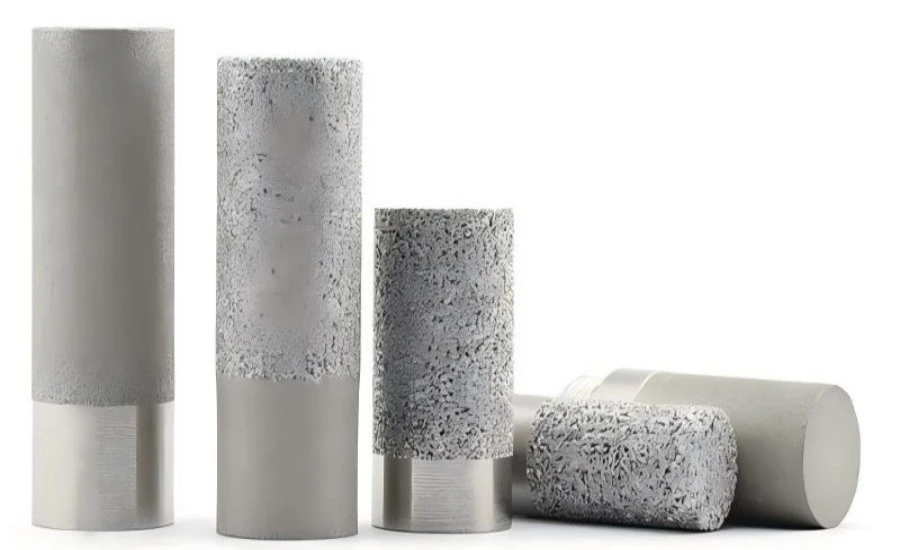
Freight cost may be reduced by combining many porosity classes in one shipment, and the risk of mixing is not covered by any single-bag specification. If 2 classes share an inner box , the person unpacking it needs to be able to tell them apart . Visual examination will not reliably distinguish a 5 micron body from a 10 micron one . Each element is provided its own cell in polyethylene partition trays, the porous surface is kept off the tray walls by an individual bag.
A batch map is written on the outside carton label to inform the receiving technician which grade is in which cell before the box is opened. The cheapest control is to verify that map against the packing list again. When dealing with mixed lots, a sintered metal powder provider should be able to demonstrate how each cell is numbered and how that relates to the material certificate. A mixed carton sent without a map makes inventory management guessing at just the worst time.
Scenario 4: Heavy Bulk Consignments, Where the Crate Is Part of the Spec
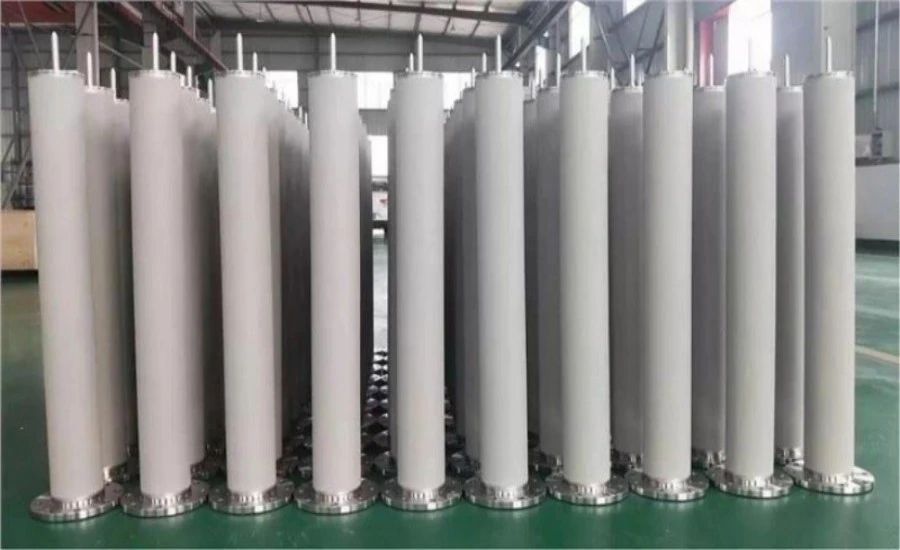
Packaging is not a wrapper at pallet size, it is structure. Several hundred kilos of sintered metal powder filter bodies are housed in a hardwood box, which must withstand the tines of a fork lift, stacking inside a container and a road transfer. Internal separators between rows are what keep the load from settling into a single grinding mass. Heat treated wood designated to ISPM 15 is accepted for phytosanitary examination with no disagreement and strapping pattern is as important as the case.
What is often missed, however, is the receiving end. A pallet too high for the cleanroom goods-in door means breaking down someplace uncontrolled, nullifying every precaution performed up-stream. Prior to manufacturing, agree the pallet size and the unpacking path with your sintered metal powder provider and have the receiving instruction page put within the box.
Sea Long-Haul vs. Air Courier - Re-Weighted for Contamination Control
All these risks are re-weighted depending on the mode selected. Contamination is the major concern, with the secondary threat impacted by weeks at sea. An air package reverses that order, and adds in handling a marine container never sees.
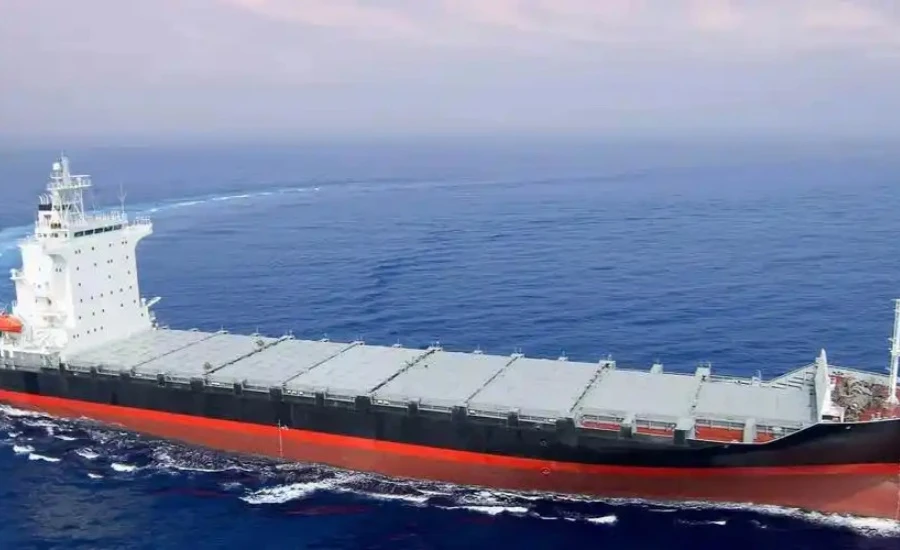
Scenario 5: Sea Long-Haul, Where Moisture and Salt Decide the Outcome
For a porous body a cruise of four weeks is a pollution concern before it is a shock one. Salt-laden air gets inside cartons, humidity cycles with the temperature variation within a container, and chloride that settles in the pores will not rinse out in the field.
Each element is in its own heat-sealed barrier foil bag, with a desiccant of the proper size and a humidity indicator card inside the inner carton, and a salt-spray-rated finish on the crate prevents the exterior from becoming a source. The important thing is to note the desiccant saturation on arrival and map out which cartons changed colour since that pattern informs you whether the barrier failed or the container failed.
A long-haul regular runner sintering metal powder provider should be able to tell you what the barrier material is and clarify the basis of calculation for the desiccant, not just confirm that desiccant was included.

Scenario 6: Air Courier, Where Drop and Tilt Take Over from Damp
The courier networks don't so much eliminate the danger of wetness as swap it for the chance of impact. They go through sorting hubs where dropping from conveyor height is typical , tilt is usual and transit time is counted in hours , not weeks .
Double-walled corrugated board that has passed an ISTA-style drop procedure absorbs that treatment, an anti-tilt label discourages the handling that destroys lengthy bodies, and pharmaceutical grades still receive the individual bag since the cleanroom cares nothing about how quickly the box travels.
Short transportation often tempts purchasers to relax the moisture barrier, which is a problem if the destination is humid and the item goes immediately into storage. Ask your sintered metal powder provider what drop height and what orientations the outer carton was approved against and whether one carton design covers both a two kilogram shipment and a twenty kilogram one.
Conclusion
One specification cannot cover six risk profiles. To suggest otherwise only shifts it from the packing bench to the receiving cleanroom where it is significantly more costly to absorb. Since filter bodies composed of sintered metal powder are qualified parts, the packaging needs to be configured per situation. Sealed at the element layer, supported according to geometry, divided by grade, crated by mass and barrier-protected by route. The practical step is to decide what scenario your order falls into before the RFQ is issued and then need the proof that matches it – sealed-bag pictures, a batch map for mixed lots, pallet measurements for bulk and a humidity card reading at goods-in.
FAQ
1. Why can't a single packaging specification cover every filter element order?
+
-
Because the dominating danger varies by size, shape and route. Surface contact and lint endanger a tiny high-value element, bending a lengthy cartridge, grade misunderstanding a mixed lot, chloride and humidity a marine cargo. Each spec defends against the danger its author considered and under-defends the remainder.
2. What should be checked first when a sea shipment of filter elements arrives?
+
-
Check the humidity indicator cards before you unpack anything, and note which boxes changed colour. That pattern identifies a crate level moisture issue from a barrier failure. Take a picture of the cards then open in controlled environment and confirm each item is separately wrapped and with batch label visible.
3. How does element length change the packaging requirement?
+
-
The support is based on length, not weight. At around 500 mm long, a porous body supported at either end would flex in transport and arrive bent, therefore the container must have multi-point axial saddles, end-cap protection and lateral restraint. Give the provider the whole length and wall thickness, not the total weight.
Ready to Match the Packaging Spec to Your Risk Scenario?
NAVI Titanium manufactures sintered metal powder filter elements at its Baoji facility and packs them to the scenario rather than to a house standard, so the specification you receive reflects your pore grade, geometry and shipping route. Send the pore size, element length, order quantity and the cleanliness procedure your site follows after unpacking, and the team will return a graded packaging plan with packing photographs from comparable shipments. Titanium and stainless grades, pharmaceutical double-bag options and palletised bulk configurations are all handled in-house. Tell us which of the six scenarios your order falls into and what your goods-in team needs to see. Write to sales@navititanium.com to begin.
References
1. ASTM B330-20(2024)e1, Standard Test Methods for Estimating Average Particle Size of Metal Powders and Related Compounds Using Air Permeability, ASTM International, West Conshohocken, PA.
2. ISO 4003:1977, Permeable Sintered Metal Materials - Determination of Bubble Test Pore Size, International Organization for Standardization, Geneva.
3. ISO 2942:2018, Hydraulic Fluid Power - Filter Elements - Verification of Fabrication Integrity and Determination of the First Bubble Point, International Organization for Standardization, Geneva.
4. ISPM 15, Regulation of Wood Packaging Material in International Trade, International Plant Protection Convention, FAO, Rome.
5. ISTA 3-Series, General Simulation Performance Tests for Packaged-Products, International Safe Transit Association, East Lansing, MI.
6. SEMI F19-0815, Surface Condition of the Wetted Surfaces of Stainless Steel Components, SEMI International Standards, Milpitas, CA.



