


A titanium bolt and a steel bolt of the same size seem remarkably similar when you hold them next to one another. But the cost difference between the two may be stark. First-time buyers experiencing the difference frequently question if the expense is really worth it, or whether it's merely a premium slapped on a fashionable material. The real answer is what occurs before the bolt ever enters your fingers. From the dirt it came from, to the machine that made it, to the paperwork that went out the door with it.
Where the Material Behind a Titanium Bolt Comes From
Titanium is the ninth most common element in the earth's crust, but its abundance in the ground does not mean it is cheap to produce. The ore must go through a multi-step reduction process (usually the Kroll process) to turn titanium dioxide into a useable metallic sponge. That sponge is melted, alloyed if it's necessary, and cast into ingots, and then rolled or forged into the bar stock that a machinist will ultimately feed into a CNC machine. All these stages are time, energy and specific equipment consuming.
Raw Material Pricing Reflects Upstream Processing
You will see that titanium bar stock is far more expensive than the same weight of stainless steel or mild steel bar. According to the International Titanium Association, the production of titanium sponge is still concentrated in a few nations, which maintains the supply limited compared to worldwide demand. When you buy a titanium bolt, most of the price is a reflection of that upstream processing chain, not simply the machining time at the end of the line.
Grade Selection Adds Another Layer of Cost
Titanium bolt grades are not cross-compatible. Gr1 and Gr2 are commercially pure and are reasonably easy to get but Gr5 (Ti-6Al-4V) comprises alloying additives which raise the raw material cost and processing complexity. The material premium of the extra-low interstitial form of Gr5, Gr23, is significantly greater due to stricter compositional constraints needed in the manufacture.
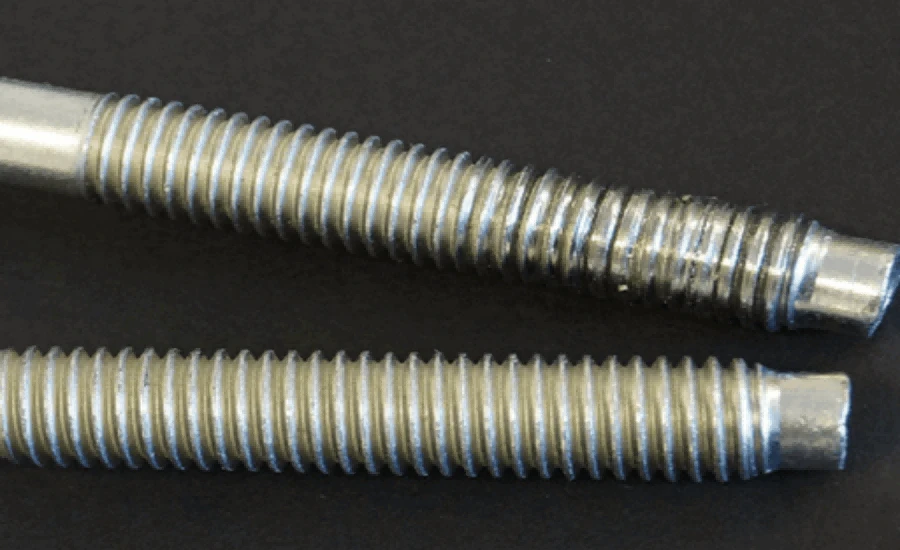
There is a true technical decision as to what grade to choose, and the expense of that material selection comes close on its heels.
Machining Effort Required for Each Titanium Bolt
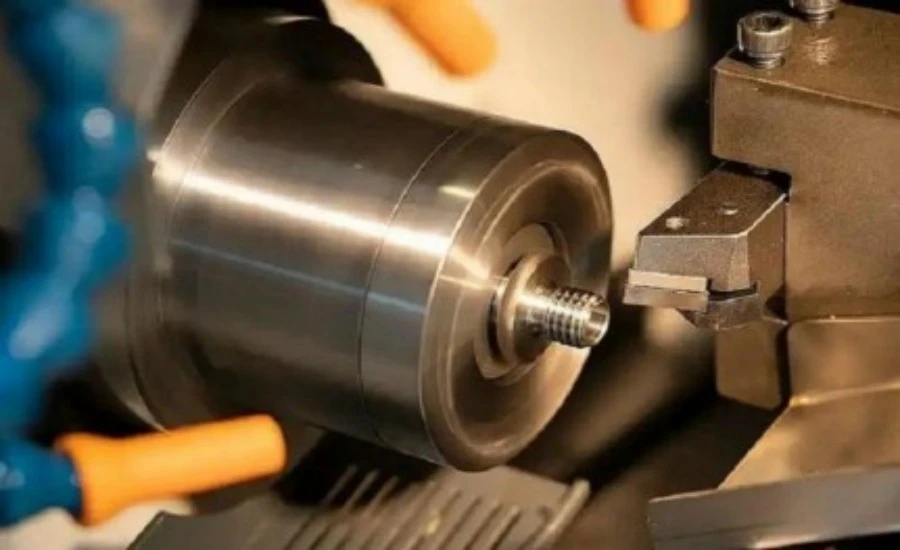
Steel is tolerant on tooling. Titanium is. Titanium has poor thermal conductivity so that heat created during cutting is localized at the tip of the tool and not carried away in the chip. That accumulation of heat substantially reduces tool life as compared to cutting steel. Machinists offset this with lower cutting rates, careful coolant strategies, and increased insert replacement frequency - all of which add time and consumable cost to each titanium bolt produced.
CNC Parameters Must Be Dialed In Carefully
Titanium has to be machined very carefully on a CNC lathe or milling center with the cutting parameters of spindle speed, feed rate, depth of cut and coolant pressure set correctly. Titanium is too hard to run too quickly, generating enough heat to induce work hardening and tool failure. Running it too cautiously makes for longer cycle times. That means a titanium bolt that seems simple on a design may take three or four times as long to produce as a comparable steel fastener.
Titanium's Spring-Back Behavior Complicates Tolerances
Titanium is relatively high in strength-to-modulus ratio, therefore there is a little more elastic spring-back after cutting than steel. This behavior has to be taken into consideration at all stages of machining to achieve tight dimensional tolerances on a titanium bolt shank or head.
Operators must check dimensions throughout the cycle and compensate offsets appropriately. This adds skilled labor time to the cost of each component produced.
Why Titanium Bolt Threads Need Dedicated Tooling
The manufacture of threads on a titanium bolt is one activity in which several of the material's problematic features come together.
Because titanium is prone to galling, a kind of adhesive wear that transfers material from one surface to another under pressure, typical steel threading inserts will wear out more quicker and may not create uniform thread geometry.
Threading tools with proper coatings and geometries are required to provide consistent results.
Lubrication technique is crucial in thread cutting, especially because of the potential of galling. Wrong cutting fluid – or no cutting fluid – may lead to material adhesion on the cutting edge during operation, resulting in a thread that passes visual inspection but fails gaging.
To avoid this, certain tooling techniques are needed which increase the per unit cost.
Inspection and Documentation Behind a Finished Titanium Bolt

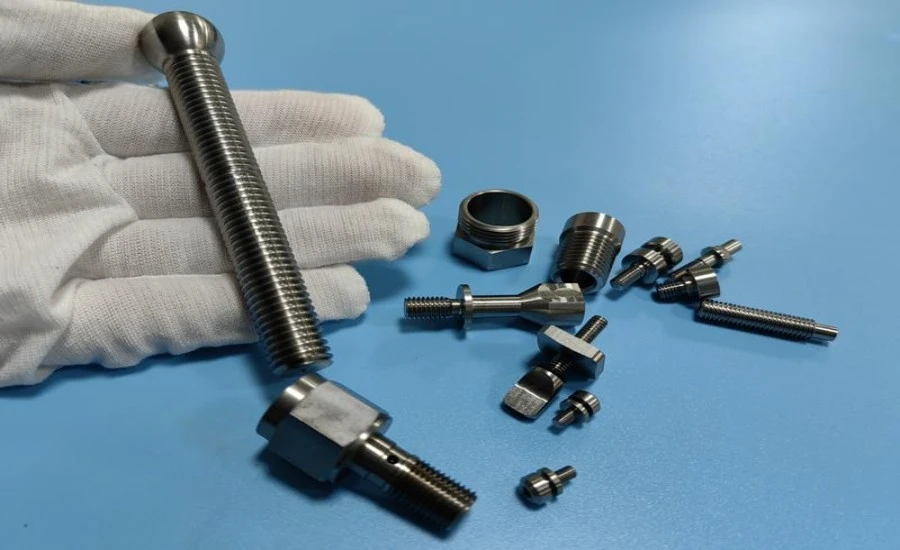
A completed titanium bolt does not leave a certified production environment without inspection. The thread gaging validates the pitch diameter, lead and flank angles to be within the stipulated tolerance class.
Dimensional inspections are performed to verify shank diameter, overall length and head geometry. The surface is inspected for machining marks, burrs or other irregularities that may compromise performance or appearance.
We send the material traceability paperwork with each manufacturing lot. The raw bar stock utilized is mill certified according to chemical composition and mechanical qualities.
For aircraft, chemical processing or industrial equipment this documentation is not optional – it is a requirement of the transaction.
The generation, review and retention of such paperwork creates an administrative expense that is not reflected in the price of a commodity steel fastener offered off the shelf.
How Order Size Changes the Way a Titanium Bolt Is Made
A bespoke titanium bolt made in small quantities will cost more per unit than a run of thousands.
Setup time – CNC programming, tooling selection, first-article inspection, fixture setup – is shared across the parts in each batch. When that batch is 10 bolts, the setup cost per item is substantial.
When it has ten thousand, the same setup cost is minimal per unit.
This is a fundamental aspect of precise CNC production, not a price aberration.
So if a buyer is making unique titanium bolt combinations for the first time, they should consider that sample cost includes the whole setup load for a short run.
Pricing for production is more efficient after designs are finalized and procedures are in place . This understanding allows buyers to plan procurement realistically.
Conclusion
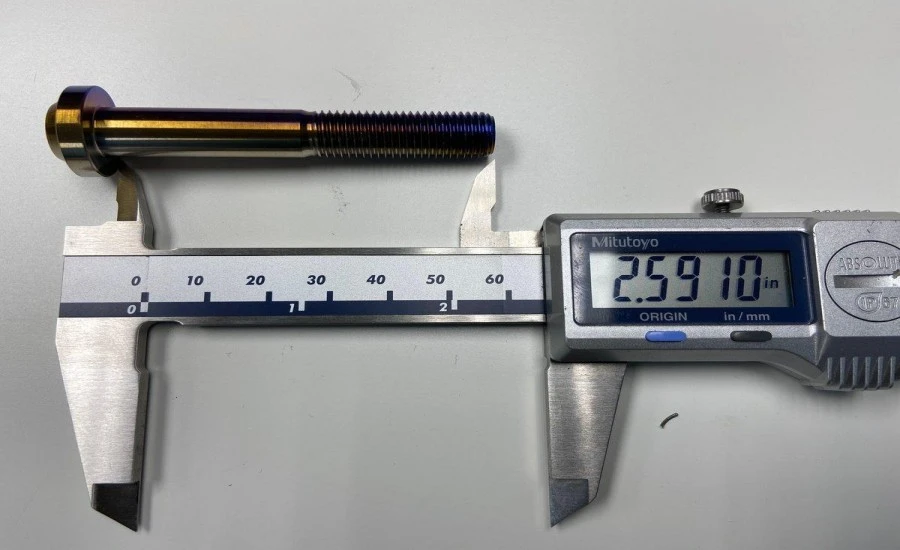
The price of a titanium bolt covers all of the steps between ore in the ground and dimensioned, inspected, recorded fastener in your palm. The ultimate cost depends on the raw material processing, the CNC machining settings adjusted to the special behavior of titanium, the customized threaded tools, the quality inspection and traceability documentation. In applications where weight reductions, corrosion resistance and extended service life are important – motorcycles, industrial assembly, precision equipment – that cost difference has significant technical value.
fAQ
1. Why does a titanium bolt cost more than a stainless steel bolt of the same size?
+
-
The cost difference is due to the processing of the raw materials, the complexity of machining, and the inspection requirements. Titanium ore has to be reduced in a sophisticated multi-step process before it can be used as bar stock. Titanium machining requires lower cutting rates, frequent tool changes and careful coolant management, all of which add to production time compared to stainless steel.
2. Does the titanium grade affect how much a titanium bolt costs?
+
-
Price is directly related on the choice of grade. Commercial pure grades such as Gr1 and Gr2 are cheaper than alloy grades such as Gr5 (Ti-6Al-4V) or Gr23. The alloying additives and more rigorous compositional controls needed for grades of greater performance increase raw material and processing costs.
3. Is it worth paying more for a titanium bolt in a motorcycle application?
+
-
In motorcycle applications, the extra cost compared to steel fasteners is usually worth it, because of the need for weight reduction, corrosion resistance and long-term dependability. Titanium has around 45 percent less density than steel, which provides an obvious weight reduction for a whole set of fasteners – without the strength hit that lighter aluminum fasteners would give you in load bearing positions.
Get Your Titanium Bolt Quote from NAVI Titanium
NAVI Titanium has been supplying precision CNC machined titanium bolt assemblies since 2008, with production based in Baoji - China's recognized center for titanium manufacturing. As an experienced titanium bolt supplier, NAVI Titanium works with Gr1, Gr2, Gr5, Gr7, Gr9, Gr12, and Gr23 materials, covering a full range of diameters, thread forms, head configurations, and surface finishes. Whether you need a matched set for a motorcycle build, a custom fastener for industrial equipment, or a production run with full material certification, NAVI Titanium offers one-on-one technical support and a clear, documented production process from inquiry to delivery. Reach out today and let the team help you find the right configuration for your application.
📧 Contact: sales@navititanium.com
References
1. International Titanium Association. Titanium: The Metal of the Future - Properties, Processing, and Applications. International Titanium Association Publications.
2. Donachie, Matthew J. Titanium: A Technical Guide, 2nd ed. ASM International, 2000.
3. Boyer, Rodney R., Gerhard Welsch, and E. W. Collings, eds. Materials Properties Handbook: Titanium Alloys. ASM International, 1994.
4. Ezugwu, E. O., and Z. M. Wang. "Titanium Alloys and Their Machinability - A Review." Journal of Materials Processing Technology, vol. 68, no. 3, 1997, pp. 262–274.
5. American Society for Testing and Materials. ASTM F3125 / F3125M: Standard Specification for High Strength Structural Bolts and Assemblies. ASTM International.
6. Froes, F. H. (Sam), ed. Titanium: Physical Metallurgy, Processing, and Applications. ASM International, 2015.



