
When a porous metal filter fails ahead of schedule, the root cause often traces back to the powder blend used during sintering. The right combination of particle sizes, material grades, and mixing ratios directly shapes how long a filter element holds up under pressure, heat, and aggressive media. This article walks through what happens inside a sintered metal powder blend and how those choices translate into real-world filter performance and longevity.
How Do Sintered Metal Powder Blends Improve Filter Element Lifespan?
A filter element's lifespan is not determined at the moment of installation - it is determined during powder selection. The blend of metal powders chosen before sintering sets the ceiling on mechanical strength, corrosion resistance, and pore stability that the finished component will ever achieve.
Powder Purity and Oxygen Content as Lifespan Drivers
Oxygen concentration of a titanium powder is one of the most important parameters in the production of filter elements. When oxygen concentrations are over the permitted range, interstitial oxygen atoms build up at the grain boundaries, making it brittle and lowering the electrical conductivity. In PEM water electrolysis applications, where the filter element has to cope with mechanical stress and electrochemical activity concurrently, even a little increase in oxygen concentration noticeably reduces the service life. For the powder metallurgy route, the improvement of the fracture toughness and long-term corrosion resistance in aqueous environment has been regularly reported for titanium feedstock with oxygen concentration < 0.15 wt% [2, 10, 11].
High-purity sintered metal powder - particularly 0A-grade titanium - minimizes contamination pathways and supports consistent pore formation throughout the sintered matrix. This uniformity prevents localized weak zones that typically become failure initiation sites during cyclic loading.

Material Composition and Operating Environment Compatibility
The composition of the powder must be matched to the operational environment as well. Nickel alloys such as INCONEL and Hastelloy C276 are excellent materials for filter elements, which are subject to hostile process streams, due to their excellent resistance to chloride-rich and high temperature media. For example, stainless steel grades such as SS316L provide cost effectiveness for high volume manufacturing and reliable performance in moderatly chemical settings. Even with well-controlled pore engineering, selecting the improper alloy system results in faster surface deterioration, shedding of particulates, and early structural failure. The best technique to lengthen service intervals of filter elements is to match composition to duty circumstances right from the beginning.
Sintered Metal Powder Particle Blending for Stronger Porous Metal Filter Structures
Particle size distribution is not just a filtration parameter - it is a structural engineering variable. How fine and coarse powders interact during compaction and sintering determines the mechanical integrity of the porous skeleton that supports every filtration event the component will ever handle.
Why Particle Size Distribution Shapes Pore Architecture?
A narrow particle size range in the powder mix will result in a sintered matrix with either too much porosity or insufficient inter-particle bonding. And they will not make them endure very long. A proper particle size distribution implies that the smaller particles may fill the spaces between the bigger particles which carry the load. The sintered skeleton may have suitable open porosity and mechanical density. Investigations of porous metal production have shown that bimodal or multimodal particle size distributions boost the density of green compacts prior to sintering and diminish the statistical fluctuation of shrinkage during the heat cycle . This leads to uniform dimensions and predictable pore size throughout manufacturing batches, often in the range of 5 to 80 μm depending on application demands.
Gradient Structures and Coarse-Fine Powder Compounding
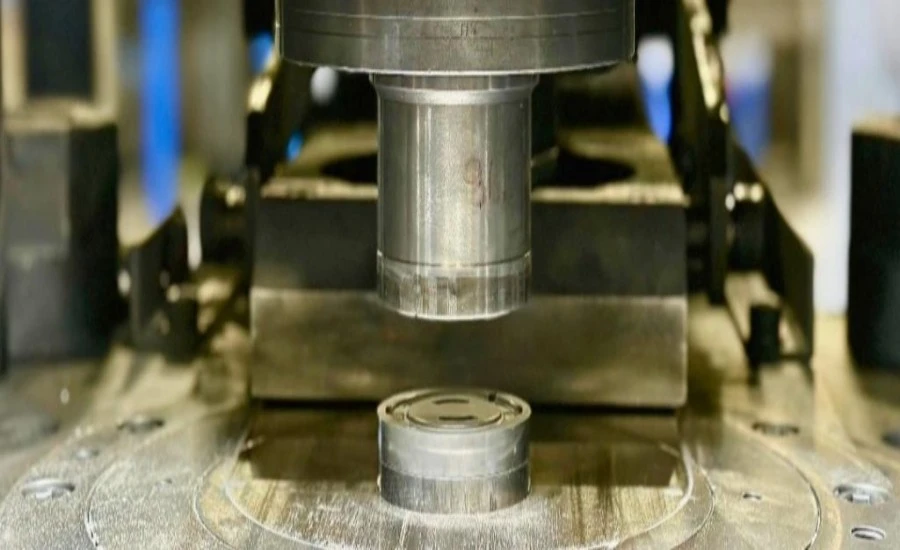
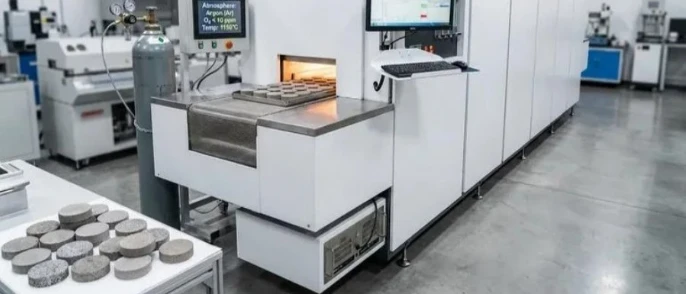
Intentional mixing of coarse and fine powders is the only way to get gradient filter elements whose pore size gradually changes from one face to the other. The coarse powder layer offers structural support and high flux zones while the fine powder layer allows accurate particle interception. This construction allows for a more uniform distribution of the mechanical stresses on the element cross-section, therefore minimizing the danger of delamination or cracking under differential pressure circumstances.
Achieving a stable gradient requires precise control over powder feeding sequences and compaction pressures. Batch-to-batch consistency in particle size distribution - maintained through rigorous raw material qualification - is what makes gradient sintered metal powder filter elements reproducible at scale.
Optimizing Sintered Metal Powder Ratios for Stable Filter Performance
Getting the powder ratio right is where the difference between an average filter and a long-service filter becomes tangible. The proportion of each powder constituent affects sintering activity, shrinkage behavior, and the final pore structure of the component.
How Ratio Adjustments Affect Sintering Kinetics
If the volume percent of fine powder is more than the ideal value, the surface area per unit mass grows rapidly, which accelerates the sintering kinetics and causes over-densification. This seals pores in advance, which decreases the flow and increases the pressure drop. In contrast, the excessive coarser powder concentration leads to wide and irregular pore channels, affecting the interception accuracy and weakening the structure strength . The required ratio is application-dependent: For PEM electrolysis filter elements a finer pore structure with a higher fraction of fine powder is often needed to cope with the gas bubble dynamics and to protect the membrane, while industrial filtration components can probably cope with broader pore distributions and higher coarse fractions for higher throughput.

Sintered Metal Powder Formulation Strategies for Durable Sintered Filter Elements
Formulation strategy encompasses not just powder selection but also how powders are prepared, conditioned, and combined before forming.

Role of Sintering Activity in Skeleton Density
Sintering activity - the propensity of powder particles to bond at a given temperature - varies significantly with powder surface condition, particle morphology, and prior thermal history. Spherical powders with clean, oxide-free surfaces sinter more uniformly than irregular or contaminated feedstocks. This uniformity produces a porous skeleton with consistent inter-particle neck geometry, which is directly linked to the mechanical strength and fatigue resistance of the finished filter element.
Ensuring Batch Consistency Across Production Runs
Batch stability in sintered metal powder supply is a non-negotiable requirement for customers who need consistent filter performance across multiple production orders. Variation in powder oxygen content, particle size distribution, or surface chemistry between batches introduces unpredictable shifts in sintered density, pore size, and mechanical strength.
Qualifying powder lots against strict incoming inspection criteria - including particle morphology analysis and oxygen content verification - is standard practice for high-reliability filter manufacturing.
How Sintered Metal Powder Mixing Methods Affect Filter Reliability and Strength
Mixing is where powder properties become filter properties. Inadequate mixing creates compositional gradients within the green compact that survive sintering and manifest as structural weak zones in the finished component.
Mixing Homogeneity and Its Effect on Pore Uniformity
Dry blending, wet mixing and slurry based procedures are used to obtain varied levels of compositional homogeneity. Wet mixing with suitable dispersants decreases particle agglomeration and promotes fine powder dispersion within the mixture. The sintered product therefore exhibits a more uniform pore size distribution, which may be measured by mercury intrusion porosimetry and bubble point testing, two common quality verification procedures used in the fabrication of porous metal filters.
Forming Method Compatibility with Powder Blends
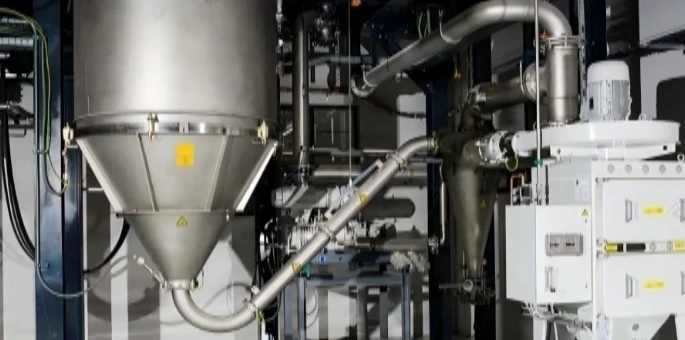
The mixing process should be compatible with the desired forming route. Well-blended free-flowing dry powders are preferred for cold isostatic pressing.
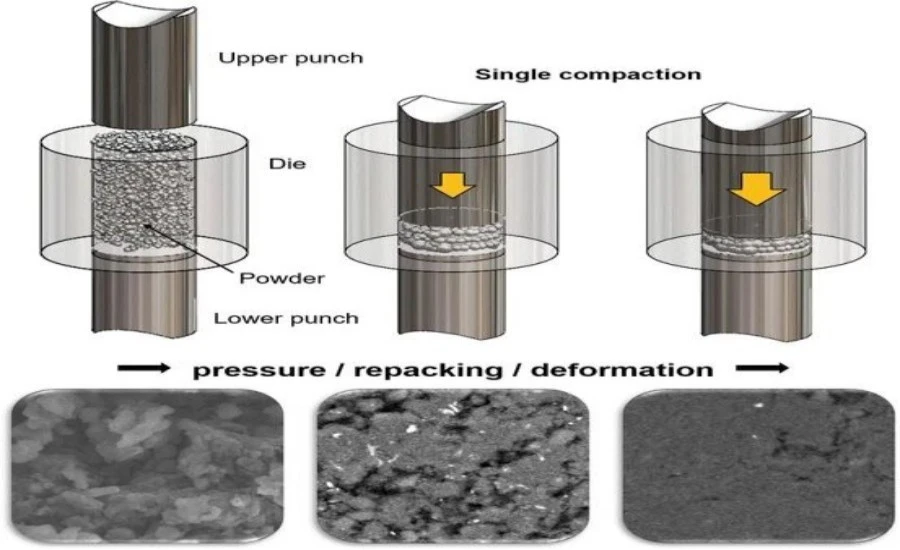
The slip casting and injection molding processes need slurry-based or binder-assisted mixes with certain viscosity and solid loading properties. By matching the mixing strategy to the forming procedure, compaction flaws, segregation and density gradients are prevented, which would otherwise affect the dependability of sintered metal powder filter elements from the very start of production.
Conclusion
Powder blend optimization is the upstream decision that determines downstream filter life. For sintered metal powder, particle size distribution, material composition, powder purity, mixing homogeneity, and ratio control each contribute measurable effects to the structural integrity and service longevity of sintered metal filter elements. Treating sintered metal powder selection as a precision engineering task - rather than a commodity purchasing decision - is what separates filters that meet rated service intervals from those that fail prematurely.
FAQ
1. What powder materials are used in sintered metal filter elements for PEM applications?
+
-
High-purity titanium powder (0A-grade or low oxygen content) is the primary material for PEM electrolysis filter elements, which has excellent electrochemical stability, corrosion resistance in acidic environment, and compatibility with proton exchange membrane systems. The alloys with nickel are utilized when need higher thermal and chemical resistance, e.g. at high temperature or hostile chemical environments.
2. How does particle size distribution affect filtration accuracy in sintered porous metal filters?
+
-
The particle size distribution directly determines the pore size and pore size homogeneity of the sintered matrix. Finer powder fractions result in smaller average pore diameters and tighter interception accuracy, whereas coarser fractions result in higher flux at the expense of filtering accuracy. Optimized bimodal distributions may balance both performance factors in one filter element.
3. Why does batch-to-batch powder consistency matter for sintered metal filter manufacturing?
+
-
Variations in powder oxygen content, morphology, or particle size between batches produce unpredictable shifts in sintered density, pore structure, and mechanical strength. For customers who require consistent filter performance across large production orders or repeat procurement, batch stability in the powder supply is a direct prerequisite for product reliability.
Partner with NAVI Titanium for Precision Sintered Metal Powder Filter Solutions
IIf you are in need of a dependable sintered metal powder provider for challenging filtering applications, NAVI Titanium offers more than 16 years of expertise in production in the Baoji High-tech Zone, the acknowledged hub of the titanium industry in China. NAVI Titanium develops every powder mix from 0A-grade titanium and nickel-based alloys to SS316L stainless steel to fit your operating conditions, pore size requirements and production scale. With in-house customization capability, rigorous batch-consistency controls, and application-focused technical support, NAVI Titanium delivers sintered metal powder filter components that hold up where generic solutions fall short. Reach out directly at sales@navititanium.com to discuss your specific requirements and receive tailored product recommendations.
References
1. German, R. M. Powder Metallurgy and Particulate Materials Processing. Metal Powder Industries Federation, 2005.
2. Thümmler, F., and Oberacker, R. Introduction to Powder Metallurgy. The Institute of Materials, 1993.
3. Lefebvre, L.-P., Banhart, J., and Dunand, D. C. "Porous Metals and Metallic Foams: Current Status and Recent Developments." Advanced Engineering Materials, vol. 10, no. 9, 2008, pp. 775–787.
4. Liu, P. S., and Chen, G. F. Porous Materials: Processing and Applications. Tsinghua University Press / Elsevier, 2014.
5. Messing, G. L., and Stevenson, A. J. "Toward Pore-Free Ceramics." Science, vol. 322, no. 5900, 2008, pp. 383–384.
6. Cardarelli, F. Materials Handbook: A Concise Desktop Reference. 3rd ed., Springer, 2018.