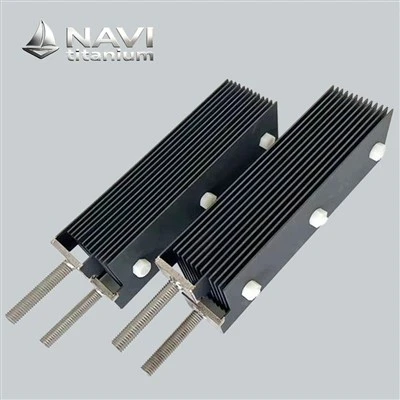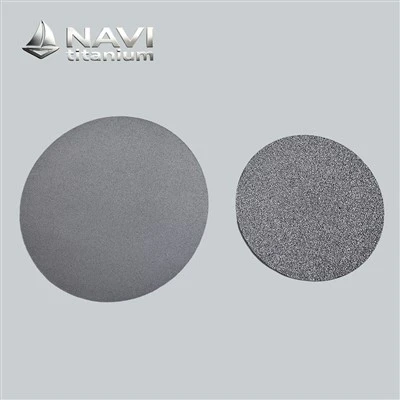


The selection of porous filter elements at the core of the stack is one of the most important choices to be made by engineers in the construction of PEM (Proton Exchange Membrane) electrolysis systems. They take care of water distribution, gas separation and current conduction all at the same time. Often, the performance of sintered metal powders is made or broken by the choice of sintered metal powders and engineering of pore structure, a single upstream decision.
This paper reviews how powder qualities translate into filter pore shape, why the 5-80 μm range is important and how to match powder gradation to real world flow requirements in PEM electrolysis situations.
How Does Sintered Metal Powder Control Pore Size in PEM Filter Elements?
The Physical Relationship Between Powder Particle Size and Pore Geometry
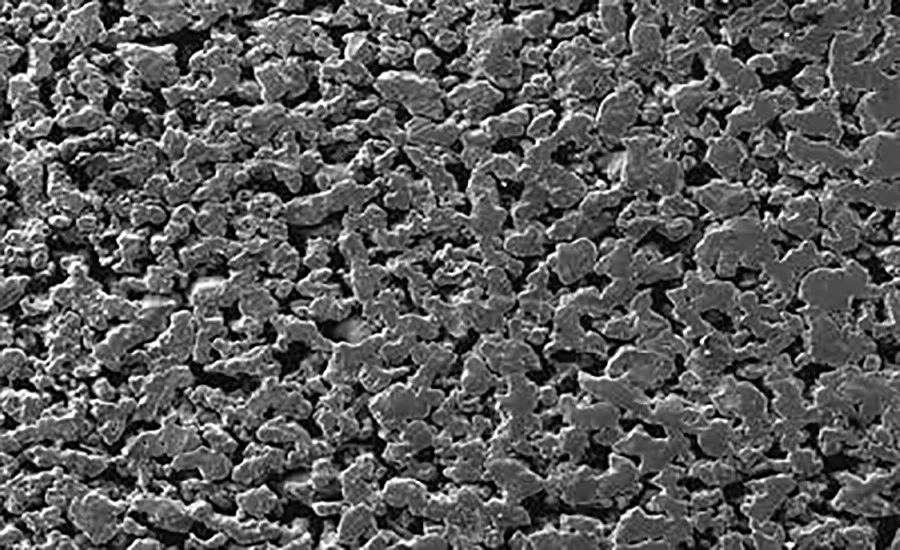
Pore size in a sintered porous metal part is not random. It is a direct result of the spatial arrangement of powder particles in the course of forming and the magnitude of neck development during sintering. bigger powders provide bigger inter-particle gaps, resulting in higher average pore sizes. Finer particles pack more tightly, and make smaller, more tortuous pathways. In PEM electrolytic filter elements, where the clean separation of hydrogen and oxygen gas streams from liquid water is required, the capillary pressure, bubble point and stability of the gas-liquid interface are determined by the inter-particle pore geometry.
In powder metallurgy it is well established that the mean pore diameter is roughly 0.3-0.5 times the median particle diameter (D₅₀) for randomly packed sintered beds (although the ratio depends on particle shape and sintering temperature). Irregular powders usually have less uniform pore distributions than spherical powders, hence the powder morphology is the first screening requirement before even the particle size.
How Sintering Parameters Refine or Collapse the Pore Network
The choice of powder remains the dominant factor governing pore size, whereas sintering temperature, hold time and environment are minor factors. Higher sintering temperature outside the optimum window, causing overgrowth of the necks and pore shrinkage; hence, compressing the useable pore width and increasing the tortuosity. In contrast, bad sintering leads to weak inter-particle connections and unstable pore walls eroded by differential pressure.
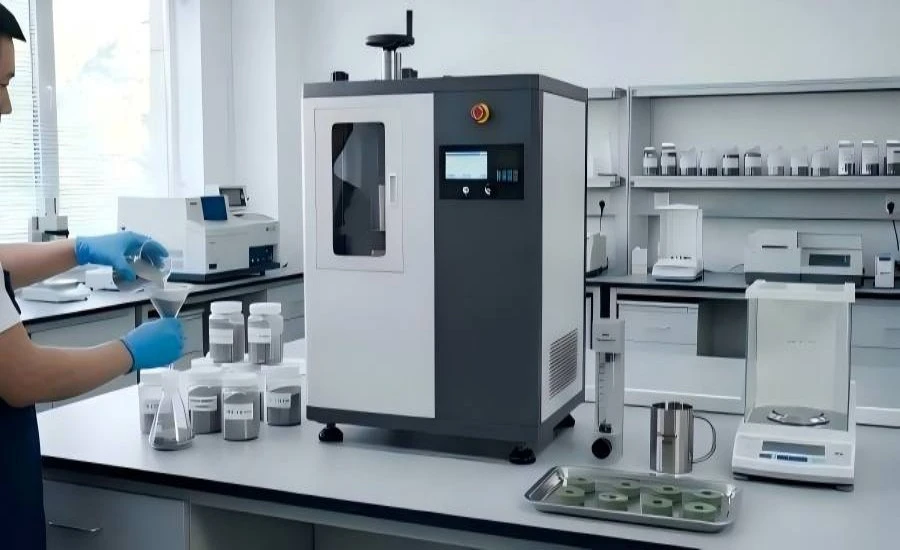
Sintering is carried out in a vacuum or inert environment for high-purity titanium powder, the main substrate in PEM filter elements, to prevent thickening of the oxide layer. Oxygen uptake beyond ~0.15 wt% greatly diminishes both electrical conductivity and corrosion resistance in the harsh acidic environment within PEM stacks. That's why NAVI Titanium uses 0A-grade pure titanium powder and strictly regulates the environment of sintering to ensure metallurgically clean and electrochemically stable pore walls.
Sintered Metal Powder Selection for 5–80 μm Porous Filter Structures
Why the 5–80 μm Window Defines PEM Filter Viability
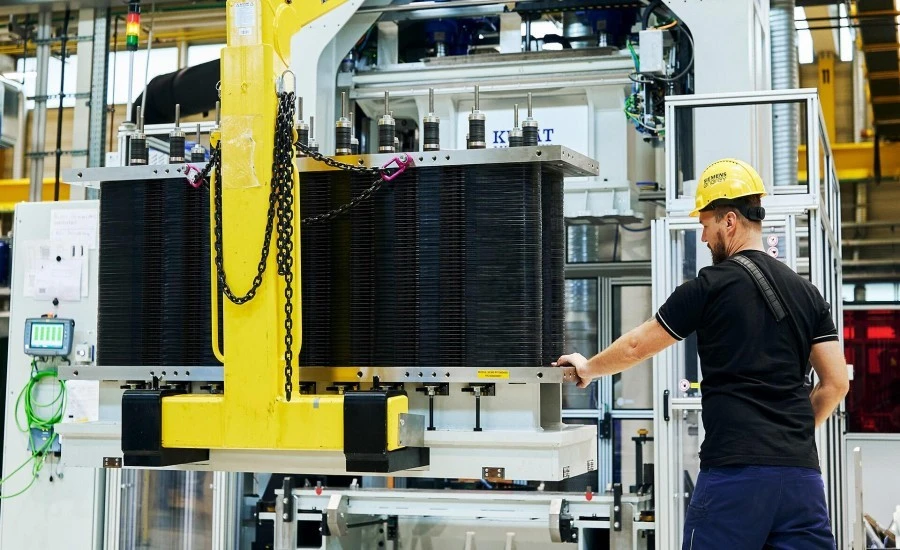
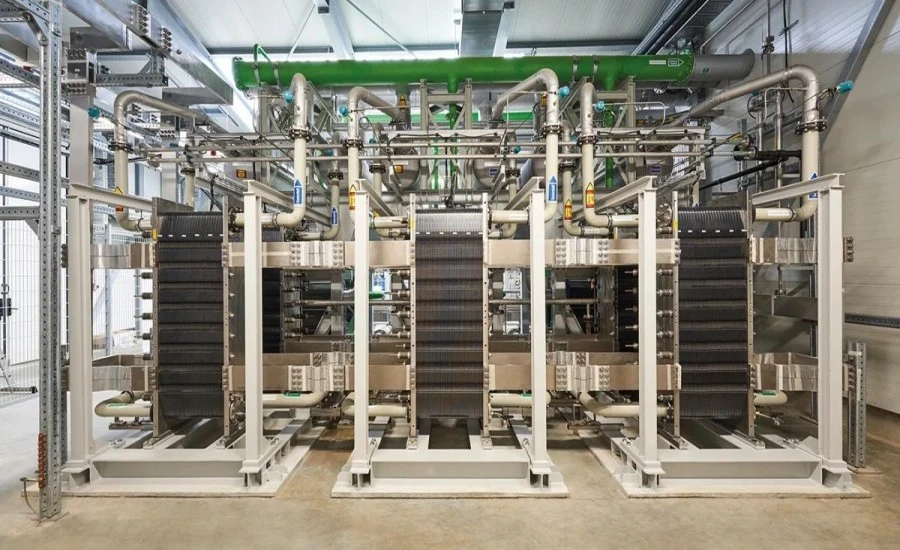
The 5–80 μm pore size range encompasses an operationally relevant region for PEM electrolytic filtration . At the fine end (5–20 μm) the filter elements enable particle interception, shield the membrane electrode assemblies from contamination and maintain steady water film distribution throughout the anode diffusion layer. At the coarser end (40-80 μm) elements want high volumetric flux, low pressure drop and effective gas venting – duties essential to bipolar plate flow field backing layers and bulk water conditioning circuits.
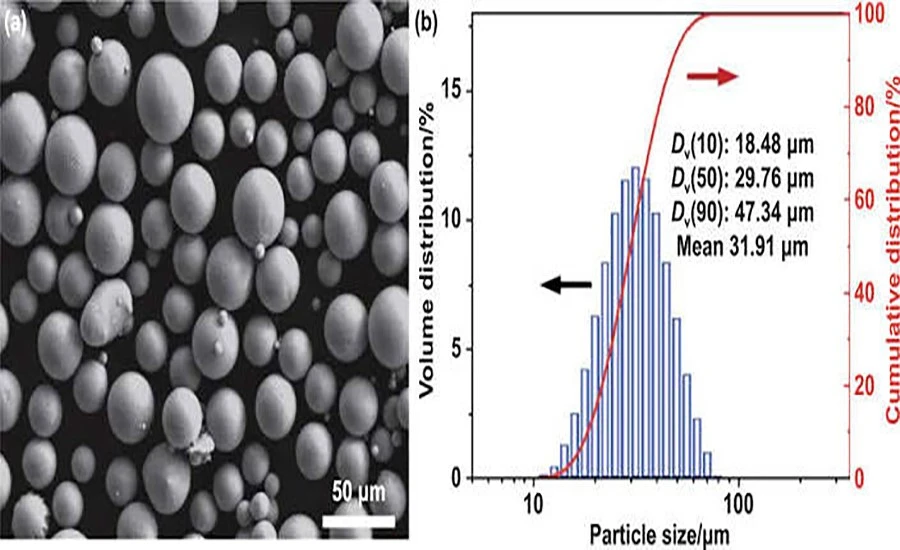
In addition to D₅₀, the particle size distribution (PSD) range must be specified when selecting a sintered metal powder for a target pore range. A narrow PSD means a small pore size distribution and higher selectivity. A wide PSD generates bimodal pore channels that may be intentionally constructed for gradient filter elements, where fine external layers trap particles and coarse internal cores reduce pressure drop.
Matching Material Composition to PEM Chemical Environment
Titanium is the substrate material of choice for PEM filter elements because of the durability of its passive oxide layer in dilute sulphuric acid media and its compatibility with perfluorosulfonic acid membranes. Nickel-based alloys and stainless steel versions (most often SS316L) are still an option for balance-of-plant filtration (outside the electrochemical stack) where the chemical exposure is less harsh.
The choice of powder depends on the substance that is chosen. Titanium powder must have minimum interstitial oxygen to preserve conductivity; Nickel-base alloys need regulated sulphur content to prevent hot-cracking during sintering. No tooling or forming work may be done until a powder specification document is completed for each substrate. NAVI Titanium has different powder qualification procedures for each material family so that sintered porous metal filter components are produced in compliance with dimensions and functional criteria from batch to batch.
How Should Sintered Metal Powder Match a Filter's Flow Requirements?
Balancing Permeability and Mechanical Integrity
The permeability of a sintered porous metal body is described by a Kozeny-Carman-type relation, scaling as the cube of the porosity and inversely as the square of the specific surface area. In practice this implies that pursuing high flow rates by increasing porosity has a structural cost, smaller inter-particle necks diminish compressive strength and fatigue resistance.
The sintered metal powder gradation is an elegant option. Engineers can individually design porosity and skeletal strength independent of total component density by mixing coarse and fine powder fractions according to specified ratios. A well-designed gradation provides adequate permeability for specified flow rates while maintaining the mechanical resilience to sustain cyclic pressurisation in PEM stacks working at 30-80 bar differential.
Pressure Drop, Bubble Point, and the Practical Trade-offs
Each PEM system operator has a pressure drop budget. Excessive limitation of filter elements results in greater energy consumption of the pump,
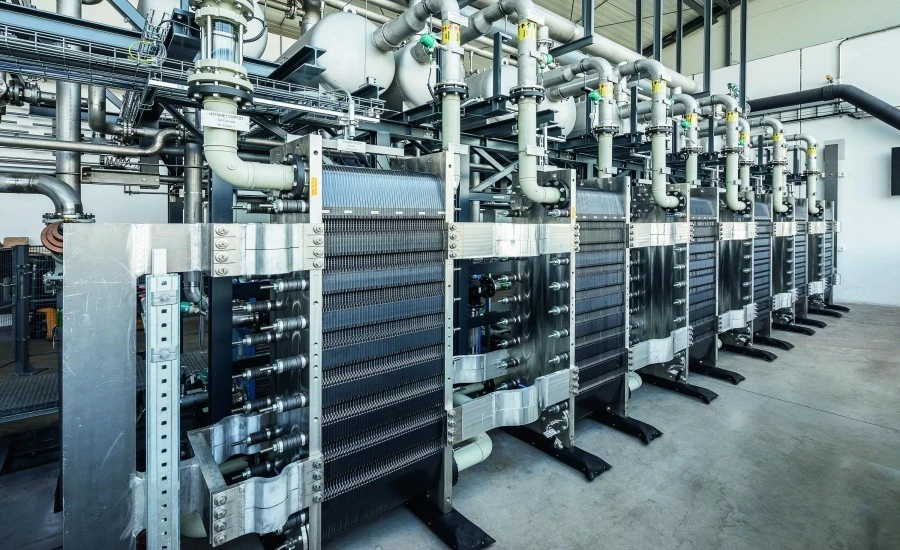
membrane fatigue and reduced system efficiency. Poor limitation leads to entrance of particles and uneven distribution of water both of which impair the performance of the membrane electrode assembly.
Using ASTM F316 standards, bubble point testing determines the greatest hole throat of a sintered filter element. The sintered metal powder has a well-controlled D₉₀ (the particle diameter below which 90% of the particles fall), which suppresses the tail of the pore distribution, and so the bubble point is stable and predictable. For NAVI Titanium, powder qualification is part of the process and comprises particle size measurement and sintering experiments on representative batch samples before every manufacturing order.
Sintered Metal Powder for Water and Gas Transport in PEM Electrolysis
Pore Structure as a Two-Phase Flow Management Tool
An anode-side porous transport layer (PTL) in an operational PEM electrolyser has to transfer liquid water toward the membrane while venting oxygen bubbles from it. These two transport requirements are opposing: water wetting needs hydrophilic surfaces and narrower capillary channels, while gas removal requires bigger, low-resistance passageways.
Gradient pore structures - which are possible by layered sintering of distinct sintered metal powder fractions - are dealing directly with this contradiction. A surface layer with finer pores maintains the water-saturated capillary network near to the membrane, while a support layer with coarser pores provides the bulk permeability for gas venting and structural backing. This architecture is not theoretical but reflects concepts proven in academic PTL investigations published by electrochemical engineering organisations in Europe and North America.
Conductivity and Corrosion Resistance as Parallel Design Constraints
A porous transport layer in a PEM stack is a current collector, not a filter.
The electrical conductivity of sintered skeleton relies on the area of the interparticle contact (defined by the quality of sintering) and on the resistivity of the bulk material (determined by the purity of the powder). The high oxygen content titanium powder generates a larger surface oxide layer which increases the contact resistance and reduces the stack efficiency.
The criterion for fine titanium powder with minimal oxygen content is precisely what NAVI Titanium has. The sintered porous metal filter skeleton maintains corrosion resistance in hostile PEM conditions and electrical conductivity for effective current collection across the anode diffusion layer by regulating the oxygen level within closely regulated limits.
Custom Sintered Metal Powder for Application-Specific PEM Filter Pore Structures
Adapting Powder Systems to Project-Scale Requirements
Large-scale green hydrogen initiatives have batch consistency requirements that are not needed for small-volume specialised work. When a factory purchases thousands of identical filter elements, the variation in pore size distribution between batches must be kept within limited tolerances in an effort to provide predictable system pressure drop and interception performance during years of operation.
Powder batch stability – reproducibility of particle size distribution, shape and chemical content from lot to lot – is the upstream basis of filter element consistency. Before any powder enters the manufacturing process, NAVI Titanium performs an incoming powder inspection against set quality standards. This includes laser diffraction PSD analysis and verification of the chemical composition. This traceability chain helps clients that need material certifications and process records for quality audits.
Engineering the Full Customization Chain

The manufacturing of sintered porous metal filters may be tailored from the selection of powder to the technique of forming, the geometry of the tooling, the sintering schedule and the final dimensional inspection. NAVI Titanium offers a comprehensive chain including advice on material selection, process design, prototype sintering and final product delivery.
This enables customers to define, for PEM-specific applications, the target pore size (within the 5–80 μm window), substrate material (titanium, nickel-base or stainless steel), component geometry (disc, tube, cap, sheet, bar or custom) and functional requirements (filtration rating, bubble point, conductivity target). The result is a sintered metal filter element designed to the real working environment of the particular PEM system, not a catalogue part that needs the system to correct for mismatched performance.
Conclusion
PEM filter elements have a pore structure that is not a specification inherited from a catalogue – it is a designed result driven by intentional powder selection, gradation design and sintering process management. The performance of a finished filter is directly and measurably correlated to the characteristics of the sintered metal powder. The particle size sets the baseline pore geometry, the PSD width dictates pore uniformity, material purity influences conductivity and corrosion resistance, and sintering parameters establish the final structural architecture. For engineers building or sourcing PEM electrolysis filter components, knowing this chain elevates powder selection from a procurement detail to a system level design choice.
FAQ
Q1: What pore size range does NAVI Titanium's sintered metal powder filter cover for PEM applications?
+
-
NAVI Titanium manufactures sintered porous metal filter elements with adjustable pore structures from 5 to 80 μm. This range includes applications such as high flux backing layer and fine filtering in PEM electrolysis systems.
Q2: Why is low-oxygen titanium powder preferred for PEM sintered filter elements?
+
-
Thicker passive oxide layer on sintered particle surface is resulted from higher oxygen content in titanium powder, which leads to higher electrical contact resistance and worse electrochemical efficiency. Low oxygen titanium powder provides the conductivity necessary for filter element to serve as a porous transport layer and current collector in PEM stacks.
Q3: Can NAVI Titanium produce sintered metal filter elements in non-standard geometries?
+
-
Yes. NAVI Titanium may be custom formed into round, disc, sheet, tube, bar, cap and totally unique geometries per client design drawings. Sample and prototype orders reduce the cost of mould tooling and production sintering is done in consolidated batches to keep prices down.
Get a Custom Sintered Metal Powder Filter Solution from NAVI Titanium
NAVI Titanium is specialised in precision sintered porous metal filter components since 2008, located in Baoji High-tech Zone, the titanium production base in China. NAVI Titanium is a specialised provider of sintered metal powder. They combine 0A-grade raw materials, regulated sintering methods and application-specific engineering to produce filter elements with validated pore architectures, dimensional correctness and batch-to-batch consistency. Whether your project needs titanium PTL discs with high purity for PEM electrolysis stacks, nickel-base filter elements for service at elevated temperatures, or large-volume production for green hydrogen infrastructure, NAVI Titanium's team offers one-to-one technical support from initial consultation to final delivery. Contact us to discuss your pore structure needs. NAVI Titanium will design the best solution for your application.
Contact us: sales@navititanium.com
References
1. Carman, P. C. Flow of Gases Through Porous Media. Butterworths Scientific Publications, London, 1956.
2. Smits, F. M., and German, R. M. Powder Metallurgy Science, 2nd ed. Metal Powder Industries Federation, Princeton, NJ, 1994.
3. Grigoriev, S. A., Millet, P., and Fateev, V. N. "Evaluation of carbon-supported Pt and Pd nanoparticles for the hydrogen evolution reaction in PEM water electrolysers." Journal of Power Sources, vol. 177, no. 2, 2008, pp. 281–285.
4. Ito, H., Maeda, T., Nakano, A., and Takenaka, H. "Properties of Nafion membranes under PEM water electrolysis conditions." International Journal of Hydrogen Energy, vol. 36, no. 17, 2011, pp. 10527–10540.
5. Kang, Z., Mo, J., Yang, G., Li, Y., Talley, D. A., Han, B., and Zhang, F.-Y. "Thin film surface modifications of thin/tunable liquid/gas diffusion layers for high-efficiency proton exchange membrane electrolyzer cells." Applied Energy, vol. 206, 2017, pp. 983–990.
6. ASTM International. ASTM F316-03: Standard Test Methods for Pore Size Characteristics of Membrane Filters by Bubble Point and Mean Flow Pore Test. ASTM International, West Conshohocken, PA, reapproved 2019.