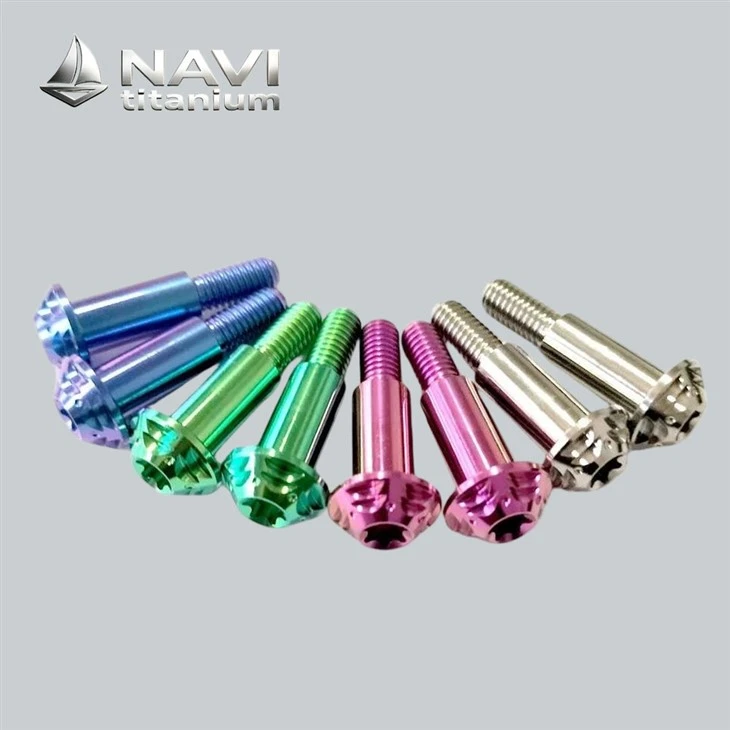
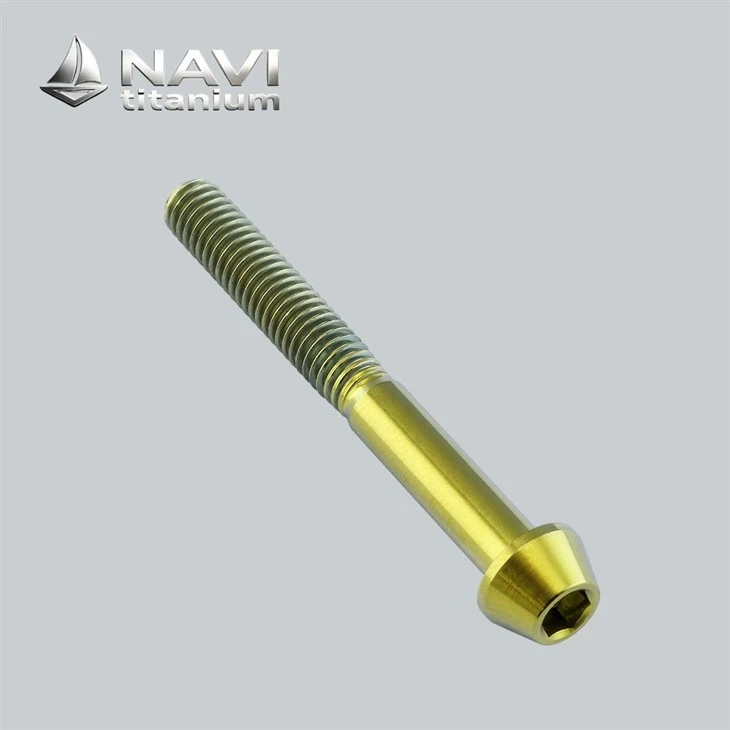
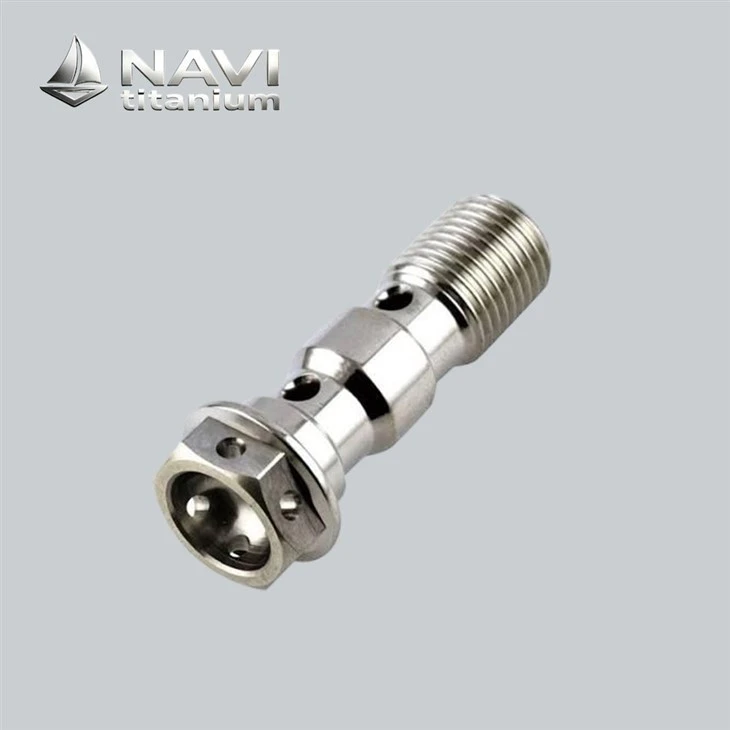
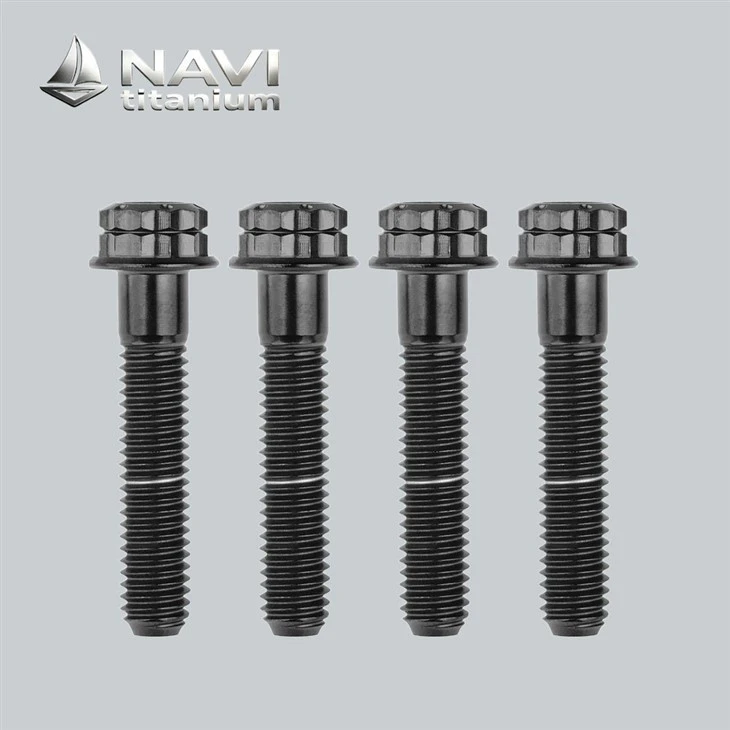
NAVI Titanium 5/16 titanium bolts replace rust-prone steel and toxic cadmium-plated AN5 hardware with Grade 5 Ti-6Al-4V - 895–1170 MPa UTS, 45% lighter, rust-free, and rolled-threaded for fatigue life under vibration. Both 5/16-18 UNC and 5/16-24 UNF are stocked; the fine thread is the AN5 thread (24 TPI, class 2A/3A to ANSI/ASME B1.1), so it drops into experimental aircraft, motorsport chassis, marine equipment and industrial machinery, with heads pre-drillable for safety wire. Note that 5/16 measures 7.9375 mm against 8.0 mm for M8 - close enough to gall if forced. Every order ships with a per-heat mill certificate, thread gauge report and torque card. Send your pitch, length and head style for a fitment-checked quote within 24 hours.
Solutions of NAVI Titanium


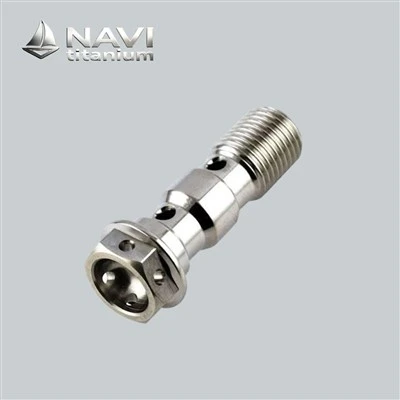
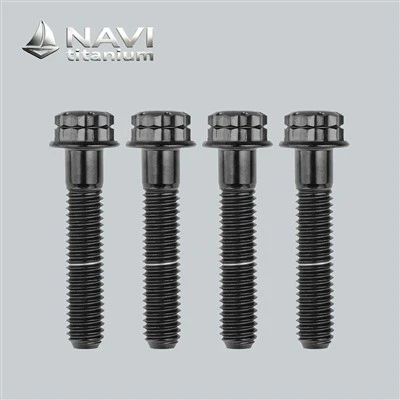
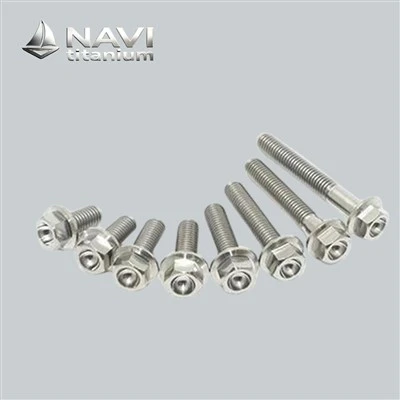
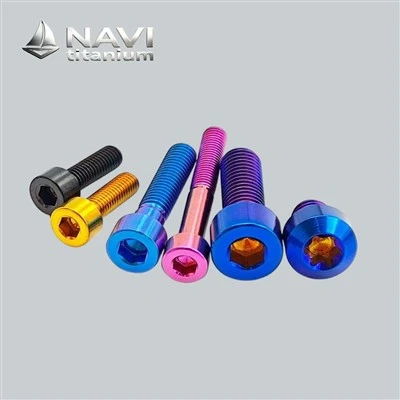
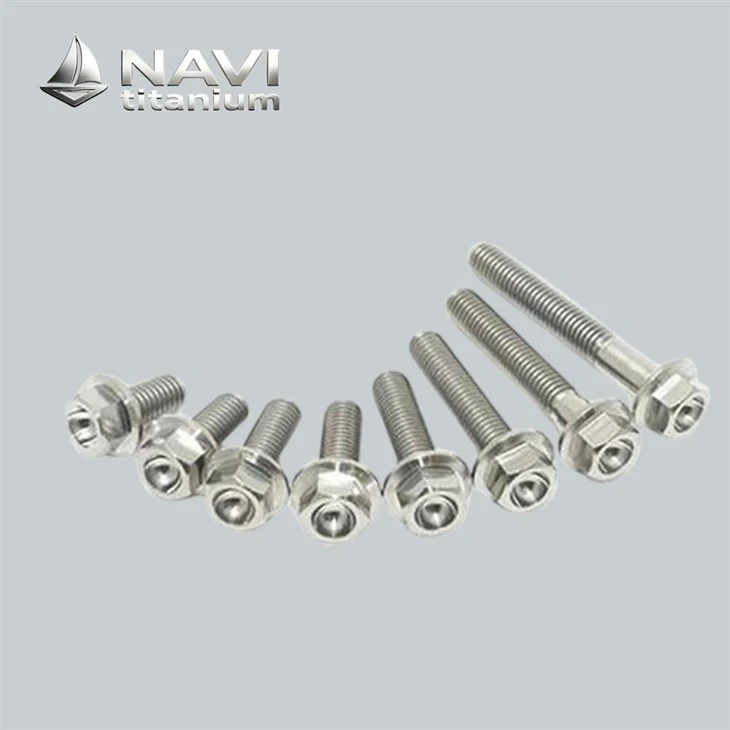
Available configurations include hexagonal, flanged hex, socket, button, Torx, twelve-point, and countersunk styles, accommodating different assembly layouts and tool-access conditions. Special profiles, overall sizes, and structural variations can be quoted using customer-provided technical specifications or physical reference pieces.


Application
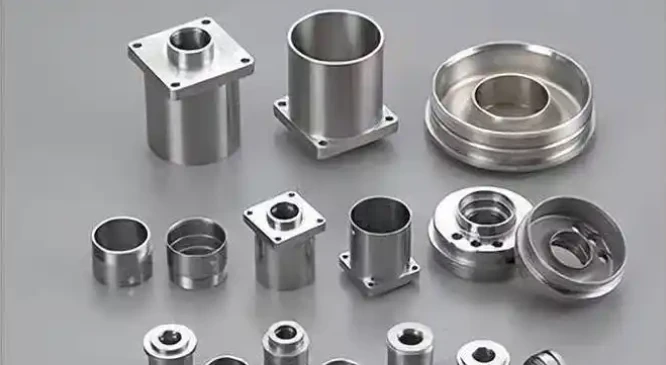
1. Need a non corrosive AN5 direct substitute
The AN5 series extensively uses cadmium coated alloy steel parts on the body, racing structure, and industrial equipment, and cadmium is both toxic and prone to peeling off. Titanium alloy itself is rust free and does not rely on coating for survival.
2. Weight reduction requirements higher than those of the 1/4 series
The tensile stress area of 5/16 is about 1.8 times that of 1/4-28, which belongs to the specification range of "truly load-bearing". Grade 5 titanium has a density of 4.43 g/cm ³ compared to 7.85 g/cm ³ for steel, reducing approximately 43-45% of the mass by volume replacement - with the most significant benefits in positions such as the frame, suspension connection points, and fuselage brackets that are both loaded and sensitive to weight.
4. It needs to withstand salt spray, humidity, and repeated rinsing
Ships, coastal areas, winter snowmelt salt roads, and washing environments can destroy coated steel parts. The passivation film of titanium can self repair.
5. Need to use safety wire or pre drill head type
Provide pre drill bits (0.8/1.0/1.2 mm) and pre drill rod versions, which can be threaded with just a hand without the need for a drilling machine. This is a common practice in aviation and also a technical requirement for most sporting events.
6. Requires stable specifications that can be supplied repeatedly
Batch furnace numbers are consistent, batch by batch pass stop inspection is carried out, and all accompanying documents are complete, which can be included in the specifications as production line components.
Purchasing guide

Quality control (QC)
NAVI Titanium operates under an ISO 9001 certified quality management system. Click below to view an example of Certificate of Analysis (COA), or contact our team to request purchase records.

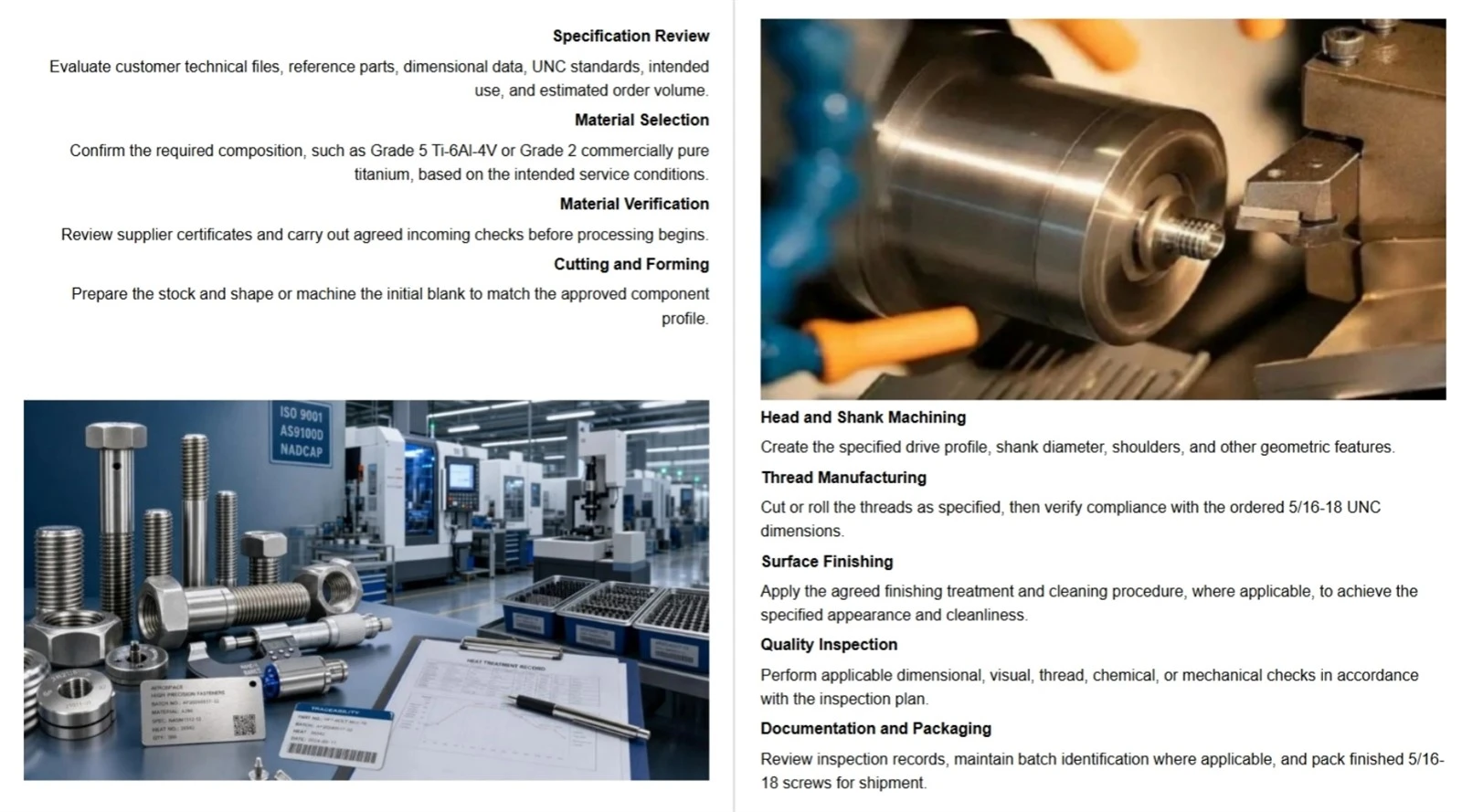
Manufacturing Process
NAVI Titanium follows a specification-led workflow for producing 5/16 Titanium Bolts. The operations involved vary according to the alloy, drive configuration, overall size, UNC thread specification, and finishing method.
Click to read more
What 5/16 Actually Means - and Why There Are Two Pitches
5/16 Titanium Bolts refers to a nominal diameter of 5/16 inch (0.3125 in / 7.9375 mm). Unlike 1/4-28, which has essentially one dominant pitch, 5/16 exists in two thread pitches, and this is the first thing to confirm before ordering:
5/16-18 UNC - coarse, 18 threads per inch, the most common thread in general machinery and automotive hardware
5/16-24 UNF - fine, 24 threads per inch, the standard thread for AN5-series aircraft bolts and motorsport hardware
| Nominal diameter | 0.3125 in (7.9375 mm) | 0.3125 in (7.9375 mm) |
| Threads per inch | 18 TPI | 24 TPI |
| Thread pitch | 1.411 mm | 1.058 mm |
| Pitch diameter | 0.2764 in | - |
| Minor diameter | 0.2464 in | - |
| Tensile stress area | 0.0524 in² | 0.0580 in² |
| Thread series | UNC - Unified National Coarse | UNF - Unified National Fine |
| Governing standard | ANSI/ASME B1.1 | ANSI/ASME B1.1 |
| Common thread classes | 2A and 3A (external) | 2A and 3A (external) |
| Wrench size (hex head) | 1/2 in | 1/2 in |
| Drive size (socket head cap) | 1/4 in | 1/4 in |
| Drive size (82° flat head) | 3/16 in | 3/16 in |
Three practical reasons to specify the fine thread:
1. Higher tensile capability at the same diameter.
Because the minor diameter is larger and the tensile stress area is bigger (0.0580 in² against 0.0524 in²), UNF typically delivers 5–10% more tensile strength than UNC at the same nominal size. You get more joint strength out of the same space.
2. Finer clamp control per unit of torque.
At 24 TPI instead of 18, each turn advances the bolt less, so preload can be dialled in precisely and thin-wall bosses are less likely to be crushed.
3. Better vibration resistance.
A fine thread has a smaller helix angle and a lower tendency to back out under sustained vibration - the reason 5/16-24 is specified on airframe and race-car structure.
One conversion to memorise: AN5 = 5/16-24 UNF. If your drawing or bill of materials calls out an AN5 bolt (for example AN5-13A or AN175), the thread is 5/16-24 UNF and the thread length is 0.531 in. The installed base of AN5 across general aviation, experimental aircraft and racing is enormous, and that single fact defines the substitution envelope.
One confusion to guard against: 5/16 versus M8. 5/16 Titanium Bolts measures 7.9375 mm and M8 measures 8.0 mm - a difference of only 0.0625 mm. Meanwhile the 5/16-24 pitch of 1.058 mm sits very close to M8×1.0 at 1.0 mm, and 5/16-18 at 1.411 mm sits close to M8×1.25 at 1.25 mm. The two will often start by hand and then gall and strip, and because metric threads are more common outside North America, the risk of a mis-install is higher here than with 1/4-28. Before assembly, measure the outside diameter with a caliper and confirm the pitch with a thread gauge.
Material and Specification
| Item | Specification |
| Material | Grade 5 titanium (Ti-6Al-4V), UNS R56400, ASTM Grade 5 - aerospace grade |
| Standard compliance | ASTM B348 / AMS 4928 bar stock, heat-lot certified |
| Density | 4.43 g/cm³ - approximately 43–45% lighter than steel |
| Ultimate tensile strength | 895–1170 MPa (130,000–170,000 psi); AMS 4928 requires ≥931 MPa at sections up to 50.8 mm |
| Yield strength (0.2% offset) | 828–1100 MPa (120,000–160,000 psi) |
| Ultimate shear strength | 480–690 MPa (70,000–100,000 psi) |
| Elongation at break | 10–15% |
| Modulus of elasticity | Approximately 114 GPa - roughly half that of steel |
| Service temperature | Stable to approximately 400–425 °C; degrades above that. A286 is the better choice for severe thermal duty |
| Thread form | Rolled threads as standard. Rolling induces residual compressive stress at the thread root and can raise fatigue limit by up to 70% against cut threads |
| Thread classes | 2A and 3A, verified with go / no-go gauges |
| Safety-wire drilling | 0.8 / 1.0 / 1.2 mm, fixture-drilled for consistent alignment across a set |
| Finishes | Raw titanium, PVD black, gold, blue, rainbow, polished |
| Documentation | Per-heat mill certificate, certificate of conformity, dimensional and thread gauge report, torque card |
Approximate ultimate tensile load by thread (calculated from tensile stress area × minimum ultimate tensile strength; for selection reference only, not a design value):
| Thread | Tensile Stress Area | Reference Ultimate Tensile Load |
| 5/16-18 UNC | 0.0524 in² | Approx. 6.8–8.0 kip (30–36 kN) |
| 5/16-24 UNF | 0.0580 in² | Approx. 7.5–8.8 kip (33–39 kN) |
Experimental and light aircraft:
AN5 replacement for supports, rectifiers, control surfaces, and non main structures without obtaining a model certificate.
Racing sports:
Suspension swing arms, frame connection points, engine mounts, brake and steering peripheral modifications (safety critical positions are retained according to factory regulations).
Ship and seawater equipment:
Deck hardware, rigging accessories, outboard engine supports, and other components that can withstand long-term flushing.
Industrial machinery:
Fixtures and fixture fasteners for flushing, chemicals, or high humidity environments.
Lubrication and Fluid System:
5/16-18 is also a commonly used thread for grease fittings and some instrument joints. Titanium alloy is used in situations where the joint is required not to rust inside the housing.
Outdoor and heavy-duty equipment:
Structural components such as trailers, lifting attachments, and agricultural machinery that work under humidity and vibration.
Experimental and light aircraft: AN5 replacement for supports, rectifiers, control surfaces, and non main structures without obtaining a model certificate
Racing sports: suspension swing arms, frame connection points, engine mounts, brake and steering peripheral modifications (safety critical positions are retained according to factory regulations)
Ship and seawater equipment: deck hardware, rigging accessories, outboard engine supports, and other components that can withstand long-term flushing
Industrial machinery: fixtures and fixture fasteners for flushing, chemicals, or high humidity environments
Lubrication and Fluid System: 5/16-18 is also a commonly used thread for grease fittings and some instrument joints. Titanium alloy is used in situations where the joint is required not to rust inside the housing
Outdoor and heavy-duty equipment: structural components such as trailers, lifting attachments, and agricultural machinery that work under humidity and vibration

Frequently Asked Questions
Q: What is the difference between 5/16-18 and 5/16-24, and which should I choose?
+
-
A: Both share a 5/16-inch nominal diameter, but 5/16-18 is coarse (UNC, 18 TPI) and 5/16-24 is fine (UNF, 24 TPI). They are not interchangeable. Choose coarse for general machinery assembly, softer or frequently dismantled threads and cost-sensitive work. Choose fine where you need higher tensile capability (the stress area is larger and UNF typically runs 5–10% stronger), finer clamp control, vibration resistance, or where your drawing already specifies an AN5 bolt.
Q: Can 5/16 be confused with M8?
+
-
A: Yes, and the risk is higher than with 1/4-28 and M6. 5/16 measures 7.9375 mm against 8.0 mm for M8 - only 0.0625 mm apart - and the 5/16-24 pitch of 1.058 mm sits very close to M8×1.0. The two will often start by hand and then gall and strip. Measure the outside diameter with a caliper and confirm the pitch with a thread gauge before assembly.
Q: How much load can one 5/16 titanium bolt carry?
+
-
A: With a minimum ultimate tensile strength of 895 MPa, and tensile stress areas of 0.0524 in² for 5/16-18 and 0.0580 in² for 5/16-24, the approximate ultimate tensile loads are 6.8–8.0 kip and 7.5–8.8 kip respectively. These are material-level estimates and must not be used as design values - the allowable load in a real joint depends on preload, shear condition, thread engagement length and the safety factor applied.
Hot Tags: 5/16 titanium bolts, China 5/16 titanium bolts manufacturers, suppliers, factory