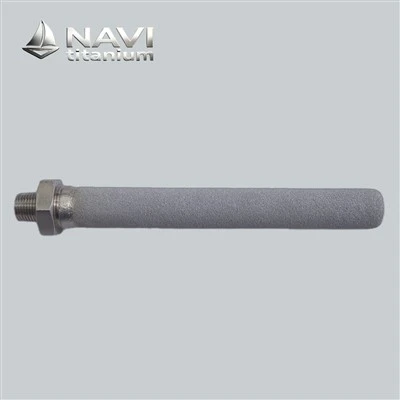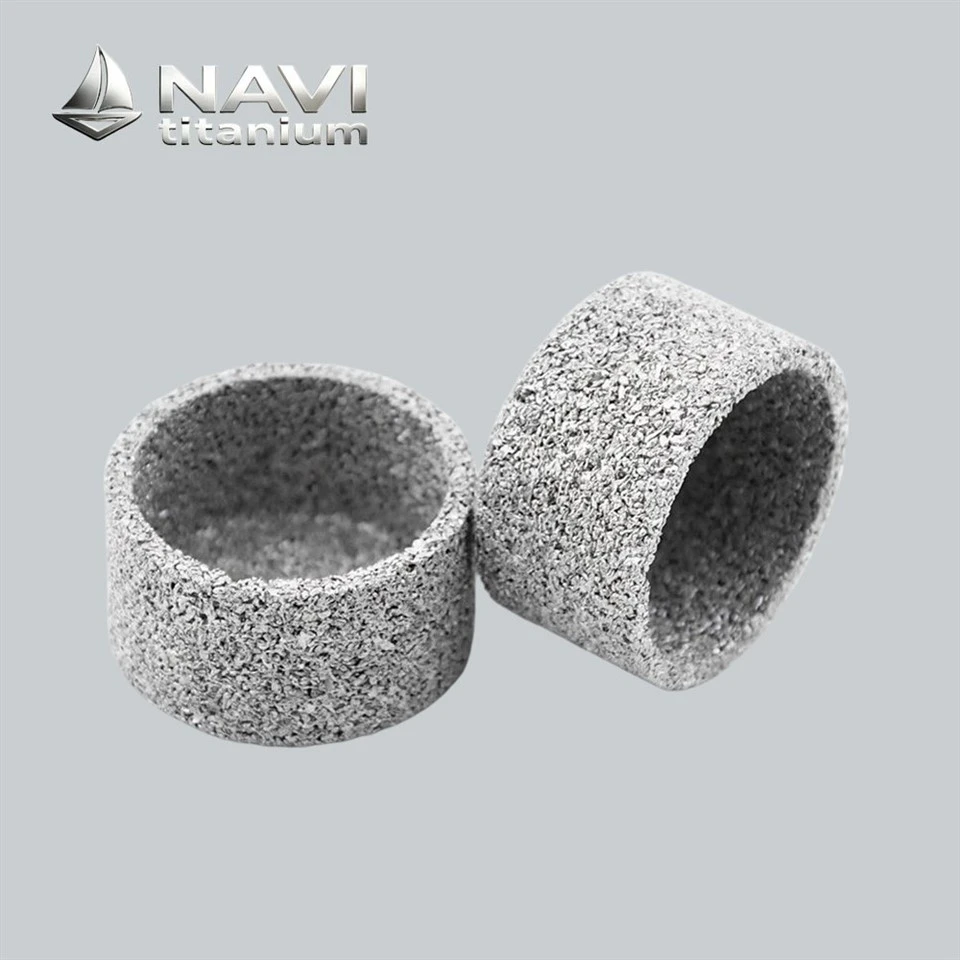
Stainless steel sintered filters for miniature flow control components are manufactured from selected stainless steel powders and formed into controlled porous structures. The interconnected pores allow fluid to pass through while retaining unwanted particles that could interfere with small passages, moving elements or calibrated flow paths. For compact fluid-control assemblies, even small contaminants can influence response accuracy or cause premature blockage. A sintered stainless steel element provides a stable filtration interface without relying on a separate fibrous layer. Its rigid structure also allows the filter to be integrated directly into small housings, valve bodies, cartridges or protective fittings. NAVI Titanium can adjust material grade, geometry, thickness and filtration characteristics according to the requirements of the finished component.
Solution of NAVI Titanium
Miniature flow-control systems require more than general-purpose filtration. The protective element must fit limited installation space while maintaining predictable fluid passage and sufficient mechanical stability. NAVI Titanium develops compact sintered stainless steel components around the actual requirements of the assembly. Product dimensions, pore characteristics, connection geometry and surface condition can be considered together rather than treating the filter as an independent standard part. For projects requiring technical discussion, our team can communicate directly with purchasing and engineering personnel to review the intended operating conditions and component structure.


For customized projects, production and inspection information can be coordinated with the customer's drawings and technical specifications. Dimensional inspection, appearance checks and batch identification help maintain consistency between prototype and repeat production.


Application
Stainless steel sintered filters provide compact particle protection for miniature flow-control components where limited installation space, controlled flow and reliable contamination management are required. Their interconnected porous structure allows the working medium to pass through while retaining particles that could interfere with precision passages, moving elements or calibrated openings. Depending on the component design, the filter can be installed at an inlet, integrated into a housing, or positioned directly within a fluid path. We can produce customized discs, cups, tubes, rings and other geometries for miniature valves, regulators, nozzles, restrictors, sensors and compact fluid modules. Material grade, filtration characteristics, dimensions and flow requirements can be evaluated together to provide a suitable protection solution for the complete assembly.
Miniature valves and flow regulators often contain narrow passages, precision seats, springs, plungers and other functional elements that can be affected by particulate contamination. A sintered stainless steel filter installed upstream or inside the component housing can intercept contaminants before they reach sensitive areas. Its rigid porous structure supports dimensional stability under operating conditions while maintaining controlled fluid passage. Customized filter geometry can also reduce the space required for a separate filtration assembly. These elements are suitable for miniature pressure regulators, proportional valves, dosing valves, pneumatic control units and compact liquid-handling equipment. By matching the filtration structure with the required flow rate, pressure and installation dimensions, the filter can provide practical protection without unnecessarily restricting the working medium. This is particularly useful where maintenance access is limited and consistent response is important across repeated operating cycles. The stainless steel construction also offers mechanical strength and can be selected according to the fluid environment and temperature requirements.

Protection of Precision Nozzles and Restrictors

Precision nozzles, restrictors and compact sensing modules can be especially sensitive to particles because their small openings and internal channels leave limited tolerance for contamination. A porous stainless steel element can provide upstream particle retention while allowing the required gas or liquid to reach the protected passage. Depending on the design, the filter may be manufactured as a disc, cup, tube, ring or other customized shape and incorporated directly into the component. This approach is applicable to metering systems, dosing equipment, analytical instruments, laboratory fluid-control devices and compact dispensing assemblies. Filtration rating, pore structure, dimensions and flow characteristics can be considered together to support stable operation and reduce the risk of blockage or contamination-related performance changes. For applications with strict space constraints, the filter can be designed around the available cavity or connection geometry, helping simplify integration while preserving the intended fluid path. It can also support repeatable production when dimensions and requirements are clearly defined.
Purchasing guide

Quality control (QC)
For miniature flow-control components, dimensional consistency is closely related to assembly fit and functional performance. NAVI Titanium therefore checks customized sintered stainless steel parts against the agreed technical requirements before shipment. Inspection can include material verification, dimensional measurement, visual inspection, surface condition and other application-specific requirements confirmed before production. Production information can be linked with batch identification to support traceability for repeat orders. Inspection records and product photographs can also be provided according to the customer's purchasing requirements.

Manufacturing Process
Selected stainless steel powder is prepared according to the required alloy composition and particle characteristics. The powder is then filled into a precision mold designed around the required miniature geometry. After controlled compaction, the formed component is transferred to a process under a controlled atmosphere. The heating cycle promotes metallurgical bonding between adjacent particles while preserving the interconnected pore structure required for fluid passage. Following the step, components may undergo sizing, surface treatment, edge finishing or other secondary operations according to the final design. Dimensional inspection is then performed to verify that the finished part conforms to the agreed specifications. This manufacturing route allows NAVI Titanium to produce compact porous components with repeatable geometry while maintaining the functional characteristics required for miniature flow-control protection.


Technical Specifications
The following specifications provide a general reference for stainless steel sintered filters designed to protect miniature flow-control components. Since these filters are frequently integrated into compact valves, regulators, nozzles and fluid modules, the final specification should be determined according to the available installation space, filtration requirement, fluid characteristics and operating conditions. NAVI Titanium can customize the porous structure and external geometry according to drawings, samples or defined technical requirements.
| Specification Category | Typical Range / Options | Design Consideration |
|---|---|---|
| Filter Structure | Sintered porous stainless steel | Rigid interconnected pore network for particle retention |
| Filtration Rating | 0.5–100 μm | Selected according to particle size and required protection level |
| Filter Geometry | Disc / Cup / Tube / Ring / Sheet / Custom | Designed according to available installation space |
| Thickness | Customized | Determined by required strength, flow path and assembly dimensions |
| Working Pressure | Up to 3 MPa | Actual pressure capability depends on geometry and material |
| Operating Temperature | Up to 600°C* | Dependent on stainless steel grade and application conditions |
| Flow Requirement | Application-specific | Porosity and dimensions can be adjusted for target flow |
| Surface Condition | As-sintered / Finished / Customized | Edge and surface treatment available when required |
| Manufacturing Process | Powder forming + controlled sintering | Produces a stable three-dimensional porous structure |
| Typical Components | Valves / Regulators / Nozzles / Restrictors / Sensors | Designed for miniature fluid-control protection |
Quality Control
For stainless steel sintered filters used in miniature flow-control components, quality control covers material verification, manufacturing consistency and finished-part inspection. Because these components are often small and installed in precision fluid paths, dimensional or structural variations can influence assembly, flow behavior and contamination protection. NAVI Titanium therefore evaluates the requirements of each project before production and applies appropriate inspection procedures throughout the manufacturing process. Inspection items can be defined according to drawings, samples, specifications and application conditions to support consistent quality for both prototype and repeat orders.
Stainless steel powder is verified according to the specified material grade before production to help ensure compatibility with the intended operating environment. During forming and sintering, key production conditions are controlled to maintain the required component geometry and porous structure. For miniature filters, factors such as powder characteristics, compaction, processing conditions and final dimensions can affect permeability and mechanical integrity, so process consistency is particularly important. After sintering, secondary operations such as sizing, edge finishing or surface treatment may be performed according to the component design. Production information can be linked with batch identification, providing a traceable reference for subsequent inspection and repeat orders. This controlled manufacturing approach helps reduce dimensional variation and maintain consistent characteristics across different batches. For customized components, production requirements can also be reviewed with the customer before mass manufacturing begins. Inspection criteria may be established in advance for critical dimensions and functional requirements.
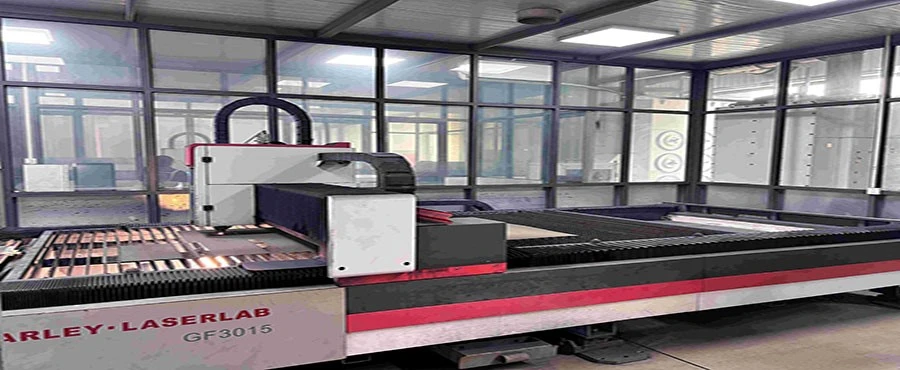
Finished Product Inspection

Finished stainless steel sintered filters are inspected against the agreed technical requirements before shipment. Depending on the project, inspection may cover outer diameter, inner diameter, thickness, overall geometry, surface condition and visual appearance. Material verification and other specified checks can also be arranged when required by the application or purchasing specification. For miniature flow-control components, dimensional accuracy is particularly important because the filter may need to fit precisely inside a valve body, regulator, nozzle or compact fluid module. Filtration characteristics and flow-related requirements can be evaluated when they form part of the approved product specification. Inspection information can be associated with the relevant production batch, helping customers review supplied components and maintain consistency during repeat purchasing. Drawings, samples and confirmed technical specifications can serve as inspection references, while agreed documentation can be provided to support supplier qualification and incoming quality review. Additional inspection records can be prepared when required for project approval or customer quality procedures.
FAQ
1. Can you manufacture filters for very small flow-control components?
-
Yes. We support customized compact components in different shapes and dimensions. Drawings, samples or detailed dimensional requirements can be used as the basis for evaluation.
2. Which stainless steel materials are available?
-
Common options include SS304, SS316 and SS316L. Other stainless steel grades can be evaluated according to the operating environment and application requirements.
3. Can the filtration rating be customized?
-
Yes. The porous structure can be designed according to the required particle retention and flow characteristics. Customers should provide the target filtration rating or application requirements whenever possible.
4. Can the filter be integrated directly into a valve or regulator?
-
Yes. Sintered stainless steel elements can be manufactured in customized discs, cups, tubes, rings and other geometries to suit the available installation space and connection method.
5. What information should I provide for a quotation?
-
Please provide the material, dimensions, filtration rating, flow rate, working pressure, operating temperature, fluid type and order quantity. A drawing or sample is also helpful for customized miniature components.
Hot Tags: stainless steel sintered filters for miniature flow control component protection, China stainless steel sintered filters for miniature flow control component protection manufacturers, suppliers, factory