

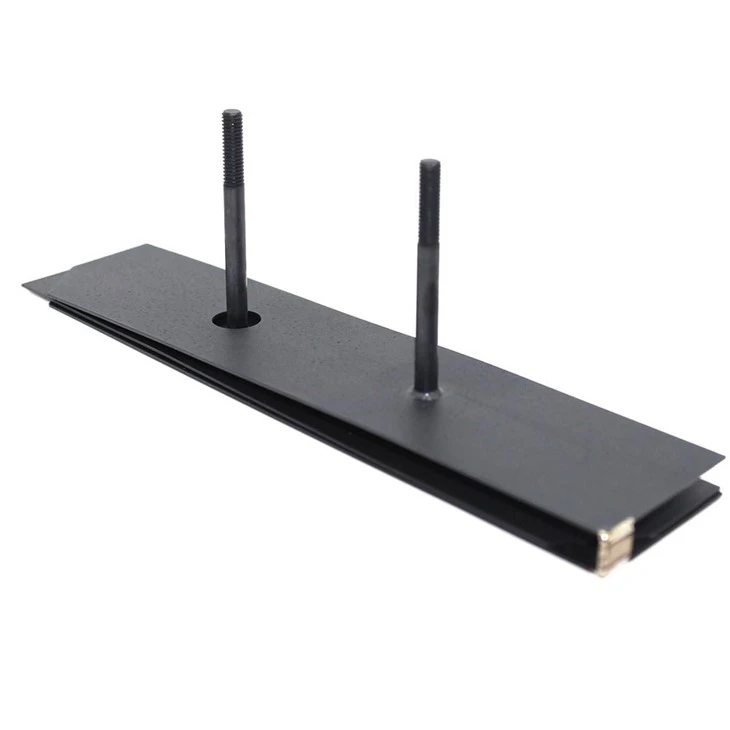
NAVI Titanium supplies Ru-Ir coating titanium anode plate with M5 bolt for chloride-based electrolysis, with particular attention to substrate compatibility and catalytic performance. Accumulated process records cover precursor concentration, thermal cycling, deposition frequency, and coating mass variation.
Solution of NAVI Titanium
For threaded configurations, NAVI Titanium gives additional attention to fastening dimensions and contact resistance, particularly when matching existing cell assemblies.


NAVI Titanium examines catalytic coating distribution, substrate geometry, and threaded connection characteristics through systematic material assessment.


Application
The Ru-Ir coating titanium anode plate with M5 bolt from NAVI Titanium is suitable for chloride-based brine and seawater electrolysis, facilitating controlled chlorine generation for sodium hypochlorite production, marine biofouling prevention, and saline circulation treatment.
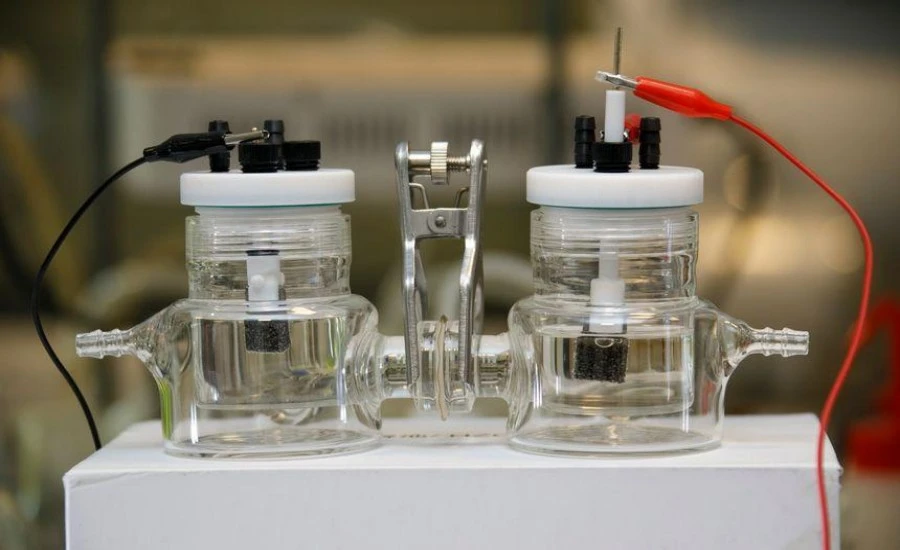
Brine electrolysis relies on the controlled oxidation of dissolved chloride ions under direct-current polarization. At the positive terminal, chloride undergoes electron transfer according to the reaction (2Cl- → Cl2 + 2e-), generating chlorine for subsequent chemical conversion. Depending on the process arrangement, the resulting gas may react with sodium hydroxide to produce sodium hypochlorite, which is subsequently applied in disinfection and chemical processing. Reaction selectivity depends on chloride concentration, electrolyte alkalinity, operating temperature, and applied current density, since oxygen evolution may compete with chlorine formation. The Ru-Ir catalytic composition is particularly relevant to chloride-rich environments where controlled chlorine generation is required. For procurement assessment, buyers should examine substrate dimensions, M5 threaded connection specifications, exposed reaction area, coating uniformity, and electrical contact resistance. These parameters determine compatibility with existing cell assemblies and current-distribution arrangements. Feedstock purity, sediment accumulation, and periodic inspection also require consideration, particularly in continuous-duty systems where changes in electrolyte composition may alter operating voltage and chlorine production efficiency.
2. Seawater Electrolysis

Seawater electrolysis utilizes naturally occurring chloride ions to generate active chlorine species through anodic oxidation. Under direct-current operation, chloride ions release electrons and form molecular chlorine, which subsequently undergoes hydrolysis to produce hypochlorous acid and hypochlorite ions. These oxidizing species can suppress biological attachment by disrupting microbial metabolism and damaging cellular membranes. Typical applications include marine cooling circuits, seawater intake channels, ballast-water treatment, and offshore circulation systems. Unlike prepared brine, natural seawater contains magnesium, calcium, sulfate, suspended solids, and variable salinity, all of which require consideration during operational assessment. Local pH, temperature, chloride concentration, and hydraulic residence time determine oxidant generation and residual concentration. Material selection must also account for saline corrosion, crevice formation around fasteners, and possible deposits near threaded connections. Buyers should specify the M5 fastening dimensions, exposed active area, electrical contact arrangement, and intended operating current. Routine inspection of connection points and removal of accumulated deposits are important for maintaining consistent current distribution during prolonged marine operation.
Purchasing guide

Quality control(QC)
NAVI Titanium maintains documented inspection records covering the M5 threaded connection, including thread pitch, nominal diameter, engagement length, dimensional tolerances, and fastening integrity. Particular attention is given to the relationship between connector geometry and electrical contact resistance, allowing dimensional conformity and assembly compatibility to be assessed against specified technical requirements.
| Certificate of Analysis | ||
| Titanium Base Material Suppliers: | Coating Precursor Suppliers: | COA of product: |
|
|
|
|


Manufacturing proces
The fabrication sequence begins with substrate cutting, edge finishing, and surface preparation before catalytic deposition. The M5 threaded section is machined separately or prepared according to the specified connection arrangement, followed by controlled attachment through an appropriate joining method. Particular attention is given to thread pitch, engagement depth, perpendicular alignment, and joint conductivity. After coating application and curing, the exposed fastening area is examined to prevent unwanted deposits from obstructing thread engagement. Contact resistance, dimensional conformity, and joint integrity are subsequently assessed to establish compatibility with the intended electrical connection and mounting configuration.


Packaging Protection and Installation Alignment
When several coated units are packed in one export carton, direct stacking may cause friction marks, edge abrasion, or localized damage to the catalytic coating during vibration and repeated handling. Individual separation is therefore important, particularly when thin rectangular substrates are shipped in larger quantities. Layered partitions made from closed-cell foam, corrugated board, or custom-cut protective inserts can isolate adjacent pieces and prevent direct contact between their active faces. Recessed compartments should accommodate the projecting M5 fasteners without allowing threaded ends to press against neighboring units. Additional cushioning around carton corners reduces displacement during container transportation, while moisture-resistant inner wrapping limits exposure to condensation during extended transit. For bulk orders, buyers should also consider the arrangement of individual layers, carton stacking strength, gross weight, and outer carton dimensions. A clearly marked packing orientation and quantity label simplify warehouse counting and incoming goods verification. These measures are particularly relevant to international shipments involving multiple specifications or different fastening configurations.

Parallel Alignment Requirements for Multi-Unit Installation
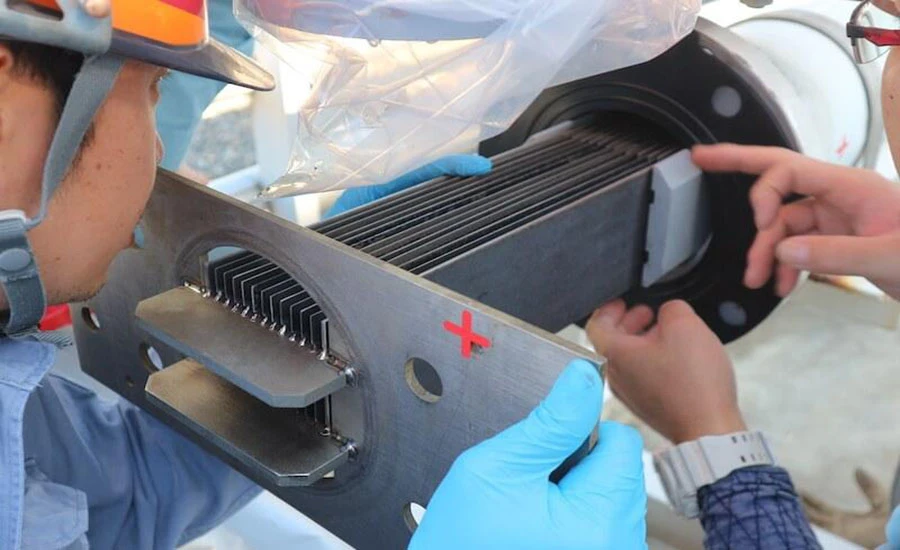
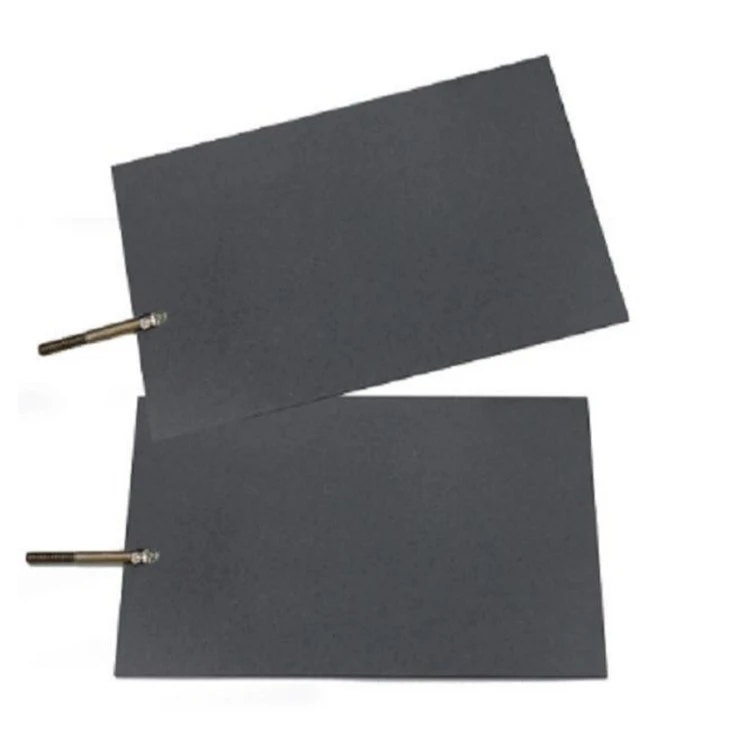
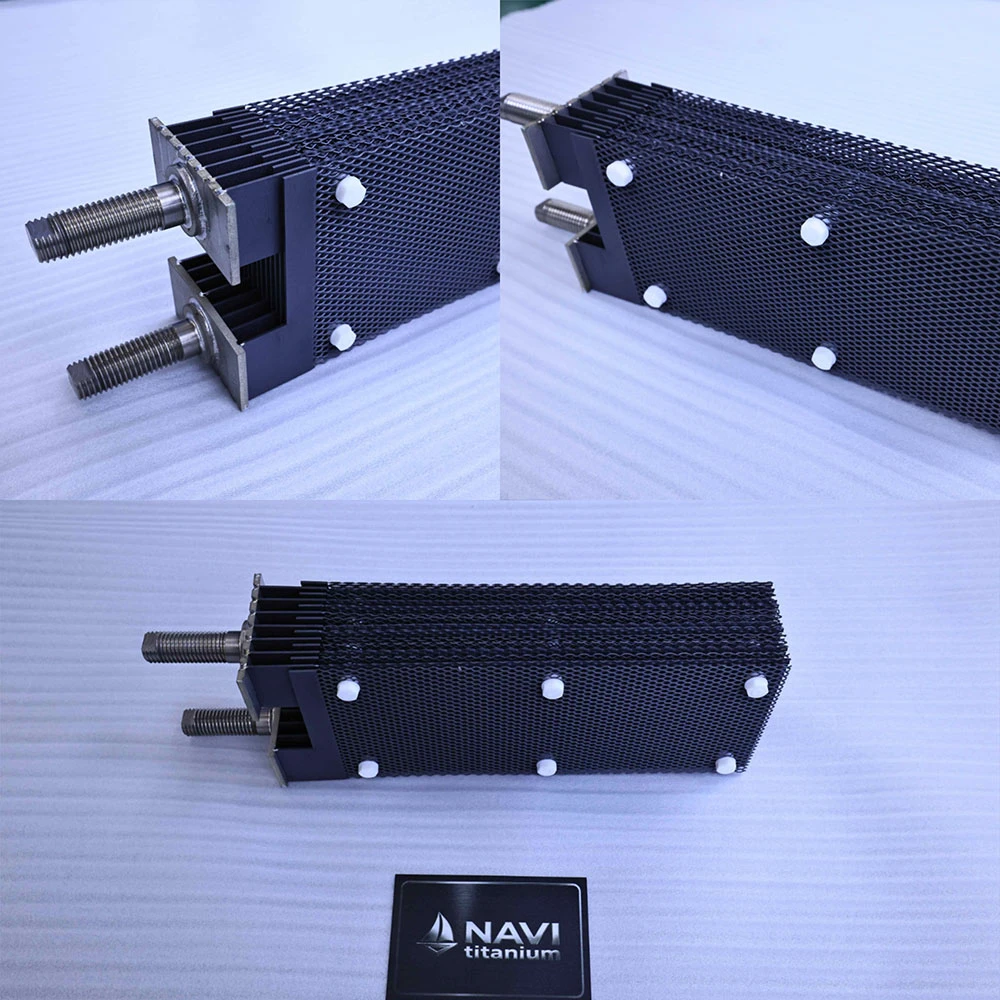
When several rectangular units are installed within the same electrolytic cell, parallel alignment is an important factor affecting clearance distribution and electrical operating consistency. Angular deviation between adjacent pieces may create uneven gaps, resulting in localized flow differences, non-uniform gas release, and possible interference during installation. Buyers should establish reference distances between mounting supports, specify allowable angular deviation, and verify the relative positions of the M5 threaded connections before assembly. A titanium anode manufacturer should maintain consistent fastening-point orientation so that connecting brackets can be installed without excessive lateral loading or forced adjustment. During installation, a calibrated straightedge, spacing gauge, or alignment fixture can be used to assess the relative positioning of neighboring units. Particular attention should be given to threaded engagement depth and tightening sequence, since uneven fastening may cause positional displacement. For procurement purposes, supplying an assembly drawing with hole spacing, connection orientation, and permitted parallelism deviation helps reduce installation discrepancies and facilitates replacement planning.
Threaded Connections
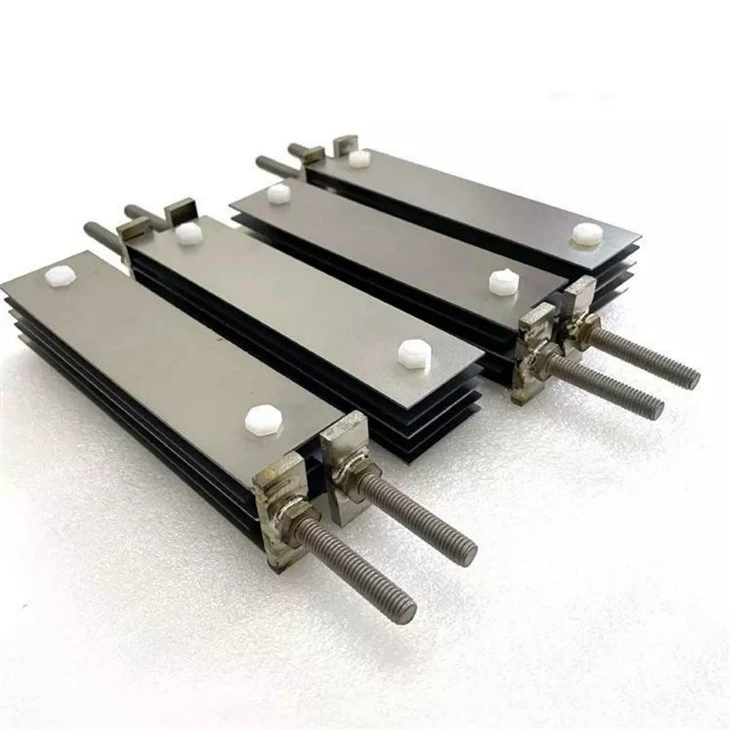
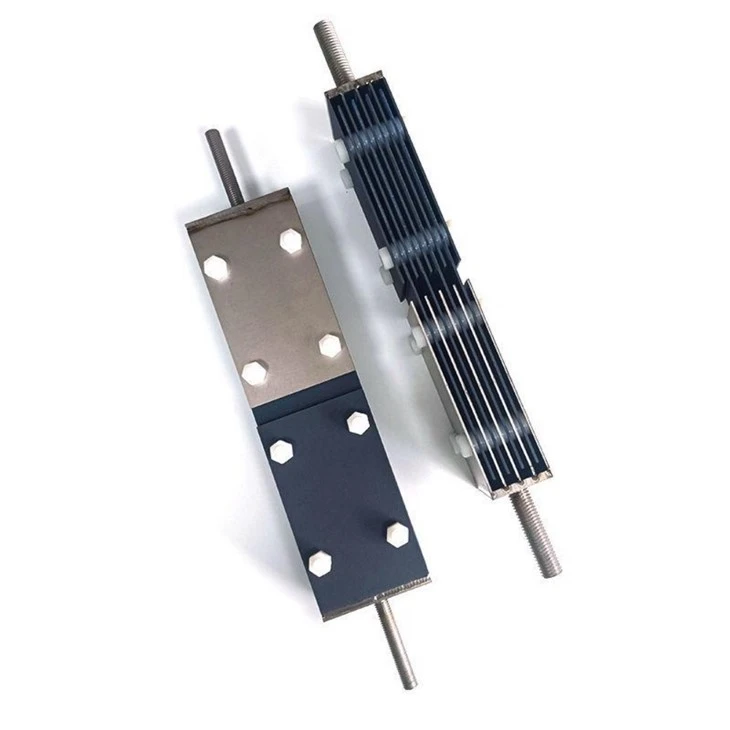
When selecting a threaded mounting arrangement, buyers should consider the available fixing space, electrical connection layout, and mechanical loading during operation. A single-bolt configuration generally requires less mounting space and allows straightforward attachment to a compact support bracket. However, the fastening point must accommodate the applied tightening force without causing unwanted rotation or angular displacement. A dual-bolt arrangement distributes the clamping force across two separate positions, reducing the tendency for lateral movement when the assembly experiences vibration or repeated handling. It also requires closer coordination between hole spacing, bracket geometry, and connector orientation. During installation, buyers should assess whether both fixing points can engage simultaneously without forcing the assembly into an uneven position. The choice depends on the overall dimensions, current-carrying requirements, mounting accessibility, and expected mechanical loading. Providing the intended fixing arrangement before ordering allows the supplier to confirm connector compatibility and avoid modifications to existing supports during on-site assembly.
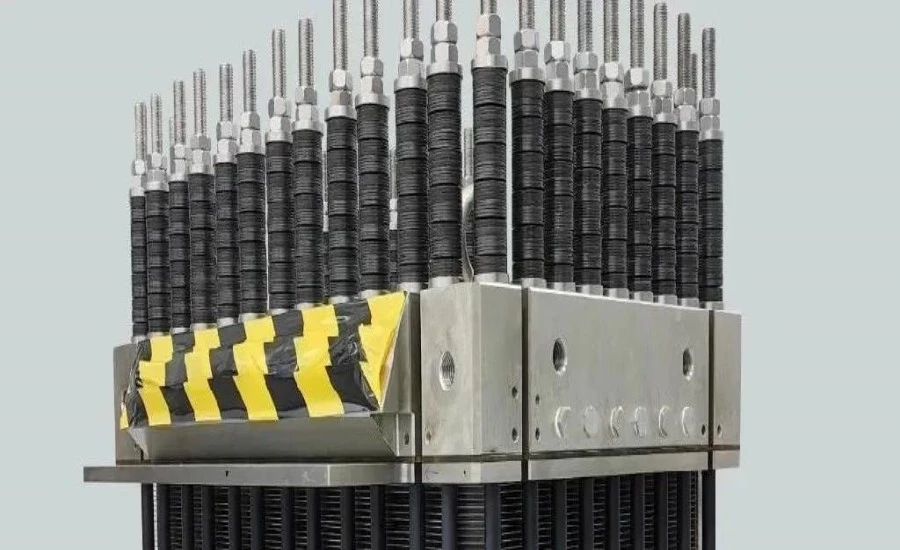
M5 Bolt Positioning and Dimensional Verification
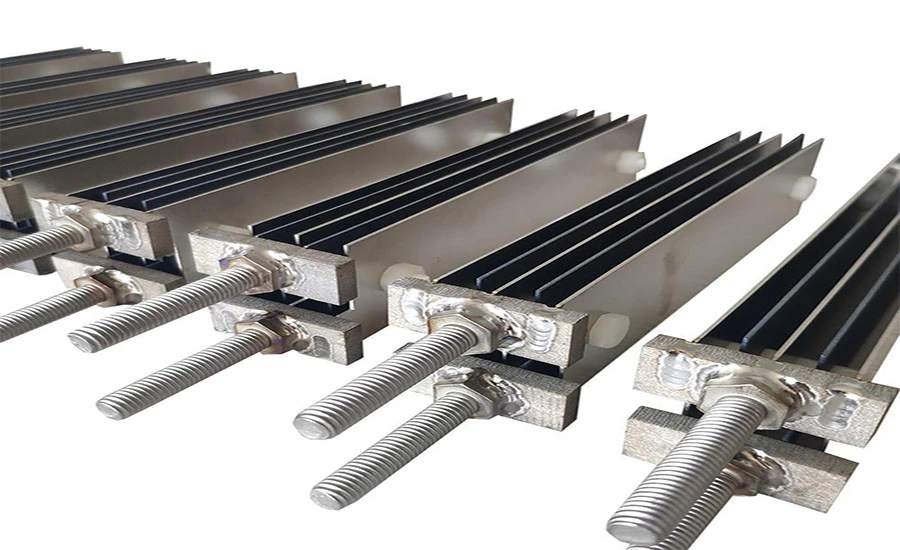
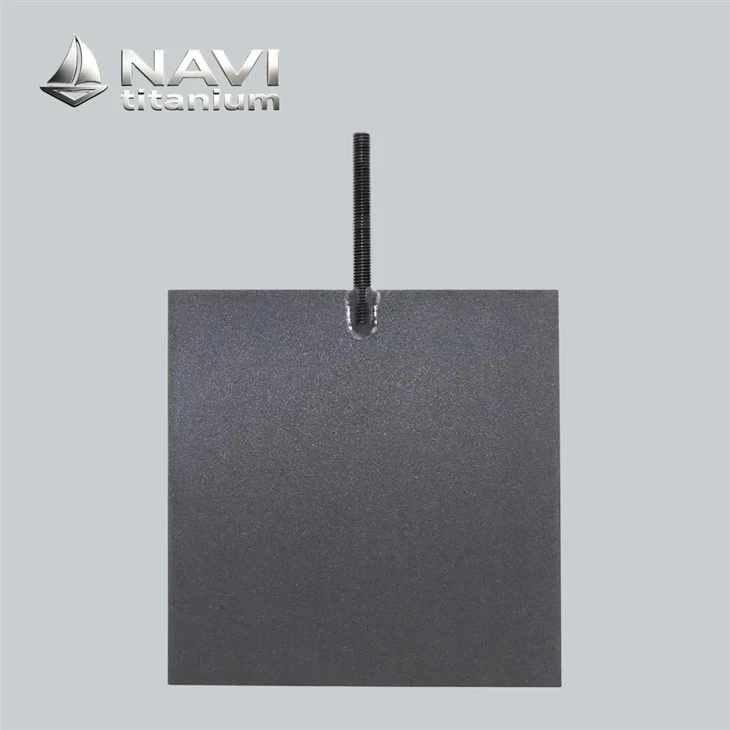
The positioning and dimensional accuracy of an M5 threaded fastener directly affect mounting compatibility and electrical contact quality. Before procurement, buyers should specify the nominal thread diameter, pitch, exposed length, attachment location, and distance from the nearest edge. For standard metric M5 threading, the nominal diameter is 5 mm, while the commonly used coarse thread pitch is 0.8 mm. However, the required thread length depends on the receiving nut, bracket thickness, washer arrangement, and available engagement depth. Dimensional verification should include thread gauge assessment, protrusion measurement, positional deviation, and perpendicularity relative to the mounting reference. Particular attention is necessary when the fastener is located near a narrow edge, where insufficient clearance may interfere with tightening tools or adjacent assemblies. Buyers can also request dimensional inspection records and reference drawings before shipment. These checks reduce discrepancies during incoming inspection, simplify installation planning, and minimize the risk of connector misalignment in multi-unit electrolytic cells.
M5 Fastener Attachment Methods and Joint Integrity
The connection between the threaded fastener and the substrate determines mechanical retention, electrical continuity, and assembly compatibility. For Ru-Ir coating titanium anode plate with M5 bolt, NAVI Titanium evaluates attachment methods according to substrate thickness, current-transfer requirements, fastening loads, and exposure to chloride-containing electrolytes. Welding can establish a permanent metallurgical joint, provided heat input is controlled to limit distortion and prevent damage to previously deposited catalytic layers. Mechanical fastening offers easier replacement and avoids localized joining heat, although loosening resistance and contact resistance require assessment.
| Connection method |
Main characteristics |
Considerations |
| TIG welding | Permanent joint with localized heat input | Weld integrity, distortion, coating protection |
| Laser welding | Concentrated heat input and limited affected area | Joint penetration, positioning, inspection |
| Mechanical fastening | Removable connection | Loosening resistance, contact resistance |
| Threaded insert | Replaceable threaded interface | Pull-out strength, dimensional compatibility |
Other options, such as threaded inserts or machined integral bosses, may be considered when substrate geometry permits.
FAQ
1. Can the exporter provide a Certificate of Origin for international shipments?
+
-
Yes. A Certificate of Origin can be arranged according to the destination country's import requirements and the applicable trade agreement.
2. Which customs documents should buyers prepare for clearance?
+
-
Importers generally need a commercial invoice, packing list, bill of lading or airway bill, and applicable origin documentation. Depending on local customs regulations, additional technical specifications, customs classification details, or declarations concerning the catalytic coating may be requested. For threaded assemblies, dimensional descriptions and fastening specifications can also help customs brokers distinguish the shipment from other electrically conductive articles.
3. How are international transportation arrangements determined?
+
-
Transportation methods depend on shipment volume, gross weight, destination, delivery urgency, and packaging dimensions.
4. How can delivery milestones be monitored throughout an export order?
+
-
A clear delivery schedule should identify order confirmation, drawing approval, fabrication completion, dimensional verification, packaging, customs documentation, and dispatch.
5. How can overseas buyers communicate technical or delivery issues after receiving the shipment?
+
-
Buyers should retain the order reference, commercial documents, packing records, and approved technical drawings for subsequent communication.
Hot Tags: ru-ir coating titanium anode plate with m5 bolt, China ru-ir coating titanium anode plate with m5 bolt manufacturers, suppliers, factory, DSA Coating Titanium Anode, iridium oxide coated titanium tube anode, mixed metal oxide coated titanium anode, MMO coated titanium basket anode, Platinized Titanium Mesh Anode, solid coated titanium anode


