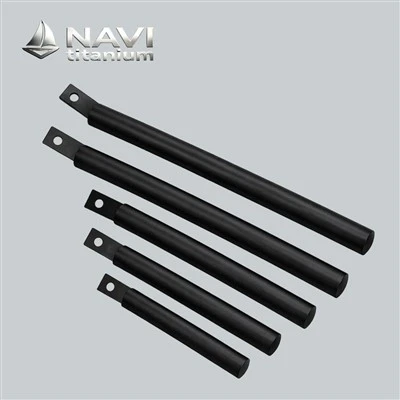
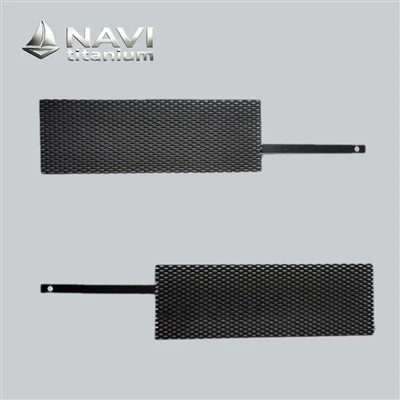
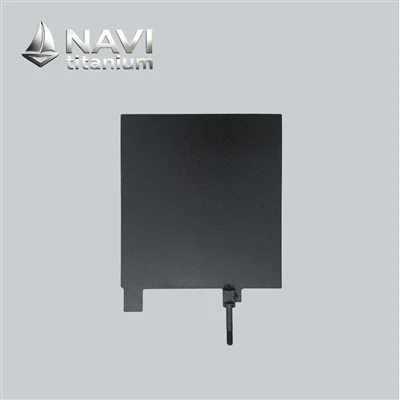
NAVI Titanium provides platinized titanium anodes for ionized water generation, intended for controlled electrolysis in household and commercial purification appliances. A dedicated technical database maintains historical test results, voltage–current references, operating parameters, and dimensional verification data across different configurations. For procurement teams, these records facilitate specification comparison, incoming inspection planning, replacement identification, and traceability during repeat orders, particularly when matching existing chamber assemblies.
Solution of NAVI Titanium
With experience in electrochemical applications, NAVI Titanium focuses on material consistency, coating specifications, and application-oriented customization for specialized electrolysis systems.


NAVI Titanium addresses the technical requirements of ionized water generation through carefully specified conductive substrates intended for aqueous electrolysis. Relevant considerations include electrical conductivity, dimensional conformity, active-area distribution, ionic transport, and compatibility with different chamber configurations.


Application
NAVI Titanium supplies platinized titanium anode for ionized water generation for alkaline and acidic drinking water production, as well as hydrogen-enriched liquid generation through controlled electrolytic processes.
Ionized drinking systems employ direct-current electrolysis to modify the acid–base characteristics of incoming potable liquid through spatially separated oxidation and reduction reactions. Within the electrolytic chamber, the positive terminal promotes oxidative reactions, whereas the negative terminal facilitates hydrogen evolution and hydroxide formation. Depending on membrane configuration, feed composition, applied voltage, current density, and residence time, the resulting streams exhibit different pH values and dissolved-gas characteristics. Platinum-coated conductive substrates are particularly relevant to the positive side, where catalytic activity, corrosion resistance, and coating integrity must remain appropriate under repeated electrical operation. For manufacturers of household and commercial ionizers, the relationship between active area and chamber geometry deserves particular attention, since insufficient reaction capacity or uneven current distribution may produce inconsistent outlet characteristics. Feed conductivity, calcium and magnesium concentrations, bicarbonate content, and temperature also affect ionic transport and deposit formation. Consequently, performance assessment should consider both electrical parameters and incoming liquid chemistry.

2. Hydrogen-Enriched Liquid Production

Hydrogen-enriched drinking systems utilize cathodic hydrogen evolution to generate molecular hydrogen, part of which may subsequently dissolve in the surrounding liquid. At the positive terminal, oxidation reactions occur simultaneously, maintaining charge balance throughout the electrolytic circuit. In practical installations, hydrogen concentration depends on current input, gas–liquid contact time, chamber pressure, temperature, dissolved-gas retention, and the efficiency of gas separation. Platinum-bearing catalytic interfaces are relevant to systems requiring controlled oxidative activity and resistance to repeated exposure to aqueous electrolytes. For manufacturers of compact household appliances and commercial hydrogen-generation units, attention should be directed toward terminal positioning, interfacial contact, and spacing between adjacent active regions. These parameters affect current distribution, local heating, gas release, and operational consistency. Feed conductivity and mineral content require additional consideration because variations in ionic composition may alter electrical demand and encourage scale accumulation. Verification under representative operating conditions should therefore include current efficiency, hydrogen concentration, and resistance to repeated polarity changes where applicable.
Purchasing guide

Quality control(QC)
NAVI Titanium maintains documented quality records for materials intended for ionized water generation, with particular attention to substrate composition, dimensional conformity, electrical characteristics, and manufacturing consistency.
| Certificate of Analysis | ||
| Titanium Base Material Suppliers: | Coating Precursor Suppliers: | COA of product: |
|
|
|
|


Manufacturing proces
The fabrication process begins with substrate preparation, including degreasing, chemical etching, and controlled surface activation to establish suitable conditions for subsequent platinum deposition. Multiple deposition cycles are applied to obtain consistent catalytic coverage across the intended active area. Each stage requires controlled solution concentration, processing duration, and drying intervals to minimize localized defects and variations in electrical response. Subsequent heat treatment promotes coating adhesion and interfacial bonding, while repeated processing may be adjusted according to the required geometry and operating specifications. Final preparation includes terminal connection, dimensional verification, and electrical performance assessment under conditions representative of ionized drinking systems.


Export Packaging and Cargo Planning
Protective film selection is an important consideration for international transportation, particularly because friction between adjacent units may cause scratches, localized coating damage, or cosmetic defects. Individual wrapping is preferable for separately packed pieces, while additional cushioning can be arranged around exposed edges, terminal connections, and irregular profiles. For multi-unit consignments, separators should be placed between individual items to prevent direct contact during handling, stacking, and vehicle movement. The packaging arrangement should also account for vibration during road transportation, repeated transfers between freight terminals, and possible compression from surrounding cartons. Before dispatch, buyers may specify whether removable protective layers, individual sleeves, foam inserts, or sealed inner bags are required. Any protective material in direct contact with the catalytic coating should be checked for chemical compatibility and residue-free removal. Clear identification labels and packing records further assist warehouse personnel in distinguishing different specifications and reducing handling errors after arrival.

Cargo Volume, CBM Calculation, and Freight Cost Assessment

Cargo volume is a significant reference when comparing international freight quotations and estimating landed procurement expenditure. CBM is calculated by multiplying the external length, width, and height of each packed carton in metres, then multiplying the result by the total carton quantity. For example, a consignment containing 10 cartons, each measuring 0.60 × 0.40 × 0.35 m, occupies 0.84 CBM. Buyers should distinguish between the net measurements of individual units and the final external measurements after protective wrapping, cushioning, and carton reinforcement. For palletized consignments, pallet height, overhang, and stacking restrictions must also be included. Accurate volume records are particularly useful when comparing LCL and FCL arrangements, assessing warehouse capacity, and calculating volumetric freight charges. A detailed packing list should specify carton quantities, gross weight, net weight, individual carton measurements, total CBM, and pallet information where applicable. These figures allow importers to coordinate freight booking, customs documentation, and receiving schedules with fewer discrepancies.
Installation Orientation and Gas Management
For buyers procuring replacement parts for ionized drinking appliances, polarity identification is an important consideration during installation, commissioning, and subsequent maintenance. Positive and negative terminals should be clearly distinguished through permanent markings, connection labels, or an agreed identification system specified in the purchasing documentation. Incorrect terminal positioning may reverse the intended oxidation and reduction reactions, resulting in different outlet characteristics and potentially affecting the operating logic of the complete electrolytic chamber. Importers and appliance manufacturers should therefore verify terminal locations, cable assignments, connection measurements, and installation direction against the original electrical drawings before confirming an order. For multi-unit assemblies, consistent terminal orientation across all individual pieces is particularly important because an incorrect connection may alter the intended current path. Replacement identification should also account for model numbers, polarity diagrams, connector specifications, and revision records. Including these references in technical documentation reduces installation ambiguity, simplifies maintenance planning, and allows distributors to distinguish visually similar units intended for different electrical configurations.

Gas Bubble Release and Effective Reaction Area

Gas bubble accumulation is another important consideration when evaluating performance in ionized drinking appliances. During electrolysis, hydrogen and oxygen evolve at their respective terminals, and the resulting bubbles may temporarily adhere to active regions before detaching and rising through the surrounding liquid. Excessive bubble retention can obstruct portions of the available reaction area, increase local electrical resistance, and produce uneven current distribution. For purchasing specialists, the relationship between aperture geometry, installation angle, spacing, and liquid circulation deserves particular attention because these factors affect bubble migration and release. A configuration that permits unobstructed upward movement generally reduces prolonged gas coverage and limits localized accumulation. Chamber manufacturers should also assess the clearance between adjacent units, since narrow passages may restrict bubble escape and encourage gas pockets. During prototype evaluation, useful observations include bubble size, detachment frequency, residual gas coverage, and changes in operating voltage under comparable electrical input. These assessments provide practical references when selecting replacement specifications or comparing alternative configurations for continuous household and commercial operation.
Usage Scope and Commercial Deployment
The platinized titanium anode for ionized water generation is intended for aqueous electrolysis usages in which controlled oxidation, current distribution, and gas release are essential to the intended output. Its potential end uses extend from household alkaline ionizers to commercial systems, with installation formats varying according to chamber capacity, electrical architecture, and available mounting space. Countertop and under-sink appliances generally require compact configurations compatible with restricted internal measurements, whereas commercial installations may involve larger active areas and multiple operating chambers. Multi-plate electrolysis chambers require particular attention to inter-unit spacing, polarity sequence, and electrical connections.
| Usage |
Typical End-Use Requirements |
| Household Alkaline Water Ionizers | Compact assemblies for domestic alkaline-water production |
| Commercial Water Ionization Equipment | Larger processing capacity and extended operating schedules |
| Water Electrolysis Systems | Controlled oxidation and reduction reactions |
| Alkaline Water Generator Manufacturing | OEM sourcing for complete appliance production |
| Countertop Water Ionizers | Restricted installation space and compact connections |
| Under-Sink Water Ionizers | Concealed installation and accessible replacement |
| Multi-Plate Electrolysis Chambers | Consistent spacing and polarity arrangements |
| OEM Water Treatment Equipment | Customer-specific dimensions and electrical interfaces |
| Replacement Electrode Assemblies | Compatibility with existing chamber specifications |
NAVI Titanium addresses these usage categories through specification-based customization and technical assessment.
FAQ
1. How can buyers assess the consistency of raw materials?
+
-
Buyers should request substrate-grade specifications, chemical composition records, and incoming inspection data.
2. How are critical raw materials controlled?
+
-
Critical inputs should be purchased against documented technical specifications, with particular attention to substrate composition, platinum purity, and coating-related chemical inputs.
3. What storage requirements should importers consider for raw materials?
+
-
Raw materials should be kept in clean, dry, ventilated storage areas, away from corrosive substances, excessive humidity, and incompatible chemicals. Separate identification labels, sealed containers where appropriate, and periodic inventory reviews help prevent contamination, oxidation, and deterioration before processing.
4. How can buyers reduce supply chain risks?
+
-
A practical procurement strategy includes qualifying alternative sources, monitoring delivery lead times, maintaining appropriate safety stock, and reviewing supplier capacity.
5. Can terminal interfaces be adjusted to match different ionized drinking appliance models?
+
-
Yes. Connection arrangements can be customized according to the original appliance specifications.
Hot Tags: platinized titanium anode for ionized water generation, China platinized titanium anode for ionized water generation manufacturers, suppliers, factory, DSA Coating Titanium Anode, lead dioxide coated titanium tube anode, mixed metal oxide coated titanium plate anode, Platinized Titanium Mesh Anode, platinum oxide coated titanium plate anode, Titanium Anode Basket