


Selecting the right material is one of the most important decisions when designing a porous metal filter. Sintered bronze, stainless steel, and titanium can all be manufactured into controlled porous structures, but they are designed for different operating environments and engineering priorities. For general industrial filtration, sintered bronze provides a practical balance between filtration performance and cost. Stainless steel is often selected when higher mechanical strength, corrosion resistance, or temperature capability is required. Titanium is generally considered for specialized applications where corrosion resistance, low density, and long-term material stability are critical.
NAVI Titanium manufactures customized porous metal filter components and can evaluate different material options according to the customer's working medium, filtration requirements, pressure, temperature, dimensions, and application environment. The objective is not to identify one universally superior material, but to select the material that provides the right combination of performance, service life, and cost for the actual application.
Material Comparison
|
Property |
Sintered Bronze |
Stainless Steel |
Titanium |
|
Cost |
Lower |
Moderate |
Higher |
|
Mechanical Strength |
Good |
High |
High |
|
Corrosion Resistance |
Good* |
High–Excellent* |
High–Excellent* |
|
Temperature Capability |
Moderate |
High |
High |
|
Density |
Higher |
Higher |
Lower |
|
Typical Positioning |
General industrial |
Demanding industrial |
Specialized applications |
*Actual performance depends on alloy, medium, concentration, temperature, pressure, and exposure conditions.
Detailed Description for the Three Materials
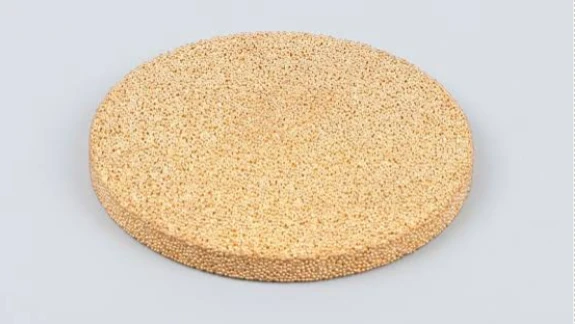
Sintered bronze is often selected for applications where reliable filtration is required without the need for extreme corrosion or temperature resistance. The manufacturing process begins with bronze powder, which is compacted into the required geometry and then sintered under controlled conditions. The resulting metallic body contains interconnected pores that form the fluid flow paths. The porous structure can be engineered according to the required filtration and flow characteristics. This makes sintered bronze suitable for applications involving compressed air, general gas filtration, oil, lubrication systems, breathers, and protection of valves and regulators. One of the strongest advantages of bronze is its balance between performance and cost. If an application operates under moderate pressure and temperature with a compatible medium, a higher-cost material may not provide sufficient additional value to justify the increased material cost. NAVI Titanium can also manufacture bronze filters in different geometries, allowing the porous component to be integrated into compact industrial assemblies.
Stainless Steel: Strength and Versatility
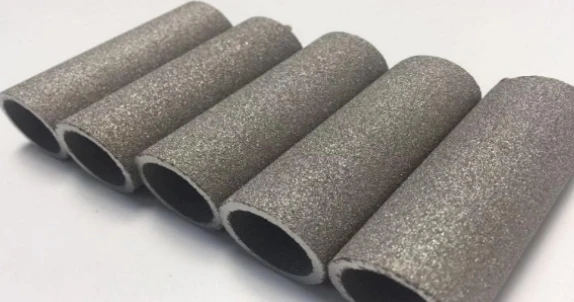
Sintered stainless steel is generally preferred when the operating environment places greater demands on mechanical strength, corrosion resistance, pressure, or temperature. Common stainless steel grades such as 304 and 316L can be considered according to the application. Grade selection should be based on the working medium and actual environmental conditions rather than assuming that one stainless steel grade is suitable for every application. Stainless steel is particularly useful for demanding industrial systems, including hydraulic equipment, chemical processing, industrial gas filtration, and process equipment. Compared with bronze, stainless steel can provide a broader operating range for applications involving higher mechanical or environmental requirements. However, higher performance also comes with a higher material cost. If the operating environment is relatively mild, choosing stainless steel simply because it has higher nominal performance may result in unnecessary over-specification.
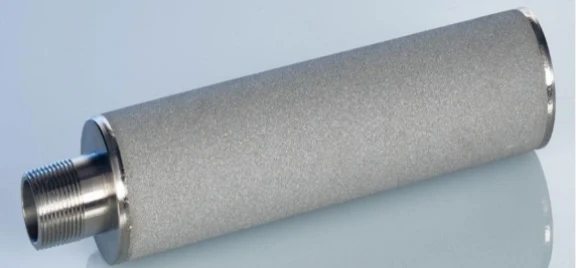
Sintered titanium is positioned toward specialized and demanding applications. Titanium combines high strength with relatively low density, making it attractive when weight reduction is important. It can also provide strong corrosion resistance in many challenging environments. This makes porous titanium suitable for applications such as marine equipment, chloride-containing environments, chemical processing, and specialized industrial systems. For example, if a filter is continuously exposed to a corrosive environment where frequent replacement of a lower-cost material would increase maintenance costs, titanium may provide a more suitable long-term solution. The higher material cost means that titanium should generally be selected because the application requires its specific advantages rather than simply because it is a premium material.
Corrosion Resistance and Medium Compatibility
Material selection becomes particularly important when the filter is exposed to corrosive liquids or gases.
Sintered bronze works reliably in many general industrial environments, yet its compatibility needs to be assessed based on the actual working medium. It is not suitable for aggressive chemical service or chloride-rich conditions by default.
Stainless steel provides a wider corrosion resistance range, and grades such as 316L are widely used for more demanding environments. Even so, it is not fully corrosion-proof; its performance depends on chemical concentration, temperature, exposure time and other factors.
Titanium offers outstanding corrosion resistance in marine and chloride-containing environments. For projects where corrosion protection is a critical design factor, it is frequently evaluated as a reliable and high-performance filter material.
For all three materials, the correct engineering approach is to evaluate the specific medium and operating conditions, rather than assigning an absolute corrosion ranking.
Temperature and Filtration Performance
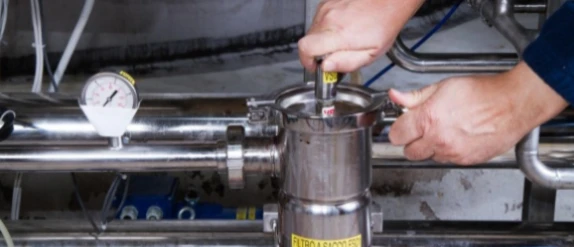
Temperature and mechanical requirements can also determine the appropriate material. Stainless steel is often a practical option for applications involving relatively high pressure, temperature, or mechanical loading because of its combination of strength and thermal capability. Titanium can also provide high strength while offering lower density, which can be useful for specialized equipment where weight reduction is important. Sintered bronze is generally more appropriate for moderate operating conditions. It can provide reliable performance in many industrial filtration applications, but more severe temperature, pressure, or corrosion conditions may justify stainless steel or titanium. The final pressure capability also depends on filter geometry, wall thickness, support structure, and pressure differential. Therefore, material selection should always be performed together with the filter design.
A common misunderstanding is that changing the filter material automatically changes the filtration rating. In reality, bronze, stainless steel, and titanium can all be manufactured with controlled porous structures. Filtration performance depends on factors such as: Powder characteristics; Pore structure; Porosity; Filter thickness; Filter area; Manufacturing conditions; Fluid properties; Flow rate; Contaminant characteristics. For example, specifying a 10 μm filter is not enough to complete an engineering specification. The manufacturer also needs to understand the required flow rate, pressure, temperature, and medium. A finer porous structure may improve particle retention but can also increase pressure drop. Therefore, the goal is to establish an appropriate balance between: Filtration Rating + Flow Rate + Pressure Drop + Service Requirements
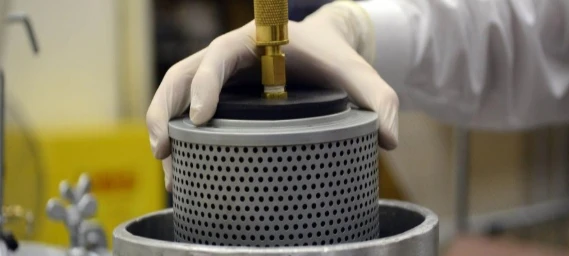
Practical Material Selection Guide
Choose Sintered Bronze When:
General industrial filtration is required;
Cost efficiency is an important consideration;
The working medium is compatible with bronze;
Pressure and temperature are moderate;
A compact porous metal component is required.
Choose Sintered Stainless Steel When:
Higher mechanical strength is required;
Pressure or temperature is relatively high;
Greater corrosion resistance is required;
The filter is exposed to demanding industrial conditions;
Long-term structural durability is important.
Choose Sintered Titanium When:
Corrosion resistance is a primary requirement;
The application involves challenging marine or chloride environments;
Low density is beneficial;
Specialized chemical or industrial conditions are involved.
NAVI Titanium Porous Metal Filter Solutions
As an experienced manufacturer of porous metal components, NAVI Titanium provides customized filtration solutions using sintered bronze, stainless steel, and titanium. Rather than applying the same filter specification to every application, NAVI Titanium evaluates the material and structure according to the actual operating conditions.
|
Required Information |
Engineering Purpose |
|
Working medium |
Material compatibility |
|
Filtration rating |
Particle retention |
|
Flow rate |
Filter area and flow design |
|
Pressure |
Structural requirements |
|
Temperature |
Material selection |
|
Dimensions |
Filter geometry |
|
Contaminants |
Filtration design |
|
Quantity |
Production planning |



