


Purchasing the right sintered bronze filter requires careful consideration of filtration requirements, operating conditions, dimensions, and manufacturing costs. Selecting a suitable product from the beginning can help reduce installation issues, maintain consistent performance, and avoid unnecessary expenses. For industrial buyers, understanding how filtration ratings, porous structures, and customization requirements affect the final product is essential. This buying guide explains the key factors to consider when sourcing sintered bronze filters and how to prepare for a more efficient purchasing process.
1. Understand the Structure of a Sintered Bronze Filter
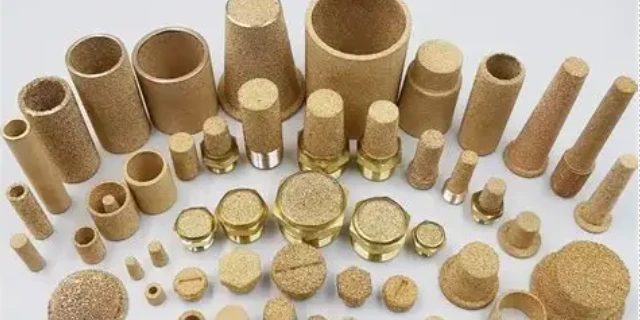
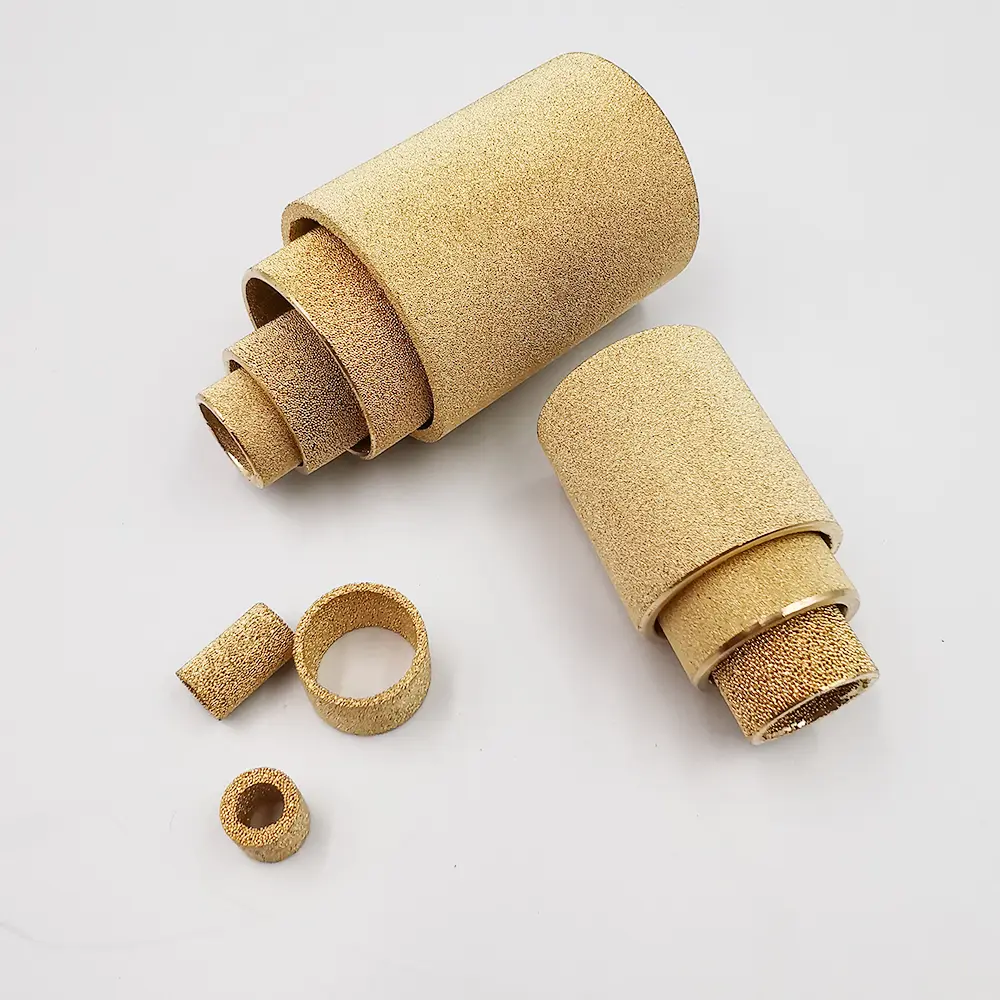
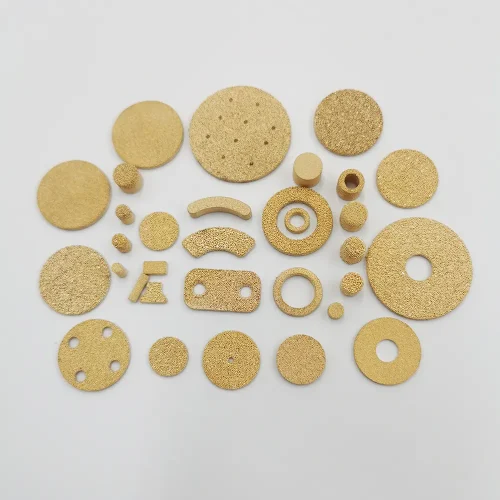
A sintered bronze filter is manufactured by compacting bronze powder and heating it under controlled conditions to bond the particles together without completely melting them. This process creates a porous metal structure with interconnected passages through which gas or liquid can flow. The resulting structure allows the filter to retain particles while maintaining permeability. Depending on its design, a sintered bronze component may also be used for gas diffusion, flow regulation, pneumatic exhaust, or noise reduction. Common product forms include discs, cylindrical elements, porous tubes, plates, and specially shaped components. The appropriate design depends on the available installation space, required filtration area, connection method, and intended function. Before requesting a quotation, identify the primary purpose of the filter. A component used to capture contaminants may require different performance characteristics from one designed to regulate airflow or reduce exhaust noise.
2. Select the Appropriate Filtration Rating
Filtration rating is one of the most important specifications to confirm before purchasing a sintered bronze filter. It influences particle retention, flow resistance, and maintenance requirements. NAVI Titanium commonly supplies sintered bronze filters with a 40-micron (40 μm) filtration rating. This is a useful starting point for applications that require this specification. Other requirements can be evaluated according to the intended use and manufacturing feasibility. When selecting a filtration rating, consider the following factors:
Particle size
Identify the approximate size of the contaminants that need to be retained.
01
Flow rate
Determine the required volume of gas or liquid passing through the filter.
02
Pressure drop
Establish the maximum acceptable pressure loss during operation.
03
Contamination level
Consider the concentration and characteristics of particles in the process medium.
04
Performance verification
Confirm how the filtration rating is defined and tested.
05
A finer pore structure may improve the retention of smaller particles, but it can also increase flow resistance and lead to more frequent maintenance. A coarser structure generally allows easier flow but may retain fewer fine particles. It is therefore important to select a filtration rating according to actual operating requirements rather than choosing the smallest available value by default.
3. Define the Required Shape and Dimensions
A sintered bronze filter must fit the equipment in which it will be installed. Incorrect dimensions, unsuitable connections, or insufficient filtration area can affect both installation and performance. NAVI Titanium can assess customized shapes and dimensions according to customer requirements. Depending on the design, available tooling, and manufacturing process, products can be evaluated in different configurations. When preparing a specification, include the following information:
|
Parameter |
Details to Confirm |
|
Product shape |
Disc, tube, cylinder, plate, or custom design |
|
Dimensions |
Outer diameter, inner diameter, length, and thickness |
|
Connection |
Thread type, mounting method, or fitting requirements |
|
Filtration rating |
Required pore size or filtration specification |
|
Tolerances |
Critical dimensions and acceptable deviations |
|
Quantity |
Initial order and estimated repeat-order volume |
If you do not have a technical drawing, photographs, measurements, or an existing sample can help clarify your requirements. For custom orders, confirm all critical dimensions and connection details before production begins.
4. Understand Mold Requirements and Tooling Costs
Tooling is an important consideration when purchasing customized sintered bronze filters. Whether a new mold is required depends on the product geometry, dimensions, manufacturing process, and availability of existing tooling. At NAVI Titanium, the mold arrangement is evaluated according to the specific product design.
- Using an existing mold: If a suitable mold is already available for your required shape and dimensions, additional mold costs may be avoided.
- Developing a new mold: If the required design cannot be produced using existing tooling, a new mold may be necessary, and a tooling fee may apply.
- Evaluating mold-fee waivers: The possibility of waiving the mold fee depends on factors such as order quantity, product specifications, and production requirements. Larger orders may provide more flexibility, but free tooling cannot be guaranteed for every project.
For buyers planning recurring purchases, providing both the initial order quantity and expected future demand can help the manufacturer assess a suitable production arrangement. Before confirming an order, clarify whether the quotation includes tooling, whether the mold is newly developed, and whether any tooling costs can be reduced or waived.
5. Check Operating Conditions Before Ordering
Even when the dimensions and filtration rating are correct, a filter must be suitable for its intended operating environment.
Operating temperature: Confirm the expected continuous temperature and any temperature fluctuations. The allowable range depends on the specific material and product design.
Operating pressure: Specify the normal working pressure, pressure fluctuations, and any relevant differential-pressure requirements.
Process medium: Identify whether the filter will handle air, gas, water, oil, or another fluid. Chemical composition and viscosity can influence material compatibility and flow performance.
Mechanical conditions: Consider vibration, installation forces, and other loads that may affect the filter during service.
Cleaning requirements: Explain whether the filter will be cleaned periodically, exposed to cleaning agents, or replaced after a defined service period.
6. Evaluate Flow Performance and Maintenance Requirements
The performance of a sintered bronze filter depends on more than its nominal filtration rating. Pore structure, element dimensions, porosity, medium viscosity, and operating conditions all influence flow capacity. When flow performance is critical, provide the required flow rate and allowable pressure drop. For gas applications, specify the gas type, inlet pressure, and temperature. For liquid applications, include the fluid type and viscosity where available. Maintenance should also be considered before purchasing. Depending on the application, cleaning may involve compressed air, reverse-flow purging, compatible liquid rinsing, or other suitable procedures. The effectiveness of cleaning depends on the contaminant type and the filter's porous structure. Ask the supplier whether repeated cleaning is appropriate and which methods are recommended. Improper cleaning can damage the filter or leave contaminants inside the pores.Service life varies with contamination levels, operating conditions, cleaning frequency, and acceptable performance limits. A realistic maintenance plan should therefore be based on the actual application rather than a general service-life estimate.
7. Assess Manufacturing Quality and Consistency
Consistent manufacturing is essential for industrial buyers who require reliable performance across multiple units or repeat orders. When evaluating a sintered bronze filter manufacturer, consider the following quality-related factors.
Dimensional inspection
Confirm that critical dimensions and connection features are checked against the approved specifications.
Filtration consistency
Ask how the manufacturer evaluates pore characteristics and verifies the specified filtration rating.
Material documentation
Determine whether relevant material information and inspection records can be provided.
Production repeatability
For recurring orders, discuss how approved specifications are maintained between production batches.
Customization capability
Confirm that the manufacturer can review non-standard designs and identify any manufacturing limitations before production.
Sample approval
Where necessary, agree on a sample or first-article approval process before proceeding with larger production quantities.
8. Common Mistakes When Buying Sintered Bronze Filters
- Choosing a filtration rating without considering flow requirements. A filter that is too restrictive may increase pressure drop and maintenance frequency.
- Providing incomplete dimensional information. Missing measurements, connection details, or tolerances can cause installation problems.
- Assuming customization always requires a new mold. Existing tooling may be suitable for some designs, so mold availability should be checked first.
- Overlooking tooling charges. If a new mold is necessary, confirm the fee and any potential waiver before approving the order.
- Ignoring operating conditions. Temperature, pressure, and process-medium compatibility should be established before finalizing the specifications.
- Comparing quotations based only on unit price. Confirm that product dimensions, filtration requirements, quantities, inspection standards, and tooling arrangements are equivalent.
- Failing to communicate future demand. Expected repeat orders may affect production planning and discussions about tooling costs.
9. How to Request a Quotation from NAVI Titanium
Providing complete information allows our team to assess manufacturing feasibility and prepare a more accurate quotation. When contacting NAVI Titanium, please provide the following details whenever possible:
| No. | Item | Details | Remarks |
|---|---|---|---|
| 1 | Filtration rating | e.g. 40 μm | Filter grade |
| 2 | Application & process medium | Usage scenario and fluid/media to be filtered | Working application |
| 3 | Operating conditions | Operating temperature and pressure | Service parameters |
| 4 | Order volume | Initial order quantity and expected repeat-order demand | For quotation evaluation |
| 5 | Technical documents | Technical drawing, photographs or existing sample | Any one or all available |
| 6 | Delivery & document requirements | Delivery destination and required certificates / documents | Shipping & paperwork |
Handling for Unavailable Specifications & Custom Products
| No. | Step | Description | Remarks |
|---|---|---|---|
| 1 | Provide basic description | Describe the equipment and the filter's intended function | If full specs are not ready |
| 2 | Information review | Our team checks available data and marks pending parameters | Confirm missing specs |
| 3 | Tooling assessment | Evaluate existing tooling or requirement for new mold development | For customized items |
| 4 | Quotation evaluation | Work out product price and applicable tooling fees based on design and order quantity | Final commercial offer |
Contact NAVI Titanium with your drawing, sample, specifications, and estimated order quantity.



