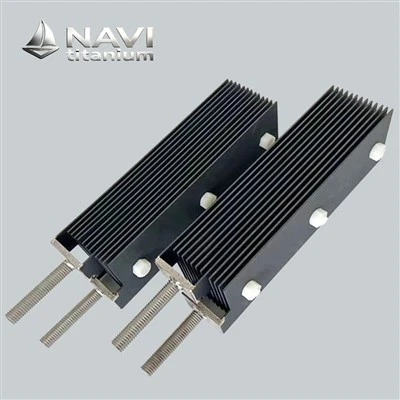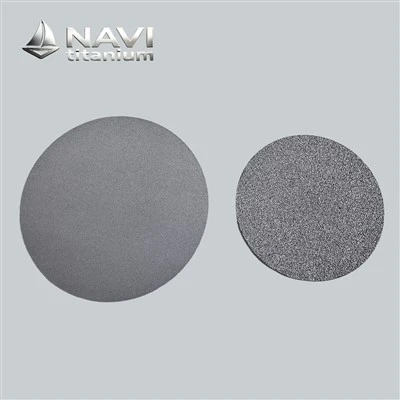

Internal component quality is crucial for hydrogen energy systems that must work year after year. Porous filter elements help keep fluid paths clean and safeguard sensitive equipment. Sintered metal powder is key to these filters' longevity. Engineers and procurement teams may cut maintenance costs and lengthen operating lifespans by understanding how purity levels impact filter performance.
Even in hostile electrochemical conditions, high-purity metal powder porous filters resist deterioration. This is especially true in Proton Exchange Membrane (PEM) water electrolysis applications, where filters must tolerate acidic environments, electrical currents, and temperature variations. Powder purity affects filter lifespan due to material science concepts of corrosion resistance, mechanical strength, and microstructural homogeneity.

1.Specification
Product name: Sintered Metal Powder
Internal Code: NAVI-2-002
Brand: NAVI Titanium®
General Shapes: Round, disc, sheet, tube, round, bar, cap or customization
Raw materials:
(1)Titanium---0A grade pure powder
(2)Stainless steel---/SS304/SS316/SS316L etc.
(3)Nickel---Nickel base alloys/MONEL/INCONEL/Hastelloy(C22/C276)
(4)Bronze---0A grade pure powder
Advanced fields of NAVI: PEM, semiconductor & electronics, pharmaceuticals etc.
2.Purchasing guide
(1)Process
NAVI Titanium(since 2008) can process according to your design drawings
(2)Sample
Effective, economic, high quality
Only take the basic cost of molds for custom product, Sintering together for sample orders, Zero unqualified
(3)Technology support
Professional one-for-one service, welcome to contact us
How Does High-Purity Sintered Metal Powder Improve Filter Durability?
The Role of Impurities in Filter Degradation
Metal powders with contaminants make structures weaker in places that speed up the failure process. During sintering, oxygen, carbon, and metal impurities make it hard for powder particles to stick together. This creates porous structures that aren't straight and stress concentration zones that aren't flat. There are flaws in the material that allow cracks to spread and rust to start.
Powder metallurgy research shows that the amount of oxygen in titanium parts directly affects how they react to electricity. Too much oxygen creates stable oxide phases at the edges of particles, which lowers electrical conductivity and makes galvanic cells that encourage rusting in certain areas. These flaws caused by impurities make filter elements last a lot less long in PEM electrolyzers, where they need to keep their mechanical stability and electrical performance.
Purity Standards for Critical Applications


To make lasting porous metal filters, you need powder material that meets strict purity requirements. Titanium powder with an oxygen level below 0.15% is usually needed for high-end PEM electrolytic systems. This is a lot less than what is found in regular industry grades. This managed chemistry makes sure that the sintering process is consistent and that the final properties are predictable.
There is more than one link between the quality of the powder and the effectiveness of the finished product. When sintering, an even spread of particle sizes, stability in morphology, and chemical homogeneity all help to make three-dimensional networks that are all the same. Premium-grade powders have tighter tolerances across these parameters, which directly lead to filter elements with consistent pore structures and mechanical properties.
Economic Impact of Powder Quality Choices
Even though high-purity sintered metal powder costs more, the total cost analysis shows that it is worth it.
Filter elements made from high-quality raw materials last longer before they need to be replaced, which lowers the cost of both the parts and the time the system is down. If a hydrogen production plant runs all the time, standard-grade powder filters might need to be replaced every 12 to 18 months. High-purity options, on the other hand, can last 36 to 48 months in the same circumstances.
This durability benefit becomes more important as green hydrogen projects get bigger and bigger, up to multi-megawatt capacities. Frequent filter maintenance requires a lot of work and stops output, which wastes more time and money than the original material savings from using lower-grade powders.
High-Purity Sintered Metal Powder for Strong and Uniform Porous Frameworks
Microstructural Benefits of Clean Powder Feedstock
Through diffusion bonding at high temperatures, the sintering process turns loose powder particles into structures that stick together. Impurities get in the way of this atomic movement, leaving behind unfinished bonding zones and extra pores that aren't part of the planned pore structure. High-purity powders sinter more evenly, making neck shapes between particles that are more regular, which increases their mechanical strength.
Studies using advanced microscopy show that sintered porous metal filters made from refined titanium powder have pore size distributions that are surprisingly uniform. This stability comes from knowing how particles will move and stick together during heat processing. The three-dimensional framework that was made spreads mechanical loads equally, which stops the early failure modes that happen a lot in filters with microstructures that aren't smooth.
Customized Pore Architecture Through Controlled Powder Characteristics


To make filter elements that work well in certain situations, you need to have precise control over the size, spread, and connectivity of the pores. Manufacturers get these specific properties by picking the right ranges of powder particle sizes and applying controlled compaction pressures before sintering. High-purity feedstock responds consistently to these processing factors, which makes it possible to make custom pore architectures over and over again.
For PEM water electrolysis to work, the filter elements need to meet two different needs: they need to have enough open space for low pressure drop and enough surface area to support the reaction. These problems can be solved by using gradient structures that include different powder size fractions. This makes filters with rough outer parts that support the structure and smooth inner parts that filter precisely. For making these complicated multi-layer designs, it's important to use high-purity powders because they are stable in their dimensions and don't melt when heated.
Mechanical Strength Considerations
Durability isn't just chemical resistance; mechanical strength tells you if filter elements can handle the stresses of being moved, installed, and used. It is directly related to the quality of interparticle bonding that is achieved during processing that sintered structures have high compressive and tensile strengths. Powders that are contaminated make the bonds between materials weaker, which makes the structures more likely to break.
As part of the testing procedures for hydrogen energy components, filter samples are put under repetitive pressure loading, which is like years of use. When made from high-purity sintered metal powder, the elements are very resistant to wear and keep their shape after thousands of pressure cycles. This mechanical durability means that parts need to be replaced less often, which makes the system more reliable.

Sintered Metal Powder Purity and Corrosion Resistance in PEM Filter Elements
Understanding the needs for electrical stability helps explain why powder purity is so important in electrolysis applications. At the anode of a PEM system, oxygen is produced. This creates highly reactive conditions that attack many materials very quickly. Titanium is the best material for filter elements in these conditions because it doesn't rust naturally, but only if the powder purity keeps this protective quality.

Titanium's impurities cause differences in electrochemical potential in certain areas, which create microgalvanic cells that speed up corrosion. According to studies released in journals of corrosion science, acidic fluids become much less passable when the amount of oxygen in them rises above a certain level. High-purity titanium powder is used to make filter elements that keep passive films steady and don't break down even after thousands of hours of use.
The acidic conditions that are common in PEM electrolyzers make the need for purity even stronger. Standard types of commercial titanium may work well in neutral water settings, but they break down quickly when they are exposed to pH levels below 3. For these tough service conditions, low-oxygen fine titanium powder formulations made for electrochemical applications are the answer. They make filter elements last three times longer than those made with regular materials.
How High-Purity Titanium Sintered Metal Powder Supports Long-Term Filter Stability
Electrical Conductivity and System Efficiency
In PEM systems, porous metal filters do more than just deal with chemicals and mechanics. They also act as current collectors and reaction substrates. Electrical resistance through the filter part has a direct effect on how well the system works and how much energy it uses. The amount of oxygen in titanium powder has a big effect on its conductivity. As the amount of contamination goes down, electrical performance gets better.
Making filter elements with little resistive loss is possible with high-purity, low-oxygen titanium powder. This higher conductivity lowers the generation of heat within the filter structure, which lowers the mechanisms of degradation that are caused by heat. When chemical resistance is better and thermal stress is lowered, practical lifespans are greatly increased.
Dimensional Stability Under Operating Conditions


Long-term filter performance needs to be stable in terms of dimensions even when temperatures change, and the filter is put under a lot of stress for a long time. Structures that are sintered and contain impurity phases expand and contract at different rates, creating internal stresses that can lead to cracking or warping. Pure metal powders make microstructures that are regular and expand and shrink in the same way. They also keep their dimensions over long periods of time.
This level of steadiness is especially important for closing surfaces and areas where filters meet housing parts. Changes in dimensions weaken the seal, letting flow around it, which makes the filter less effective. When premium-grade sintered metal powder is used to make filter elements, they keep their original shape, which means they seal well for a long time.
Batch Consistency for Manufacturing Scalability
As hydrogen production grows to an industrial level,
reliable component performance is needed to keep the project's costs low. Changes in the properties of filter elements make system design more difficult, necessitate more thorough quality testing, and make upkeep planning less certain. High-purity powder suppliers keep strict control over specifications, so they can give regular batches that have filter qualities that can be repeated.
This level of consistency in manufacturing lets maintenance plans be planned ahead of time based on operational hours instead of replacements being made after performance starts to decline. Large-scale green hydrogen projects have less financial uncertainty because project developers can accurately predict how much the parts will cost and how much maintenance will be needed.
Reducing Equipment Wear With High-Purity Sintered Metal Powder Filter Substrates
Protecting Downstream Components
As the first line of defense against particulate pollution that destroys expensive system parts, sintered filter elements do their job. Fluids that are high in particles speed up the wear on catalyst layers, membrane systems, and precise valves. Durable filters keep blocking things even after long periods of time without being serviced, protecting equipment further down the line.
Filter elements that break down too quickly release their own particles into the flow of fluid, making them sources of pollution in a strange way. This breakdown happens when weak sintered structures break apart under the stress of flow or when corrosion weakens bonds and they break. Using high-purity powder as a material makes structures strong and resistant to both mechanical wear and chemical attack, getting rid of this problematic way for structures to fail.
System Reliability and Uptime


Hydrogen production plants are most cost-effective when they are running at full capacity all the time. This means that unplanned shutdowns are very expensive. When filters stop working, they need to be fixed right away, which throws off production schedules and causes problems further down the supply chain. Buying long-lasting porous metal filter parts made from pure materials directly improves the stability of the system.
There is a clear link between the quality of the filters and how often they need to be maintained, as shown by operational statistics from industrial PEM installations. Facilities that use premium filter elements report upkeep times longer than three years, while setups with regular parts need service at least once a year. The longer replacement cycles lower the costs of both the parts themselves and the costs that come up because of planned downtime.
Total Cost Optimization
When weighing the costs of the initial parts against the costs over the course of their life, procurement decisions tend to favor high-purity sintered metal powder solutions for tough jobs. A full cost study that takes into account the prices of parts, installation work, system downtime, and secondary equipment wear shows that premium materials have big benefits. The original price extra usually adds up to less than 20% more cost while making the product last longer by more than 200%.
Using realistic repair schedules and replacement prices in project financial models shows that high-quality filter components give a better return on investment. This economic benefit becomes stronger as system capacities rise and hydrogen production stops being an experiment and starts being a main source of income.

Conclusion
The clarity of the sintered metal powder that makes up porous filter elements is the most important factor in how long they last. High-purity material makes microstructures that are regular and have better resistance to corrosion, dynamic strength, and dimensional stability. When these things are present, they directly lead to longer service lives, fewer maintenance needs, and higher system reliability.
Investing in filter elements made from high-quality low-oxygen titanium powder has clear economic and operational benefits for PEM water electrolysis applications that need to run nonstop for years under harsh electrochemical conditions. The link between the quality of the powder and how well the filter works isn't just interesting for academics; it also determines how reliable and inexpensive hydrogen production systems are, which helps reach clean energy goals.
When engineering teams and procurement specialists look at filter choices, they should put powder purity standards ahead of geometric factors and pressure ratings. This all-around method for choosing parts makes sure that filter systems work well for a long time, which is important for green hydrogen projects to be successful.
FAQ
1. What oxygen content level defines high-purity titanium sintered metal powder for PEM applications?
+
-
Titanium powder that is very pure and can be used for PEM electrolyzer filter elements usually has less than 0.15% oxygen by weight. This specification is much stricter than normal industrial types of titanium powder, which may have as much as 0.25% oxygen in them. The lower amount of oxygen makes the material better at conducting electricity, resisting rusting in acidic environments, and solidifying more evenly. In demanding electrochemical applications, these properties directly lead to longer filter element lifetimes.
2. How does sintered metal powder purity affect the consistency of filter production batches?
+
-
The purity of the powder affects both the uniformity of the chemicals in it and the consistency of the particles' properties within production lots. When you buy high-purity sintered metal powder from a reputable source, the oxygen content, particle size distribution, and morphology stay very close to the same across multiple batches. Because of this, manufacturers can keep the sintering parameters stable and get the same pore structures in finished filter elements every time. The uniformity of the final product makes quality control easier and guarantees consistent performance across large amounts of components needed for industrial hydrogen production plants.
3. Can high-purity sintered metal powder filters reduce overall hydrogen production costs?
+
-
Prices for quality porous metal filters made from high-purity powder are higher at first, but they save a lot on overall operating costs. Longer replacement intervals lower the costs of both parts and the amount of work that needs to be done on maintenance. Consistent filter performance also keeps expensive parts further downstream from wearing out too quickly, which lowers the costs of secondary failure. Detailed lifecycle cost analyzes consistently show that investing in high-purity sintered filter elements leads to better economic performance for large-scale hydrogen production systems that run nonstop for many years.
Choose NAVI Titanium as Your Trusted Sintered Metal Powder Supplier
NAVI Titanium Metal Technology Co., Ltd. makes high-quality, pure titanium sintered metal powder and filter elements that are designed to work with PEM water electrolysis systems that are very strict. Our improved methods for making powder give it very high purity levels, with oxygen levels always below 0.12%. This means that it is more resistant to rust, conducts electricity better, and lasts longer mechanically. We can make pore shapes that are exactly what you need for your water and gas transport needs. The sizes of the pores can range from 5 to 80 micrometers. As a supplier of sintered metal powder with a lot of experience, NAVI Titanium helps green hydrogen projects all over the world by providing reliable parts that make the systems last longer and cost less overall. Our technical team works directly with customers to create custom powder standards and filter shapes that solve problems that only their specific applications present. Get in touch with us right away at sales@navititanium.com to talk about how our high-purity sintered metal powder solutions can improve the performance and reliability of your electrolyzer.
References
1. Davis, J.R. (2003). Handbook of Materials for Medical Devices. ASM International, Materials Park, Ohio, pp. 197-221.
2. German, R.M. (2014). Sintering: From Empirical Observations to Scientific Principles. Butterworth-Heinemann, Oxford, pp. 345-382.
3. Smit, J. & van Wingerden, K. (2019). Prevention of hydrogen incidents in industry through fundamental understanding of hydrogen behavior. International Journal of Hydrogen Energy, 44(15), 8101-8119.
4. Carmo, M., Fritz, D.L., Mergel, J., & Stolten, D. (2013). A comprehensive review of PEM water electrolysis. International Journal of Hydrogen Energy, 38(12), 4901-4934.
5. Schaffer, G.B., Hall, B.J., Bonner, S.J., Huo, S.H., & Sercombe, T.B. (2006). The effect of the atmosphere and the role of pore filling on the sintering of titanium. Acta Materialia, 54(11), 2867-2873.
6. Badwal, S.P.S., Giddey, S.S., Munnings, C., Bhatt, A.I., & Hollenkamp, A.F. (2014). Emerging electrochemical energy conversion and storage technologies. Frontiers in Chemistry, 2, Article 79, pp. 1-28.