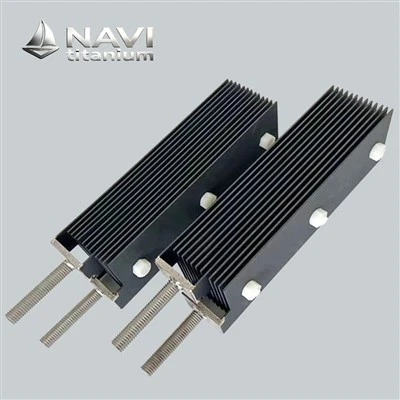

The United States imports more titanium anode rods than almost any other single national market, and the demand splits between two buyer profiles. On one side sits the residential pool salt-chlorination segment, where mixed metal oxide coated rods are specified as service parts for in-line chlorinators on backyard pools. On the other sits industrial and marine impressed current cathodic protection, where plate and tubular anodes are engineered into tanks, pipelines, and harbor structures. The same titanium anode rod supplier base serves both, yet their spec sheets diverge enough that a quotation built for one almost never satisfies the other.
Why the U.S. Market Is Worth a Separate Look (Pool Chlorination + ICCP)
U.S. demand pulls from two non-overlapping buyer profiles, and that is the first thing a sourcing professional notices. One segment runs on a fast replacement cycle, the other on a slow engineered-project cycle, and recognizing which clock applies changes everything from sample policy to documentation.
Two Distinct Buyer Profiles, One Product Family
The pool segment treats a titanium anode rod as a wear item. Salt-chlorinator cells typically run three to five years before the MMO coating is consumed, and the replacement rod is sold into the aftermarket for chlorinator brands that private-label OEM assemblies. The ICCP segment treats the same product family as engineered hardware, where a titanium anode rod is sized against the protected surface area and a design life of ten or twenty years. The titanium anode rod supplier will not price both on one line.
Why North American Pool OEMs Standardize on MMO Rods
Pool cell OEMs across the United States and Canada converge on ruthenium-iridium coated titanium rods because that chemistry tolerates the low salinity inside residential chlorinators while keeping the cell voltage within the chlorinator's power supply rating.

The grade is almost always Grade 1 or Grade 2 commercially pure titanium, and the connector thread is usually M8 or M10. Because the cell is replaced as a unit, the titanium anode rod supplier competes on coating consistency, thread tolerance, and parcel-friendly packaging.
What U.S. Buyers Typically Specify
A good RFQ reads less like a marketing brief and more like a checklist of numbers the buyer's inspection team can verify on receipt. For the pool segment the spec fits on a single page; for engineered ICCP it runs several pages with drawings and acceptance criteria tied back to the rectifier's commissioning plan.

Pool Cell Spec Essentials
A residential pool cell RFQ locks down the rod diameter within a three to five millimeter window, names the titanium grade as Grade 1 or Grade 2, and specifies a ruthenium-iridium MMO coating with a loading in grams per square meter. The thread is almost always M8 or M10, and the length matches the chlorinator housing. The titanium anode rod supplier that returns a single line price with a documented coating loading is the one worth keeping on file.
ICCP Spec Essentials
ICCP buyers write a longer spec. Tubular or ribbon anodes are sized against a current density in amperes per square meter, quoted as a design figure against the rectifier's set-point. The coating chemistry is often iridium-tantalum, the substrate is sometimes Grade 1 titanium tube.
A complete RFQ names the design life, environmental resistivity, and rectifier rating, then asks the titanium anode rod supplier to confirm the proposed anode will meet those numbers with a defined derating factor.
Documents U.S. Buyers Usually Request
Mill test certificates to ASTM B265 come up on virtually every U.S. purchase order, and an ICCP order typically adds a coating thickness record. A certificate of conformance naming the lot, coating type, and inspector's signature is the minimum paper trail. The titanium anode rod supplier that ships the right paperwork with the first shipment tends to be the one that gets the reorder.
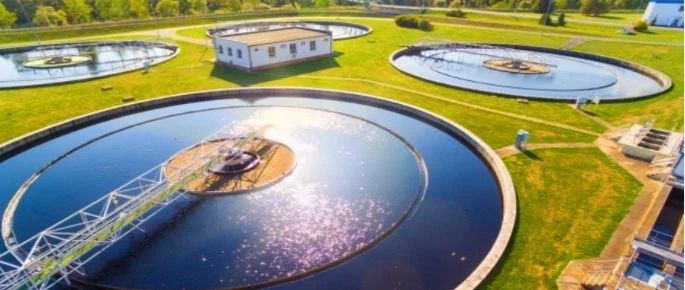
Shipping, Incoterms, and U.S. Import Practicalities
Most U.S. pool-cell orders move by sea under LCL or FCL terms from East Asian production hubs into West Coast gateways such as Los Angeles or Long Beach. ICCP project cargo more often moves door-to-door under DDP terms. Lead time splits into production and transit, with the latter running fourteen to twenty-eight days on the Pacific trades.

Typical Ocean Transit Windows
A container booked out of Shanghai, Ningbo, or Busan into Los Angeles or Long Beach lands in roughly fourteen to eighteen days at sea, plus another three to seven days for terminal handling. East Coast routings via the Panama Canal add ten to fourteen days. The titanium anode rod supplier should be asked for the booked vessel name and the bill of lading number, because those two pieces of information let the buyer align anode delivery with the rectifier commissioning date.
Incoterms That Recur with U.S. Buyers
FOB and CIF are the two most common terms on U.S. purchase orders for pool cells, with FOB favored when the buyer has a contracted freight forwarder. DDP shows up more often on ICCP project orders, where the buyer wants a single delivered price that includes customs broker fees, duty, and final-mile transport.
The titanium anode rod supplier will quote against the same logistics reality when the RFQ names the Incoterm up front.
Pre-Shipment Checklist for U.S. Import
The pre-shipment checklist that catches the most first-time mistakes starts with HS classification under the World Customs Organization's Harmonized System, then confirms country-of-origin marking on each piece and carton, and verifies that any wooden pallets meet ISPM 15 treatment requirements. The buyer who builds this checklist into the purchase order is the one whose shipments clear on the first attempt, and the titanium anode rod supplier who volunteers the checklist before the buyer asks tends to be quoted on the next round.

RFQ-Ready Specs and Common Pitfalls
A pool cell RFQ typically runs between two hundred and two thousand pieces per SKU, with the higher volumes going through distribution rather than direct to the homeowner. An ICCP RFQ is the opposite shape: fewer pieces, larger, with engineered drawings and third-party witness tests built into the order. Most rework costs come from gaps in the hand-off between the buyer's spec and the supplier's engineering judgment.

Pool RFQ Essentials
A clean pool RFQ names the chlorinator brand and model, the cell housing length, the connector thread, and the cable exit orientation, because those four data points let the titanium anode rod supplier confirm the part will drop into the existing housing. Sample policy should be explicit: how many pilot pieces, what tests run on the pilot. Volume commitment, packaging format, and label artwork are usually negotiated on the same call so the supplier returns a single delivered price.
ICCP RFQ Essentials
An ICCP RFQ carries drawings, an engineered current density figure, and an expected design life in years, plus the rectifier set-point and the environmental resistivity of the soil or water. The buyer should also state whether a witness test is required.
A titanium anode rod supplier that has handled ICCP before will price the witness test as a separate line and ask for the rectifier set-point in writing because that figure determines the derating factor.
Two Pitfalls We See Repeatedly
The first pitfall is locking the supplier on rod diameter without confirming the chlorinator housing tolerance, so a rod that meets the diameter spec still binds inside the cell. The second is locking ICCP current density without confirming the rectifier set-point. The middle pitfall is failing to ask the titanium anode rod supplier to mark pilot samples before bulk; a thirty-piece pilot catches issues that would otherwise become a full-batch rejection at the receiving dock.

Conclusion
U.S. sourcing of titanium anode rods works best when the two buyer profiles are kept in separate conversations and on separate purchase orders. Pool cells run on a fast replacement clock with sample-led RFQs and carton-friendly packaging, while ICCP hardware runs on a project clock with drawings, witness tests, and a design life measured in decades. The buyer who names the application, spec, Incoterm, and destination port up front gets the most predictable landed price and the cleanest reorder cycle on each segment of the U.S. market.
FAQ
Q1. What is the typical service life of an MMO titanium anode rod in a residential pool chlorinator?
+
-
Most pool cells run three to five years before the MMO coating is consumed, depending on pool size, run time, salt concentration, and water balance. A buyer can ask the titanium anode rod supplier for a projected hours-of-use figure against the specific operating envelope rather than accept a generic range.
Q2. Can a titanium anode rod supplier ship directly to a residential pool service company?
+
-
Both routes are common. Direct-to-OEM and direct-to-large-distributor shipments move by FCL or LCL through a West Coast gateway, while replacement units for individual pool owners are usually drop-shipped in smaller cartons from a regional distributor's warehouse.
Q3. What documents should a buyer request for an ICCP titanium anode rod shipment?
+
-
The standard set is a mill test certificate to ASTM B265, a coating loading report, a certificate of conformance naming the lot and coating chemistry, and where the project requires it, a witnessed first-article inspection report, with independent lab loading readings sometimes added for marine projects.
Looking for a Reliable Quote on U.S.-Bound Titanium Anode Rods?
NAVI Titanium supplies MMO-coated titanium anode rods with documented coating chemistry, mill trace, and packaging aligned to U.S. import routes into Los Angeles, Long Beach, and the major East Coast gateways. Send your RFQ with application, target current density, dimensions, and destination port to sales@navititanium.com and the team will return a sample plan, an Incoterm-based quotation, and a production-plus-transit calendar your purchasing team can plan against. NAVI Titanium has been manufacturing ruthenium-, iridium-, and platinum-based titanium anodes from its Baoji High-tech Zone base since 2008 and supports material selection, process design, customization, and finished-product delivery for overseas buyers.
References
1. 1. ASTM International. *ASTM B265-25, Standard Specification for Titanium and Titanium Alloy Strip, Sheet, and Plate.* West Conshohocken, PA: ASTM International, 2025.
2. 2. ASTM International. *ASTM B338-17(2026), Standard Specification for Seamless and Welded Titanium and Titanium Alloy Tubes for Condensers and Heat Exchangers.* West Conshohocken, PA: ASTM International, 2026.
3. 3. International Chamber of Commerce. *Incoterms 2020, ICC Publication No. 723E.* Paris: ICC, 2020.
4. 4. International Organization for Standardization. *ISO 9001:2015, Quality Management Systems - Requirements.* Geneva: ISO, 2015.
5. 5. National Association of Corrosion Engineers / AMPP. *SP0169, Control of External Corrosion on Underground or Submerged Metallic Piping Systems.* Houston, TX: AMPP, 2013.
6. 6. World Customs Organization. *Harmonized Commodity Description and Coding System, 2022 Edition, Chapter 81, Heading 81.08 - Titanium and Articles Thereof.* Brussels: WCO, 2022.