


It might sound like magic to turn regular salt into a strong germ killer, but the process is actually a well-known electrical one called electrochlorination. One important part is at the heart of every efficient electrochlorination system: the titanium anode rod. Without it, the reaction simply wouldn't work the way it should. This article walks you through how electrochlorination works, what makes a titanium anode rod so indispensable, and how to choose the right one for your system.
How Does a Titanium Anode Rod Enable Electrochlorination?
Electrochlorination is the process of passing an electric current through a saltwater (brine) solution to produce sodium hypochlorite - a potent disinfectant used in water treatment, swimming pools, and municipal systems. The titanium anode rod serves as the positive electrode in this electrolytic cell, where the actual chlorine evolution chemistry takes place.
When electricity is put on the electrodes, chloride ions (Cl⁻) in the saltwater move toward the surface of the anode. At that surface, oxidation reactions change the chloride ions into chlorine gas (Cl₂). This gas then reacts with the water around it to make hypochlorous acid (HOCl) and hypochlorite ions (OCl⁻), which are what do the disinfecting work.
The Electrochemical Reaction at the Anode Surface
The primary anodic reaction in electrochlorination follows this path:
2Cl⁻ → Cl₂ + 2e⁻
Cl₂ + H₂O → HOCl + HCl
This sequence produces a disinfectant output that is proportional to the current applied, the salt concentration, and the active surface area of the anode. A well-designed titanium anode rod maximizes the chlorine evolution reaction (CER) while suppressing the competing oxygen evolution reaction (OER), which wastes energy without generating any disinfectant.
Why Titanium Is the Base Material of Choice?
Pure titanium, specifically Grade 1 (TA1) or Grade 2 (TA2), is chosen as the base because it has an oxide layer on top of it that is stable and keeps growing. In high-chloride, acidic, or alkaline ions, this inactive layer keeps the metal from rusting. Titanium anodes don't dissolve, pollute the electrolyte, or break down quickly under high current density situations like graphite, stainless steel, or iron anodes do.
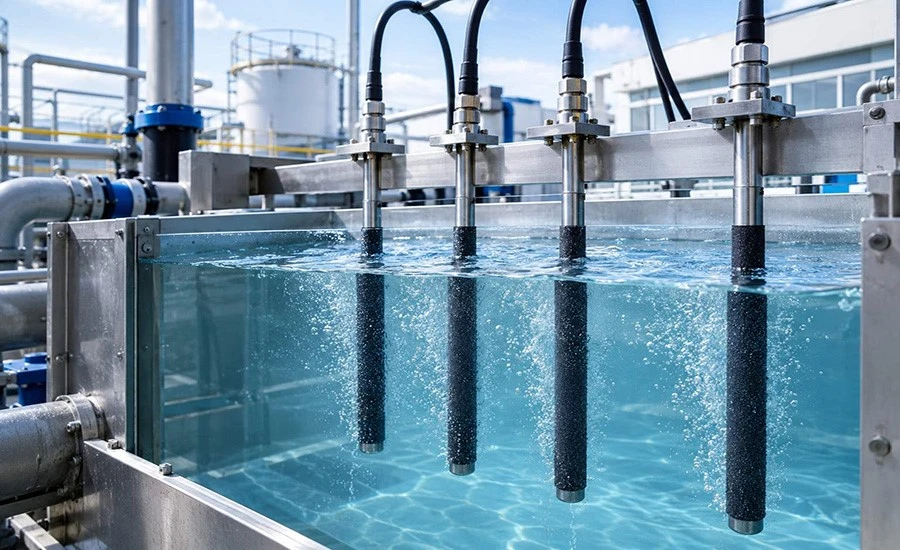
Because it is mechanically hard, it can be precisely made into plates, rods, tubes, or mesh shapes that can fit different reactor designs.
Titanium Anode Rod Chlorine Evolution From Chloride Ions
The electrochemical selection of the anode surface is very important for the chlorine evolution process. Even though a bare titanium substrate doesn't rust, it doesn't help chlorine evolve very well on its own. Its surface passivation stops electrons from moving, which causes the cell voltage to be high, the chlorine output to be low, and energy to be wasted quickly. This is precisely why the titanium anode rod requires a specialized coating to function optimally in electrochlorination.
Competing Reactions and Selectivity Challenges
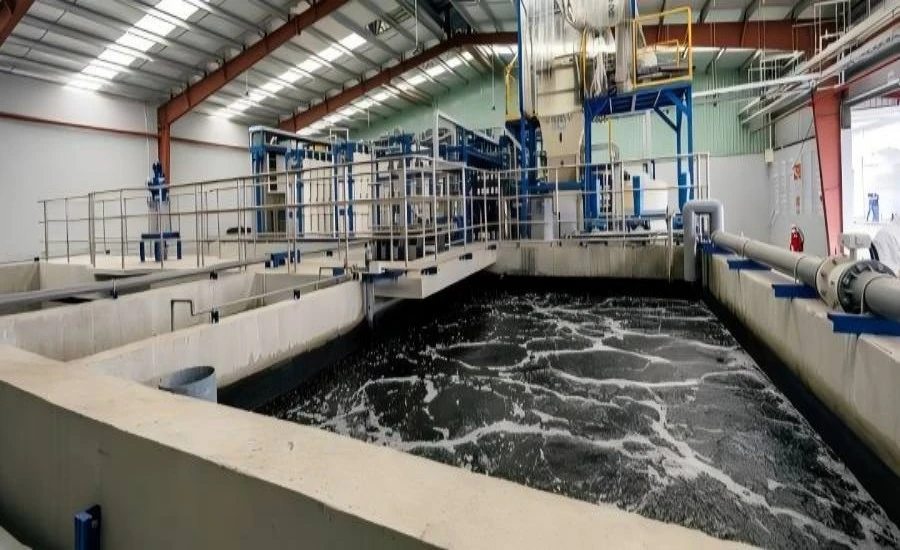
Two reactions compete at the anode in a saltwater electrolyte - chlorine evolution (CER) and oxygen evolution (OER). The OER produces oxygen gas instead of chlorine, consuming electricity without generating any disinfectant:
2H₂O → O₂ + 4H⁺ + 4e⁻
The selectivity ratio between CER and OER determines how efficiently the system converts electrical energy into active chlorine. Research published in electrochemical engineering journals confirms that ruthenium-iridium oxide coatings on titanium substrates achieve CER selectivity above 95% under typical operating conditions (current densities of 100–1000 A/m²), far outperforming uncoated or carbon-based anodes.
How Coating Composition Controls Chlorine Output?
The catalytic coating on a titanium anode rod directly governs which reaction dominates. Ruthenium dioxide (RuO₂) is the primary active phase for chlorine evolution, exhibiting high catalytic activity for Cl⁻ oxidation. Iridium dioxide (IrO₂) adds mechanical stability and resistance to coating dissolution at elevated temperatures and current densities.
Tantalum pentoxide (Ta₂O₅) functions as a structural stabilizer, extending coating adhesion and service life. This combination - the classical IrO₂-Ta₂O₅ or RuO₂-IrO₂ formulation - has become the industry benchmark for high-performance electrochlorination anodes.
Why Does a Titanium Anode Rod Need an MMO Coating?
Mixed Metal Oxide, or MMO, is a multi-component catalytic coating that is put on a titanium base by heating precursor salts and breaking them down at high temperatures (usually 400–550°C). The MMO coating turns a titanium surface that is normally passive into one that is electrocatalytically active. enabling the titanium anode rod to sustain continuous, high-efficiency chlorine evolution over thousands of operating hours.
The Four Functions of MMO Coatings in Chlorine Evolution
An MMO coating on a titanium anode rod performs four simultaneous functions. It lowers the anodic overpotential for chlorine generation, which lowers the voltage in the cell and the amount of energy it uses. It stops substrate passivation by keeping the electrolyte from coming into close touch with bare titanium. It spreads the current evenly across the electrode surface, so there aren't any hot spots that break down the coating too quickly. It also doesn't react chemically with strong brine, hypochlorite, or changes in pH, which would kill most other electrode materials in days.
Gradient Composite Coatings: The Next Step Beyond Standard MMO
Usually, MMO coatings put on a smooth layer of mixed oxides. Leading manufacturers use advanced gradient composite coatings, which build up multiple layers with different compositions from the base layer outward. The layers on the inside focus on sticking together and absorbing stress,
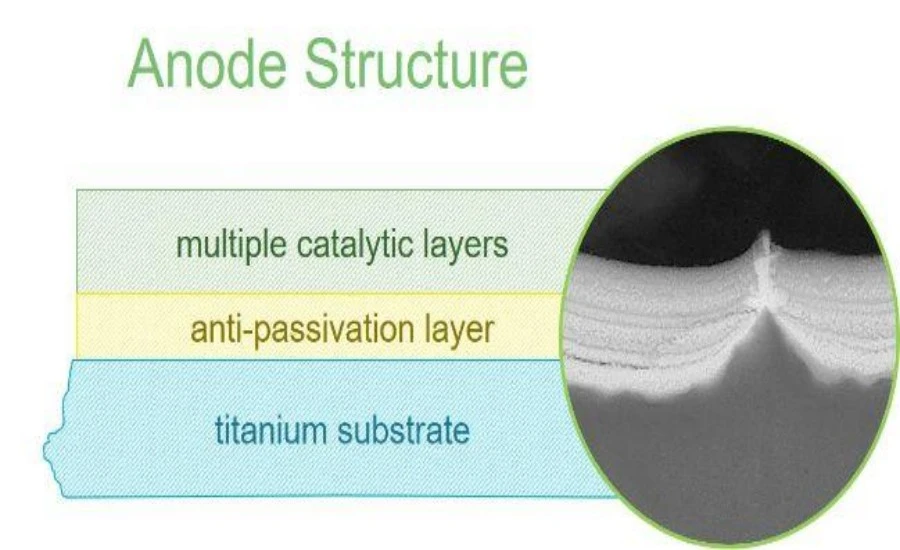
while the layers on the outside focus on chemical activity. This design fixes four typical problems that happen in chlorine evolution electrodes: the spread of microcracks, delamination of the interface, passivation of the substrate, and the entry of chloride ions. Systems using gradient-coated titanium anode rods consistently achieve lower unit energy consumption - in the range of 3.2–3.8 kWh per kilogram of available chlorine - compared to conventional single-layer MMO electrodes.
Titanium Anode Rods in Sodium Hypochlorite Generation
Sodium hypochlorite generators are among the most widespread applications for titanium anode rods worldwide. Small on-site units that make 50 g/h of chlorine for swimming pools and big city sites that make 5000 g/h or more for drinking water treatment and industrial moving water systems are both types of systems.
System Architecture and Anode Configuration
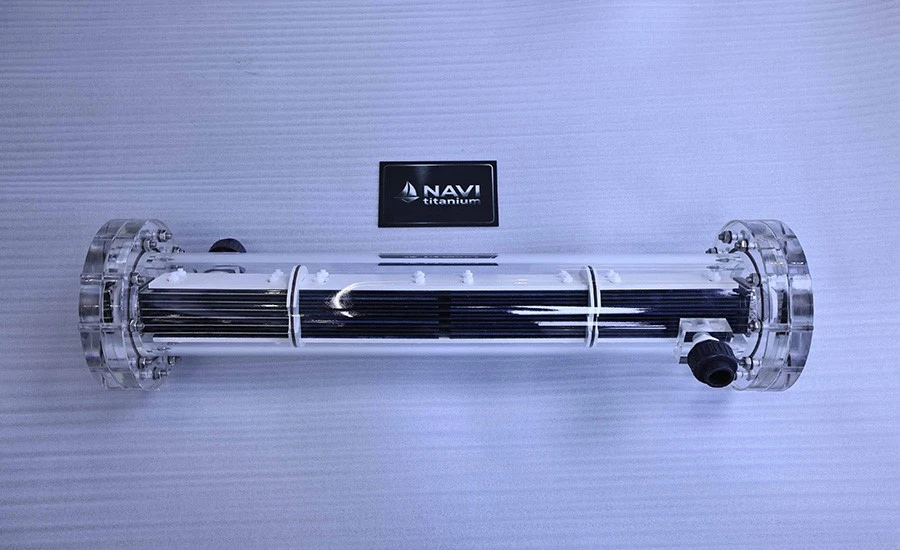
A sodium hypochlorite generator typically houses multiple titanium anode rods arranged in parallel within an electrolytic cell. A salty brine solution (3–6% NaCl) runs constantly through the cell, and when needed, the anodes break down chloride ions to make hypochlorite solution. The diameter, length, and spacing of the rods are designed to match the desired current distribution and flow dynamics of each system. NAVI Titanium's ruthenium-iridium-titanium anodes can handle up to 5000 g/h of flow rate, which makes them useful for treating garbage in cities, disinfecting swimming pools, making drinking water, running water systems in factories, and keeping oceans free of algae.
Performance Benchmarks in Continuous Operation
Under continuous 24-hour operating conditions - which are standard in municipal and industrial deployments - the titanium anode rod must maintain stable chlorine output without voltage drift or coating deterioration.
Electrochemical engineering study groups have found that ruthenium-iridium MMO anodes keep more than 90% of the chlorine evolution activity they had at the start even after being used nonstop for 8,000 hours in 30 g/L NaCl solutions. With high-quality substrate pretreatment and optimized coating processes, you can get a service life of more than 8–10 years under controlled operating conditions. This is a standard that lowers the total cost of ownership for electrochlorination plant operators by a large amount.
How to Match a Titanium Anode Rod With Electrochlorination Systems?
Selecting the right titanium anode rod for an electrochlorination application requires matching several technical parameters to the specific operating environment. Getting this selection right from the start prevents premature electrode failure, avoids unnecessary energy waste, and ensures consistent disinfectant output over the full system lifecycle.
Key Parameters: Current Density, Coating Type, and Geometry
Current density is the most critical operating variable. Titanium anode rods with ruthenium-iridium MMO coatings operate reliably across a wide range - from 10–50 A/m² in low-intensity cathodic protection applications to 2000–5000 A/m² in high-throughput industrial electrolysis. Operating current levels are usually between 100 and 800 A/m² for making sodium hypochlorite in diluted brine (2–5% NaCl). The formulation of the coating should match the reaction that is wanted: For chlorine evolution, RuO₂-IrO₂ is used. For oxygen evolution or mixed-service environments, IrO₂-Ta₂O₅ is used. The shape-rod, plate, tube, or mesh-depends on the type of reactor, the flow, and the amount of active surface area that is needed.
Custom Fabrication and Technical Support
Not every electrochlorination system uses standardized electrode dimensions. Retrofit projects, specialized reactor geometries, or high-capacity municipal upgrades often require custom-fabricated titanium anode rods with specific diameters, lengths, hole patterns, or connection interfaces.
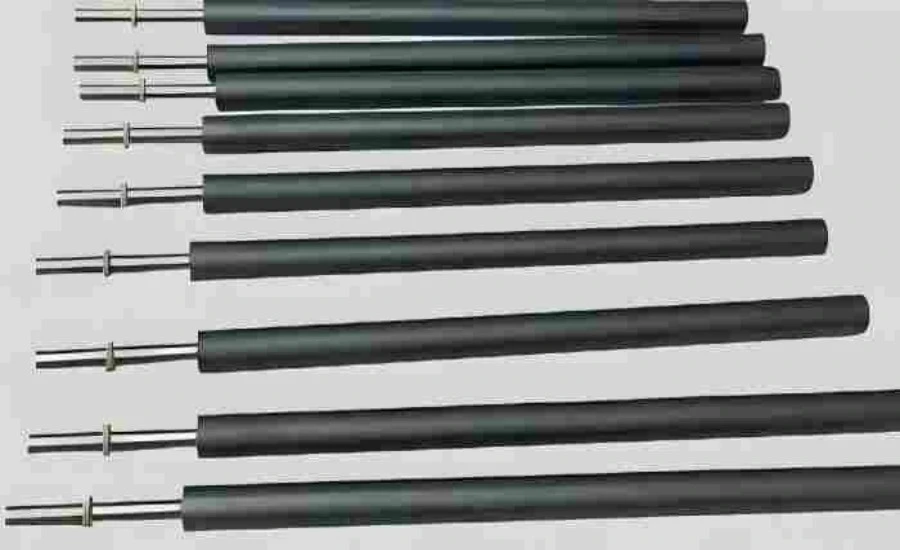
Working with a manufacturer that offers engineering consultation, process design support, and custom fabrication capability - rather than only catalog products - substantially reduces integration risk and commissioning time.
Conclusion
The titanium anode rod is not a commodity component - it is the electrochemical engine of every electrochlorination system. Its performance determines chlorine output efficiency, energy consumption, system reliability, and long-term operating costs. Choosing a properly coated, correctly dimensioned titanium anode rod, backed by rigorous substrate pretreatment and gradient MMO coating technology, is the single most impactful decision in electrochlorination system design.
FAQ
1. What is the typical service life of a titanium anode rod used in electrochlorination?
+
-
An 8–10-year-old high-quality ruthenium-iridium MMO-coated titanium anode rod can work well as long as the current density stays stable, the brine concentration stays the same, and the flow is managed correctly. The two things that have the most impact on life are the quality of the substrate preparation and the structure of the finish.
2. Can a titanium anode rod work in both dilute and concentrated brine systems?
+
-
Yes. A properly chosen MMO-coated titanium anode rod can work in a lot of different chloride concentrations, from saltwater that is only 3.5% NaCl to industrial brine that is 25–30% NaCl. To get the best efficiency and coating durability, the coating formulation and current density range should be matched to the specific concentration of the brine and the desired chlorine output.
3. How does a titanium anode rod compare to graphite or stainless steel anodes in electrochlorination?
+
-
In chloride-rich solutions, graphite anodes wear away all the time, polluting the product stream and needing to be replaced often. Under anodic polarization in salty solutions, stainless steel anodes rust, letting out metal ions that clog the system. A titanium anode rod coated with MMO is inert, stable in size, and keeps working at the same level of electrochemistry for thousands of hours. This makes it the best choice for modern electrochlorination systems from both a technical and financial point of view.
Ready to Upgrade Your Electrochlorination System? Contact NAVI Titanium
NAVI Titanium has specialized in high-performance titanium anode rod manufacturing since 2008, with production based in Baoji - China's recognized center of titanium expertise. Every anode we produce combines high-purity TA1/TA2 titanium substrates with precision-applied ruthenium-iridium MMO coatings, delivering electrode resistance as low as ≤0.02 Ω and service life exceeding 8–10 years under continuous operation. As a trusted titanium anode rod supplier, NAVI Titanium covers the full range from 50 to 5000 g/h sodium hypochlorite generator projects, with free samples available for standard specifications and one-on-one technical support at no charge.
Whether you need standard catalog anodes or fully custom-fabricated solutions, our engineering team is ready to help you select, design, and deploy the right anode system for your application.
Reach our sales team directly: sales@navititanium.com
References
1. Trasatti, S. (1991). Physical electrochemistry of ceramic oxides. Electrochimica Acta, 36(2), 225–241.
2. Comninellis, C., & Vercesi, G. P. (1991). Characterization of DSA-type oxygen evolving electrodes: Choice of a coating. Journal of Applied Electrochemistry, 21(4), 335–345.
3. Kuhn, A. T., & Mortimer, C. J. (1973). The kinetics of chlorine evolution and reduction on titanium-supported metal oxides especially RuO₂ and IrO₂. Journal of the Electrochemical Society, 120(2), 231–236.
4. Kraft, A. (2008). Electrochemical water disinfection: A short review. Platinum Metals Review, 52(3), 177–185.
5. Beer, H. B. (1972). The invention and industrial development of metal anodes. Journal of the Electrochemical Society, 127(8), 303C–307C.
6. Panizza, M., & Cerisola, G. (2009). Direct and mediated anodic oxidation of organic pollutants. Chemical Reviews, 109(12), 6541–6569.



