


Bacteria, algae, and viruses that live in swimming pool water could really hurt your health. Still, chlorine is the best way to get rid of these threats, but the way it is made makes a huge difference. Electrochemical disinfection using a titanium anode rod has become the preferred solution for modern pool systems, from residential saltwater pools to large municipal aquatic facilities.
This guide explains exactly how a titanium anode rod works in pool disinfection, what coating technologies drive performance, and how to choose the right electrode for your application.
How Does a Titanium Anode Rod Disinfect Swimming Pool Water?
The Electrochemical Mechanism Behind Pool Disinfection
A titanium anode rod starts an oxidation reaction at the surface of a saltwater pool when an electric current flows through it. Chloride ions (Cl-) turn into chlorine gas (Cl2) when they mix with water. Once Cl2 meets water, it quickly changes into hypochlorous acid (HOCl) and hypochlorite ions (OCl-). These are what kill germs and stop viruses from working.
The name of this process is the chlorine evolution reaction (CER), and it works really well if a valuable metal layer is carefully placed on the anode surface. The titanium base makes the system strong and immune to rust, and the layer drops the amount of overpotential that is needed to make chlorine. As a whole, this keeps the system stable and saves energy.
Why Titanium Outperforms Conventional Anode Materials?
The graphite electrodes quickly break down in chloride media that are oxidizing, adding carbon particles to the water in the pool. When exposed to anodic polarization, stainless steel passesivates.
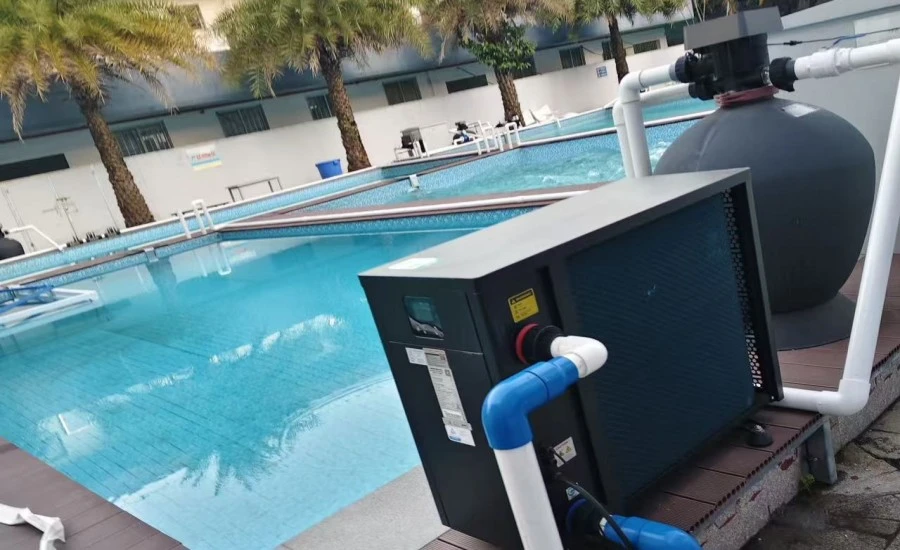
After a few weeks, it stops carrying electricity. Iron and copper rust quickly and give off metal ions that can stain water and hurt pool surfaces.
A titanium anode rod made from industrial-grade pure titanium (TA1/TA2) resists all of these failure modes. The base metal creates a solid, self-renewing oxide layer that keeps the substrate from dissolving, even when electrolysis goes on for 24 hours straight. When combined with an active coating, it maintains a constant chlorine output over years of use, which is an achievement that no other material can match.
Titanium Anode Rods for Saltwater Chlorine Generation
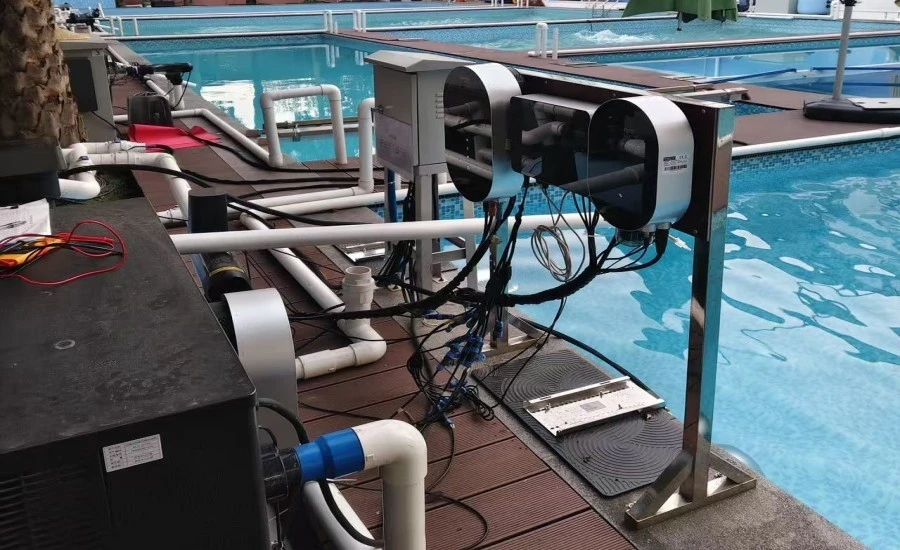
How Salt Chlorination Systems Use Titanium Anodes
Salt chlorination systems - sometimes called saltwater chlorinators - dissolve sodium chloride (NaCl) at low concentrations (typically 2,500–4,000 ppm) into pool water. An electrolytic cell containing a titanium anode rod splits the salt solution, generating chlorine on-site and on-demand without storing or handling hazardous chemicals.
This approach eliminates the logistical and safety challenges tied to manual chlorine dosing. The titanium anode rod operates continuously within the electrolytic cell, producing a steady, controllable stream of active chlorine that keeps disinfection residuals within safe limits at all times. Electrochemical engineering material says that in ideal conditions, dimensionally stable anodes (DSA), which are made up of precious metal-coated titanium electrodes, can achieve chlorine current values of more than 85%.
Operational Advantages in Commercial and Residential Pools
In commercial aquatic facilities, chemical consistency is a regulatory requirement.
A titanium anode rod integrated into an automated electrolysis cell allows operators to dial in chlorine output precisely, reducing the risk of under- or over-dosing. The same method is used to chlorinate saltwater pools in homes. This method makes the water feel softer, saves money on chemicals, and causes less pain to the eyes and skin than traditional tablet-based chlorination.
Mixed metal oxide (MMO) titanium anodes are dimensionally stable, which means that the form of the electrode will not change during its service life. The geometric stability of the flow patterns inside the electrolytic cell means that the rate of chlorine production can be predicted over the electrode's useful life.
How Does a Titanium Anode Rod Produce Active Chlorine?
The Electrochemistry of Chlorine Evolution at the Anode Surface
At the surface of a coated titanium anode rod, the primary reaction is:
2Cl⁻ → Cl₂ + 2e⁻
The chlorine gas dissolves almost immediately into the water phase:
Cl₂ + H₂O → HOCl + HCl
At pH levels between 6.5 and 7.5, which is what most pool systems aim for, hypochlorous acid (HOCl) is the main disinfectant. Its molecular, noncharged form easily gets through the cell membranes of microbes, messing up their metabolic pathways and stopping them from working within seconds.
At the anode, there is also a competing oxygen evolution process (OER). High-performance coatings stop the OER and boost the CER, turning as much of the electrical energy as possible into a useful disinfectant. The ruthenium-iridium oxide (RuO₂-IrO₂) covering method is the standard way to get this level of selection at normal current rates.
Coating Composition and Its Effect on Chlorine Yield
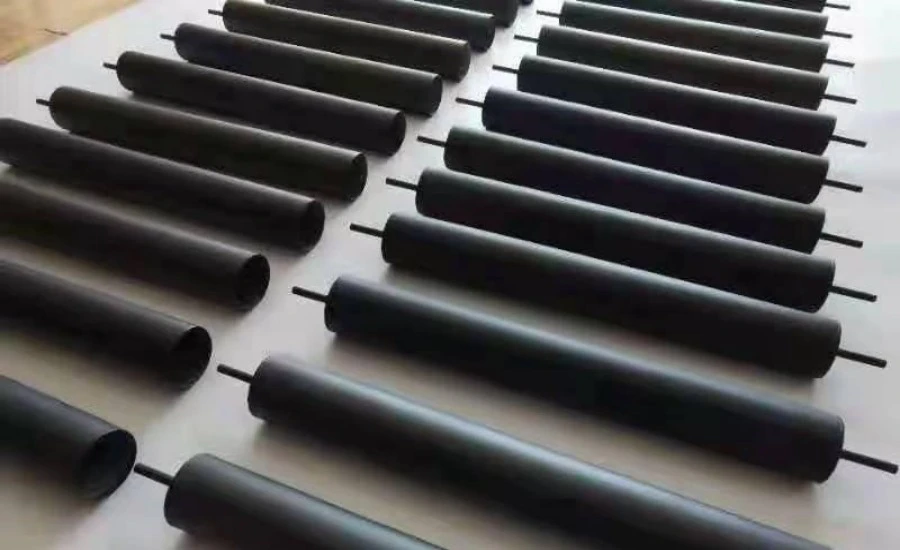
How well the covering works, how long it lasts, and the overpotential are all affected by the exact amounts of RuO 2 and IrO 2. Ruthenium oxide raises the activity for chlorine evolution and lowers the voltage in the cell. Iridium oxide makes the covering more stable against rust corrosion and makes it last longer. Adding tantalum oxide (Ta2O5) strengthens the oxide lattice structure and lowers the number of microcracks that form during heat cycle.
NAVI Titanium makes its Ru-Ir mixtures for electrolysis uses that need to work continuously and with a lot of salt. The layer is usually between 2 and 15 microns thick. It is thin enough to keep the valuable metal from adding too much weight and cost, but thick enough to keep the catalytic activity going for the 8 to 10 years that the product is supposed to last.
Titanium Anode Rod Coatings for Continuous Pool Disinfection
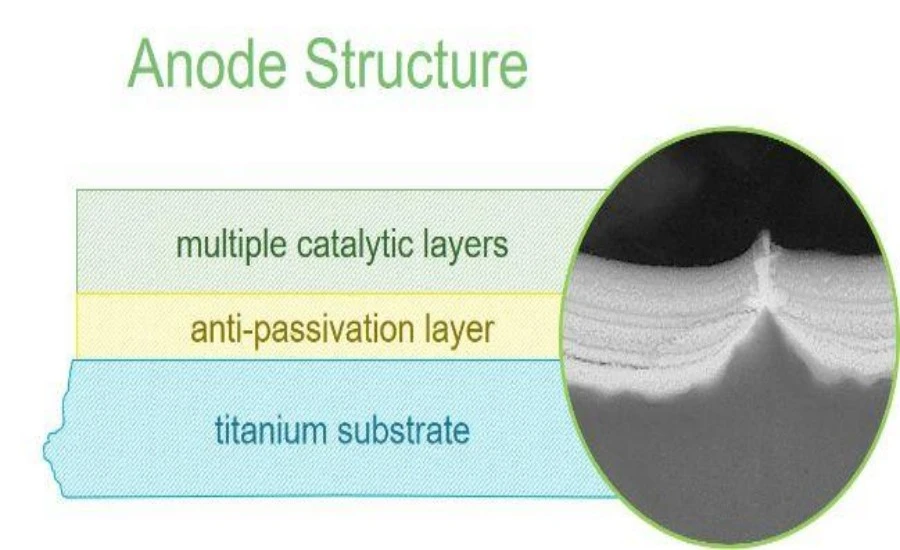
Comparing Coating Systems for Long-Duration Pool Applications
There are four main types of coatings on the market: single-layer pure ruthenium, single-layer standard ruthenium-iridium, uniform uniform MMO, and gradient composite coatings. Each one strikes a different mix between cost, exercise, and longevity.
Pure ruthenium surfaces have a lot of chlorine-evolving action at first, but they break down pretty fast in the harsh, chloride-filled environment of a pool electrolysis cell. Adding iridium to standard Ru-Ir single-layer coatings makes them last longer, but over time, stress buildup at the coating-substrate interface can still cause delamination.
Gradient composite coatings get around this problem by changing the composition of the coating as it goes deeper. They go from a layer that bonds to the substrate and is best at sticking to it, through a zone that relieves stress, to a layer on the surface that is tuned for maximum CER selectivity. Microcracking, delamination, substrate passivation, and chloride ion penetration are the four main failure modes that this architecture makes much less likely to happen.
Why Coating Adhesion Matters for Pool Systems
Not only does a delaminating layer lower performance, it also adds loose oxide particles to the water stream, which can clog up equipment further downstream and mess up the hydraulics of the electrolytic cell. A must-have quality for pool-grade electrodes is strong coating adhesion, which can only be achieved by pretreating the titanium substrate with acid etching and surface roughening.
Before coating is applied, NAVI Titanium changes the base in several steps. This makes sure that the precious metal oxide layer actually bonds physically to the titanium surface, rather than just sitting there as a thin film.
How to Select a Titanium Anode Rod for Pool Systems
Key Parameters to Evaluate Before Purchasing
The key to selecting the right titanium anode rod is matching electrode characteristics to system operating circumstances. The most important element is the working current density range. Pool electrolyzers are often operated in the range of 100 to 500 A/m2, while commercial high output generators may be operated up to 2,000 A/m2 . The electrode must be given an active coating compatible with the current density to be used and not subject to rapid wear.
Coating degradation kinetics is a function of electrolyte salinity, water temperature, pH range and duty cycle (continuous vs. intermittent). An electrode designed for occasional usage in a home setting will not work well, and will fail prematurely in a commercial facility operating continuous electrolysis 24/7.
Rod geometry - diameter, length, and surface area - determines the volumetric chlorine output rate. NAVI Titanium manufactures titanium anode rods in plate, rod, mesh, and tube geometries, with full customization available to match proprietary cell designs.
Working With a Reliable Titanium Anode Rod Supplier
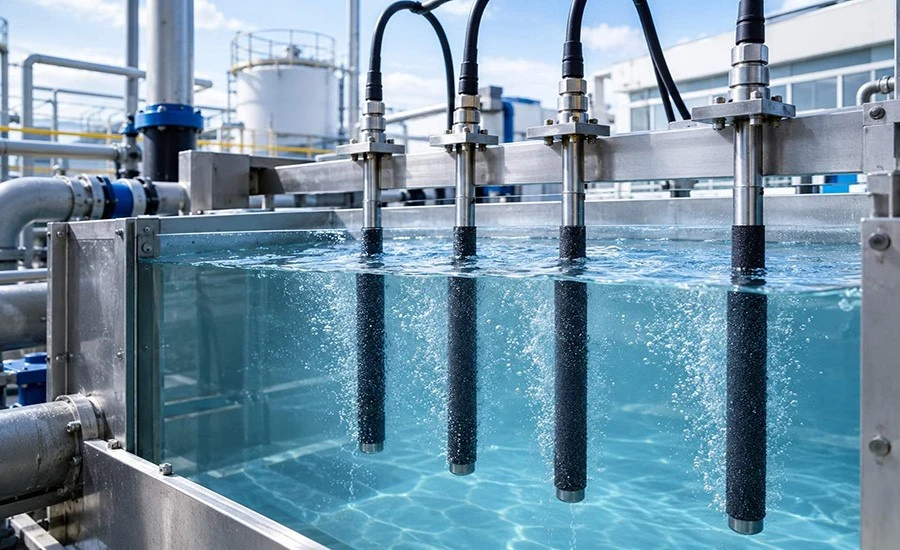
Price alone shouldn't be the only thing that guides purchases. When it comes to the real total cost of ownership, the coating quality, material clarity, prior rigor, and professional help after the sale are all important factors. A trustworthy titanium anode rod supplier will give you full material traceability, certification of the coating composition, and written data on the rod's service life under conditions similar to your application.
Electric and chemical parts have been sold by NAVI Titanium since 2008. The company offers free samples for basic needs, provides one-on-one expert help, and comes up with its own methods. This reduces the engineering risk that comes with adding new electrode technologies to pools that are already in use.
Conclusion
A titanium anode rod with a precision-engineered precious metal oxide coating is the most reliable, energy-efficient, and durable solution for electrochemical swimming pool disinfection available today. Every part of this technology has been improved over many years of industrial growth, from the electrochemistry of chlorine generation to the design of the covering and the integration of the system. Choosing the right electrode for your pool system based on its shape, coating type, and current density is what will determine whether it works well for a long time or breaks down quickly.
FAQ
Q1: Can a titanium anode rod be used in both freshwater and saltwater pool systems?
+
-
A titanium anode rod is designed primarily for saltwater (chloride-rich) electrolysis environments where the chlorine evolution reaction can proceed efficiently. In freshwater pools with low salinity, more sodium chloride needs to be added to get enough chloride ions to make a lot of chlorine. The 2,500 to 4,000 ppm NaCl level is where most electrolytic pool systems work.
Q2: How long does a titanium anode rod last in a swimming pool disinfection application?
+
-
Under controlled operating conditions - appropriate current density, stable water chemistry, and regular system maintenance - a high-quality coated titanium anode rod achieves a service life of 8–10 years. Gradient composite coating architectures, such as those manufactured by NAVI Titanium, extend this lifespan by mitigating microcracking and delamination at the coating-substrate interface.
Q3: What is the difference between an MMO titanium anode and a platinum-coated titanium anode for pool use?
+
-
MMO (mixed metal oxide) anodes have a ruthenium-iridium oxide layer that speeds up the chlorine evolution process only. This makes them very good at cleaning saltwater pools. Platinum-coated titanium anodes are more electrochemically flexible and have great corrosion resistance, but they usually cost more because they are made of precious metals. Ru-Ir MMO coatings give the best value for money when it comes to chlorine production for pools. They last the longest and produce the most chlorine.
Ready to Upgrade Your Pool Disinfection System? Contact NAVI Titanium Today
NAVI Titanium has been a trusted titanium anode rod supplier since 2008, delivering precision-coated electrodes to pool disinfection projects across municipal, commercial, and residential scales. With in-house gradient coating technology, substrate modification expertise, and full customization capability, NAVI Titanium engineers electrodes built to operate continuously for 8–10 years - cutting energy costs by up to 25% and eliminating frequent replacement cycles. Whether you need a standard specification or a fully bespoke electrolytic cell component, NAVI Titanium's technical team is ready to assist at every stage, from material selection through finished product delivery.
Send your inquiry today: sales@navititanium.com
References
1. Trasatti, S. (2000). Electrocatalysis: Understanding the success of DSA®. Electrochimica Acta, 45(15–16), 2377–2385.
2. Comninellis, C., & Vercesi, G. P. (1991). Characterization of DSA-type oxygen evolving electrodes: Choice of a coating. Journal of Applied Electrochemistry, 21(4), 335–345.
3. Kraft, A. (2008). Electrochemical water disinfection: A short review. Platinum Metals Review, 52(3), 177–185.
4. Martínez-Huitle, C. A., & Ferro, S. (2006). Electrochemical oxidation of organic pollutants for the wastewater treatment. Chemical Society Reviews, 35(12), 1324–1340.
5. Karlsson, R. K. B., & Cornell, A. (2016). Selectivity between oxygen and chlorine evolution in the chlor-alkali and chlorate processes. Chemical Reviews, 116(5), 2982–3028.
6. Brillas, E., & Martínez-Huitle, C. A. (2015). Decontamination of wastewaters containing synthetic organic dyes by electrochemical methods. Applied Catalysis B: Environmental, 166–167, 603–643.



