
When operating filtration systems under demanding conditions, the foundation of reliable performance lies in choosing the right materials. High-pressure environments place extraordinary demands on filter elements, requiring careful consideration of mechanical strength, porosity control, and long-term durability. Understanding how sintered metal powder characteristics influence filter performance becomes essential for industries ranging from hydrogen production to petrochemical processing.
The material choices made during filter manufacturing directly impact operational safety, maintenance intervals, and overall system efficiency. This comprehensive guide explores the critical factors that engineers and procurement specialists must evaluate when selecting sintered metal powder for pressure-intensive applications.

1.Specification
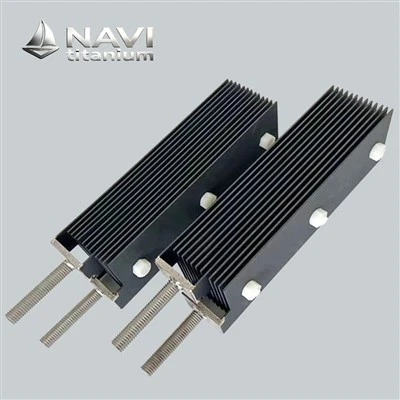
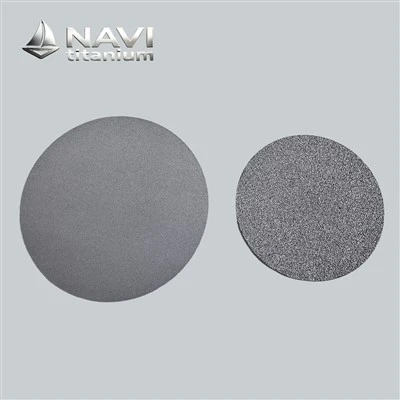
Product name: Sintered Metal Powder
Internal Code: NAVI-2-002
Brand: NAVI Titanium®
General Shapes: Round, disc, sheet, tube, round, bar, cap or customization
Raw materials:
(1)Titanium---0A grade pure powder
(2)Stainless steel---/SS304/SS316/SS316L etc.
(3)Nickel---Nickel base alloys/MONEL/INCONEL/Hastelloy(C22/C276)
(4)Bronze---0A grade pure powder
Advanced fields of NAVI: PEM, semiconductor & electronics, pharmaceuticals etc.
2.Purchasing guide
(1)Process
NAVI Titanium(since 2008) can process according to your design drawings
(2)Sample
Effective, economic, high quality
Only take the basic cost of molds for custom product, Sintering together for sample orders, Zero unqualified
(3)Technology support
Professional one-for-one service, welcome to contact us
How Should Sintered Metal Powder Be Selected for High-Pressure Filters?
Choosing the right sintered metal powder for high-pressure filtration means looking at a lot of different factors that affect both how well it works right away and how reliable it will be in the long run. Before you can make a choice, you need to know exactly what operating conditions your system will face.
Understanding Operational Requirements and Pressure Ratings
Ratings for pressure set the standard for choosing materials. For systems that work above 10 MPa, the powders need to have natural mechanical qualities that make strong shapes when they are sintered. The shape of the metal powder particles affects how they stick together during sintering, which in turn affects the finished filter element's compressive strength. When it comes to packing density, spherical powder particles usually do a better job than irregular forms. This helps make the mechanical behavior under stress more reliable.
Chemical compatibility adds another layer to the decision process. When you mix corrosive media with high pressure, you get tough conditions where things break down faster. High-purity titanium powder is very good at stopping stress corrosion cracking caused by chloride. This makes it useful for uses involving seawater or brine solutions that are under pressure. The amount of oxygen in titanium powder affects both its ability to resist corrosion and its mechanical properties.


Evaluating Powder Particle Size Distribution
The basic pore structure of sintered filters is based on how the particle sizes are spread out. Engineers can make filters with specific permeability properties while keeping the structure's integrity when the distribution is carefully controlled. Coarser powder fractions make the material more porous and permeable, while finer particles fill in the gaps between the larger particles, making more contact points between them and making the material stronger.
By making gradient structures, multi-modal powder distributions are useful for high-pressure uses. A base layer with smaller particles gives mechanical strength, and layers with bigger and bigger powder help faster flow rates. This way of building improves both the efficiency of the filter and the resistance to pressure within a single component. Scientists who study materials have found that powder with controlled particle sizes between 20 and 45 micrometers can be used to make structures that can withstand pressures higher than 15 MPa while still having enough holes for effective filtration.
To get the best particle bonding without making the powder too dense, which would make it less permeable, the sintering temperature and time must be carefully chosen for each powder mixture.
High-Strength Sintered Metal Powder for Pressure-Resistant Porous Filter Elements
To keep the porosity while still providing pressure resistance, you need powder formulas that are made just for structural uses. The performance range of the finished filter is mostly set by the qualities of the sintered metal powder before it is sintered.
Material Selection for Maximum Strength-to-Weight Performance
Powders made from titanium have a very high strength-to-weight ratio, which makes them ideal for uses where weight is limited and pressure needs to be applied. Titanium is naturally mechanically stable because its crystal structure is hexagonal and close-packed. Its passive oxide layer also protects against rusting, even in harsh chemical conditions. For PEM water electrolysis uses, high-purity titanium powder with less than 0.15% oxygen allows for the structural integrity and electrical conductivity needed for the job to be done well.
Powder metals based on nickel offer different options for high-temperature and high-pressure uses. At high temperatures, where titanium might creep deform, these materials keep their mechanical properties. Stainless steel powder grades, especially 316L formulations, are cost-effective options for moderate pressure applications and have great resistance to corrosion in general.
Powder Purity and Its Impact on Structural Integrity


Impurities in metal powder act as stress concentration points in structures that have been fused, which could cause cracks to spread when the pressure is applied and removed repeatedly. High-purity powders reduce these defect spots, which helps improve resistance to fatigue and increase service life. When making powder, methods that use gas atomization usually get better purity levels than methods that use mechanical comminution.
Interstitial elements like carbon, nitrogen, and oxygen have a big effect on the mechanical qualities of a material. Some interstitial substance makes the material stronger through solid solution stiffening, but too much of it makes it less flexible and more brittle, which is not good for use in pressure vessels. To keep interstitial pollution under control during production and storage, powder makers use vacuum or inert atmosphere processes.
Chemical composition analysis, particle size distribution measurement, and apparent density determination are some of the tests that are used to check the quality of powder. Together, these factors tell makers how the powder will behave during the pressing and heating processes,
which helps them keep the quality the same from one production batch to the next.
Sintered Metal Powder Selection for High-Temperature and High-Pressure Conditions
When working in harsh conditions, you need to be very careful when choosing materials because they need to be able to handle heat expansion, rust resistance, and mechanical property loss at high temperatures.
Temperature Stability and Oxidation Resistance
Conditions with a lot of heat speed up oxidation processes that can weaken filters over time. When choosing a material, it's important to think about the service temperature range and the make-up of the air. Titanium stays structurally stable and doesn't rust at temperatures up to 350°C as long as air contact is kept under control. Once this point is reached, protective coatings or other materials are needed.
Nickel-based superalloy powders work great in high-temperature situations because they keep their mechanical strength at temperatures above 600°C. These materials don't rust because stable chromium oxide scales form on top of them and protect the metal structure below. To get the best inter-particle bonding that can withstand thermal cycling without microcracks, the powder particle size and sintering parameters must be optimized.
Thermal Expansion Matching and System Integration

When the filter element and housing parts have the same thermal expansion rate, stress doesn't build up when the temperature changes. When two different materials expand at different rates, they create interface forces that can break seals or damage structures. When choosing a sintered metal powder, the whole system's parts should be taken into account to make sure they work with the heat.
Powder blending techniques make it possible to make composite structures with specific thermal expansion properties. When you mix titanium sintered metal powder with small amounts of ceramic particles, you change the general expansion coefficient while keeping the metal matrix's flexibility benefits.
Balancing Sintered Metal Powder Porosity With Filter Mechanical Strength
A big challenge in filter design is finding the best balance between the needs for high permeability and structural strength. This balance is especially important in high-pressure situations where not having enough strength can cause a catastrophic failure.

Porosity Control Through Powder Gradation
The porosity of sintered structures is directly affected by powder gradation, which is the ratio of different particle size fractions. A small particle size distribution makes pores of the same size, which makes flow patterns predictable, but it may cost tensile strength. Structures with wider ranges have pores of different sizes and are stronger because the particles are packed more tightly, but they don't filter as precisely.
Engineers use computer models to guess how different types of powder will work after they are sintered. These models take into account how particles move around during compaction, how necks form during sintering, and how the pore network shape changes as a result. The models help with the creation of powder formulations, which cuts down on the number of experiments needed to reach the desired results.
Compression Molding Parameters and Density Control
When a filter element is being made, the compaction pressure changes the green density,
which is the pre-sintered compact density. Parts that are sintered and have higher green densities tend to be stronger and have fewer holes. To get the best pressure resistance, you need to find the right balance between the compaction pressure needed to make enough particle contact for bonding and the open pore structure needed for filtration.
With isostatic pressing, pressure is applied evenly in all directions. This makes the density more stable in complex shapes than with uniaxial pressing. When filter elements have different wall thicknesses or complicated internal channels, this uniformity is useful.
Sintering Atmosphere and Temperature Optimization
The conditions of sintering have a big effect on the final quality of metal powder parts. Controlling the atmosphere stops oxidation and lets particles diffuse and bond in the best way possible. Vacuum sintering gets rid of surface oxides and helps metals connect cleanly with each other, which makes the strongest parts possible.

Hydrogen environment sintering lowers oxide films and makes the material thermally conductive so that it heats evenly. Picking the right temperature sorts out different factors that are at odds with each other. Higher temperatures improve the bonds and strength between particles, but they also cause grains to grow and become denser, which reduces the number of pores. Controlled heating and cooling rates during multiple stages of sintering improve both strength and permeability.
Specialized Sintered Metal Powder for Reliable High-Pressure Filtration Structures
For more complex uses, you need powder mixes that are specially made to meet performance needs that go beyond normal market grades.

Customized Powder Formulations for Application-Specific Requirements
PEM electrolysis systems need filter elements that can withstand high pressures, conduct electricity, and not rust. Customized formulations of low-oxygen titanium powder are made to meet these needs. As long as the oxygen level stays below 0.12%, the porous structure will conduct electricity well and prevent corrosion in acidic electrolyte environments.
Technologies for particle surface treatment change the properties of powder without changing its bulk composition. Coatings on the surface can make sintering work better, which lets you process at lower temperatures that keep the small microstructures. These processes make the mechanical qualities better while keeping the exact measurements needed for filter elements that need to be within a certain range.
Quality Assurance and Batch Consistency
To make sure that high-pressure filter elements work as expected, the powder batches must be very consistent.
Changes in the properties of powder from one production lot to the next cause performance differences that make quality control and predicting reliability harder. Reliable providers of sintered metal powder use strict testing methods to make sure that every production batch has the right makeup, particle size distribution, flowability, and apparent density. Statistical process control methods keep an eye on the features of powder over time and spot trends before they lead to material that doesn't meet specifications. This proactive quality management keeps production from stopping and makes sure that filter elements always work the way that important applications need them to.
Long-Term Performance and Service Life Optimization
When filters are used under high pressure, they go through cycles of mechanical stress, possible corrosion, and clogging of pores from dirt and other particles. The choice of material affects how these processes of decline work over time. Structures that are resistant to stress crack initiation and spreading are made with high-purity powders and optimized sintering.

Long-term stability is based on the microstructure that is created by the powder's properties and the processing conditions. When it comes to fatigue resistance, fine, uniform grain structures usually do better than coarse, irregular microstructures. These helpful microstructural features are made possible by controlled powder processing and sintering optimization.
According to research data from accelerated life tests, filters made from carefully chosen sintered metal powder keep their structural integrity through more than 10,000 rounds of maximum rating pressure. This means that industrial systems will need less maintenance and have longer service intervals.
Conclusion
To choose the right sintered metal powder for high-pressure filtration uses, you need to look at the qualities of the material, the processing factors, and the operating needs. The features of the powder that are set before it is manufactured have a big impact on how well the finished filter elements work.
Controlled particle sizes and high purity make structures that are sintered in a way that balances mechanical strength with the porosity needed for filtration to work. Specialized formulations are used to deal with problems like working at high temperatures, in corrosive environments that corrode, or where electrical conductivity is needed in electrochemical applications.
Buying good powder materials from reputable sellers is an investment that pays off in the long run because they last longer, work reliably, and cause fewer system failures. As businesses keep moving toward more difficult working conditions, specialized metal powders play an even more important role in making these technologies possible.
FAQ
Q: What particle size range of sintered metal powder is optimal for filters operating above 10 MPa?
+
-
A: Powder with particles between 20 and 45 micrometers usually gives the best mix of mechanical strength and controlled porosity for high-pressure uses above 10 MPa. This range lets enough inter-particle bonding happen during sintering while keeping enough open pores for filtration. Multi-modal distributions that combine this main range with smaller amounts of finer particles improve structure stability even more without lowering permeability too much.
Q: How does oxygen content in titanium powder affect high-pressure filter performance?
+
-
A: The amount of oxygen in sintered titanium screens has a direct effect on both their mechanical qualities and their ability to prevent corrosion. Lower oxygen levels, especially below 0.15%, make the material more flexible and difficult to break, which are important properties for pressure tank use. Also, less air makes it easier for electricity to flow, which is important for PEM electrolysis filter elements. Titanium powder that is very pure and low in oxygen is used to make filters that are very resistant to fatigue when they are loaded and unloaded many times.
Q: Can sintered metal filters maintain porosity while achieving pressure ratings suitable for industrial applications?
+
-
A: Yes, with careful choice of powder and better handling. Controlled particle size distributions and custom sintering profiles make structures with 30–40% porosity that are strong enough to withstand pressures above 15 MPa. Gradient structures, which use different levels of powder throughout the filter wall thickness, create high-strength structural zones along with optimal flow zones. This makes it possible for a single component to resist pressure and filter effectively.
Need Expert Guidance on Sintered Metal Powder Selection for Your High-Pressure Applications?
NAVI Titanium is an expert at making high-quality sintered metal powder and filter elements that are designed to work in harsh, high-pressure settings. With our advanced powder metallurgy skills and knowledge of PEM electrolysis applications, we can create custom solutions that improve both mechanical strength and filtration performance.
We can make high-purity, low-oxygen titanium powders with controlled particle size ranges that are made to fit your needs in terms of pressure and working conditions. Our unique hole structures with sizes ranging from 5 to 80 micrometers make sure that water and gas can move through the material efficiently while keeping the structure's integrity in harsh conditions.
As a reliable provider of sintered metal powder, we offer full technical help, from choosing the right materials to making sure production runs smoothly. Get in touch with our engineering team at sales@navititanium.com to talk about how our unique powder solutions can improve the performance and stability of your filtration system.
References
1. German, R.M. (2014). Sintering: From Empirical Observations to Scientific Principles. Oxford: Butterworth-Heinemann Publishing.
2. Thümmler, F. & Oberacker, R. (2018). Introduction to Powder Metallurgy: Fundamentals of Metal Powder Processing. London: Institute of Materials Publishing.
3. Schatt, W. & Wieters, K.P. (2017). Powder Metallurgy: Processing and Materials. Shrewsbury: European Powder Metallurgy Association.
4. Randall, M. (2015). Powder Metallurgy Science: Properties and Performance of Sintered Components. Princeton: Metal Powder Industries Federation.
5. ASM International Handbook Committee. (2016). Powder Metal Technologies and Applications: Volume 7 of ASM Handbook Series. Materials Park: ASM International.
6. Upadhyaya, G.S. (2019). Powder Metallurgy Technology: Manufacturing Techniques and Material Properties. Cambridge: Cambridge International Science Publishing.