

Three separate logistical difficulties, one product label: a 20kg sample batch, 500kg of replenishment and a 12 tonne yearly contract. They have to be handled as one titanium anode order, with anode shipments paying air rates for freight with no deadline or sitting on a vessel for five weeks while a plating line waits. Cargo volume is the first cut, but the issue remains. Two shipments of the same weight might get different replies if you factor in value, packaging dimensions, deadline, customs position and ultimate delivery. The following splits those two phases, each with a working example. All weights are illustrative and not based on tariff.
Express for Samples, Lab Coupons & Emergency Spares
The small end belongs to courier networks, where the buyer is validating a coating, not filling a warehouse.
When Express Is the Right Default
Up to roughly 30 kg - lab coupons, a few sample rods, or an emergency spare for a cell already down - courier networks win on everything except price per kilo. Transit lands in days, clearance is bundled into most lanes, and the buyer's team never raises an import entry alone. That is why a titanium anode supplier usually proposes express for a first order: paperwork stays with the carrier, and the buyer sees whether the coating performs before committing to volume. Treat 30 kg as illustrative.
Carrier Restrictions Worth Checking Before Booking
Courier acceptance is not uniform and the shocks are more often chemical than dimensions. Each carrier and destination has different declaration regulations. A detained cargo costs more than the goods saved. Before booking, ask two questions:


does the destination have de-minimis threshold for keeping the package out of official entrance; and does the carrier demand a material statement for coated titanium? A titanium anode provider that ships coated items often should know which channels need what.
Worked Example - A 20 kg Sample Lot
Take 20 kg of mixed sample rods in one carton, roughly 0.08 m³, bound for a plant running a trial next month. Express charges a high rate per kilo and still totals less than the administrative cost of clearing a sea consignment. The real saving is time: a trial starting three weeks earlier moves the whole qualification schedule forward. Any titanium anode supplier can quote the same carton both ways, which puts the comparison on paper.
Air Freight for Time-Sensitive Mid-Batch Orders
Mid-batch orders sit where freight and downtime cost are comparable - this band needs more arithmetic than the other two.
When Air Beats Sea on Total Cost
A restock of a few hundred kilos is where the comparison stops being about freight. If the shipment replaces a worn electrode, the relevant number is what an idle line costs per day, and that comfortably exceeds the air premium over a four-week voyage. The same logic applies to a commissioning window: missing it delays the client's project. Any titanium anode supplier quoting this band should ask what the cargo is replacing, because without it nobody can tell whether speed is worth buying.
Dimensional Weight Against Actual Weight
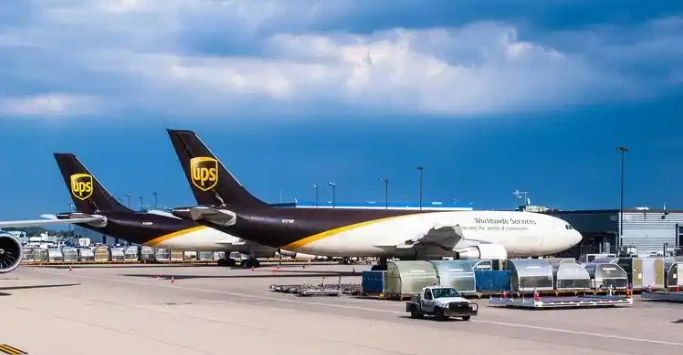
Air freight bills on chargeable weight, the greater of actual and dimensional, and long packed rods routinely produce a dimensional figure above what the crate weighs. A 500 kg crate occupying 3 m³ can be billed well above its actual mass.

Send both numbers at enquiry stage rather than at booking, since a volumetric surprise at the counter is why quoted air rates fail to hold. Your titanium anode supplier should quote against chargeable weight, not actual.
Worked Example - A 500 kg Restock
A 500 kg, 2.4 m³ restock with a hard date attached is the textbook air case. Chargeable weight lands near the volumetric figure, the premium over sea is real but bounded, and the alternative - a line down for three extra weeks - is not. The exercise worth doing is asking one titanium anode supplier for the same consignment quoted air and sea together, then setting the difference against the daily cost of the equipment waiting.
LCL vs FCL by Sea for Bulk Anode Procurement
At a tonne and above, sea is the default; the question becomes consolidation: shared space or your own box.
LCL - When Mixed SKUs Justify It
Less-than-container-load suits buyers consolidating several SKUs, or testing a new source before committing to annual volume. Freight is paid per chargeable unit, so a mixed order of rods, mesh and plates travels together without waiting to fill a container. The trade-off is handling: shared containers are consolidated and deconsolidated at both ends, adding dwell time at destination. A titanium anode supplier can limit that exposure by packing each SKU as an identifiable unit.
FCL - When Volume and Repeatability Win
A full container makes its keep when the SKUs recur and quantities are predictable, since the customer pays for the box not the space and dictates how it is filled. The most obvious example is a yearly contract sending one specification per quarter. Containers come sealed, eliminating the deconsolidation stage.


The crossover is more about handling expenses than goods, therefore compare landed cost per unit. A titanium anode provider performing repeat programs understands where that cross over falls.
Worked Example - A 12-Tonne Annual Contract
Four discharges of twelve tonnes per quarter is a container narrative easily. The packing pattern is determined after the first shipment. Each release fills or about fills a 20 foot box. Landed cost per unit drops against both LCL and air. Quote all four releases at once so the carrier can arrange equipment. Confirm each release against a standing packing list. The choice of equipment will rely on the size and the port of destination, which a titanium anode provider may tell you up front.
The 5-Factor Decision Matrix
Volume narrows the field; these five factors make the call, and explain why two buyers shipping the same weight to one port can reasonably differ.
High value coated anodes have a low enough freight-to-value ratio such that speed costs a correspondingly little amount. Lower value bare substrates reverse the arithmetic. Value also dictates the level of insurance and handling attention the package requires. State stated value at inquiry stage so that the carrier quotes the correct liability protection. Remember that a titanium anode provider offering coating work is quoting a value that grows with precious-metal loading.
Packing dimensions decide whether a shipment is billed as it weighs or as it occupies. Long thin crates are the classic trap, because air and LCL both penalise empty space. Cutting crate height and void fill reduces chargeable weight without removing a single anode. Every titanium anode supplier should be able to state packed dimensions before goods are booked, not after.
It is a hard limitation, not a desire. A deadline should be specified as a date with a consequence. Even if it costs more, a shutdown window, commissioning date or contract milestone might make the slower mode impossible. The way to go is to go backward through clearance and inland legs, not just the port-to-port leg, since that's when timetables slide. The true date is known and a titanium anode provider may suggest a mode that contains it .
Classification and origin documentation push landed cost over most buyers' expectations. Under a free trade system preferential treatment may mean zero duty, but only if the certificate matches what is actually transported. Both before the vessel departs. Ask which certificate the destination accepts. The response will be on file with a titanium anode supplier who has regular access into that market.
A port-to-port quote hides the expensive part. Inland haulage, appointment windows, forklift access and site restrictions often exceed the ocean leg for heavy consignments, and a destination with limited handling equipment turns a cheap container into an expensive problem. Agree who delivers to the door and confirm the site can receive the packing format being shipped. A titanium anode supplier can pack to the site's constraint once told what it is.
Conclusion
Order of titanium anode - choice of mode in two stages. The possibilities reduce down to realistic by amount of cargo. Which one to select is decided by five factors: value, volumetric weight, deadline, customs position and last-mile. The idea is that the three working examples illustrate the same product going in three distinct directions for three valid reasons, there is no default answer only a documented one. And laying out that logic gives a buyer statistics to defend a decision rather than preference. If the weight, size, destination and delivery time are provided at the time of inquiry, it is easy to compare.
FAQ
1. Which shipping mode suits a first titanium anode order?
+
-
Express, typically under 30 kg. Transit takes days, clearance is bundled into most lanes, and the buyer validates coating performance before committing to volume.
2. Why does an air quote sometimes exceed the estimate for long anode rods?
+
-
Air bills on chargeable weight - the greater of actual and dimensional - and long crates often exceed their actual mass. Supply packed dimensions at enquiry stage.
3. When does a full container beat shared space for anode shipments?
+
-
When SKUs repeat and volumes are predictable, a full container costs less per unit and removes the deconsolidation step. Compare landed cost per unit including destination handling.
Ready to Compare Modes on Your Own Lane?
NAVI Titanium manufactures ruthenium-, iridium- and platinum-based titanium anodes at its Baoji facility and ships sample, air and sea consignments routinely, so the packing dimensions behind your order are already familiar ground. Send the cargo weight, packed dimensions, destination and arrival date, and the export team will return a side-by-side express, air, LCL and FCL comparison for your lane - the shape of each option with document requirements noted, leaving freight pricing to your forwarder. That comparison turns the five-factor matrix from a checklist into a defensible decision. Write to sales@navititanium.com with your lane details to start.
References
1. ICC, Incoterms 2020, ICC Publication No. 723E, International Chamber of Commerce, Paris.
2. IATA, Air Cargo Tariff and Rules (TACT), International Air Transport Association, Montreal.
3. UNCTAD, Review of Maritime Transport 2025: Staying the Course in Turbulent Waters, UNCTAD/RMT/2025, United Nations, Geneva.
4. WCO, Harmonized System Nomenclature 2022, Chapter 81, Heading 81.08 - Titanium and Articles Thereof, World Customs Organization, Brussels.
5. ISO 668:2020, Series 1 Freight Containers - Classification, Dimensions and Ratings, International Organization for Standardization, Geneva.
6. ASTM B265-25, Standard Specification for Titanium and Titanium Alloy Strip, Sheet, and Plate, ASTM International, West Conshohocken, PA.



