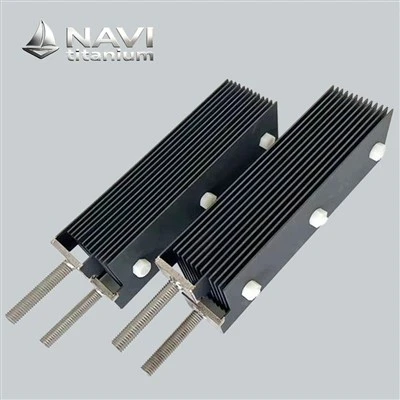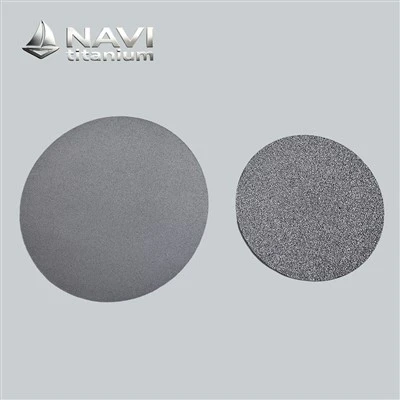


The electrodes that are used in electrochemical systems are what make them work. The process, on the other hand, is harmed if the electrodes wear out quickly, waste too much energy, or stop working as catalysts when things get tough. This is exactly why purchasing managers and engineers working in water treatment, chlor-alkali, and industrial electrolysis are focusing on the titanium anode rod. It is the silent factor that determines how much energy a system wastes and how long it will run before it needs to be fixed.
This article talks about the physics behind the catalytic performance of titanium anode rods, why precious metal oxide coatings are important, and how to choose the right coating composition for your electrochemical application.
How Does Titanium Anode Rod Catalytic Activity Improve Chlorine Evolution?
The Electrochemical Foundation of Chlorine Evolution
Chlorine evolution is one of the most energy-consuming processes in commercial electrolysis. This is when chloride ions (Cl⁻) inside a saline electrolyte are oxidized at the anode surface to form chlorine gas (Cl₂) or hypochlorite (ClO⁻). The effectiveness of this reaction is nearly completely dependent upon the capacity of the electrode to reduce the activation energy barrier – where catalytic coatings become important.
A bare titanium substrate is chemically stable, but in the presence of electrolytic conditions, it produces a passive titanium dioxide (TiO₂ ) oxide layer. This passivation layer greatly raises the electrical resistance and blocks the charge transfer. This constraint is overcome by the titanium anode rod coated with a catalytically active precious metal oxide that maintains constant electron transfer at the electrode-electrolyte interface.


Catalytic Selectivity and Reaction Kinetics
Catalytic selectivity determines whether an anode preferentially promotes chlorine evolution against the competing oxygen evolution process. According to research published in Electrochimica Acta, Ruthenium dioxide (RuO₂)-based coatings have been shown to have a much lower chlorine evolution overpotential than other electrode materials under same operating circumstances, often by 50-100 mV. This selectivity immediately translates into improved current efficiency and reduced energy consumption per kilogram of accessible chlorine generated.
The titanium anode rod with a ruthenium-iridium coating system has current efficiency more than 90% for sodium hypochlorite production applications. This catalytic advantage is accumulated over time for a sodium hypochlorite generator operated continuously at industrial scale, lowering the unit energy consumption to the range of 3.2-3.8 kWh per kilogram of accessible chlorine.
Titanium Anode Rod Surface Catalysis for Efficient Electrochemical Reactions
How Coating Morphology Drives Electrochemical Performance?
The physical structure of the coating layer is as important as its chemical content. A well-engineered titanium anode rod coating exhibits a high electrochemically active surface area (ECSA) - a cracked-mud or cauliflowerlike microstructure that increases the number of active catalytic sites per unit geometric area. The enhanced electrolyte and electrode contact surface area instantly boosts reaction rates without having to increase the applied voltage.
Scanning electron microscopy (SEM) of ruthenium-iridium-tantalum oxide coatings shows that the multi-layer thermal degradation processes provide a hierarchical porosity that supports ionic transport deep into the coating matrix. The coating thickness of a typical titanium anode rod is generally between 2 and 15 microns, a thickness that is small enough to reduce the loading and expense of precious metals yet dense enough to stop chloride ion penetration to the titanium substrate.


Substrate Pretreatment and Interface Bonding
The durability of the performance is determined by the bonding between the catalytic coating and the titanium substrate. Before applying the coating, the titanium substrate is chemically etched, generally in oxalic acid, to remove the natural oxide layer and impart microscale surface roughness. This etching procedure exposes new titanium metal and enlarges the region of mechanical interlocking for the oxide layer of the coating.
NAVI Titanium uses a more sophisticated pre-treatment process than etching. At the grain boundary level, substrate alteration induces a transitory adhesion zone which absorbs the differential thermal expansion stresses during repeated heating-cooling cycles. The outcome is a coating that resists microcrack development, delamination, and premature substrate passivation, which shortens the lifetime of traditionally made electrodes.
How Ruthenium-Iridium Coatings Enhance Titanium Anode Rod Activity?
Why the Ru-Ir Binary System Outperforms Single-Component Coatings?
Pure ruthenium oxide coatings have great chlorine evolution activity, but dissolve rather rapidly in strong oxidizing solutions. Pure iridium oxide coatings are quite stable, however they have a larger overpotential for chlorine evolution. The combination of both in a ruthenium-iridium (Ru-Ir) binary system combines the catalytic power of RuO 2 with stabilization of the coating matrix and resistance to corrosive dissolution provided by the IrO₂ component.
Electrode lifetime studies based on accelerated lifetime testing indicate that Ru-Ir coated electrodes have a lifespan that is 3-5 times longer than pure ruthenium electrodes in high salt, high current circumstances. NAVI Titanium further extends this advantage by using a gradient composite coating architecture that distributes the Ru-Ir ratio over multiple layers, placing the higher-iridium, more corrosion-resistant formulation at the outer interface, and the higher-ruthenium, more active formulation near the substrate.


Practical Performance Gains in Industrial Sodium Hypochlorite Systems
The Ru-Ir titanium anode rod operates effectively across a current density range of 10–5000 A/m², making it adaptable to everything from small swimming pool disinfection units to large municipal water treatment plants processing millions of liters per day. In continuous electrolysis environments - the kind that run 24 hours a day, seven days a week - this broad operating window prevents the electrode from being pushed into performance degradation zones during load fluctuations.
NAVI Titanium's ruthenium-iridium titanium anodes are engineered specifically for high-salt, strong-oxidizing, 24-hour continuous electrolysis conditions, covering the full capacity range of sodium hypochlorite generators from 50 g/h to 5000 g/h.
Titanium Anode Rod Cell Voltage and Electrochemical Reaction Efficiency
Understanding the Relationship Between Cell Voltage and Energy Cost
Cell voltage is one of the most consequential variables in any electrochemical process. Every extra 0.1 V of unnecessary overpotential translates directly into higher electricity bills and increased heat dissipation within the electrolytic cell. A high-performance titanium anode rod reduces the anode overpotential component of total cell voltage through interface catalysis optimization - lowering the energy barrier for the desired electrode reaction without altering the thermodynamic requirements.
NAVI Titanium's interface catalysis optimization technology has demonstrated measurable reductions in cell voltage under equivalent current density conditions. When combined with substrate modification, the practical outcome is a system energy consumption reduction of 10–25% compared to conventional electrode systems. Over a ten-year service period, this efficiency gain represents a substantial reduction in total operating cost for any industrial electrolysis facility.


Long Service Life as a Compounding Economic Advantage
The economic case for a titanium anode rod extends well beyond energy savings. Electrode replacement in an industrial sodium hypochlorite generator is a maintenance event that requires system shutdown, labor, and procurement time. When a titanium anode delivers a service life of 8–10 years under controlled operating conditions, the annualized replacement cost drops dramatically compared to electrodes requiring replacement every two to three years.
The low wear rate of precious metal oxide coatings under continuous operation conditions supports this longevity claim. The coating resistance of NAVI Titanium's rods measures as low as ≤ 0.02 Ω, ensuring stable current distribution across the electrode surface throughout the entire service period.
Choosing Titanium Anode Rod Coatings for Chlorine, Oxygen, and Hydrogen Evolution
Matching Coating Chemistry to Reaction Type
For each electrochemical use, a different coating formulation is needed. For uses involving chlorine evolution, like making sodium hypochlorite, chlor-alkali, and seawater electrolysis, coatings need to be designed so that they have a low overpotential for chlorine evolution and are very resistant to chloride attack. This group works well with ruthenium-iridium and IrO₂-Ta₂O₅ films.
Coatings that have higher oxygen evolution activity and can handle the highly oxidizing conditions that come with anodic reactions above 1.5 V vs. the standard hydrogen electrode are better for electrochemical wastewater treatment, advanced oxidation, and electrolytic metallurgy. Different types of platinum-coated titanium anode rods work well in these conditions because they have a stable electrochemical potential and are very resistant to corrosion over a wide pH range.
In most systems, hydrogen generation happens at the cathode instead of the anode.


However, buying teams can choose the right anode covering to reduce unwanted side reactions that could affect the quality of hydrogen in PEM water electrolysis applications by knowing the full cell design.
Application-Specific Selection Guidance
The most popular choice for disinfecting swimming pools and drinking water is still the Ru-Ir coated titanium anode rod. This is because it is selective for chlorine, uses little energy, and lasts a long time in salty electrolytes. Municipal wastewater treatment plants that use electrochemical oxidation to get rid of ammonia and nitrogen usually use IrO₂-Ta₂O₅ formulations because they are better at releasing oxygen and don't get clogged up with organic matter.
For cathodic protection tasks like pipeline security and water heater anti-corrosion, MMO (mixed metal oxide) covered rods are often used.
These rods can last more than 50 years in dirt and seawater. Along with killing bacteria and odors, the water heater anode rod type also works well for the whole time the appliance is in use.
NAVI Titanium can make coatings that are specifically made for all of these types of materials. They can also offer scientific advice to help you match the base material, coating chemistry, and size requirements to your exact process needs.
Conclusion
The titanium anode rod is more than just a carrier; it is the heart of every electrochemical system that needs reliable and effective anodic reactions. Modern titanium anode rods offer big advantages in terms of energy efficiency, service life, and process stability. This is made possible by careful coating chemistry, substrate pretreatment, and the design of gradient composite layers. Whether it's for cathodic protection for infrastructure, chlorine evolution for disinfection, or oxygen evolution for advanced oxidation, the right formulation of a titanium anode rod makes a big difference in how well it works and how much it costs to run.
FAQ
Q1: What makes a titanium anode rod more efficient than graphite or stainless steel anodes for chlorine evolution?
+
-
Graphite anodes are quickly eroded in chloride-containing electrolytes, causing contamination of the product and frequent replacement. Oxide coatings form on stainless steel and iron anodes, which insulate them, leading to a rise in cell voltage and a drop in current efficiency. In contrast, the titanium anode rod is a chemically inert titanium substrate coated with catalytically active precious metal oxide that provides consistent electrochemical performance throughout multi-year working periods without surface deterioration or product contamination.
Q2: How long does a ruthenium-iridium titanium anode rod typically last in continuous operation?
+
-
NAVI Titanium's ruthenium-iridium titanium anode rod has a service life of 8-10 years under regulated working circumstances – constant current density, suitable temperature and compatible electrolyte concentration. According to the ISO and ASTM electrochemical standards, accelerated lifetime testing methodologies show that multi-layer gradient composite coatings have a much longer lifespan than single-layer coating systems with the same precious metal loading.
Q3: Can NAVI Titanium customize the titanium anode rod for non-standard dimensions or coating formulations?
+
-
NAVI Titanium produces titanium anode rods to client design drawings and accepts bespoke requirements for substrate material, form, dimensional tolerances and coating chemistry. Classical IrO₂-Ta₂O₅, Ru-Ir and platinum coatings, or application specific bespoke formulations created in conjunction with the client's technical team, are available in standard forms such as plate, rod, mesh and tube.
Ready to Upgrade Your Electrochemical System? Contact NAVI Titanium Today
NAVI Titanium has been engineering precision titanium anode solutions since 2008, serving clients across water treatment, chlor-alkali, PEM electrolysis, and industrial electrochemical sectors worldwide. As a trusted titanium anode rod supplier, NAVI Titanium combines advanced gradient coating processes with rigorous substrate pretreatment to deliver electrodes that reduce system energy consumption by 10–25% and achieve service lives of 8–10 years under demanding operating conditions. Free samples are available for standard specifications, and our engineering team provides one-on-one process design consultation at no charge. Reach out today to discuss your application requirements and discover how NAVI Titanium's solutions can reduce your operating costs and extend your system's productive life.
📧 Contact us: sales@navititanium.com
References
1. Trasatti, S. (1991). Physical electrochemistry of ceramic oxides. Electrochimica Acta, 36(2), 225–241.
2. Comninellis, C., & Vercesi, G. P. (1991). Characterization of DSA-type oxygen evolving electrodes: choice of a coating. Journal of Applied Electrochemistry, 21(4), 335–345.
3. Beer, H. B. (1980). The Invention and Industrial Development of Metal Anodes. Journal of the Electrochemical Society, 127(8), 303C–307C.
4. Zeradjanin, A. R., Topalov, A. A., Van Overmeere, Q., Cherevko, S., Chen, X., Ventosa, E., & Schuhmann, W. (2012). Rational design of the electrode morphology for oxygen evolution - enhancing the performance for catalytic water oxidation. RSC Advances, 2(24), 9289–9298.
5. Martínez-Huitle, C. A., & Ferro, S. (2006). Electrochemical oxidation of organic pollutants for the wastewater treatment: direct and indirect processes. Chemical Society Reviews, 35(12), 1324–1340.
6. Kuhn, A. T., & Mortimer, C. J. (1973). The kinetics of chlorine evolution and reduction on titanium-supported metal oxides especially RuO₂ and IrO₂. Journal of the Electrochemical Society, 120(2), 231–236.