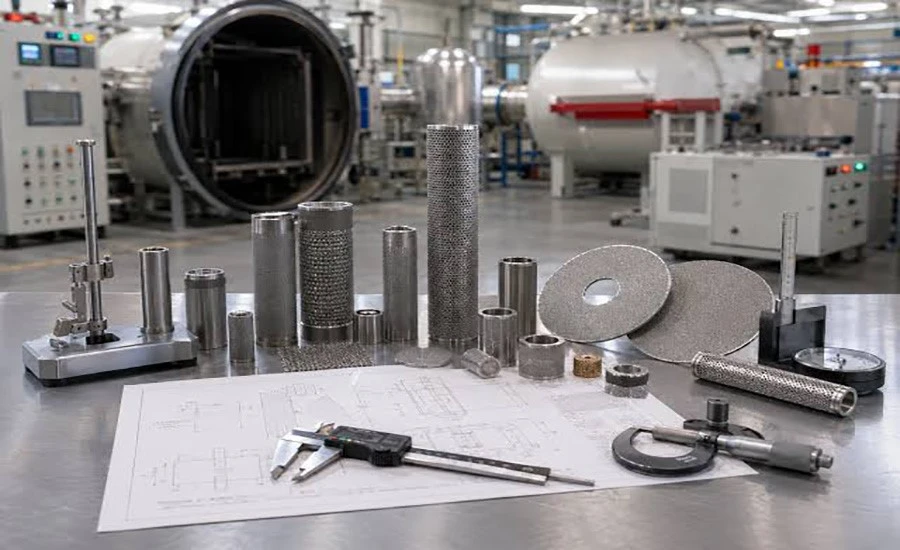
A sintered metal powder filter is a porous filtration component manufactured by compacting metal powder and heating it below the material's melting point. This process, known as sintering, bonds metal particles together while preserving interconnected pores that allow fluids or gases to pass through.
Common materials include stainless steel, titanium, nickel, and bronze. The appropriate material depends on the operating temperature, pressure, fluid chemistry, corrosion risk, and required filtration performance.
Unlike conventional mesh filters, sintered metal filters provide a three-dimensional porous structure. This structure supports particle retention throughout the filter wall rather than relying exclusively on a surface screen.
1. How Does the Sintering Process Work?
The manufacturing process directly influences pore structure, strength, and filtration consistency.
Typical production sequence:
Metal powder selection → Powder blending and preparation → Mold filling and compaction → Sintering → Finishing and machining → Inspection and testing
During sintering, particles bond at their contact points without completely melting. The resulting structure contains interconnected voids that form filtration pathways.
Powder particle size, particle-size distribution, compaction pressure, sintering temperature, and processing time all influence the final pore structure. Manufacturers must balance porosity against mechanical strength because increasing one property may affect the other.
2. Common Types and Forms
Sintered metal powder filters are available in several configurations to accommodate different equipment designs and operating conditions.
Porous filter tubes
Suitable for inline filtration, gas distribution, and cylindrical filter assemblies.
01
Filter cartridges
Designed for installation in dedicated housings and industrial filtration systems.
02
Porous discs and plates
Used in compact filtration units, venting systems, and laboratory equipment.
03
Porous metal sheets
Suitable for applications requiring a larger filtration surface or customized geometry.
04
Custom-shaped components
Developed for specialized equipment, restricted installation spaces, or specific flow requirements.
05
The best form depends on the available installation space, required filtration area, flow direction, and connection method. Dimensions and tolerances should be confirmed before production.
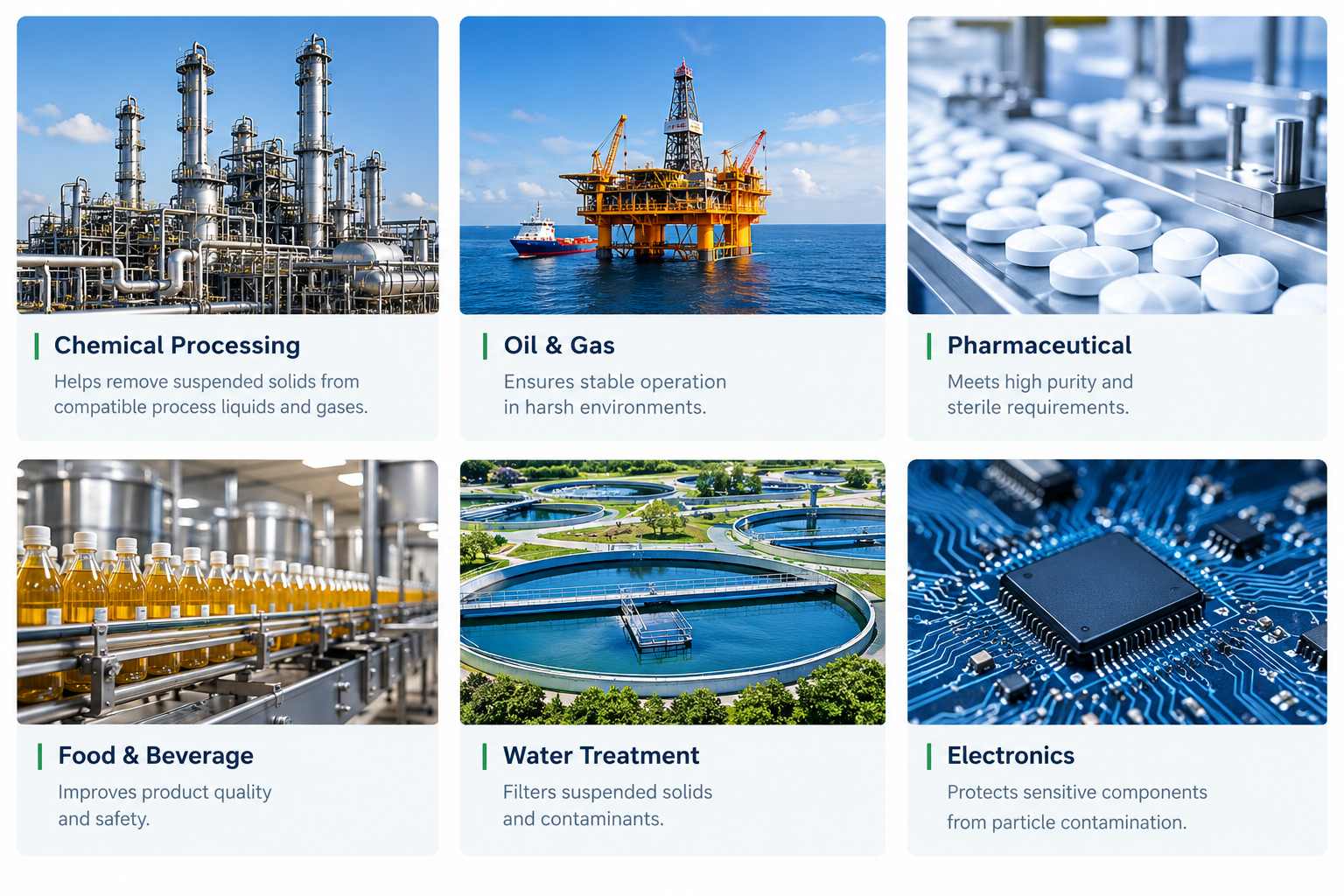
3. Main Industrial Applications
Sintered metal powder filters are used where controlled permeability, mechanical durability, or resistance to demanding operating conditions is required.
NAVI Titanium emphasizes the importance of matching material properties with real operating conditions when evaluating industrial metal components. For buyers comparing filtration solutions, documenting the process medium, temperature, pressure, and required particle retention provides a practical starting point for supplier discussions.
4. How to Select the Right Sintered Metal Powder Filter
Before purchasing, define the filtration objective and operating environment. A filter designed for clean gas service may not perform effectively in a viscous liquid containing high concentrations of suspended solids.
Use the following checklist to narrow down suitable specifications:
| Selection factor | Questions to answer |
| Filtration rating | What particle size must be retained, and how is efficiency measured? |
| Flow rate | What is the required flow under normal and peak operating conditions? |
| Differential pressure | What pressure drop is acceptable when the filter is clean and during service? |
| Operating conditions | What are the working pressure, temperature, and chemical composition? |
| Filter geometry | Is a tube, disc, cartridge, plate, or custom shape required? |
| Maintenance | Can the element be cleaned, backwashed, or replaced easily? |
Buyers should also consider contaminant characteristics, including particle concentration, hardness, shape, and tendency to form deposits. These factors affect clogging behavior and maintenance intervals.
Where possible, request technical data showing permeability, filtration performance, pressure-drop characteristics, dimensional tolerances, and the relevant test conditions. A sample evaluation under representative operating conditions can help confirm whether the proposed filter meets the actual requirement.
5. Customization and Quality Control
Customized sintered metal filters may be specified by material grade, outside diameter, inside diameter, length, wall thickness, pore characteristics, connection type, and surface finish. End fittings, mounting features, and other interface dimensions should also be defined where required.
When discussing a custom project with NAVI Titanium, buyers should clearly communicate the intended application and required component specifications so that product suitability and any relevant material requirements can be assessed. Final capabilities and available configurations should be confirmed with the supplier.
A reliable quality-control process may include:
Raw material inspection: Verify material grade and incoming powder documentation.
Process control: Monitor powder preparation, compaction, and sintering parameters.
Dimensional inspection: Check critical dimensions, tolerances, and connection features.
Porosity and permeability testing: Evaluate whether the porous structure meets the agreed requirements.
Filtration performance testing: Verify retention or efficiency using an appropriate test method.
Final inspection and traceability: Review appearance, documentation, and batch identification.
Not every filter requires every test. Inspection requirements should be agreed upon according to the application's risk level and applicable industry standards.
6. Service Life, Cleaning, and Maintenance
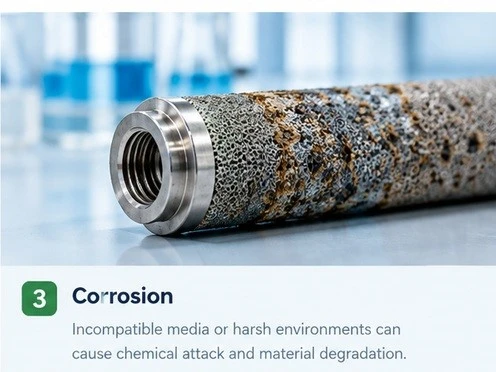
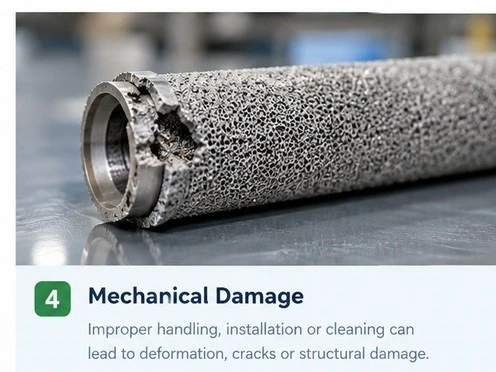
The service life of a sintered metal filter depends on the material, contaminant loading, operating pressure, temperature, corrosion exposure, and cleaning procedure. A durable metal structure does not mean the filter is immune to clogging, erosion, or chemical attack.
Common causes of performance deterioration include:
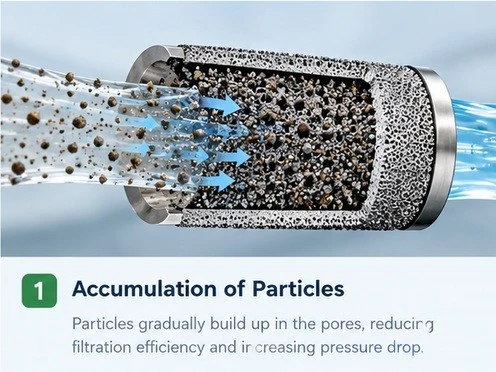
- Accumulation of particles within the pores
- Excessive differential pressure or pressure cycling
- Corrosion caused by incompatible process media
- Mechanical damage during handling or installation
- Inappropriate cleaning methods
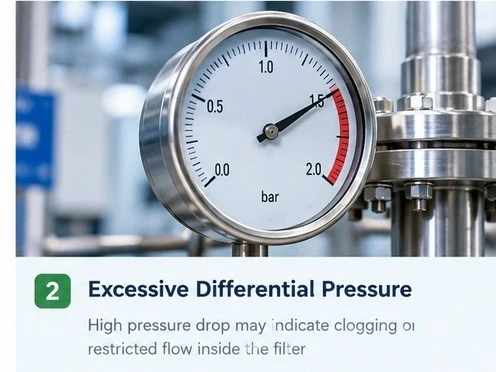
Monitor differential pressure and flow rate during operation. An increasing pressure drop at a comparable flow rate may indicate clogging, while unexpected changes in filtration performance may require further inspection.
Cleaning methods can include backwashing, compatible chemical cleaning, or other supplier-approved procedures. The correct method depends on the filter material and the type of contamination. Avoid aggressive chemicals, uncontrolled heating, or mechanical treatment that could damage the porous structure.
NAVI Titanium recommends that buyers establish maintenance procedures and acceptance criteria before putting a component into service. Cleaning effectiveness, dimensional stability, and filtration performance should be checked before a cleaned element is returned to operation.
7. Technical Specifications and RFQ Checklist
A complete technical specification helps suppliers evaluate feasibility and prepare a more accurate quotation. If the application is still under development, provide the available information and identify any parameters that remain undecided.
Before sending an RFQ, prepare the following details:
- Application and process medium
- Required material or preferred material grade
- Filtration rating and required efficiency
- Operating temperature and working pressure
- Required flow rate and allowable pressure drop
- Component dimensions, shape, and connection details
- Quantity and expected order frequency
- Drawing, sample, or equipment interface information
- Testing, inspection, certification, and documentation requirements
- Target delivery schedule
Where the filtration rating or material grade is uncertain, explain the operating conditions and performance objective rather than selecting a specification without supporting data.
8. Choosing a Suitable Supplier
When evaluating a sintered metal filter supplier, look beyond the quoted unit price. Assess material traceability, manufacturing consistency, testing methods, customization capability, technical communication, and after-sales support.
Ask suppliers to explain how filtration ratings are verified, which pressure-drop data are available, and whether cleaning or reuse has been validated for the proposed design. Confirm that the quotation, drawings, inspection criteria, and delivery requirements refer to the same specification.
A well-defined purchasing process reduces the risk of receiving a filter that fits the equipment but fails to deliver the required filtration performance.
Ultimately, the right sintered metal powder filter is one that balances filtration efficiency, flow capacity, mechanical strength, chemical compatibility, maintenance needs, and total operating cost. Clear technical requirements and appropriate performance verification help buyers make a more informed decision.