


A sintered bronze filter may perform well during initial operation, but after weeks or months, users may notice reduced flow rates, increasing pressure drop, or more frequent cleaning requirements.
These problems are not always caused by manufacturing defects. In many cases, the selected filtration grade, pore structure, or effective filtration area does not match the actual operating conditions.
Sintered bronze filters are widely used in industrial applications because their porous metal structures provide controlled fluid passage and practical filtration solutions. However, selecting the right element requires more than choosing a micron rating.
This article explores the key factors affecting filter selection, industrial applications, maintenance methods, and customization considerations.
1. How Do Sintered Bronze Filters Work?
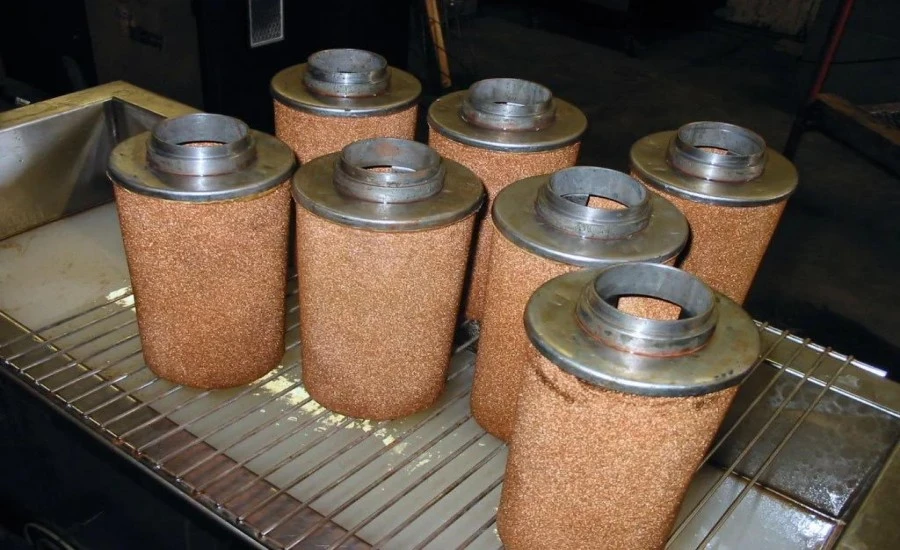
Unlike woven wire mesh or conventional paper filter media, a sintered bronze filter is manufactured by bonding bronze powder particles through a controlled thermal process.
During sintering, the powder particles form metallurgical bonds at their contact points while retaining interconnected voids throughout the material. These voids create the porous structure through which fluids or gases can pass.
When a medium flows through the filter, suspended particles are retained according to the pore structure, particle characteristics, and operating conditions. Some contaminants are captured near the surface, while smaller particles may be retained within the porous material.
This depth-filtration characteristic is one reason sintered bronze elements are used in applications where a conventional surface screen may not provide the required filtration arrangement.
2. Three Factors Affecting Filter Performance

2.1 Pore Size and Filtration Rating
Filtration rating indicates the approximate particle size a filter is designed to retain under specified test conditions.
A finer rating may protect downstream equipment, but it can also increase clogging risk when the incoming medium contains high concentrations of contaminants.
Buyers should consider particle size distribution and contamination levels rather than selecting the finest available grade.
2.2 Porosity
Porosity represents the proportion of void space within the material. Higher porosity may provide more available flow channels, but it does not automatically guarantee better filtration.
Pore size distribution and connectivity also influence performance.
2.3 Permeability
Permeability describes how easily fluid or gas passes through a porous material. It is affected by pore structure, material thickness, fluid viscosity, and operating conditions.
The filtration rating and permeability should therefore be evaluated together.
Table 1. Key Parameters for Sintered Bronze Filter Selection
| Parameter | Typical Reference | Selection Consideration |
|---|---|---|
| Filtration rating | 0.5–120 μm | Target particle size |
| Porosity | 28–50% | Void distribution and flow |
| Material | Sintered bronze | Medium compatibility |
| Structure | Disc, tube, cartridge | Installation requirements |
| Wall thickness | Customized | Flow and mechanical requirements |
Note: These are representative NAVI Titanium product references. Actual specifications depend on product configuration.
3. Different Sintered Bronze Filter Structures

Filter Discs
Sintered bronze discs are used in compact filtration assemblies, pressure regulators, and specialized equipment. Diameter, thickness, mounting method, and sealing should be confirmed during selection.

Filter Tubes
Tubular elements provide a cylindrical filtration surface. Depending on the design, fluid may flow from inside to outside or vice versa. Wall thickness, connection dimensions, and flow direction are important considerations.

Filter Cartridges
Bronze filter cartridges are used in industrial filtration systems requiring replaceable elements. Accurate dimensions and proper sealing help prevent untreated fluid from bypassing the filter.

Pneumatic Elements
Porous bronze components are also used in pneumatic silencers and exhaust systems. Their porous structures help distribute discharged air and reduce exhaust noise. Airflow and backpressure are key selection factors.
Table 2. Filter Types and Typical Applications
| Filter Type | Typical Application | Key Consideration |
|---|---|---|
| Bronze disc | Compact fluid filtration | Diameter and thickness |
| Bronze tube | Industrial filtration | Flow direction |
| Bronze cartridge | Oil and fluid systems | Housing compatibility |
| Pneumatic element | Air exhaust and silencers | Airflow and backpressure |
4. Industrial Applications
Sintered bronze filters serve different functions depending on the working medium and equipment design.

Pneumatic systems
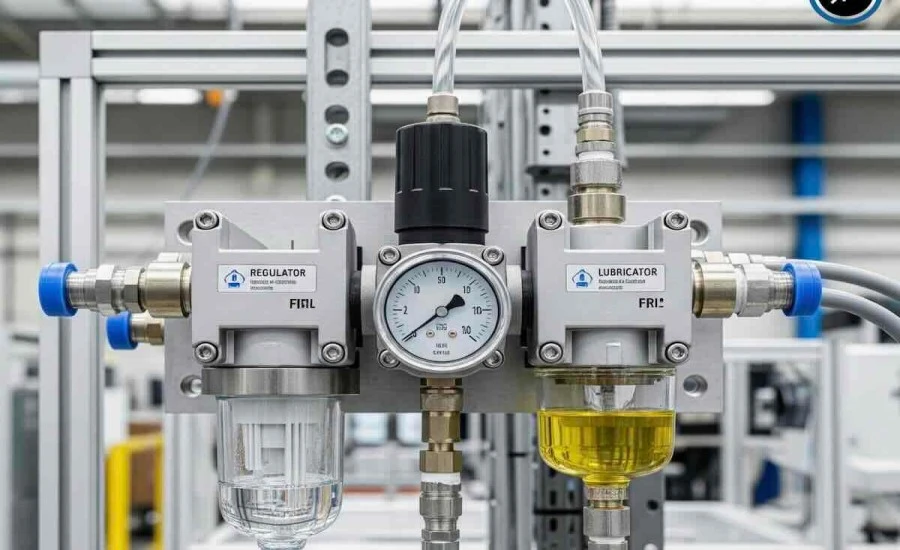
Hydraulic systems

Fuel and lubrication systems

Specialized machinery
5. Cleaning and Maintenance
One advantage of suitable porous metal filters is that some elements can be cleaned and reused. However, cleaning effectiveness depends on contaminant type, penetration depth, and filter structure.
Common methods include:
Backwashing
Reversing flow to remove trapped particles.
01
Ultrasonic cleaning
Using ultrasonic energy to dislodge deposits.
02
Chemical cleaning
Applying compatible cleaning agents to remove oil or other residues.
03
Compressed air cleaning
Removing loose particles from suitable pneumatic elements.
04
Operators should monitor pressure drop, flow rate, and visible contamination. If cleaning no longer restores acceptable performance, replacement may be necessary.
Table 3. Common Filter Problems and Recommended Actions
| Problem | Possible Cause | Recommended Action |
|---|---|---|
| High pressure drop | Particle accumulation | Inspect and clean |
| Reduced flow | Blockage or insufficient permeability | Review specifications |
| Frequent clogging | Filtration grade too fine | Reassess requirements |
| Poor filtration | Bypass or damaged element | Inspect sealing and integrity |
| Difficult cleaning | Deep contamination | Evaluate replacement |
6. Common Selection Mistakes
Several mistakes can affect filter performance and increase maintenance requirements:
Selecting a filter based only on micron rating without considering permeability.
Ignoring contaminant concentration and particle distribution.
Overlooking installation dimensions and connection details.
Choosing an element without considering its cleaning method.
Assuming products with identical nominal ratings have identical performance.
A proper selection process should consider the complete operating environment rather than an isolated specification.
7. NAVI Titanium Customization and Manufacturing Support
NAVI Titanium supplies porous metal filtration products in materials including titanium, stainless steel, nickel, and sintered bronze.
For bronze filtration applications, available configurations include porous discs, tubes, and cartridge-style components, with filtration specifications selected according to project requirements.
Customers can provide drawings, photographs, physical samples, or operating information for technical evaluation.
Application Requirements → Technical Review → Material and Structure Selection → Drawing Confirmation → Sample Evaluation → Production → Quality Inspection → Packaging and Delivery
Relevant inspection activities may include dimensional checks, visual examination, and verification of agreed filtration or permeability requirements.
For specialized applications, NAVI can also discuss alternative porous metal materials according to operating conditions.
Conclusion
Selecting a sintered bronze filter requires balancing filtration rating, porosity, permeability, structural dimensions, and operating conditions.
A suitable filter should match the target particle size, required flow rate, working medium, and maintenance requirements.
For OEM manufacturers and industrial buyers, providing drawings, samples, and operating parameters helps make technical evaluation more accurate.
Looking for a customized sintered bronze filter?
Contact NAVI Titanium with your drawings, required filtration rating, dimensions, and operating conditions. Our team can help review your requirements and discuss suitable porous metal filtration solutions. Email: sales@navititanium.com



