
The landscape of electrochemical water treatment has undergone a remarkable transformation over recent decades. At the heart of this revolution lies the titanium anode rod, a component that has evolved from simple metal electrodes into sophisticated catalytic systems. Understanding this evolution reveals not just technological progress but also the industry's response to escalating demands for efficiency, durability, and cost-effectiveness in applications ranging from municipal wastewater treatment to swimming pool disinfection.
Modern water treatment facilities face mounting pressure to deliver consistent performance while minimizing operational expenses. Traditional electrode materials like graphite, stainless steel, and various base metals proved inadequate for the harsh realities of continuous electrolysis, particularly in sodium hypochlorite generation. The emergence of titanium-based solutions addressed these limitations fundamentally, yet the journey from basic titanium electrodes to today's advanced composite structures represents a fascinating story of materials science meeting industrial necessity.

1.Specification
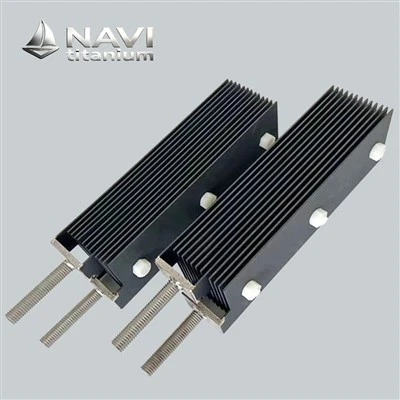
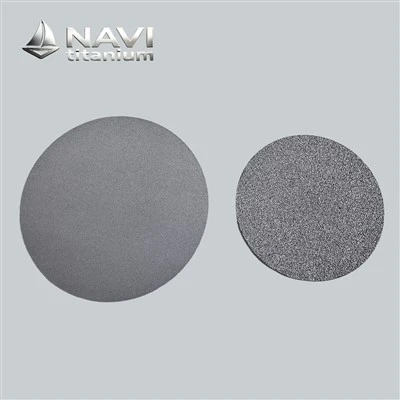
General Shapes: Plate, Rod, Mesh, Tube or customization
Coating: The classical formula of IrO2-Ta2O5, Ru-Ir, Pt, or customization
Electrochemical reaction: Oxygen/Chlorine/Hydrogen evolution reaction
Internal Code: NAVI-1-011
Brand: NAVI Titanium®
Basic Material: Pure Titanium Gr1
Advanced fields of NAVI: PEM, PCB, wastwater treatment etc.
2.Purchasing guide
(1)Process
NAVI Titanium(since 2008) can process according to your design drawings
(2)Free sample
NAVI Titanium supply free sample for general specifications
(3)Technology support
Professional one-for-one service, design free, welcome to contact us
How Has Titanium Anode Rod Technology Evolved Over Time?
The first reason titanium was used in electrolytic processes were because it was very strong and didn't rust. Early attempts, however, quickly showed that bare titanium surfaces became passivated under anodic conditions, creating layers of insulating oxide that stopped them from working. In the 1960s, coated titanium anodes were made possible by this finding. This was the real start of the business.
In the beginning, coating systems used platinum group metals that were put on using simple heat breakdown techniques. These cutting-edge designs showed proof of concept, but they didn't always work right and were too expensive for most people to afford. Often, the coating layers were either too thick, which wasted valuable metals, or too thin, which caused them to fail too soon. The manufacturing processes did not have the precise controls needed for consistent quality, so there were big differences in how well different batches of products worked.
When coatings switched to mixed metal oxide (MMO), it was a turning point. It was found that combining ruthenium oxide, iridium oxide, and other substances made chlorine evolution processes more effective while using less of the most expensive platinum metals. During the 1980s and 1990s, these MMO anode formulas became the standard in the industry. This made electrolytic cleaning systems very popular.
However, traditional MMO technology had its own flaws. Mechanical stress was caused by differences in thermal expansion between the titanium substrate and the oxide layer in single-layer uniform coatings.

These pressures showed up as tiny cracks when the current density was very high all the time, especially in high-salt settings like those used to make sodium hypochlorite. Ions of chlorine got through these flaws and to the titanium surface below, speeding up the passivation process. As a result, the electrode slowly lost its ability to work and eventually failed, usually within three to five years in tough circumstances.
From Conventional Ruthenium Coatings to Gradient MMO Structures
Gradient coating architectures fixed the main problems with uniform layer systems as they evolved. Instead of putting a single coating that is all the same, gradient technology makes several layers whose makeup changes in a planned way. The thinnest layer, which is in close contact with the titanium substrate, has more of the materials that help things stick together and reduce stress. As you move through the layers, you get to compositions that are best for catalytic activity and chemical resistance.

This structural approach handles several problems at the same time. The slow change in composition spreads thermal expansion forces across surfaces instead of concentrating them at one border. Better adhesion at the contact with the base stops the delamination that happened with older designs. The electrode's outer layers, which are full of electrocatalytically active compounds, keep the electrode's chlorine evolution performance high for as long as it is used.
Controlling the process of making gradient structures requires a lot of skill. For each layer, the temperature ranges, dwell times, and atmospheric variables that affect thermal breakdown must be carefully controlled. For the preparation solutions, they need to be made exactly right, with the ratios of the parts changing at each covering stage. Because it is so complicated, gradient titanium anode rod technology is a high-end part of the market as a whole.
The performance benefits have been measured by research done at top materials science schools. In continuous electrolysis uses,
accelerated lifetime testing shows that properly designed gradient coatings can extend operating lifetimes to eight years or more. At the same time, these improved structures keep the overpotentials for chlorine generation low, which directly means they use less energy. Field installations say that new electrode designs save twenty to forty percent of the power used by older designs. The exact savings rely on the system settings and working conditions.
Titanium Anode Rod Substrate Modification as a Key Technology Upgrade
For decades, coating innovations drove electrode development. But recently, attention has turned to the titanium substrate itself. High-purity titanium has great qualities by itself, but surface modification methods can make it even better. Pretreatment of the substrate has become an important way to tell the difference between high-quality electrodes and cheaper ones.
These days, preparing a substrate involves several steps that are done in order. By increasing the contact area and mechanical coupling, mechanical treatments make the surface rougher in a controlled way. This makes it easier for coatings to stick. Chemical etching gets rid of surface impurities and oxide films while creating good microstructures. Some advanced methods use heat processes that change the crystallographic structure of the medium close to the surface.
Better substrate preparation has effects that go beyond just coating adhesion. When surfaces are modified, their electronic properties change, which affects how quickly charges move between the substrate and coating. According to research, titanium plates that have been properly treated lower interfacial resistance, which helps lower the total cell voltage. This effect makes the benefits of using advanced coating formulations even better.
Long-term longevity issues can also be solved with substrate change technology. In harsh situations, it is possible for coatings to be peeled off, even when gradient coatings provide multiple layers of protection.

A changed base surface has better passivation resistance than titanium that hasn't been treated, which adds another layer of protection against performance loss. The strongest modern electrode designs use this "defense in depth" strategy.
Advanced Interface Catalysis in Modern Titanium Anode Rods
The amount of energy used and the amount of sanitizer that can be made by electrolytic systems are both based on how well the catalyst works at the electrode surface. Modern titanium anode rod designs use complex interface engineering to make chlorine evolution reactions work better. This is different from previous methods that mostly focused on coating durability, knowing that a long lifespan doesn't mean much if the performance isn't good enough.

Understanding how chlorine changes form at the molecular level is the first step in improving interface catalysis. There are several steps in the process where electrons are transferred, and different intermediate species stick to the electrode surface. The microstructure and composition of the coating affect which reaction pathway is most important and how quickly each step moves forward. Targeted catalyst formulations keep good intermediates stable while making energy-intensive competitors less stable.
Nanostructured coating surfaces have become a powerful way to boost the activity of catalysts. Instead of thick, smooth oxide layers, new coverings have controlled surface porosity and roughness at the nanometer level. This structure makes a huge difference in the actual surface area that can be used for reactions, which means that there are many more active catalytic sites. The three-dimensional shape also makes it easier for large amounts of reactants and products to move to and from the active surface.
When put into practice, this means lower operating voltage needs and better current economy. When systems have improved catalytic anodes,
they use less energy to make the same amount of chlorine, even though the cell voltages are lower. With better current efficiency, more of the electricity goes into making the disinfectant work instead of going into side reactions that don't do anything useful. These factors work together to make unit energy consumption go down by a lot. The best designs get numbers between 3.2 and 3.8 kilowatt-hours per kilogram of usable chlorine.
The Next Generation of Titanium Anode Rods for Chlorine Evolution
In the future, electrode performance is expected to get even better thanks to new technologies. Computational materials science is being used more and more to guide the development of coatings. Simulation tools can predict the best ratios before a real prototype is made.
This method shortens the time it takes to come up with new ideas and lets us look into complicated systems with many parts that would be hard to study using only empirical methods.
Different precious metal catalysts and new mixed oxide formulations are areas of active research. Currently, ruthenium and iridium are used most often. However, research into other platinum group metals and their oxides sometimes shows traits that were not expected. Non-precious catalysts are still a goal, but it has been hard to get them to work well and stay stable in chlorine evolution uses. Little by little, improvements in how efficiently precious metals are used offer a more immediate way to cut costs.
Smart electrode ideas that can sense things and change how they work are an interesting new realm. Embedded sensors could check the state of the electrodes in real time, which would allow for planned upkeep and better working conditions. Feedback control systems could change the current densities on the fly to balance the need for production with the need to protect the electrodes. This would maximize the total lifetime chlorine output instead of just increasing the calendar lifespan.

Conclusion
Titanium anode rod technology has changed over the years from simple coated electrodes to today's complex gradient composite structures. This is the result of decades of progress in materials science meeting the needs of industry. Each stage of development worked on a different problem: the first coatings fixed titanium passivation, the MMO formulations lowered the price of valuable metals, the gradient structures made them last longer, the substrate change made them work better, and the interface optimization cut down on the amount of energy they used. The trend keeps going up, and new technologies promise even more improvements in efficiency, durability, and value for money.
Electrode choice has big long-term effects on places that use sodium hypochlorite producers, swimming pool cleaning systems, or electrochemical wastewater treatment processes. Even though they cost more at first, modern, advanced designs offer appealing total cost of ownership benefits through longer lifespans and lower energy usage. Understanding the underlying technologies that cause these variations in performance allows for smart choices that match electrode specs with practical needs.
FAQ
1. What makes titanium essential for sodium hypochlorite electrolysis applications?
+
-
Titanium is the only material that can be used to make sodium hypochlorite because it is resistant to rust, strong, and good at conducting electricity. Other materials, like graphite, wear away quickly in oxidizing conditions, but stainless steel and other base metals rust quickly in the high-chloride, low-pH conditions that these systems usually have. Titanium can handle these harsh conditions, but it needs catalytic coatings to stop its surface from becoming passivated when anodic polarization happens.
2. How do gradient coating structures extend electrode lifespan compared to conventional designs?
+
-
Instead of concentrating mechanical stresses at one point between the base and uniform coating layer, gradient coatings spread them out over several surfaces. This stress distribution stops the microcracking that normally lets chloride ions in and passivates the substrate in regular electrodes. In addition, the multiple-layer structure provides extra safety, so flaws in a few layers don't quickly damage the whole electrode. When these things come together, they make operating lifespans longer than eight years in situations of constant high current.
3. What operational factors most significantly impact titanium anode rod performance and longevity?
+
-
Current density is the main factor that determines how long an electrode will last. Higher densities cause the coating to break down faster because they put more electrochemical stress on it. The makeup of the electrolyte, especially the amount of chloride and the pH, has a big effect on both the catalytic efficiency and the stability of the coating. The operating temperature changes the speed of reactions and the adhesion of coatings. High temperatures speed up failure. Total charge flow is more important than whether the system runs continuously or intermittently. However, a well-designed system should reduce idle times that waste energy without making disinfectant.
Ready to Upgrade Your Water Treatment System with Advanced Titanium Anode Rod Technology?
NAVI Titanium is a leader in electrode innovation, providing ruthenium-iridium titanium anodes that are specifically designed for environments with high salt, strong oxidation, and continuous electrolysis. Our gradient coating methods and substrate change technologies keep the energy use of each unit to a mere 3.2–3.8 kWh/kg of usable chlorine, and they also make the units last eight to ten years longer. Our technical team can help you find parts that will lower the total cost of running your system by 10 to 25%, whether you need them for treating wastewater in cities, disinfecting swimming pools, processing drinking water, or industrial uses with a capacity of 50 to 5,000 grams per hour. Get in touch with our titanium anode rod seller team at sales@navititanium.com right away to talk about how cutting-edge electrode technology can change the way you treat water.
References
1. Chen, G. (2004). Electrochemical technologies in wastewater treatment. Separation and Purification Technology, 38(1), 11-41.
2. Comninellis, C., & Chen, G. (2010). Electrochemistry for the Environment. Springer Science & Business Media.
3. Kraft, A. (2008). Electrochemical water disinfection: A short review. Platinum Metals Review, 52(3), 177-185.
4. Martínez-Huitle, C. A., & Ferro, S. (2006). Electrochemical oxidation of organic pollutants for wastewater treatment: direct and indirect processes. Chemical Society Reviews, 35(12), 1324-1340.
5. Trasatti, S. (2000). Electrocatalysis: understanding the success of DSA®. Electrochimica Acta, 45(15-16), 2377-2385.
6. Xu, L., & Scantlebury, J. D. (2003). A study on the deactivation of an IrO2-Ta2O5-coated titanium anode. Corrosion Science, 45(12), 2729-2740.