


Wastewater treatment has evolved significantly over the past two decades. Where chemical dosing and biological filtration once dominated industrial water management, electrochemical oxidation has emerged as a precise, controllable, and chemically efficient alternative. At the center of this shift sits one critical component: the titanium anode rod.
If you are responsible for municipal sewage, industrial effluent or recirculating process water, knowing how this electrode technology works – and why it is better than traditional options – may change the way you think about water purification investment choices.
How Does Titanium Anode Rod Improve Electrochemical Wastewater Treatment Efficiency?
The Electrochemical Mechanism Behind Active Oxidation
In an electrolytic cell, the anode forces oxidation processes at the electrode surface, while current is flowing . The titanium anode rod is covered with mixed metal oxides, e.g. ruthenium-iridium or iridium-tantalum and creates potent oxidants directly in the aqueous medium. These include hydroxyl radicals, chlorine species, ozone and persulfate depending on the electrolyte composition. This production of oxidants in situ removes the need for bulk chemical storage and continual purchase of reagents. This implies that the electrode speeds up chemical processes at very low overpotential, or less electrical energy is lost as heat. Research published in the Journal of Hazardous Materials demonstrates that MMO-coated titanium electrodes attain current efficiency in excess of 85% in chlorine evolution applications, a standard that graphite and lead electrodes cannot reach.
Dimensional Stability Under Continuous Operation
One historical reason electrochemical systems had problems with consistency was electrode deterioration. Lead anodes are subject to corrosion.
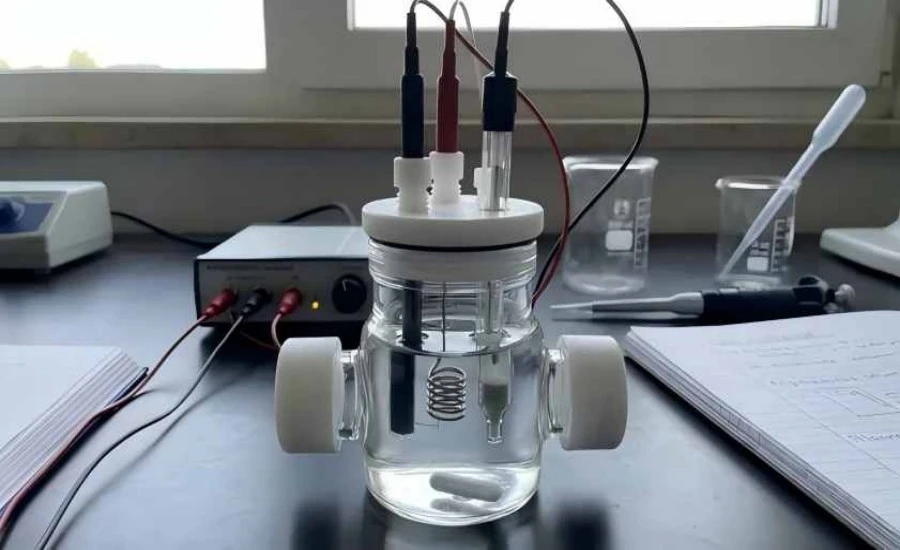
Graphite rubs off. Stainless steel passivates fast in chloride heavy conditions. Conversely, the titanium substrate develops a passive oxide layer that heals itself, preventing dissolution even at current densities of 50 A/m 2 to 5,000 A/m 2
The titanium anode rod maintains dimensional precision throughout its operational lifespan. This stability translates directly into predictable treatment performance: the electrode gap does not widen, current distribution does not shift, and cell voltage does not drift uncontrollably. Operators can calibrate dosing protocols and trust those parameters will hold for years, not months.
Titanium Anode Rod Applications for COD Removal and Organic Oxidation Treatment
Degrading Persistent Organics in Industrial Effluent
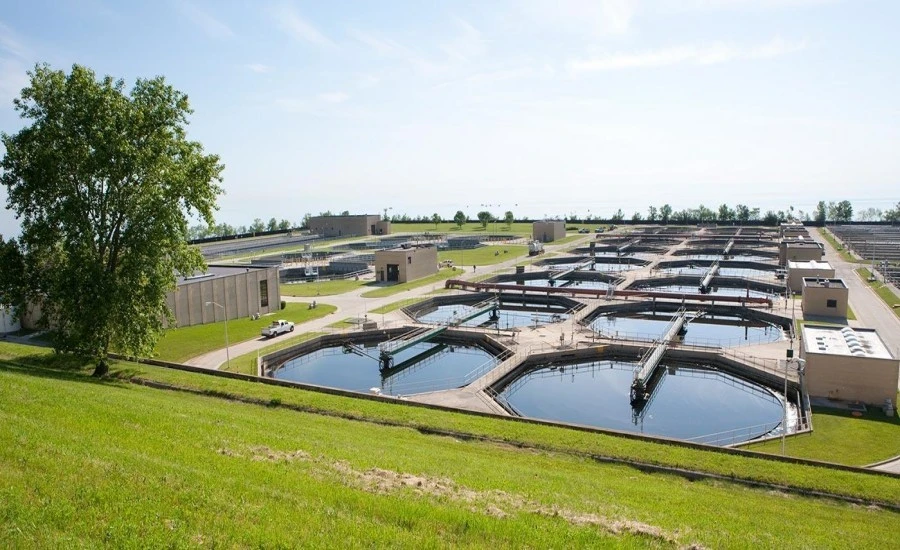
One of the world's most demanding discharge criteria for wastewater control is chemical oxygen demand (COD). Biological treatment cannot entirely mineralize refractory organic compounds in high-COD effluents such as textile dyeing, pharmaceutical synthesis, food processing and petrochemical processes. The titanium anode rod allows electrochemical advanced oxidation, which employs hydroxyl radicals produced on the electrode surface to attack carbon-hydrogen bonds in organic molecules with almost indiscriminate reactivity. Researchers from Tsinghua University's department of environmental engineering have shown that electrochemical reactors with ruthenium-iridium coated titanium anodes may reduce COD levels by more than 70%, and remove over 85% of ammonia nitrogen under optimal circumstances. The titanium anode is thus established as a main treatment method, not a polishing step, capable of handling effluent streams that would overwhelm traditional biological reactors.
Ammonia Nitrogen and Swimming Pool Water Disinfection
In addition to industrial COD,
the titanium anode rod also showed excellent results in ammonia nitrogen decomposition and pathogen control. Thousands of establishments throughout the world have replaced chlorine gas dosing in their swimming pool disinfection systems with electrolytic sodium hypochlorite production utilizing titanium anodes. It's a simple process: a saline solution goes through an electrolytic cell, hypochlorous acid is generated in situ at the anode and the cleaned water goes back into the pool circuit. Data from water treatment plants show that the energy consumption with the improved MMO titanium anodes is about 3.2-3.8 kWh per kilogram of accessible chlorine, which is due to the catalytic efficiency and lower ohmic losses. This compares well with the typical performance of historical electrode systems that often approach >5 kWh/kg under similar circumstances.
Why Titanium Anode Rod Is Selected for Advanced Water Treatment Electrolysis?
Material Incompatibility of Alternative Electrode Substrates
The topic of why titanium is especially selected for advanced electrolysis anode applications has a precise electrochemical explanation. Graphite anodes oxidize slowly and continually producing carbon particles that pollute the treated water and change the reactor geometry over time. The anodic polarization of iron and stainless steel anodes in chloride media leads to their dissolution and the release of metal ions which might complicate downstream treatment. Copper anodes are incompatible with oxidizing electrolytes at potentials sufficient for hydroxyl radical production. Paradoxically, titanium's valve metal characteristic, i.e., the propensity to develop a persistent, electrically insulating oxide layer, gives it a perfect substrate for electrocatalytic coatings. The oxide layer stops the substrate from corroding, but still allows electron transport via the thin precious metal oxide coating on top. This dual property of corrosion immunity and catalytic activity is indispensable in chlorine evolution and oxygen evolution reaction settings.
Electrochemical Wastewater Treatment Systems Using Titanium Anode Rod Technology
Integration Into Modular Electrolytic Reactor Design
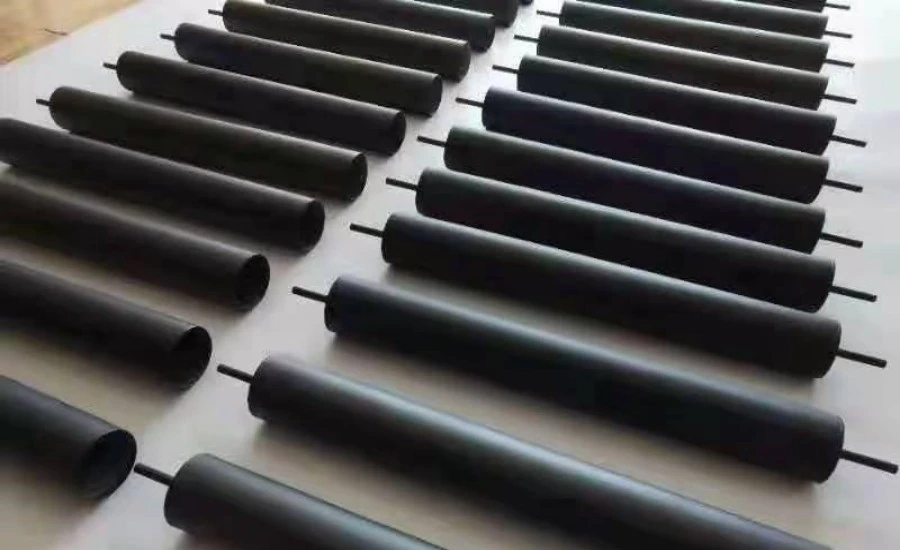
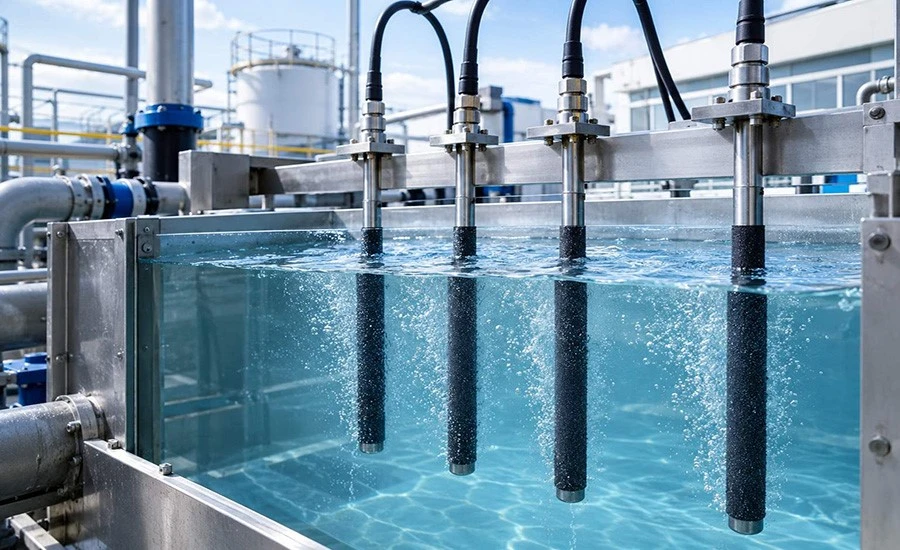
Modern electrochemical wastewater treatment systems are built around modular cell architectures where electrode geometry, inter-electrode spacing, and flow dynamics are co-optimized. The titanium anode rod fits into this design paradigm as either a standalone cylindrical electrode or as part of a tube-and-shell configuration where treated liquid flows axially past the anode surface.
Rod geometry offers a high surface-area-to-volume ratio in compact reactor formats, making it particularly suited for point-of-use applications - water heater disinfection units, small-scale municipal treatment skids, and recirculating cooling tower systems. NAVI Titanium manufactures titanium anode rods across a broad dimensional range, with coating compositions tailored to the specific electrochemical reaction required: oxygen evolution, chlorine evolution, or mixed-mode oxidation.
Coating Specifications That Determine System Performance
The precious metal oxide layer on the titanium substrate regulates the selectivity, lifetime and energy efficiency. Coatings of Ru-Ir dominate the field of chlorine evolution applications,
as Ru oxide is a very good chlorine selective catalyst and Ir oxide increases the structural stability of the coating. Iridium-tantalum coatings provide improved resistance to acidic oxygen evolution conditions. Platinum coatings have inert, broad-spectrum electrocatalytic activity for particular uses. The coating thickness, generally 2–15 microns, is obtained via thermal breakdown of precursor solutions and the gradient composite technique is the current industry standard for optimizing adhesion and limiting microcrack propagation during thermal cycle events.
Titanium Anode Rod Performance Factors in Industrial Water Purification Processes
Operating Parameters That Govern Electrode Longevity
Electrode lifespan in industrial water purification depends on four primary variables: current density, electrolyte composition, operating temperature, and reverse polarity cycling frequency. At current densities below 2,000 A/m², a well-manufactured MMO titanium anode rod routinely achieves operational lifespans of 8 to 10 years in continuous service. Exceeding recommended current density limits accelerates coating dissolution through a mechanism called accelerated service test degradation, where lattice oxygen from the oxide coating is consumed faster than it regenerates.
Chloride concentration profoundly affects chlorine evolution efficiency. Optimal sodium chloride concentrations for hypochlorite generation fall between 3 and 5 g/L. Below this range, current efficiency drops; above it, competing reactions reduce selectivity. NAVI Titanium's technical team provides process parameter guidance as part of standard product support, helping operators maintain conditions that protect both electrode longevity and treatment outcomes.
Gradient Composite Coating Technology and Its Practical Impact
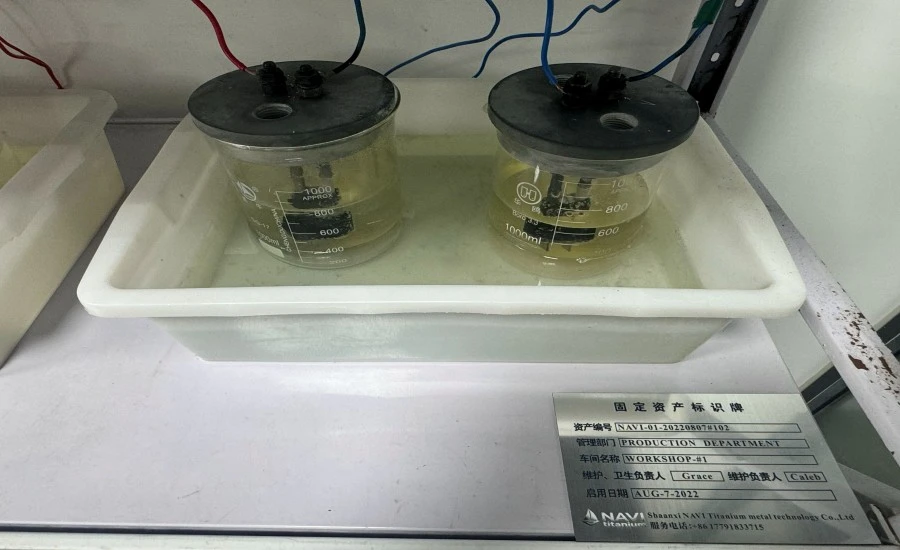
The gradient composite coating strategy solves four long-standing problems in traditional electrode manufacturing: the generation of micro cracks during thermal cycling, the detachment of the coating at the titanium interface, the passivation of the substrate under thin coating areas and the infiltration of chloride ions into the oxide lattice. The coating system is designed as a compositional gradient from the substrate to the coating surface and from titanium-rich to ruthenium-iridium-rich oxide phases to alleviate the effects of differential thermal expansion without leading to stress concentrations. Developed by electrode producers and university electrochemistry research groups, this technique gives a dramatic increase in service life and minimizes the frequency of electrode replacement. Less replacements means cheaper maintenance costs, and less process downtime, results that industrial water treatment operators weigh significantly in total cost of ownership calculations.
Conclusion
The titanium anode rod is not simply a component in an electrolytic cell. It is the determining factor in whether an electrochemical wastewater treatment system achieves its design performance targets over a multi-year operational horizon. From COD degradation and ammonia nitrogen removal to swimming pool disinfection and advanced industrial effluent treatment, the combination of a stable titanium substrate with a high-performance precious metal oxide coating delivers catalytic efficiency, dimensional stability, and process reliability that no alternative electrode material can match.
Understanding these principles positions engineers, procurement teams, and facility operators to make better-informed decisions about electrode selection, system design, and lifecycle cost management.
FAQ
1. What makes a titanium anode rod more suitable for wastewater treatment than stainless steel?
+
-
Stainless steel anodes undergo rapid anodic dissolution in chloride-containing electrolytes, releasing metal ions that contaminate treated water and compromise electrode geometry. A titanium anode rod with a precious metal oxide coating resists corrosion under anodic polarization, maintains dimensional stability, and delivers consistent electrochemical performance across thousands of operating hours.
2. How long does a titanium anode rod typically last in a continuous treatment system?
+
-
Under properly controlled operating conditions - appropriate current density, electrolyte concentration, and temperature - a quality MMO-coated titanium anode rod achieves a service life of 8 to 10 years. Operational factors such as reverse polarity cycling and current density exceedance are the primary variables that reduce this figure.
3. Can titanium anode rods be customized for specific wastewater treatment applications?
+
-
Yes. Coating composition, substrate geometry, dimensional tolerances, and coating thickness can all be specified to match the electrochemical requirements of a particular treatment process. NAVI Titanium manufactures rods in plate, mesh, tube, and custom configurations with IrO₂-Ta₂O₅, Ru-Ir, and platinum coating systems tailored to oxygen evolution, chlorine evolution, or mixed oxidation reaction environments.
Ready to Upgrade Your Wastewater Treatment System? Contact NAVI Titanium Today
NAVI Titanium has been engineering high-performance electrode solutions since 2008, operating from Baoji High-tech Zone - China's recognized center of titanium technology. As a dedicated titanium anode rod supplier, NAVI Titanium delivers ruthenium-iridium, iridium-tantalum, and platinum-coated titanium anodes engineered for the most demanding electrochemical wastewater treatment environments. With in-house gradient coating technology, substrate modification expertise, and full-range customization capability for plates, rods, meshes, and tubes, NAVI Titanium supports projects from 50 g/h to 5,000 g/h sodium hypochlorite generation capacity and beyond.
Free samples are available for standard specifications. Custom design support is provided at no charge. Reach out to discuss your project requirements and receive a tailored product recommendation from NAVI Titanium's technical team.
Contact us: sales@navititanium.com
References
1. Comninellis, C., & Chen, G. (Eds.). Electrochemistry for the Environment. Springer Science & Business Media, 2010.
2. Chen, G. "Electrochemical technologies in wastewater treatment." Separation and Purification Technology, 38(1), 11–41, 2004.
3. Martínez-Huitle, C. A., & Brillas, E. "Decontamination of wastewaters containing synthetic organic dyes by electrochemical methods: A general review." Applied Catalysis B: Environmental, 87(3–4), 105–145, 2009.
4. Kraft, A. "Electrochemical water disinfection: A short review." Platinum Metals Review, 52(3), 177–185, 2008.
5. Panizza, M., & Cerisola, G. "Direct and mediated anodic oxidation of organic pollutants." Chemical Reviews, 109(12), 6541–6569, 2009.
6. Trasatti, S. "Electrocatalysis: Understanding the success of DSA." Electrochimica Acta, 45(15–16), 2377–2385, 2000.



