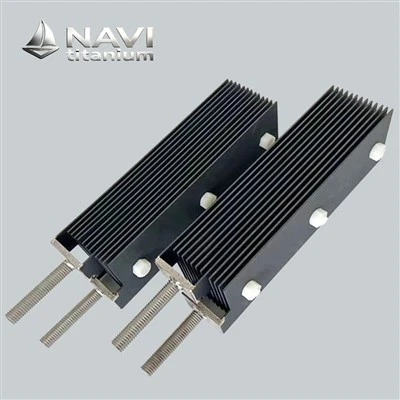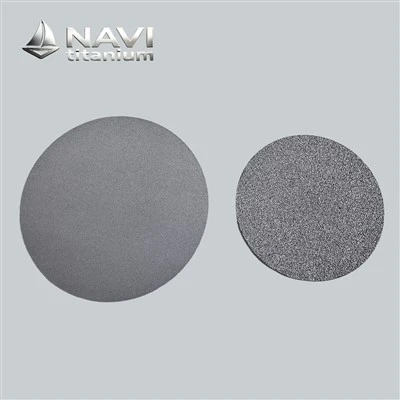

Ruthenium iridium titanium anodes are dimensionally stable insoluble anodes based on pure titanium substrates with a thermally sintered mixed ruthenium-iridium metal oxide catalytic coating on the surface. They feature low chlorine evolution potential, high catalytic activity, excellent corrosion resistance in chloride-containing electrolytes, long service life, and stable dimensions without deformation. They can be manufactured into various forms, including plates, meshes, and tubes, and are widely used in chlorine evolution electrolysis applications such as sodium hypochlorite generators, seawater electrolysis, electroplating, wastewater treatment, and hydrometallurgy. NAVI Titanium provides these configurations for different operating requirements. This article provides a detailed introduction to the adaptability of this titanium anode in sodium hypochlorite electrolysis.

1.Specification
General Shapes: Plate, Rod, Mesh, Tube or customization
Coating: The classical formula of Ru-Ir or customization
Electrochemical reaction: Chlorine evolution reaction
Internal Code: NAVI-1-003
Brand: NAVI Titanium®
Basic Material: Pure Titanium Gr1
Advanced fields of NAVI: Wastewater Treatment, Chlor-Alkali Industry, Hydrometallurgy etc.
2.Purchasing guide
(1)Process
NAVI Titanium(since 2008) can process according to your design drawings
(2)Free sample
NAVI Titanium supply free sample for general specifications
(3)Technology support
Professional one-for-one service, design free, welcome to contact us
Overall Core Principle of Sodium Hypochlorite Electrolysis Preparation
A sodium hypochlorite generator uses industrial softened brine with a stable concentration ratio as the working medium. By relying on a low-voltage DC power supply system, a stable electric field is established inside a sealed electrolytic cell. Under normal temperature and pressure conditions, ions in the electrolyte are driven to undergo controlled directional electrochemical reactions, enabling the in-situ, continuous, and safe generation of high-quality sodium hypochlorite disinfectant solution. It is suitable for various water disinfection applications, including drinking water, wastewater, swimming pool water, and industrial circulating water. As a chemical-free, environmentally friendly, and safe electrochemical preparation process, the overall performance of the ruthenium iridium titanium anode is the key factor determining electrolysis efficiency, equipment energy consumption, and service life.

Core Electrochemical Reaction Process of Anode and Cathode

After direct current is applied to the electrolytic cell, various ions in the electrolyte migrate directionally under the action of the electric field. Independent reaction zones are formed at the anode and cathode, where different oxidation-reduction reactions occur. The anode is responsible for the core chlorine evolution reaction through chloride ion oxidation. NAVI Titanium focuses on anode configurations suited to this reaction environment. Chloride ions lose electrons to generate chlorine gas, which then undergoes disproportionation with water to form hypochlorous acid, ultimately dissociating into sodium hypochlorite. At the cathode, only the auxiliary side reaction of water reduction and hydrogen evolution occurs. Since the operating conditions are relatively mild with no severe corrosion risk, the material selection requirements for the two electrodes are significantly different. The anode must be manufactured from specially designed corrosion-resistant catalytic materials.
The core operating stress of sodium hypochlorite electrolysis is concentrated in the anode region. The anode operates under extremely harsh conditions for extended periods, including high-salt chloride ion corrosion, strong oxidative attack from chlorine gas and hypochlorous acid, and continuous DC polarization. In addition, sodium hypochlorite equipment is generally designed for 24-hour continuous operation. Conventional carbon steel, stainless steel, and single-layer coated electrodes are highly prone to corrosion damage, surface passivation, reduced production efficiency, and increased energy consumption. NAVI Titanium provides highly adaptable ruthenium iridium titanium anodes that can meet the requirements for long-term stable, low-energy, and high-efficiency operation of such equipment.

Core Performance Requirements of Anodes in Sodium Hypochlorite Electrolysis Conditions

The brine used in sodium hypochlorite electrolysis contains a large amount of free chloride ions, which have strong pitting corrosion and crevice corrosion capabilities. Conventional iron materials, copper materials, and ordinary stainless steels rapidly undergo electrochemical corrosion under energized high-salt conditions, resulting in rusting, perforation, and substrate detachment. These issues not only cause electrode failure but may also contaminate the disinfected water. Therefore, NAVI Titanium dedicated anodes must possess excellent resistance to chloride ion electrochemical corrosion and be capable of long-term exposure to high-salt media erosion and attack.
The anode area continuously generates strongly oxidizing substances such as chlorine gas, hypochlorous acid, and hypochlorite ions during electrolysis. Ordinary electrode surfaces are easily oxidized to form insulating passivation layers, causing increased electrode resistance, higher electrolysis voltage, and significantly reduced chlorine production efficiency. Eventually, this leads to excessive equipment energy consumption and failure to meet water disinfection quality requirements. Therefore, NAVI Titanium qualified electrolysis anodes must have excellent anti-passivation and strong oxidation resistance, maintaining stable surface electrochemical activity during long-term operation.

Stable Electrochemical Catalytic Activity

The anode is the core catalytic carrier in sodium hypochlorite electrolysis. The production efficiency, energy consumption, and operational stability of the equipment depend entirely on the electrochemical performance of the ruthenium iridium titanium anode. High-quality anodes can selectively catalyze the main chlorine evolution reaction of chloride ions while minimizing ineffective side reactions such as oxygen evolution from water electrolysis. NAVI Titanium anodes maintain stable catalytic activity without degradation under long-term energized polarization conditions, ensuring high current utilization efficiency and uniform, stable sodium hypochlorite concentration.
Sodium hypochlorite generators typically operate continuously under all-weather conditions. The anode must withstand long-term DC electric field polarization and current loading. Excellent electrical conductivity can effectively reduce electrode resistance, minimize heat loss, and control operating energy consumption. Meanwhile, NAVI Titanium electrodes must possess good mechanical strength and toughness, withstand water flow impact and installation stress, and maintain long-term operation without deformation, cracking, or coating detachment, ensuring safe and continuous equipment operation.

Core Principles and Unique Advantages of Ruthenium Iridium Coated Titanium Anodes

Pure titanium substrates have no inherent electrochemical catalytic activity. However, due to their excellent chemical stability, they can rapidly form a dense and stable titanium dioxide passivation film in high-salt, strongly oxidizing electrolytes. This completely isolates the substrate from corrosive media and electrochemical penetration, providing a strong, smooth, and durable supporting foundation for the surface ruthenium-iridium active coating. NAVI Titanium applies this substrate principle to ensure strong adhesion of the high-temperature sintered coating and prevent coating detachment, serving as the fundamental basis for the stable catalytic performance of the ruthenium iridium titanium anode.
The ruthenium iridium coated titanium anode specially designed for sodium hypochlorite production is a composite precious metal electrode manufactured through a high-temperature sintering process using high-purity titanium as the substrate. The active coating consists of ruthenium dioxide and iridium dioxide in a scientifically optimized ratio. Among them, ruthenium dioxide provides an extremely low chlorine evolution overpotential and efficiently catalyzes the main chloride ion oxidation reaction for chlorine generation. Iridium dioxide stabilizes the coating crystal structure, improving resistance to polarization and high-temperature oxidation. The synergistic combination of these two components enables precise adaptation to the harsh operating conditions of sodium hypochlorite electrolysis, including low voltage operation, strong corrosion environments, and continuous operation. It effectively suppresses side reactions, reduces energy consumption, and slows electrode degradation.

Core Unique Advantages of Ruthenium Iridium Coated Titanium Anodes

Ruthenium iridium titanium anodes provide four major unique advantages: First, they offer high chlorine evolution catalytic efficiency and low energy consumption. The specialized coating has an extremely low chlorine evolution overpotential, with current efficiency reaching above 85%. Under the same operating conditions, chlorine production is more stable and energy consumption is lower. Second, they demonstrate excellent anti-passivation and corrosion resistance. They can withstand high-chlorine, strongly oxidizing environments and continuous polarization stress for long periods, with no significant reduction in surface activity. Third, they provide strong coating adhesion and long service life. NAVI Titanium high-temperature sintered coating bonds firmly with the titanium substrate, resisting powdering and peeling. The stable service life can reach 3–8 years. Fourth, they provide excellent reaction selectivity and stable water quality. They effectively suppress unwanted side reactions, improve raw material utilization efficiency, and ensure pure sodium hypochlorite solution with stable concentration, meeting various water disinfection standards.
Conclusion
Sodium hypochlorite electrolysis is a green process that uses a DC electric field to achieve directional chlorine evolution from brine and produce sodium hypochlorite. The operational bottleneck of the entire system is concentrated in the anode component. The harsh conditions of high-salt corrosion, strong oxidative attack, and long-term polarization impose extremely high requirements on anode corrosion resistance, oxidation resistance, catalytic activity, and structural stability.
Ruthenium-iridium coated titanium anodes from NAVI Titanium perfectly match the specialized operating conditions of sodium hypochlorite electrolysis by combining the corrosion-resistant supporting advantages of titanium substrates with the synergistic properties of ruthenium-based high-efficiency chlorine evolution catalysis and iridium-based structural stability. They effectively overcome the shortcomings of traditional electrodes, including high energy consumption, easy passivation, short service life, and unstable production efficiency, making them the core key components for ensuring efficient, low-energy, long-term, and stable operation of sodium hypochlorite disinfection equipment.
NAVI Titanium TECH – Professional Ruthenium Iridium Coated Titanium Anode Supplier
NAVI Titanium TECH is a professional global supplier of high-performance ruthenium-iridium coated titanium anodes. We specialize in premium ruthenium-iridium coated titanium anodes manufacturing, serving international clients in electrochemistry, pharmaceuticals and advanced manufacturing. Backed by reliable quality and cost-effective solutions, we have built stable partnerships with many well-known global enterprises.
We own a 100,000 m2 GMP-standard production base with complete authoritative certifications, including US-FDA, EU-GMP, PMDA and CFDA, complying with global high-end manufacturing standards. A strict three-tier quality control system covering factory testing, professional QA/QC inspection and third-party certification ensures consistent and reliable product quality for every batch.
We uphold transparent pricing and credible after-sales service, providing a full refund guarantee for unqualified products. With reasonable profit margins and sincere cooperation concepts, we focus on long-term win-win partnerships. We also provide accurate delivery schedules, complete documents and full shipping support to simplify your procurement process. For customized high-quality MMO titanium anode solutions to upgrade your electrochemical systems, please contact our professional team at sales@navititanium.com. We provide tailored technical parameters and professional solutions according to your actual application requirements.
FQA
Q1: Why are ruthenium-iridium coated titanium anodes more suitable for sodium hypochlorite disinfection than conventional ruthenium-titanium anodes?
Q2: Will ruthenium-iridium titanium anodes cause heavy metal contamination during saltwater electrolysis disinfection?
Q3: How much operating cost can be reduced by using ruthenium-iridium anodes in sodium hypochlorite electrolysis equipment?
References
1. TRASATTI S. Electrocatalysis: understanding the success of DSA®[J]. Electrochimica Acta, 2000, 45(15-16): 2377-2385.
2. Afify AA, Hassan GK, Al-Hazmi HE, Kamal RM, Mohamed RM, Drewnowski J, Majtacz J, Mąkinia J, El-Gawad HA. Electrochemical Production of Sodium Hypochlorite from Salty Wastewater Using a Flow-by Porous Graphite Electrode[J]. Energies. 2023; 16(12):4754.
3. Fesenko LN, Pchelnikov IV, Fedotov RV (2017) Comparative Assessment of Resistance of Hardwearing Anodes, Ternary Coated with Iridium, Ruthenium and Titanium. SSP 265:580–586.
4. Wu, Xu and Zou, Xiaoyu and Wei, Jucai, Electrochemical Waste Salty Water Treatment with Sodium Hypochlorite By-Product and Oxygen Cathode to Reinforce Energy Efficiency[J]. Openalex. 2024.